
MEMORY A’LEVEL
This section covers everything AQA expects you to know about assessing memory, including how psychologists measure capacity, duration and coding in different memory stores. It explains key studies such as Baddeley’s research on coding, Jacobs and Miller on capacity, and Peterson and Peterson on duration. You will also learn how these findings support or challenge the multi store model and how to apply them effectively in exam essays.
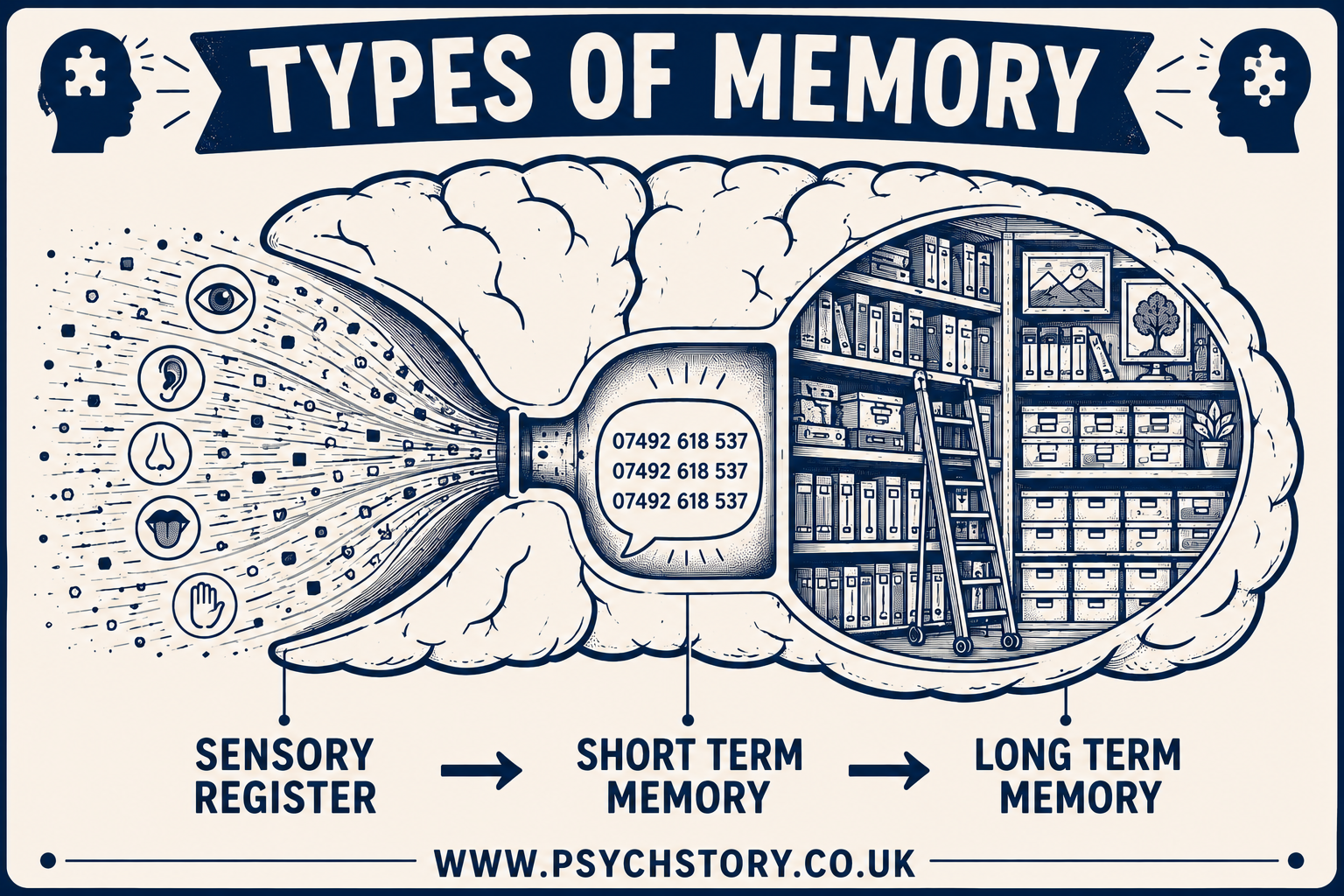
THE SENSORY REGISTER, SHORT-TERM MEMORY AND LONG TERM MEMORY
Understand how sensory memory, short-term memory (STM), and long-term memory (LTM) function, including their limitations and roles in processing information. Learn about key research shaping our understanding of memory systems.
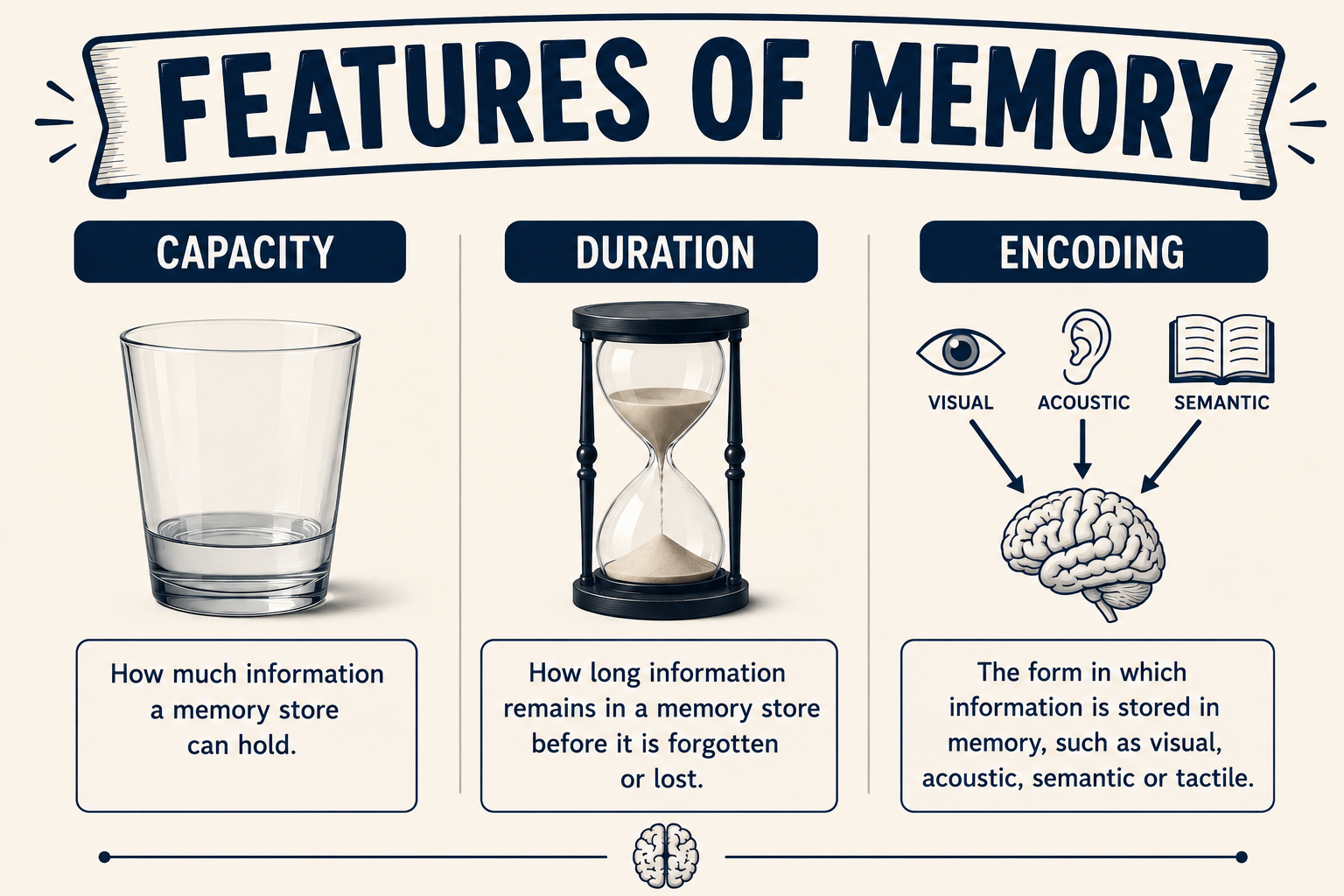
CODING, CAPACITY AND DURATION OF MEMORY
Discover Memory: Explore capacity, duration, and encoding across different memory stores: sensory memory, short-term memory (STM), and long-term memory (LTM)

THE MULTISTORE MODEL OF MEMORY
Explore Atkinson and Shiffrin’s Multi-Store Model of Memory (MSM)—a foundational theory in cognitive psychology. Learn how sensory memory, short-term memory (STM), and long-term memory (LTM) interact through processes like attention and rehearsal. Discover key research supporting and challenging this model.


STUDY OF HM
The case study of HM (Henry Molaison), pioneered by Scoville and Milner (1957), is a key study in Edexcel Psychology exploring localization of brain function and memory. Following bilateral medial temporal lobe resection to treat epilepsy, HM suffered severe anterograde amnesia, demonstrating the hippocampus's crucial role in forming long-term explicit memories while leaving short-term and procedural memory intact.
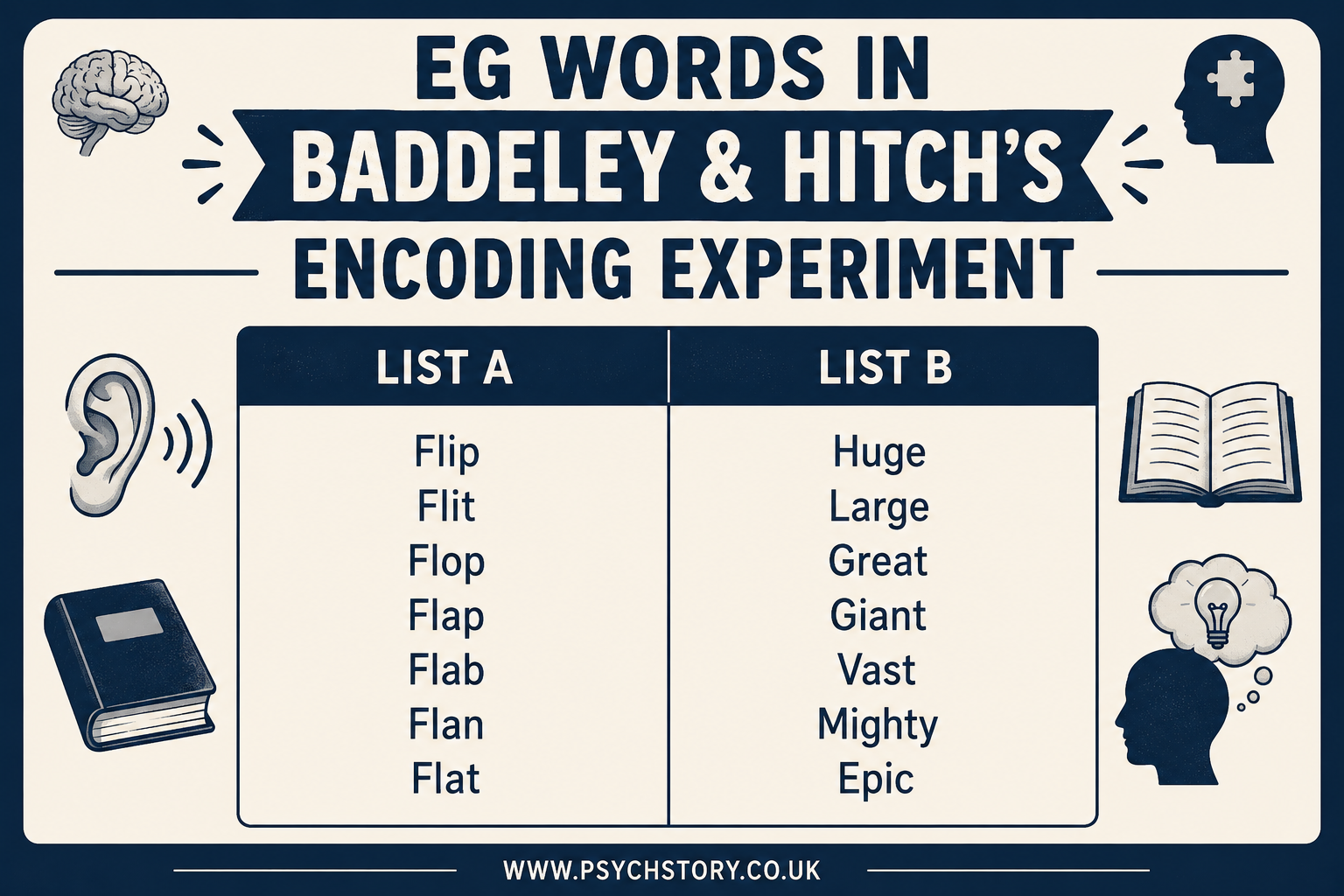
CLASSIC STUDY: BADDELEY THE INFLUENCE OF ACOUSTIC AND SEMANTIC SIMILARITY
BADDLEY’S CLASSIC STUDY ON ENCODING IN WORKING MEMORY AND LONG TERM MEMORY.
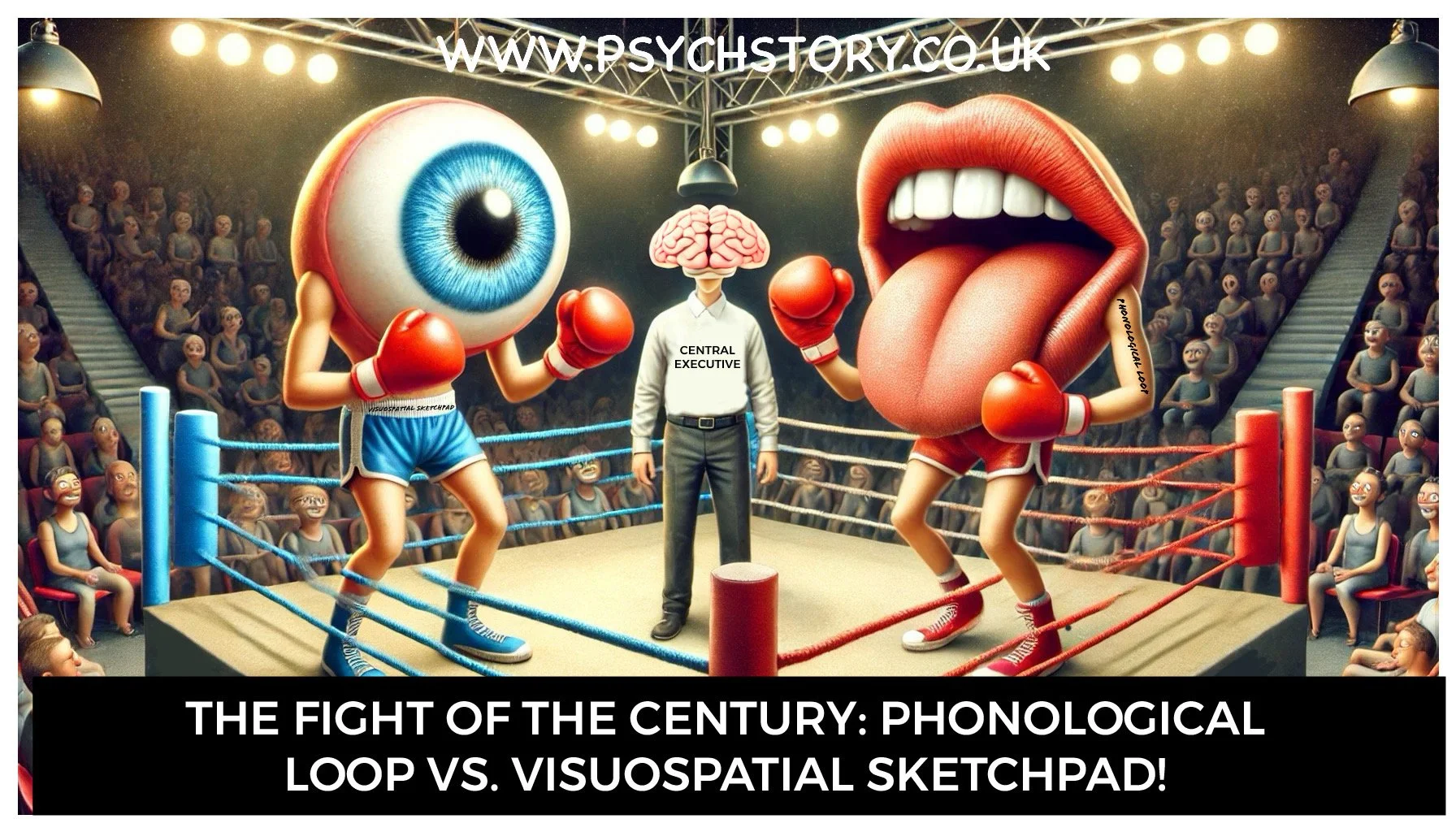
THE WORKING MODEL OF MEMORY
Discover Baddeley and Hitch’s Working Memory Model, which explains short-term memory as a dynamic system with multiple components. Learn about the central executive, responsible for attention control; the phonological loop, which processes verbal information; the visuospatial sketchpad, which handles visual and spatial data; and the episodic buffer, which integrates information from different sources.
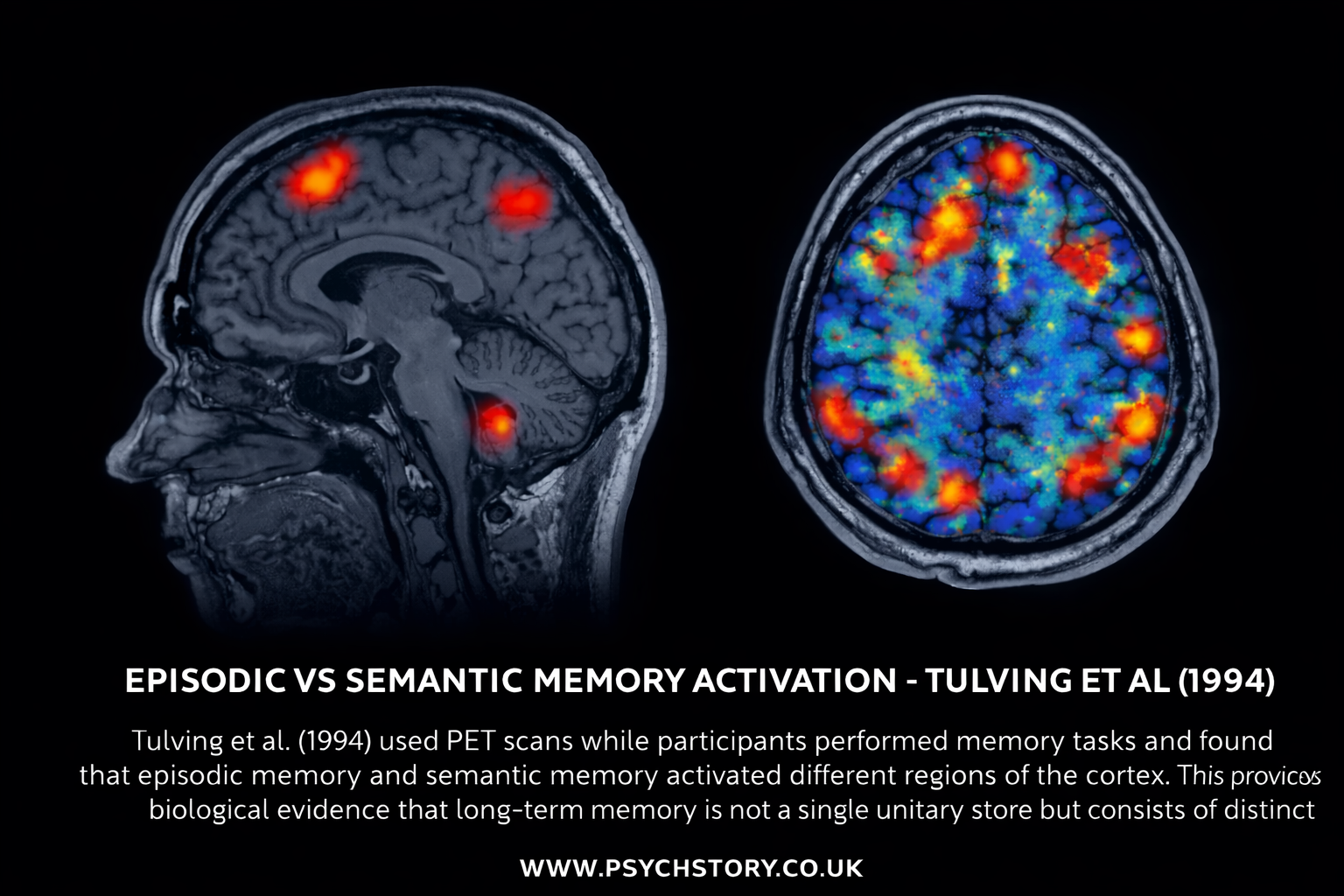
TULVING LTM: EPISODIC AND SEMANTIC
Endel Tulving’s (1972) theory, central to Edexcel A-Level Psychology, challenges unitary long-term memory (LTM) models by proposing distinct systems: episodic memory (personal experiences) and semantic memory (general knowledge/facts). Later, procedural memory was added, emphasizing that memory is divided into declarative and non-declarative subsystems

LONG TERM MEMORY
Explore the different types of long-term memory, including episodic memory, which involves personal experiences and events, and semantic memory, which stores general knowledge and facts. Procedural memory, a form of non-declarative memory, allows for the learning and performing skills without conscious effort. Research, including studies by Tulving, has provided evidence for these distinctions in memory function.
EXPLANATIONS FOR FORGETTING
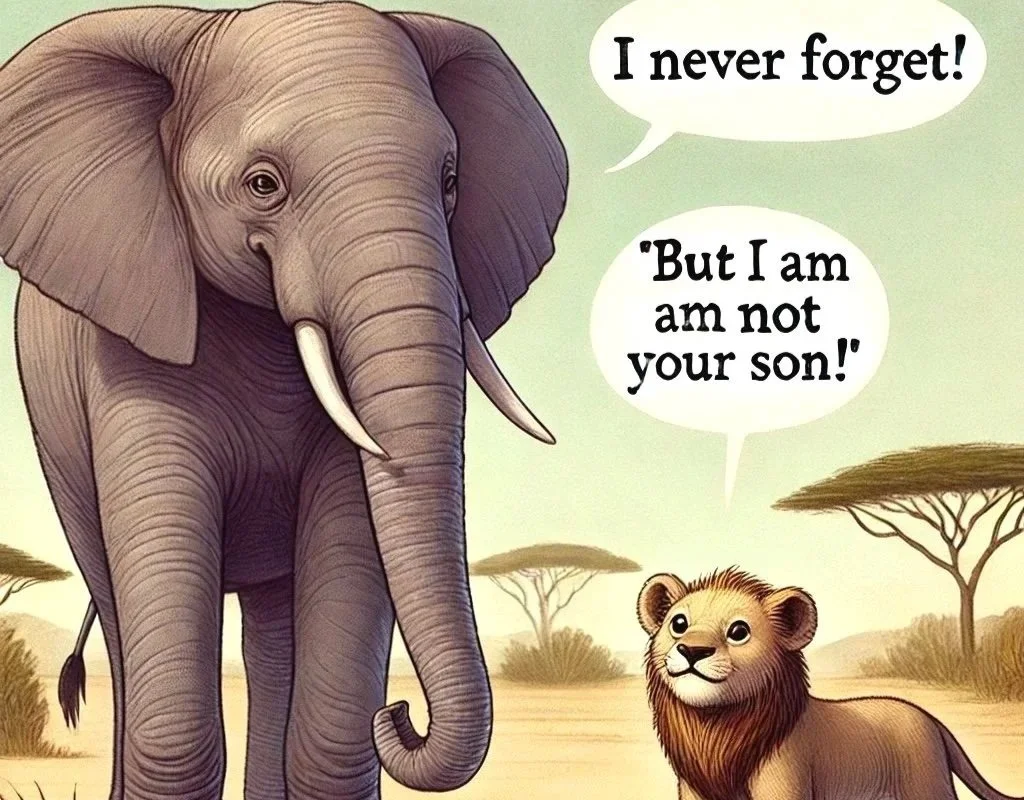
Explore the different explanations for forgetting, including proactive and retroactive interference, retrieval failure due to the absence of cues, and decay theory. Understand how memory traces fade over time, the impact of competing information, and how contextual and state-dependent cues play a role in retrieval.

RECONSTRUCTIVE MEMORIES AND SCHEMAS
Explore Reconstructive Memory and Schema Theory, focusing on Bartlett’s War of the Ghosts study. Learn how schemas—mental frameworks shaped by experience—influence memory recall, leading to distortions, omissions, and rationalisations when recalling unfamiliar information.

FACTORS AFFECTING THE ACCURACY OF EYE WITNESS TESTIMONY
Explore the fascinating research by Elizabeth Loftus on eyewitness testimony and how it can be distorted by misleading questions, post-event discussion, and anxiety. Learn how memory isn't always as reliable as we think and the implications this has for the criminal justice system.

THE COGNITIVE INTERVIEW
Discover how the Cognitive Interview technique improves the accuracy of eyewitness testimony by enhancing memory recall. Learn about key components such as reporting everything, context reinstatement, changing perspective, and reversing the order, and how these strategies help reduce the effects of misleading information and anxiety on memory.

EDEXCEL MEMORY
Edexcel memory specification and content
Students must understand that cognitive psychology focuses on the role of cognition and cognitive processes in human behaviour. These processes include perception, memory, selective attention, language, and problem-solving. The cognitive approach draws on the analogy of cognitive processing to computer processing.
Individual differences and developmental psychology must be considered when learning about memory differences, memory deficits, and how memory develops as the brain ages.

COGNITIVE PROCESSING IN THE REAL WORLD
Cognitive processing in the real world (IB Psychology) examines how mental processes—memory, thinking, attention, and decision-making—operate outside the laboratory, heavily influenced by modern technology. Key topics include the reliability of memory, cognitive biases, schema theory in daily life, and the impact of digital technologies (digital natives vs. immigrants).