
Memory is the thing we forget with…
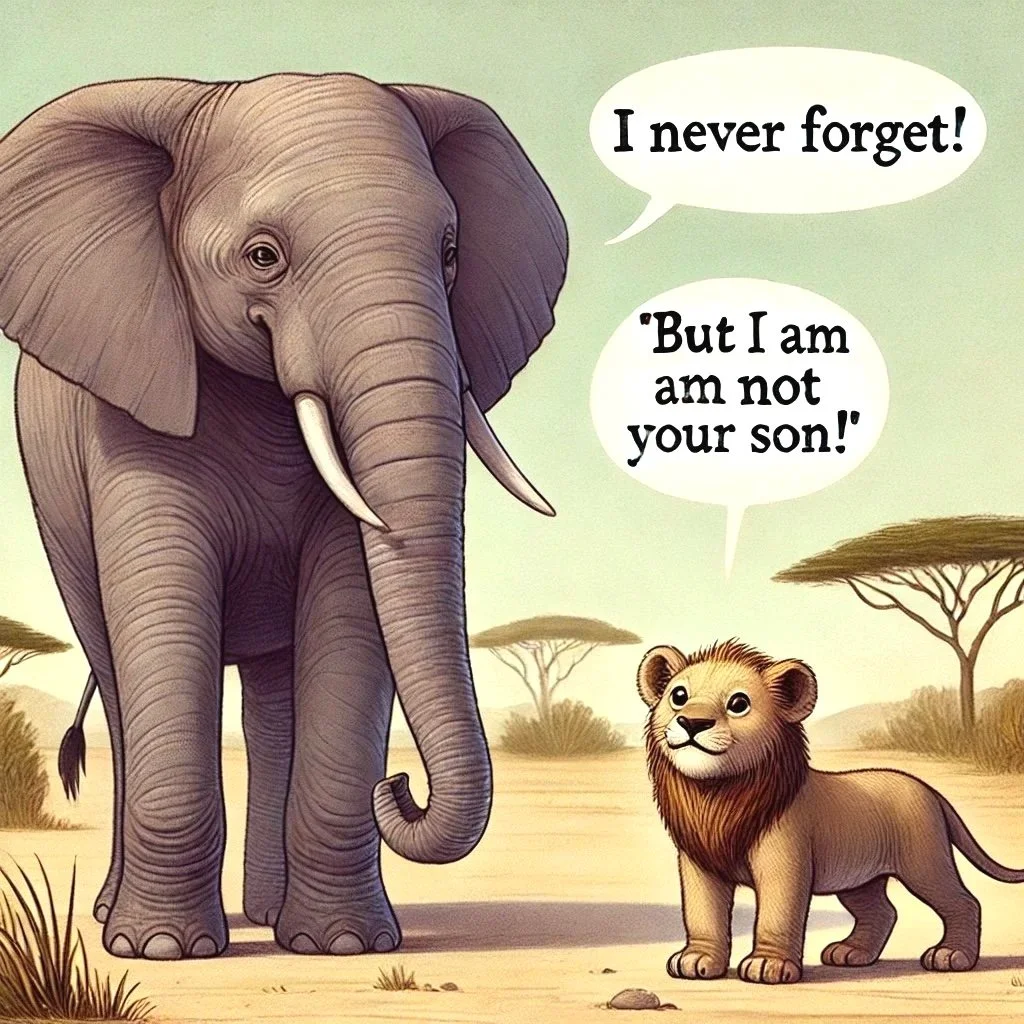
Billy Collins Forgetfulness 1941 –
The name of the author is the first to go
followed obediently by the title, the plot,
the heartbreaking conclusion, the entire novel
which suddenly becomes one you have never read,
never even heard of,
as if, one by one, the memories you used to harbour
decided to retire to the southern hemisphere of the brain,
to a little fishing village where there are no phones.
Long ago, you kissed the names of the nine Muses goodbye
and watched the quadratic equation pack its bag,
and even now, as you memorise the order of the planets,
something else is slipping away, a state flower perhaps,
the address of an uncle, the capital of Paraguay.
Whatever it is you are struggling to remember
It is not poised on the tip of your tongue,
not even lurking in some obscure corner of your spleen.
It has floated away down a dark mythological river
whose name begins with an L as far as you can recall,
Well, on your own way to oblivion, where you will join those
who have even forgotten how to swim and how to ride a bicycle.
No wonder you rise in the middle of the night
to look up the date of a famous battle in a book on war.
No wonder the moon in the window seems to have drifted
out of a love poem that you used to know by heart.
SPECIFICATION: Explanations for forgetting: Proactive and retroactive interference. Retrieval failure due to the absence of cues.
EXPLANATIONS FOR FORGETTING: INTERFERENCE THEORY
AO1: THEORETICAL BASIS OF INTERFERENCE
Interference theory explains forgetting as the result of competition between memories rather than decay of the memory trace. Traditional explanations of forgetting focused on trace decay, the idea that memory fades over time if not rehearsed. Interference theory challenges this by arguing that memories remain intact but become disrupted by other information. Forgetting occurs because different memory traces compete for retrieval, leading to confusion or incorrect recall.
Interference is most likely to occur when memories are similar in content or structure. This similarity leads to overlap among memory traces, increasing the likelihood that incorrect information is retrieved. The theory, therefore, emphasises the organisation and interaction of stored information rather than the passive loss of memory over time. It applies primarily to long-term memory, where large amounts of information are stored and therefore more likely to compete.
AO1: PROACTIVE INTERFERENCE
Proactive interference occurs when older memories interfere with the recall of newer information. The direction of interference is forward in time, meaning that previously learned material disrupts the encoding or retrieval of more recent material. A common example is recalling an old password or phone number when attempting to remember a newly learned one.
The mechanism underlying proactive interference involves the persistence of earlier memory traces, which remain highly accessible and therefore intrude when new information is being processed. This makes it difficult to encode the new memory accurately or retrieve it without confusion. Proactive interference is particularly evident when the old and new information are similar, as this increases the likelihood of overlap.
AO1: RETROACTIVE INTERFERENCE
Retroactive interference occurs when newly learned information disrupts the recall of previously stored memories. The direction of interference is backward in time, meaning that more recent learning interferes with older information. For example, learning a new address may make it difficult to recall a previous one.
This form of interference suggests that new information either alters existing memory traces or competes more effectively during retrieval, making the older memory less accessible. One explanation is that the newer memory becomes stronger or more salient, overshadowing the earlier one. Another interpretation is that the correct information remains, but retrieval cues activate the newer memory instead, leading to incorrect recall.
AO1: ROLE OF SIMILARITY AND COMPETITION
A central assumption of interference theory is that similarity between memories determines the extent of interference. When two pieces of information share features, such as meaning, structure, or context, they are more likely to compete during retrieval. This competition leads to confusion, where elements of one memory are mistakenly attributed to another.
This explains why interference effects are particularly strong in situations involving lists of similar items, such as words with related meanings or categories. It also highlights that forgetting is not random but systematic, depending on the relationships between stored memories. The theory, therefore, positions forgetting as an active process involving competition rather than passive loss.
AO3: EMPIRICAL SUPPORT FOR INTERFERENCE
There is strong experimental support for interference effects. McDonald et al demonstrated that recall is significantly worse when participants learn two lists containing similar material, such as synonyms, compared to dissimilar lists. This supports the claim that similarity increases interference and leads to confusion between memory traces. Classic laboratory studies, including those using word lists and paired associates, consistently show both proactive and retroactive interference. These findings provide controlled evidence that memory performance declines when competing information is introduced, supporting the core assumptions of the theory.
AO3: LIMITATIONS IN ECOLOGICAL VALIDITY
A major limitation is that much of the supporting evidence comes from laboratory-based tasks that lack ecological validity. Participants are often asked to memorise artificial material such as word lists or nonsense syllables, which does not reflect how memory operates in real life. Everyday memories are typically richer, more meaningful, and supported by multiple cues, reducing the likelihood of interference.
As a result, it is difficult to determine how much everyday forgetting can be attributed to interference. The artificial nature of laboratory tasks may exaggerate interference effects, limiting the generalisability of the findings.
AO3: INDIVIDUAL DIFFERENCES
Interference does not affect all individuals equally. Research by Kane et al indicates that individuals with higher working memory capacity are less susceptible to proactive interference. This suggests that cognitive control processes, such as attention and inhibition, play a role in managing competing information.
This challenges the universality of interference theory, as it does not fully account for why some individuals are better able to resist interference than others. It also implies that forgetting is influenced by broader cognitive factors, not just the similarity of memory traces.
AO3: REAL WORLD APPLICATIONS
Interference theory has practical applications, particularly in areas such as advertising. Danaher found that when individuals are exposed to competing adverts in close temporal proximity, their ability to recall brand information decreases. This demonstrates interference in a real world context and shows how competing information can reduce memory effectiveness.
This application highlights the relevance of the theory beyond laboratory settings, although such examples are still relatively limited compared to controlled experimental evidence.
AO3: THEORETICAL LIMITATIONS
Interference theory cannot explain all forms of forgetting. It is most effective when information is similar, but much real life forgetting occurs in situations where memories are not obviously competing. This suggests that interference is only one component of forgetting rather than a complete explanation.
The theory also lacks a detailed account of the underlying cognitive processes. It describes what happens when memories compete but does not fully explain how or why certain memories dominate retrieval. This limits its explanatory depth compared to more comprehensive models of memory.
AO3: OVERALL EVALUATION
Interference theory provides a well-supported and systematic explanation of forgetting, particularly in situations involving similar information. It offers clear mechanisms, including proactive and retroactive interference, and is supported by a large body of experimental research. However, its reliance on artificial tasks, its inability to account for all types of forgetting, and its limited explanation of underlying processes reduce its overall explanatory power. It is best understood as one component within a broader account of memory failure, alongside explanations such as retrieval failure and cue-dependent forgetting.
EXPLANATIONS FOR FORGETTING: RETRIEVAL FAILURE DUE TO ABSENCE OF CUES
AO1: THEORETICAL BASIS OF RETRIEVAL FAILURE
Retrieval failure refers to situations in which information is stored in long-term memory but cannot be accessed at the point of recall because the appropriate cues are absent. This explanation is rooted in the encoding specificity principle proposed by Tulving, which states that memory is most effectively retrieved when the cues available at recall match those that were present at the time of encoding. During encoding, information is not stored in isolation but becomes linked to a network of contextual and internal cues. These cues form part of the memory trace. When those cues are unavailable or mismatched at retrieval, recall is impaired, not because the memory has been lost, but because it is temporarily inaccessible.
Tulving made an important distinction between availability and accessibility. Information may be available in long-term memory but not accessible without the correct cues. This distinction is critical because it challenges the assumption that forgetting always reflects decay or loss. Instead, retrieval failure suggests that forgetting can be reversible if the appropriate cues are reinstated. This shifts the focus from storage to retrieval processes and positions memory as a dynamic system dependent on context.
AO1: CONTEXT DEPENDENT FORGETTING
Context-dependent forgetting occurs when external environmental cues present during encoding are absent during retrieval. These cues may include physical surroundings, background noise, lighting conditions, or even subtle sensory features. When these environmental cues are reinstated, recall improves because they act as triggers for the original memory trace.
Godden and Baddeley’s study of deep-sea divers provides strong support for this. Participants learned word lists either underwater or on land and were later asked to recall them in the same or a different environment. Recall was significantly higher when the learning and recall contexts matched. This demonstrates that environmental context becomes encoded alongside the material and can facilitate retrieval when reinstated. Similar findings have been reported in educational settings, where students perform better when tested in the same environment in which they learned the material, although such effects tend to be weaker outside controlled conditions.
AO1: STATE DEPENDENT FORGETTING
State-dependent forgetting refers to the influence of internal cues on recall. These internal states include physiological conditions such as intoxication, fatigue, or arousal levels, as well as psychological states such as mood. When the internal state at retrieval matches the state at encoding, recall is more effective because the internal cues align with those embedded in the memory trace.
Overton demonstrated this using animal research in which rats learned a maze under the influence of a drug. Their performance was significantly better when tested under the same drug state compared to a different state. In humans, mood-dependent memory shows a similar pattern, where individuals are more likely to recall information when their emotional state at retrieval matches that at encoding. This suggests that internal conditions form part of the encoding context and can act as retrieval cues in the same way as external environments.
AO3: EMPIRICAL SUPPORT AND APPLICATION
There is substantial empirical support for retrieval failure as an explanation of forgetting. Laboratory studies, such as those conducted by Godden and Baddeley, demonstrate clear, measurable effects of context reinstatement on recall. Studies on state-dependent learning further support the role of internal cues. These findings are consistent across a range of experimental designs, strengthening the validity of the explanation.
The theory also has practical applications. The cognitive interview technique used in forensic psychology explicitly draws on the principle of context reinstatement by encouraging witnesses to mentally recreate the environment and emotional state of an event. This has been shown to improve recall accuracy. In education, students can enhance retrieval by revising in varied contexts or by deliberately creating multiple associations with the material, increasing the number of potential retrieval cues available during an exam.
AO3: RELATIONSHIP WITH INTERFERENCE THEORY
Research by Tulving and Psotka challenges the idea that forgetting is always due to interference. In their study, participants learned multiple word lists and showed reduced recall for earlier lists. However, when category cues were provided, recall improved significantly. This suggests that the information had not been overwritten but was simply inaccessible without the appropriate cues. This supports retrieval failure as a more precise explanation in some cases, as it distinguishes between loss of information and failure to access it.
AO3: LIMITATIONS AND CRITICISMS
One limitation is that the effects of context are often less pronounced in real-world settings. Everyday environments are complex and overlapping, making contextual cues less distinct than in laboratory conditions. This reduces their effectiveness as retrieval triggers and limits the ecological validity of some supporting studies.
Another issue concerns cue overload. A cue that is associated with many memories becomes less effective because it lacks distinctiveness. For example, common environments such as classrooms or homes are associated with numerous experiences, weakening their ability to serve as specific retrieval cues. This refines the encoding specificity principle by showing that not all cues are equally useful.
Baddeley also criticised the encoding specificity principle for being circular. The theory suggests that cues are effective if they lead to successful recall, but recall success is then used to define their effectiveness. This makes the theory difficult to falsify because it does not provide an independent way of identifying what constitutes a valid cue.
AO3: OVERALL EVALUATION
Retrieval failure provides a strong and well-supported explanation of forgetting by emphasising accessibility rather than loss. It integrates effectively with broader cognitive theories and has clear applications in both forensic and educational contexts. However, its explanatory power is limited by issues of ecological validity, cue distinctiveness, and theoretical circularity. It is most useful when considered alongside other explanations such as interference, as forgetting is likely to result from multiple interacting processes rather than a single mechanism