
INTRODUCTION TO BIOPSYCHOLOGY
biopsychology specification:
Biopsychology
The divisions of the nervous system: central and peripheral (somatic and autonomic).
The structure and function of sensory, relay and motor neurons. The process of synaptic transmission, including reference to neurotransmitters, excitation and inhibition.
The function of the endocrine system: glands and hormones.
The fight or flight response including the role of adrenaline.
Ways of studying the brain: scanning techniques, including functional magnetic resonance imaging (fMRI); electroencephalogram (EEGs) and event-related potentials (ERPs); post-mortem examinations.
Localisation of function in the brain and hemispheric lateralisation: motor, somatosensory, visual, auditory and language centres; Broca’s and Wernicke’s areas, split brain research. Plasticity and functional recovery of the brain after trauma

GLOSSARY OF THE BRAIN
Comprehensive glossary of brain anatomy and function for A-level Psychology. Learn key terms including cerebral cortex, frontal lobe, parietal lobe, Broca’s and Wernicke’s areas, homunculus, and localisation of function

THE NERVOUS SYSTEM
The nervous system is divided into the central and peripheral systems, with the peripheral system further split into the somatic and autonomic branches. Discover how these divisions control everything from voluntary movements to automatic bodily functions


THE STRUCTURE AND FUNCTION OF NEURONS
Learn about the structure and function of sensory, relay, and motor neurons and how they transmit signals across the nervous system. Explore the process of synaptic transmission, including the role of neurotransmitters, excitation, and inhibition.
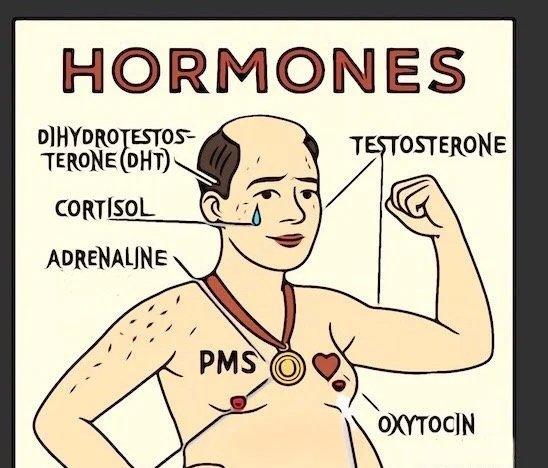
THE FUNCTION OF THE ENDOCRINE SYSTEM
Discover the function of the endocrine system, exploring how glands release hormones to regulate essential processes like stress, metabolism, and growth
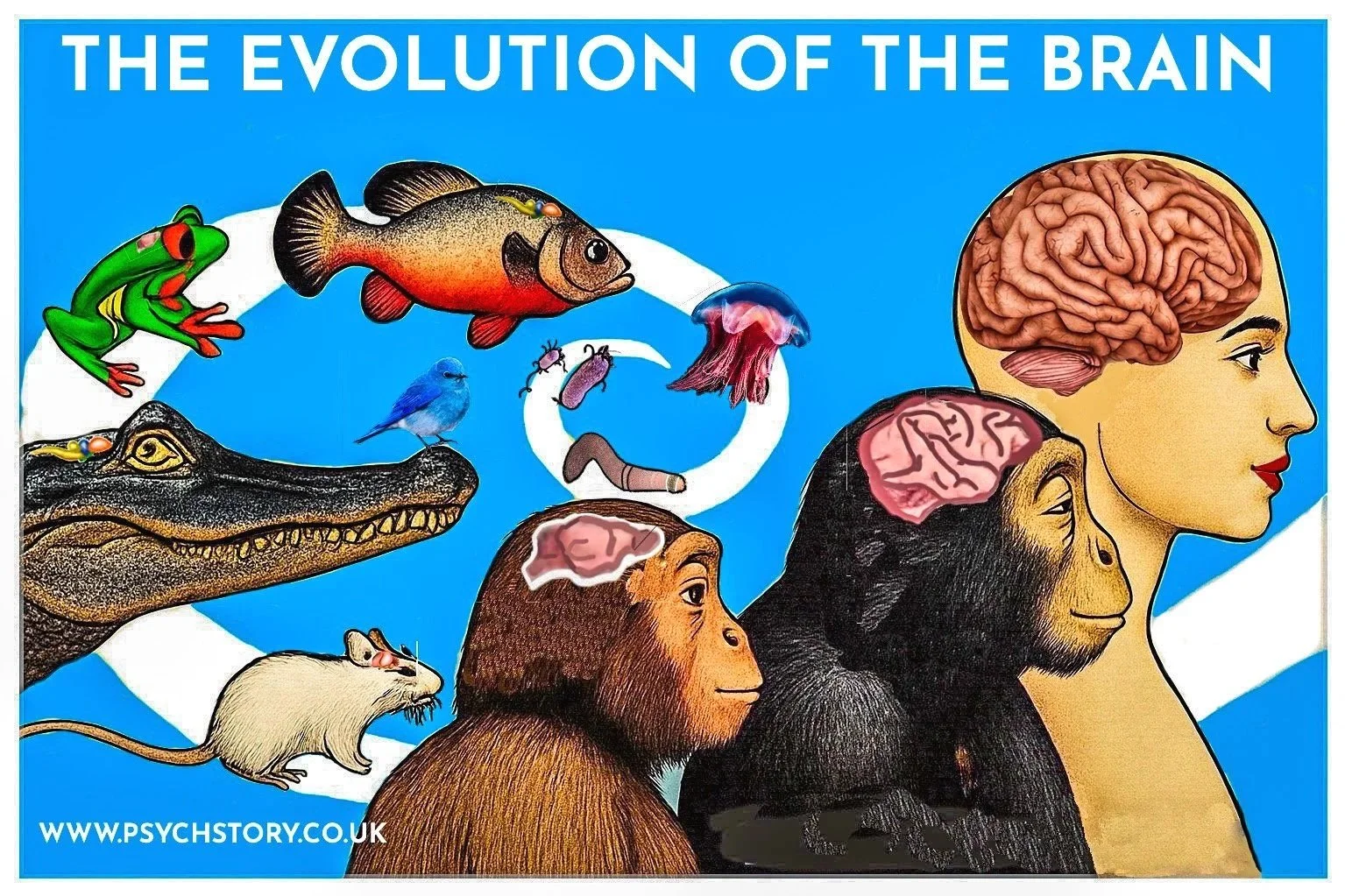
BRAIN ANATOMY AND FUNCTION
Dive into brain anatomy and function, exploring the cortices, lobes, hindbrain, midbrain, forebrain, and the limbic system. Learn how these structures work together to control behaviour, emotions, and essential bodily functions.
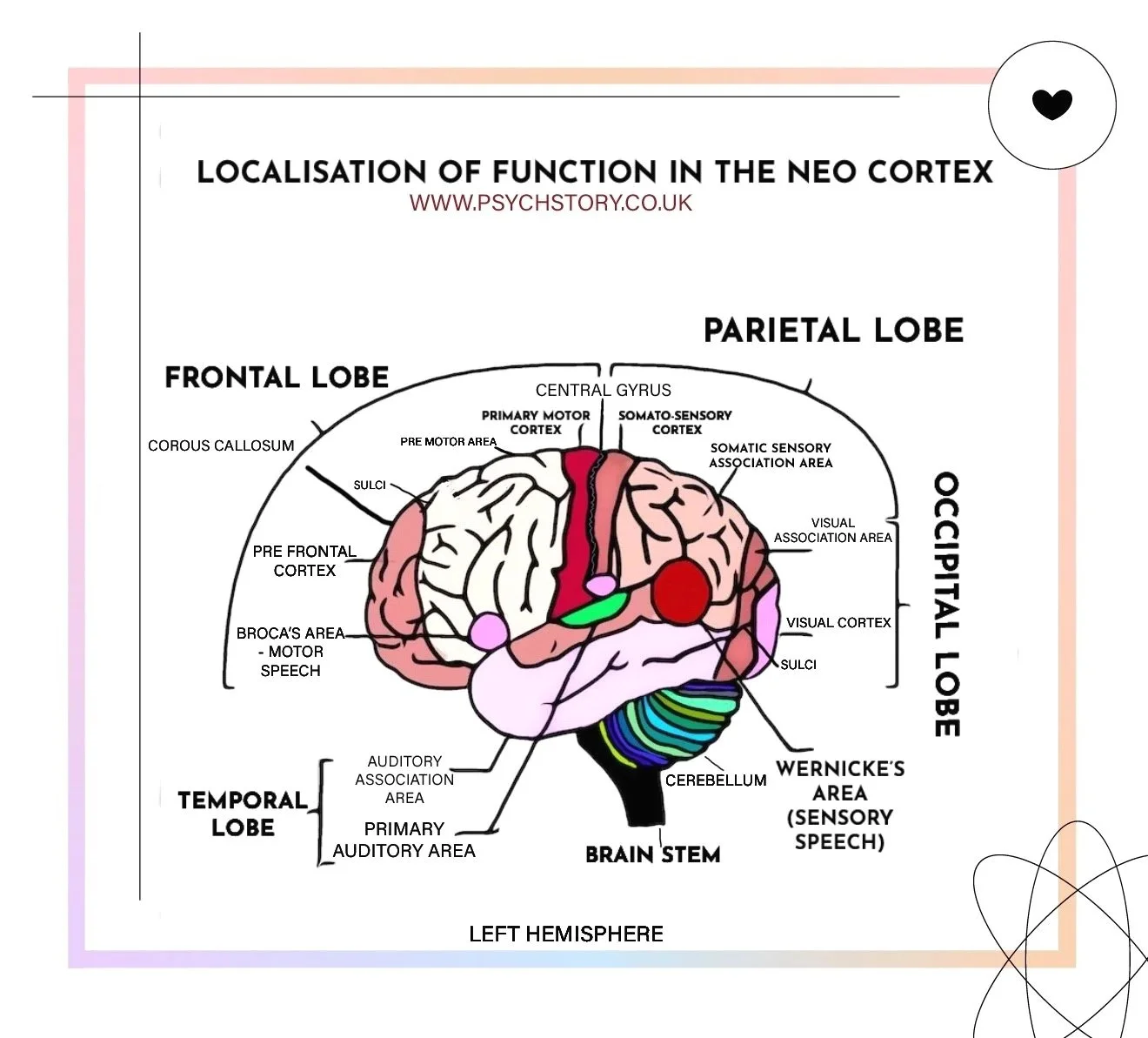
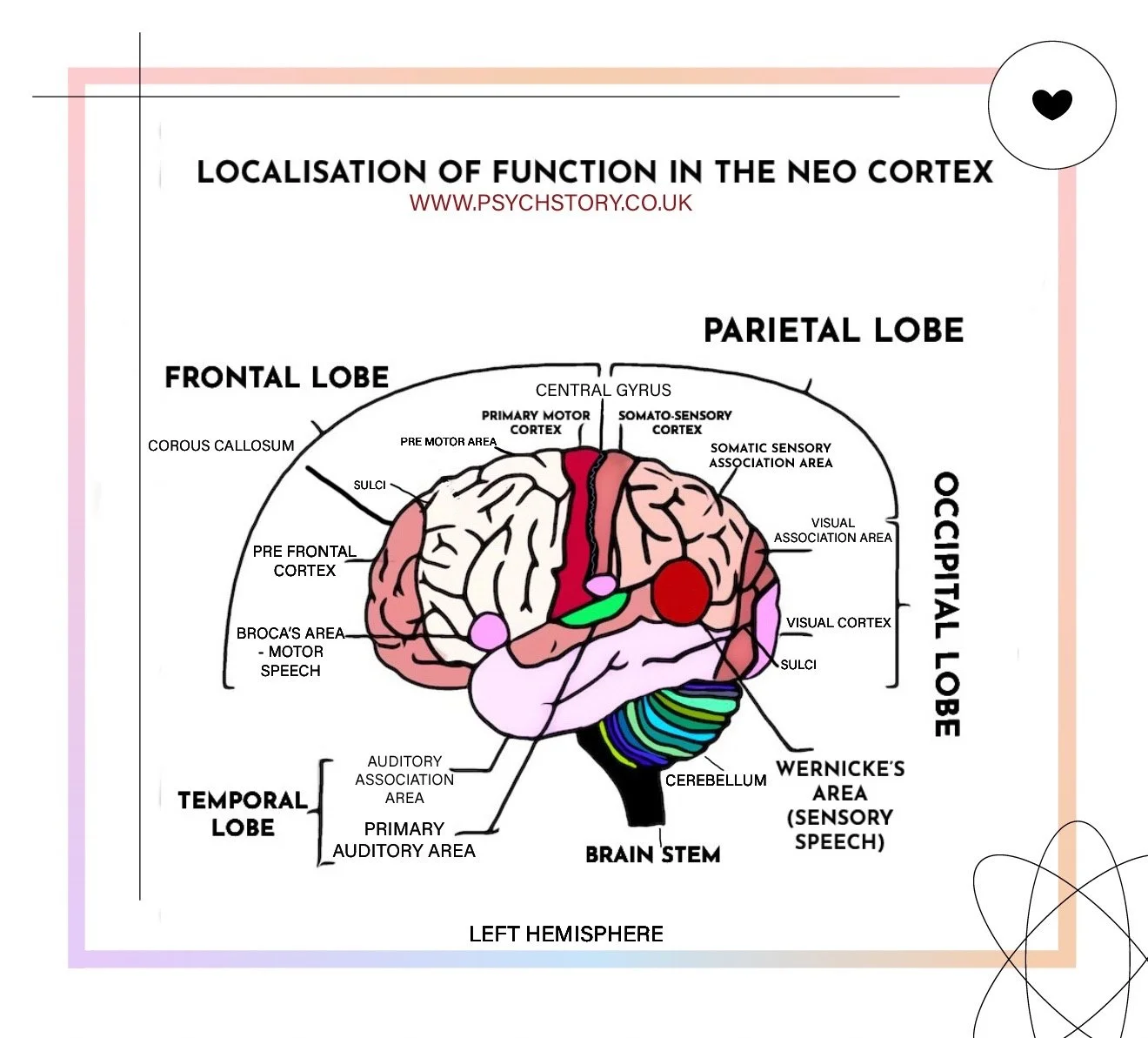
LOCALISATION OF FUNCTION IN THE BRAIN
Explore localisation of function in the brain, including the motor, somatosensory, visual, auditory, and language centres. Learn about Broca’s and Wernicke’s areas and their roles in speech and comprehension

HEMISPHERIC BRAIN LATERALISATION
Discover hemispheric lateralisation and how the brain’s hemispheres specialise in visual, auditory, and language processing. Understand how each hemisphere contributes uniquely to communication and perception

SPLIT-BRAIN RESEARCH AND COMMISSUROTOMIES
Clear AQA A-level notes on split-brain research. Covers Roger Sperry’s studies, commissurotomies, effects on consciousness and behaviour when the corpus callosum is severed, and evaluation of strengths and limitations

PLASTICITY AND FUNCTIONAL RECOVERY OF THE BRAIN AFTER TRAUMA
Explore brain plasticity and functional recovery after trauma for A-level Psychology. Covers neural plasticity, spontaneous recovery, rehabilitation techniques, supporting research and evaluation of strengths and limitations

WAYS OF STUDYING THE BRAIN
How do we investigate the brain? From fMRI and EEG to post-mortem studies and electrical stimulation, explore the key techniques neuroscientists use to understand cognition and behaviour
NEUROSCIENCE ASSESSMENT AND ESSAYS
AQA PSYCHOLOGY A LEVEL NEUROSCIENCE ASSESSMENT AND ESSAYS

RHYTHMS: CIRCADIAN, INFRADIAN AND ULTRADIAN
Learn about biological rhythms, including circadian, infradian, and ultradian cycles. Explore the role of endogenous pacemakers and exogenous zeitgebers in regulating the sleep/wake cycle and other vital processes.


GENES AND HOW TO RESEARCH THEM
Explore genetic research methods, including twin, adoption, and genome-wide association studies (GWAS). Learn how these approaches uncover the influence of genetics on behaviour and health.