THE FUNCTION OF THE ENDOCRINE SYSTEM
SPECIFICATION:The function of the endocrine system: glands and hormones
HORMONES AND THE ENDOCRINE SYSTEM
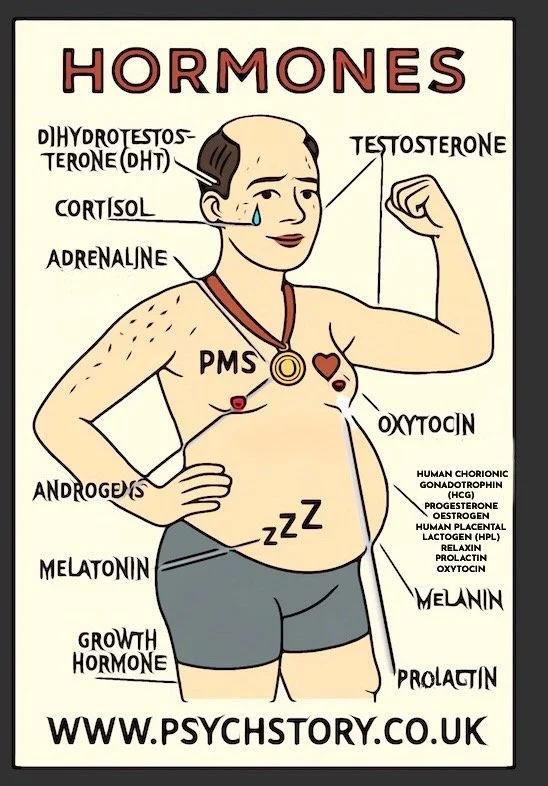
Hormones are chemical messengers that are secreted by the endocrine system directly into the bloodstream. Once released, they are transported around the body where they bind to specific receptors on target cells, producing widespread and often long-lasting effects on both physiological and psychological functioning. Compared with neurotransmitters, which act rapidly and locally at synapses, hormones typically produce slower-onset but more prolonged changes. Their effects can last from several minutes to hours or even days. Hormone release is not constant; it is often highly regulated and follows natural biological rhythms. Many hormones exhibit circadian rhythms (approximately 24-hour cycles) or ultradian rhythms (shorter pulses throughout the day), allowing the body to respond appropriately to daily changes in activity, stress, and internal demands. When hormone levels are maintained within an optimal range, they support homeostasis, normal development, emotional stability, cognitive functioning, and adaptive behavioural responses. However, when levels become too high (excess) or too low (deficiency), significant disruptions can occur. Such imbalances may arise from genetic predispositions, illness, chronic stress, or other physiological factors, and can contribute to a variety of physical and psychological difficulties.
THE HYPOTHALAMUS
NAME OF HORMONE
Thyrotropin-releasing hormone (TRH)
Corticotropin-releasing hormone (CRH)
Gonadotropin-releasing hormone (GnRH)
Growth hormone-releasing hormone (GHRH)
Somatostatin
Dopamine
Oxytocin
Antidiuretic hormone (ADH)GLAND: Hypothalamus. Located at the base of the brain, directly above the pituitary gland. Releasing and inhibiting hormones (TRH, CRH, GnRH, GHRH, somatostatin, dopamine) are secreted into the hypophyseal portal system to act on the anterior pituitary. Oxytocin and ADH are synthesised in hypothalamic nuclei and transported to the posterior pituitary for storage and release.
RHYTHM: The hypothalamus regulates endocrine activity through multiple axes, including the hypothalamic–pituitary–thyroid, hypothalamic–pituitary–adrenal, and hypothalamic–pituitary–gonadal systems. Hormone release is typically pulsatile, particularly for GnRH, which is essential for normal reproductive signalling. Many hypothalamic functions follow circadian rhythms, coordinated by the suprachiasmatic nucleus in response to light–dark cycles. Regulation operates through negative feedback, where hormones produced by target glands inhibit further hypothalamic release. Activity is also influenced by stress, temperature, hunger, hydration, and emotional state.
MAIN JOB: The hypothalamus maintains homeostasis and controls the endocrine system via the pituitary gland. It does not duplicate the action of pituitary hormones but regulates their release. TRH stimulates TSH release from the pituitary, linking to thyroid function. CRH stimulates ACTH release, linking to cortisol and the stress response. GnRH controls the release of LH and FSH, regulating reproduction. GHRH and somatostatin regulate growth hormone secretion. Dopamine inhibits prolactin release. Oxytocin and ADH are produced in the hypothalamus but released via the posterior pituitary. Oxytocin is involved in uterine contraction, milk release, and aspects of bonding. ADH regulates water balance by controlling kidney function. The hypothalamus also regulates temperature, appetite, thirst, circadian rhythms, and links emotional processing to physiological responses.
IMBALANCES: Disruption of hypothalamic function affects multiple endocrine systems simultaneously due to its central regulatory role. Impaired GnRH release can lead to infertility, delayed puberty, or menstrual disruption. Abnormal CRH activity can alter cortisol levels and stress responses. Disruption of TRH can indirectly affect thyroid function. Deficiency of ADH leads to diabetes insipidus, characterised by excessive urination and dehydration. Excess ADH can cause fluid retention and electrolyte imbalance. Damage due to tumours, trauma, or neurodegeneration can impair temperature control, appetite regulation, and hormonal coordination, often producing widespread and complex effects rather than a single isolated disorder.
DRUGS THAT ACT ON IT: Desmopressin is a synthetic analogue of ADH used to treat diabetes insipidus. GnRH agonists and antagonists are used to regulate reproductive hormones in fertility treatment, endometriosis, and hormone-sensitive conditions. Dopamine agonists influence prolactin regulation via hypothalamic pathways.
MOST POPULAR / MOST IMPORTANT TO KNOW: GnRH because it controls reproductive hormone release. CRH because it regulates the stress response via the HPA axis. ADH because it directly controls water balance. The hypothalamus is the primary regulator of the pituitary.
SUMMARY: The hypothalamus is the central control point linking the nervous system and endocrine system. It regulates the pituitary through releasing and inhibiting hormones and maintains internal balance by responding to physiological and environmental changes. Its influence extends across stress, metabolism, reproduction, and fluid balance, making it the key coordinator of endocrine function
THE PITUITARY GLAND
NAME OF HORMONE
Adrenocorticotropic hormone (ACTH)
Luteinising hormone (LH)
Follicle-stimulating hormone (FSH)
OxytocinGLAND: Pituitary gland. ACTH, LH, and FSH are released from the anterior pituitary. Oxytocin is released from the posterior pituitary, although it is actually made in the hypothalamus and then stored in the pituitary before release.
RHYTHM: The pituitary gland is controlled by the hypothalamus and works through complex feedback mechanisms, especially negative feedback. It does not simply release hormones at random. Its activity changes in response to the body’s internal state, the levels of other hormones already circulating in the blood, and signals from the brain. Some pituitary hormones show pulsatile release, meaning they are secreted in bursts rather than continuously. Reproductive hormones such as LH and FSH also vary across the menstrual cycle. ACTH tends to follow a daily rhythm, with levels usually higher in the morning because it is linked to cortisol secretion. Oxytocin is more situationally released, especially during labour, breastfeeding, and certain forms of close social contact.
MAIN JOB: The pituitary gland is often called the master gland because it helps regulate other endocrine glands and coordinates many major body processes. However, it is itself controlled by the hypothalamus, so it is not fully independent.
ACTH stimulates the adrenal cortex to release cortisol, which is involved in the stress response, blood sugar regulation, metabolism, and helping the body cope with physical or psychological challenge. LH and FSH are gonadotrophins, meaning they act on the ovaries and testes. In females, FSH helps ovarian follicles mature and supports oestrogen production. LH triggers ovulation and stimulates the formation of the corpus luteum, which produces progesterone. In males, FSH supports sperm production, while LH stimulates the testes to produce testosterone
OXYTOCIN: has a very different role. It is involved in uterine contractions during labour and in the milk let-down reflex during breastfeeding. It is also associated with social attachment, maternal behaviour, trust, and emotional bonding, although these effects are more complex than the popular description of it as simply the “love hormone.”
IMBALANCES
Problems with pituitary function can disrupt multiple systems because this gland affects stress hormones, reproduction, growth, fluid balance, and childbirth-related processes.Too much or too little ACTH can lead to abnormal cortisol levels. Excess ACTH may contribute to Cushing’s disease, causing weight gain, high blood pressure, muscle weakness, thinning skin, and mood changes. Too little ACTH can contribute to adrenal insufficiency, leading to fatigue, weakness, low blood pressure, and poor stress tolerance.
Imbalances in LH and FSH can affect fertility, puberty, menstruation, and sex hormone production. In females, this may lead to absent periods, irregular ovulation, or infertility. In males, it can reduce testosterone production or sperm count. If pituitary signalling is impaired early in life, puberty may be delayed or incomplete.
Too little oxytocin may interfere with labour contractions or milk release, although oxytocin problems are less often discussed as a classic endocrine deficiency in the same way as ACTH or the gonadotrophins. Disruption in the oxytocin system has also been explored in relation to social bonding and emotional functioning, but this area is more complex and not fully explained by simple deficiency models.
More broadly, pituitary damage from tumours, trauma, infection, or vascular problems can produce hypopituitarism, where several pituitary hormones are reduced at once. This can affect energy, fertility, stress response, growth, and general endocrine stability.
DRUGS THAT ACT ON IT: Synthetic oxytocin, commonly known as Pitocin, is used medically to induce or strengthen labour and sometimes to help control bleeding after childbirth by promoting uterine contraction. Although your original list names only Pitocin, other drugs may act on pituitary pathways indirectly. For example, some fertility treatments influence LH and FSH activity, and drugs affecting cortisol disorders may alter the consequences of ACTH imbalance. However, Pitocin is the clearest direct example linked to the hormones listed here.
THE THYROID GLAND
NAME OF HORMONE
Thyroxine (T4)
Triiodothyronine (T3)
CalcitoninGLAND: Thyroid gland. Located in the neck, just below the larynx. T3 and T4 are produced by follicular cells. Calcitonin is produced by parafollicular cells (C cells).
RHYTHM: The thyroid gland is regulated by the hypothalamic–pituitary–thyroid axis. The hypothalamus releases TRH, which stimulates the pituitary to release TSH, which in turn stimulates the thyroid to produce T3 and T4. This system operates through negative feedback, where rising levels of T3 and T4 inhibit further release of TRH and TSH. Thyroid hormones are released in a relatively steady, continuous manner, rather than in sharp pulses. There is some circadian variation, but it is less pronounced than in hormones like cortisol. The system is sensitive to metabolic demands, temperature, and long-term physiological stress.
MAIN JOB: The thyroid gland regulates the body’s metabolic rate and overall energy use. It influences how quickly cells use oxygen and nutrients, and therefore affects almost every organ system. T3 and T4 increase metabolic activity by acting on cells throughout the body. They raise basal metabolic rate, increase heat production, and influence heart rate, digestion, and neurological activity. They are essential for normal growth and brain development, particularly in early life. T4 is produced in larger quantities but is less active; it is converted into the more active T3 in target tissues.
Calcitonin plays a minor role compared to T3 and T4. It helps regulate blood calcium levels by reducing calcium release from bones, although in humans this role is relatively limited compared to other regulatory systems.
IMBALANCES: Disruption of thyroid function primarily affects metabolism, energy levels, weight, temperature regulation, and cognitive functioning. Excess thyroid hormone leads to hyperthyroidism. This increases metabolic rate, causing weight loss despite normal or increased appetite, rapid heart rate, sweating, heat intolerance, anxiety, and restlessness. A common cause is Graves’ disease, an autoimmune condition that overstimulates the thyroid. Too little thyroid hormone leads to hypothyroidism. This slows metabolism, resulting in weight gain, fatigue, cold intolerance, slowed heart rate, depression, and cognitive slowing. In adults, a common cause is Hashimoto’s thyroiditis. In early development, an untreated deficiency can impair brain development and lead to severe intellectual impairment. Iodine deficiency can also reduce thyroid hormone production, as iodine is required to synthesise T3 and T4. This can lead to goitre, an enlargement of the thyroid gland due to overstimulation by TSH.
DRUGS THAT ACT ON IT: Levothyroxine is a synthetic form of T4 used to treat hypothyroidism by restoring normal hormone levels.
Carbimazole (and methimazole) reduces thyroid hormone production and is used to treat hyperthyroidism.
Beta blockers may also be used to manage symptoms such as rapid heart rate, although they do not act directly on the thyroid itself.MOST POPULAR / MOST IMPORTANT TO KNOW: T3 and T4 because they control metabolic rate and have widespread effects across the body. TSH regulation explains how the thyroid is controlled via negative feedback.
SUMMARY: The thyroid gland regulates metabolic activity across the entire body. T3 and T4 control energy use, temperature, and growth, while calcitonin has a minor role in calcium regulation. Its function is tightly controlled by the hypothalamus and pituitary through a negative feedback system. Imbalances lead to either an overactive or underactive metabolism, with widespread physiological and psychological effects
THE THALAMUS
NAME OF HORMONE: None
GLAND: Thalamus. Located deep in the centre of the brain, above the hypothalamus. It is not an endocrine gland but a neural structure composed of multiple nuclei that process and relay information.
RHYTHM: The thalamus does not release hormones and does not operate through endocrine rhythms. Its activity is governed by neural firing patterns. It is closely involved in sleep–wake cycles, showing different activity states during wakefulness, non-REM sleep, and REM sleep. These patterns are coordinated with cortical activity and influenced by the hypothalamus.
MAIN JOB: The thalamus acts as a sensory relay station. It receives incoming sensory information from the body and routes it to the appropriate areas of the cerebral cortex. This includes vision, hearing, touch, and pain. Olfactory information is the main exception, as it bypasses the thalamus. It also plays a role in attention, consciousness, and alertness, helping prioritise which sensory signals reach conscious awareness. In addition, it contributes to motor control by relaying information between the cerebellum, basal ganglia, and motor cortex.
IMBALANCES: Because the thalamus is a neural structure, dysfunction affects perception and consciousness rather than hormone levels. Damage can lead to sensory disturbances, such as loss or distortion of sensation. It can also cause thalamic pain syndrome, where individuals experience chronic pain without a clear external cause. Disruption of thalamic function can impair attention, alertness, and consciousness. Severe damage may contribute to coma or persistent vegetative states. Abnormal activity has also been linked to sleep disorders and certain neurological and psychiatric conditions.
DRUGS THAT ACT ON IT: There are no drugs that act on the thalamus as an endocrine gland. However, many drugs affect thalamic activity indirectly through the central nervous system, including anaesthetics, sedatives, and antipsychotic medications, which alter sensory processing and consciousness.
MOST POPULAR / MOST IMPORTANT TO KNOW: The thalamus is the main sensory relay station. Its role in directing information to the cortex and regulating consciousness.
SUMMARY: The thalamus is not an endocrine gland but a central neural relay structure. It processes and directs sensory and motor information, contributing to awareness and sleep regulation. Dysfunction leads to sensory, perceptual, and consciousness-related disturbances rather than hormonal imbalance
THE ADRENAL GLANDS
NAME OF HORMONE
Adrenaline (epinephrine)
Noradrenaline (norepinephrine)
Cortisol
AldosteroneGLAND: Adrenal glands. Located on top of each kidney. The gland has two distinct parts. The adrenal medulla produces adrenaline and noradrenaline. The adrenal cortex produces cortisol and aldosterone.
RHYTHM: The adrenal glands are regulated by both the nervous and endocrine systems, depending on the hormone involved. The adrenal medulla responds rapidly to signals from the sympathetic nervous system. Adrenaline and noradrenaline are released in immediate response to stress, threat, or arousal. This is fast, short-term, and situation-dependent. The adrenal cortex, particularly cortisol release, is controlled by the hypothalamic–pituitary–adrenal (HPA) axis. The hypothalamus releases CRH, stimulating the pituitary to release ACTH, which then stimulates cortisol release. This operates through negative feedback, where rising cortisol levels suppress further release of CRH and ACTH. Cortisol follows a clear circadian rhythm, with levels typically highest in the morning and lowest at night. It is also released in response to prolonged stress. Aldosterone is regulated mainly by blood pressure and electrolyte balance rather than a strong circadian pattern.
MAIN JOB: The adrenal glands are central to the body’s stress response, as well as the regulation of blood pressure, metabolism, and fluid balance. Adrenaline and noradrenaline prepare the body for immediate action. They increase heart rate, raise blood pressure, dilate airways, and redirect blood flow to muscles. This is the classic fight-or-flight response, enabling a rapid physical reaction to a threat. Cortisol is involved in long-term stress regulation. It increases blood glucose levels, supports metabolism, suppresses non-essential functions such as immune responses, and helps the body maintain energy during prolonged stress. Aldosterone regulates salt and water balance. It acts on the kidneys to retain sodium and water while excreting potassium, which helps maintain blood pressure and fluid stability.
IMBALANCES Disruption of adrenal function affects stress regulation, energy levels, blood pressure, and metabolic stability. Excess cortisol leads to Cushing’s syndrome. This is associated with weight gain, particularly around the abdomen and face, high blood pressure, muscle weakness, thinning skin, and mood disturbances. Too little cortisol leads to Addison’s disease. This results in fatigue, weight loss, low blood pressure, dizziness, and poor stress tolerance. In severe cases, it can become life-threatening. Excessive activation of the adrenal medulla can produce chronic elevation of adrenaline, contributing to anxiety, persistent arousal, and cardiovascular strain. Imbalances in aldosterone can disrupt fluid balance. Too much can lead to high blood pressure and low potassium levels. Too little can contribute to dehydration, low blood pressure, and electrolyte imbalance.
DRUGS THAT ACT ON IT
Corticosteroids (such as hydrocortisone and prednisolone) are used to replace or mimic cortisol in conditions like Addison’s disease or to reduce inflammation.
Beta blockers reduce the effects of adrenaline on the heart and are used to control symptoms such as rapid heart rate and anxiety.
ACE inhibitors and related drugs influence aldosterone pathways to regulate blood pressure.MOST POPULAR / MOST IMPORTANT TO KNOW
Adrenaline, because it drives the immediate fight-or-flight response.
Cortisol regulates long-term stress and metabolism.
Aldosterone because it controls fluid balance and blood pressure.SUMMARY: The adrenal glands coordinate both immediate and long-term responses to stress. The medulla produces adrenaline for rapid action, while the cortex produces cortisol and aldosterone for sustained regulation of metabolism and fluid balance. Their activity is controlled by both neural signals and endocrine feedback systems. Dysfunction leads to significant disturbances in stress response, blood pressure, and overall physiological stability
THE OVARIES
NAME OF HORMONE
Oestrogen
Progesterone
InhibinGLAND: Ovaries. Located in the pelvic cavity. These are the female gonads and have both reproductive and endocrine functions.
RHYTHM: The ovaries operate on a clear cyclical rhythm, regulated by the hypothalamic–pituitary–gonadal axis. The hypothalamus releases GnRH, which stimulates the pituitary to release LH and FSH. These hormones act on the ovaries to control the menstrual cycle. The cycle typically lasts around 28 days and is divided into phases. During the follicular phase, FSH stimulates follicle development and oestrogen production. Rising oestrogen eventually triggers a surge in LH, leading to ovulation. After ovulation, the luteal phase begins, where progesterone becomes dominant. Hormone levels fluctuate across the cycle and operate through negative and positive feedback mechanisms, particularly the oestrogen-driven LH surge.
MAIN JOB: The ovaries regulate female reproductive function, including egg development, ovulation, and preparation of the uterus for potential pregnancy. Oestrogen promotes the development of female secondary sexual characteristics, regulates the menstrual cycle, and stimulates the growth of the uterine lining. It also affects bone density, mood, and cardiovascular function. Progesterone prepares and maintains the uterine lining after ovulation, making it suitable for implantation. It also helps regulate the cycle and supports early pregnancy. Inhibin provides feedback to the pituitary by inhibiting FSH release, helping to regulate the number of follicles that develop.
IMBALANCES Disruption of ovarian hormone production affects reproduction, mood, and broader physiological systems. Low oestrogen levels can lead to irregular or absent periods, infertility, reduced bone density, and symptoms such as hot flushes and mood changes. This is commonly seen in menopause. Excess oestrogen, or imbalance relative to progesterone, can contribute to conditions such as endometrial thickening, irregular bleeding, and increased risk of certain hormone-related cancers. Low progesterone can result in failure to maintain the uterine lining, leading to irregular cycles or difficulty sustaining pregnancy. Conditions such as polycystic ovary syndrome disrupt normal hormonal rhythms, often leading to irregular ovulation, elevated androgens, and fertility issues.
DRUGS THAT ACT ON IT
Combined oral contraceptives regulate oestrogen and progesterone levels to prevent ovulation.
Progesterone-based treatments are used to regulate cycles or support pregnancy.
Clomifene stimulates ovulation by influencing the release of FSH and LH.
Hormone replacement therapy is used to manage symptoms of low oestrogen, particularly during menopause.MOST POPULAR / MOST IMPORTANT TO KNOW
Oestrogen because it regulates the menstrual cycle and female secondary sexual characteristics.
Progesterone because it maintains the uterine lining and supports pregnancy.SUMMARY
The ovaries are central to female reproductive function, producing oestrogen and progesterone in a cyclical pattern. Their activity is tightly controlled by the hypothalamus and pituitary. Hormonal balance is essential for ovulation, menstruation, fertility, and wider physiological stability.
THE PANCREAS
NAME OF HORMONE
Insulin
Glucagon
SomatostatinGLAND: Pancreas. Located in the abdomen behind the stomach. It has both endocrine and exocrine functions. The endocrine portion consists of the islets of Langerhans. Beta cells produce insulin, alpha cells produce glucagon, and delta cells produce somatostatin.
RHYTHM: The pancreas responds primarily to blood glucose levels rather than a fixed circadian rhythm. Hormone release is tightly regulated through negative feedback. After eating, rising blood glucose stimulates insulin release. During fasting or between meals, falling blood glucose stimulates glucagon release. This creates a dynamic balance that maintains glucose within a narrow range. There is some daily variation linked to eating patterns and metabolic activity, but regulation is mainly demand-driven rather than time-driven.
MAIN JOB: The pancreas regulates blood glucose levels and energy availability. Insulin lowers blood glucose by promoting the uptake of glucose into cells, especially muscle and fat, and by stimulating glycogen formation in the liver. It supports energy storage and reduces blood sugar after meals. Glucagon has the opposite effect. It raises blood glucose by stimulating glycogen breakdown and promoting glucose release from the liver during fasting. Somatostatin acts as a regulatory hormone, inhibiting the release of both insulin and glucagon to fine-tune the balance.
IMBALANCES: Disruption of pancreatic hormone function primarily affects blood glucose regulation. Insufficient insulin production or action leads to diabetes mellitus. In type 1 diabetes, the immune system destroys beta cells, resulting in little or no insulin production. In type 2 diabetes, cells become insulin-resistant, leading to elevated blood glucose despite insulin. Chronic high blood glucose can damage blood vessels, nerves, kidneys, and eyes. Excess insulin can cause hypoglycaemia, where blood glucose drops too low, leading to dizziness, confusion, and in severe cases loss of consciousness. Imbalances in glucagon can also contribute to poor glucose control, particularly in diabetes.
DRUGS THAT ACT ON IT: Insulin therapy is used to treat diabetes by replacing or supplementing natural insulin.
Metformin improves insulin sensitivity and reduces hepatic glucose production.
Sulfonylureas stimulate insulin release from beta cells.
GLP-1 receptor agonists enhance insulin secretion and reduce appetite.MOST POPULAR / MOST IMPORTANT TO KNOW: Insulin, because it lowers blood glucose and is central to diabetes. Glucagon because it raises blood glucose and counterbalances insulin.
SUMMARY: The pancreas maintains stable blood glucose levels through the opposing actions of insulin and glucagon. It responds directly to changes in blood sugar rather than to a fixed rhythm. Proper function is essential for energy regulation, and disruption leads to metabolic disorders such as diabetes
THE TESTES
NAME OF HORMONE
Testosterone
InhibinGLAND Testes. Located in the scrotum. These are the male gonads. Testosterone is produced by Leydig cells. Inhibin is produced by Sertoli cells within the seminiferous tubules.
RHYTHM: The testes are regulated by the hypothalamic–pituitary–gonadal axis. The hypothalamus releases GnRH, which stimulates the pituitary to release LH and FSH. LH stimulates Leydig cells to produce testosterone. FSH acts on Sertoli cells to support sperm production. Testosterone levels show a diurnal rhythm, typically higher in the morning and lower in the evening. Unlike the ovaries, there is no monthly cycle. Regulation is relatively stable and maintained through negative feedback, where testosterone inhibits further release of GnRH and LH. Inhibin specifically feeds back to reduce FSH release.
MAIN JOB: The testes regulate male reproductive function, including sperm production and the development of male secondary sexual characteristics. Testosterone drives the development of male reproductive organs, increases muscle mass, deepens the voice, and stimulates facial and body hair growth. It also influences libido, mood, and aspects of behaviour. FSH, acting through Sertoli cells, supports spermatogenesis, the production and maturation of sperm. Inhibin helps regulate this process by controlling FSH levels.
IMBALANCES Disruption of testicular hormone production affects fertility, development, and physical characteristics. Low testosterone can lead to reduced libido, fatigue, decreased muscle mass, increased body fat, and infertility. If it occurs during development, it can delay or impair puberty. Excess testosterone, particularly from external sources, can suppress natural hormone production through negative feedback, reducing sperm production and potentially causing testicular shrinkage. Impaired Sertoli cell function or low inhibin can disrupt sperm production even if testosterone levels appear normal. Damage to the testes from injury, infection, or medical treatments can result in hypogonadism, where hormone production and sperm production are reduced.
DRUGS THAT ACT ON IT
Testosterone replacement therapy is used to treat low testosterone levels.
Anabolic steroids mimic testosterone but can disrupt natural hormone regulation and reduce fertility.
Gonadotropin treatments (such as hCG) can stimulate testosterone production by acting similarly to LH.MOST POPULAR / MOST IMPORTANT TO KNOW
Testosterone because it drives male development, behaviour, and reproductive function.
FSH and its role in spermatogenesis, even though it originates from the pituitary, are essential for testicular function.SUMMARY: The testes produce testosterone and support sperm production under the control of the hypothalamus and pituitary. Hormone levels are regulated through negative feedback and follow a daily rhythm rather than a cycle. Proper function is essential for fertility, sexual development, and broader physiological stability.