
NON-EXPERIMENTS

NON-EXPERIMENTS
Observational techniques. Types of observation: naturalistic and controlled observation, covert and overt observation, and participant and non-participant observation. Observational design: behavioural categories, event sampling, time sampling
Self-report techniques, questionnaires, and interviews, both structured and unstructured. Questionnaire construction, including open and closed questions; interview design.
Correlations. Analysis of the relationship between co-variables. The difference between correlations and experiments.
Discourse analysis
Thematic analysis: analysis and coding.
Content analysis: coding.
Case studies:
WHY DOES PSYCHOLOGY NEED NON-EXPERIMENTAL RESEARCH METHODS?
Research forms the bedrock of both the social sciences and sciences, providing a framework for testing and validating theories and hypotheses. In psychology, relying solely on personal arguments, beliefs, and observations is inadequate because they are inherently biased, subjective, and based on unrepresentative samples. Moreover, personal opinions often reflect individual desires to uphold pre-existing political, religious, or moral agendas. Psychologists are thus urged to approach their work impartially, embracing insights and conclusions from empirical research. This objective approach allows the discipline to progress through evidence-based inquiry rather than personal predispositions.
THE EXPERIMENT IS THE BEST RESEARCH METHOD
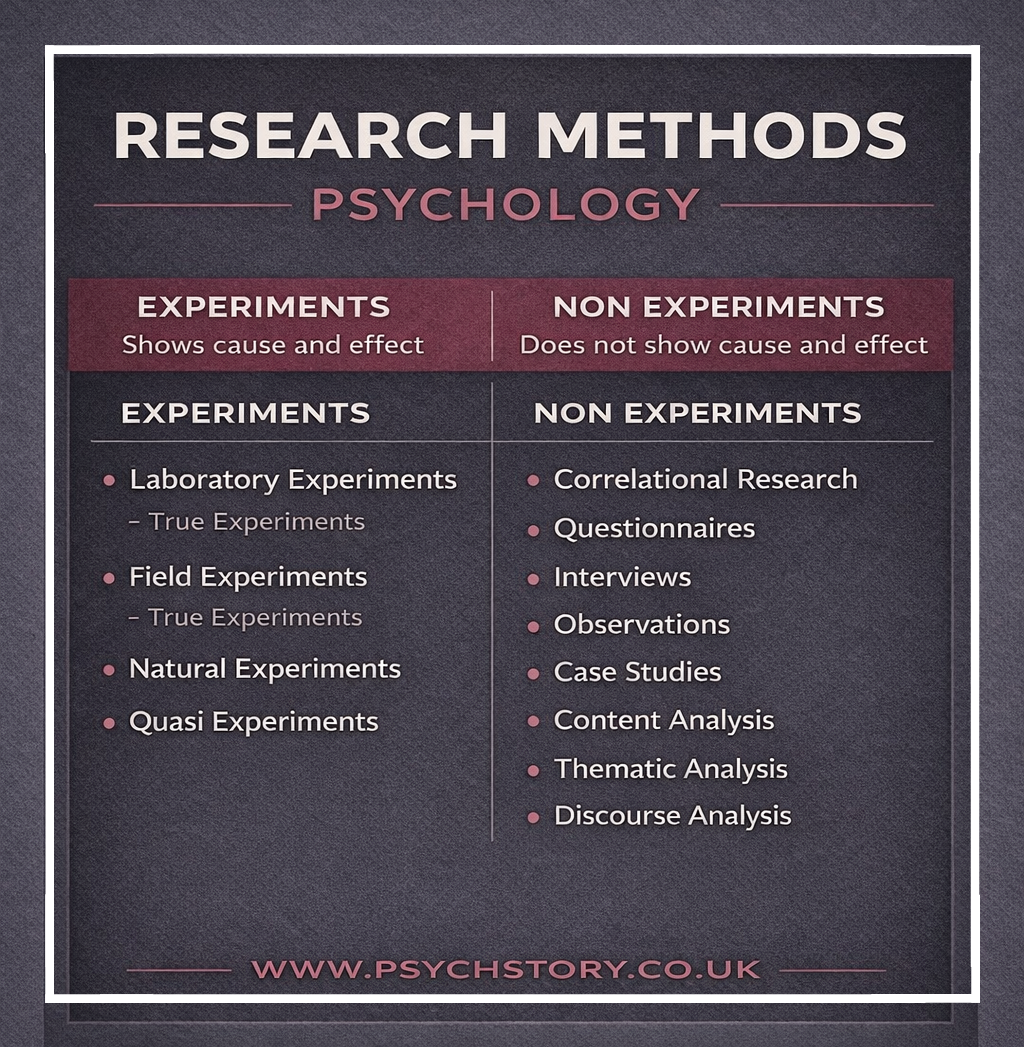
Research is split into two camps: Experimental and non-experimental, but experimentation is the most robust method.
.
NON-EXPERIMENTAL RESEARCH METHODS IN PSYCHOLOGY
This next section is about non-experimental research methods in psychology. These methods are broadly similar to those used across the social sciences and include correlational designs, observations, interviews and surveys, content analysis, other qualitative methods (such as thematic analysis and grounded theory), and case studies.
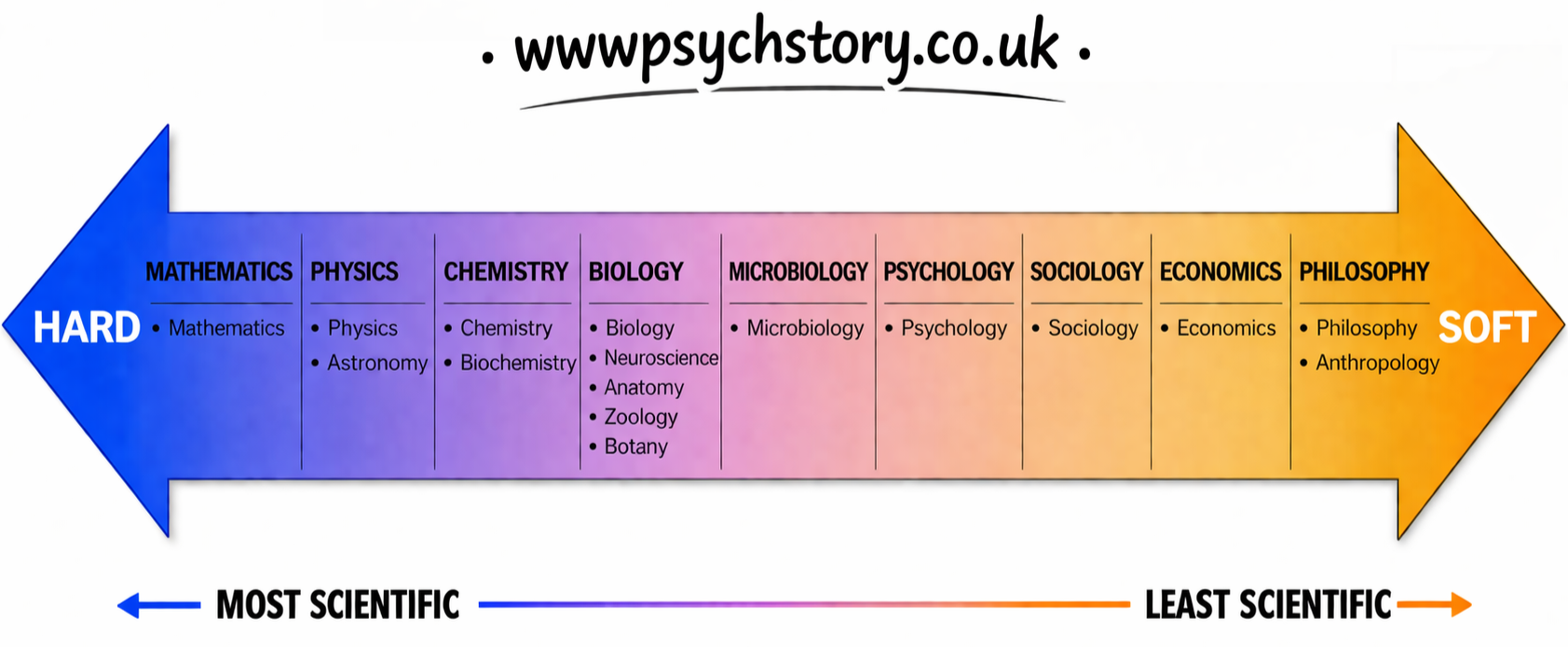
Psychology is a relatively young scientific discipline, emerging as a distinct field only in the late 19th century. For much of its history, non-experimental methods formed the very foundation of psychological inquiry. Unable to directly access the mind, early researchers relied heavily on case studies, early neuropsychological investigations, and post-mortem brain examinations to piece together the workings of what was effectively a black box. Even today, despite major advances in technology such as brain imaging (fMRI, EEG) and genetic analysis, the core problem persists: thoughts, emotions, and conscious experiences cannot be observed directly. Psychologists must therefore rely on indirect measures — behavioural indicators, physiological responses, or individuals’ self-reports gathered through interviews, surveys, and questionnaires — and carefully interpret those accounts.
Moreover, this reliance on indirect measures has a significant limitation. Self-reports and rating scales typically produce only nominal or ordinal data — categories and rankings rather than precise numerical measurements. Consequently, psychologists are forced to study the human mind using data that lacks the mathematical precision possible in the physical sciences. In effect, researchers must convert subjective opinions into numbers that, at best, remain rough approximations of the actual thoughts and experiences they seek to understand. This reliance on indirect evidence is compounded by significant ethical constraints that limit experimental approaches. Many critical research questions involve variables that simply cannot be manipulated without causing harm, such as the long-term effects of trauma, abuse, or extreme deprivation. Researchers cannot ethically expose participants to traumatic events or deliberately recreate the severe developmental conditions seen in historical cases of feral children. As a result, non-experimental methods remain not merely supplementary, but often the only ethically and practically viable way to investigate core aspects of human psychology
THE PROBLEMS WITH NON-EXPERIMENTAL RESEARCH METHODS
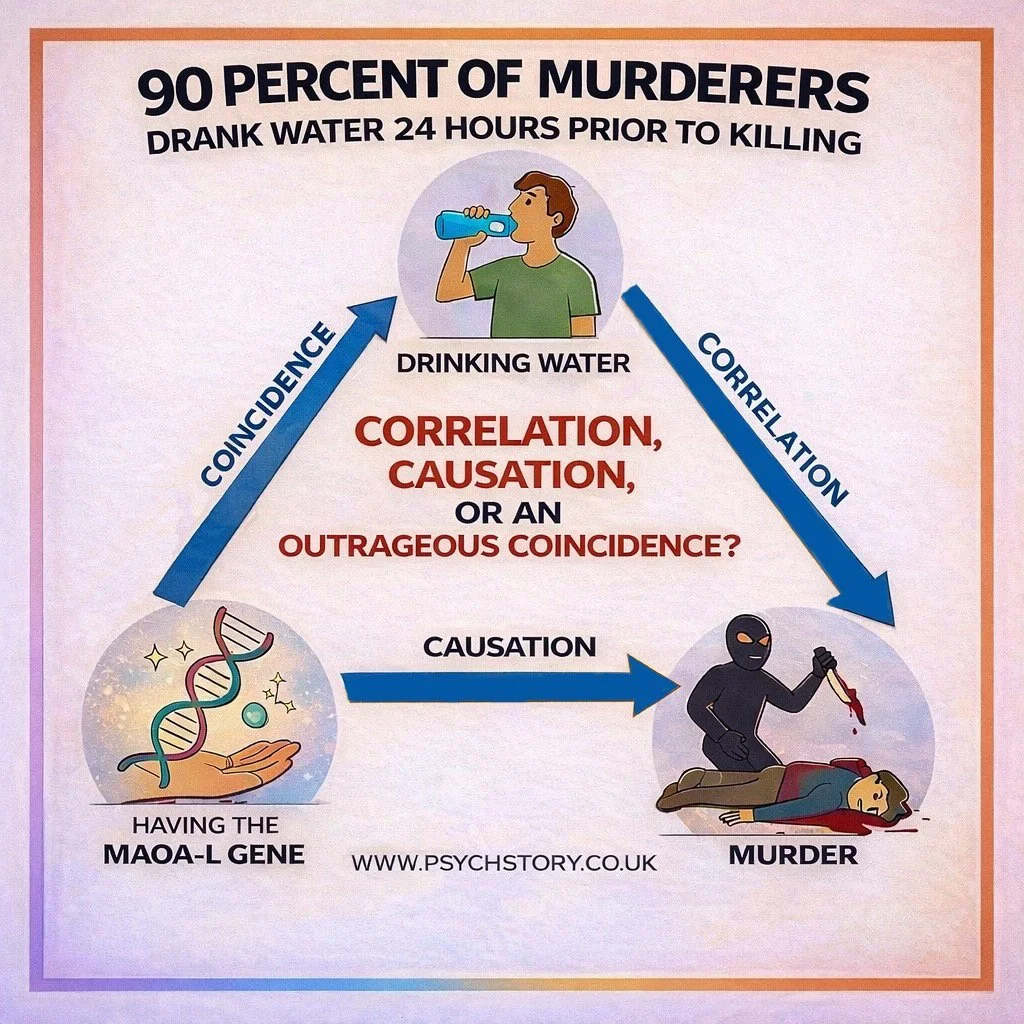
However, this does not remove the central limitation. Non-experimental research does not show cause and effect, the so-called holy grail of science. Without this, findings remain open to interpretation and, at times, vulnerable t o being labelled speculative. Only experiments are explicitly designed to isolate variables in such a way that a claim can be made that X causes Y. On that basis alone, non-experimental research can appear methodologically inferior. The question, therefore, remains valid. If causality cannot be established, what exactly is being achieved? The answer begins with the nature of what psychology is trying to study. Psychology deals with people, and people are not equivalent to the kinds of variables studied in the physical sciences. In those domains, variables are effectively stable and predictable. Carbon is carbon. It does not fluctuate depending on its upbringing, reinterpret its environment, or respond differently based on past experience. It does not have off days. Human beings, by contrast, are defined by precisely those kinds of variations. This creates an immediate and unavoidable complication for establishing causality in psychology. You are never starting with a tabula rasa. Every individual enters a study with a developmental history, a biological profile, learned experiences, cultural influences, personality traits, and a current psychological state that may shift even during the research. Humans are biologically similar at a broad level, yet they are not uniform, interchangeable units. This makes attributing any behaviour to a single cause inherently problematic.
HOW DO YOU UNRAVEL A HUMAN?
Consider, for example, the claim that exposure to violent television causes aggression. On the surface, it appears to be a straightforward causal link. In reality, the behaviour sits within a complex network of interacting variables: individual differences in temperament, prior exposure to violence, family environment, peer influence, cultural norms, and momentary emotional state. The person is not a passive recipient of media; they actively interpret, filter, and respond to it. Contrast this with inanimate matter. Imagine two identical pots of water. One has been kept in a harsh, “abusive” environment; the other in a calm, encouraging one. When both are heated under standard conditions, they boil at exactly 100°C. The prior “treatment” is irrelevant because water is governed by fixed physical properties — it does not internalise experience, reinterpret stimuli, or vary its response. Human behaviour works differently. The same input rarely produces a uniform output because the individual’s internal processing is unique. A real-world illustration makes this concrete. At the same rave, several people are offered cocaine under identical conditions. One feels curious and accepts, later developing long-term dependency. Another accepts due to social pressure but uses it only occasionally. A third refuses immediately and feels irritated. A fourth hesitates, observes others, and declines. These varied responses are not random error or “noise” — they are the expected result of each person’s distinct biology, past experiences, personality, and current state interacting with the same stimulus. This is where the problem for experimental research becomes clear. To demonstrate that X causes Y, alternative explanations must be eliminated. In psychology, those alternative explanations are not external variables that can simply be controlled. They are internal to the participant. Even with random allocation, standardised procedures, and carefully designed controls, it remains uncertain whether the observed effect is due to the manipulated variable alone or to its interaction with pre-existing differences between individuals.
This is not just a general constraint on research. It directly explains the continued use of non-experimental methods. When a variable cannot be ethically manipulated, it cannot be studied experimentally. The only alternative is to study it as it naturally occurs. Non-experimental research, therefore, becomes the only viable methodological option in these cases, not a weaker choice but a necessary one imposed by ethical boundaries. The issue is not simply technical but structural. Human behaviour is not typically the product of a single cause operating in isolation. It is the outcome of interacting systems, often involving feedback loops where behaviour influences the environment and the environment, in turn, influences behaviour. This makes outcomes less predictable and less amenable to the kind of clean, linear cause-and-effect relationships that experiments are designed to detect. In reality, the level of control required to establish definitive causality would involve conditions that cannot realistically be created.
In an ideal scenario, researchers would use identical individuals, raised in identical environments, differing only in the variable of interest. This would allow any observed difference to be attributed with confidence to that variable. In reality, such designs are not feasible. Ethical considerations further restrict what can be manipulated, particularly when variables involve harm, risk, or long-term consequences. Even where manipulation is technically possible, ethical constraints often prevent the level of control required for clean causal inference
THE PROBLEM WITH EXPERIMENTS
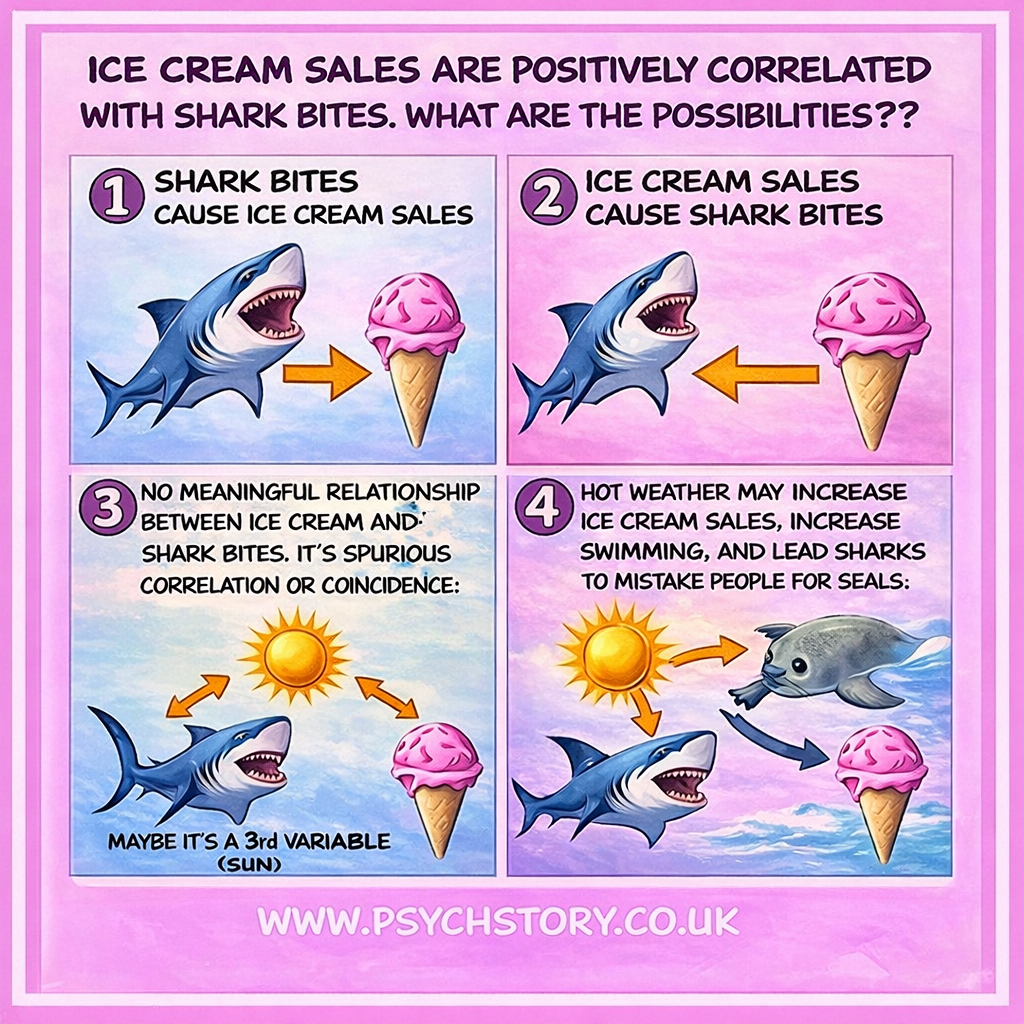
A further issue with non-experimental research lies in the interpretation of relationships between variables. Even when strong correlations are identified, the direction of that relationship remains unclear. This introduces the problem of bidirectionality. For example, while increased social media use may be associated with higher anxiety, it is equally plausible that individuals with higher baseline anxiety are more likely to engage in excessive social media use. Without manipulation, there is no clear method for disentangling cause from effect. This creates interpretive ambiguity rather than a definitive explanation.
In addition to bidirectionality, non-experimental research is also vulnerable to third variable problems. A third variable is an unmeasured factor that influences both variables under investigation, creating the illusion of a direct relationship. For instance, a correlation between ice cream sales and crime rates may appear meaningful, but both are influenced by a third variable, such as temperature. In psychological research, these third variables are often complex and difficult to identify, including socioeconomic status, early childhood experiences, and genetic predispositions. This further complicates the interpretation of findings.
However, this limitation can also be reframed as a strength. Non-experimental methods often have higher ecological validity than tightly controlled experiments. Because behaviour is studied in natural contexts, the findings may better reflect real-world functioning. Observational studies, case studies, and qualitative research capture the richness and complexity of human experience in a way that controlled laboratory experiments often cannot. This makes them particularly valuable for generating hypotheses and identifying patterns that can later be tested under more controlled conditions.
Non-experimental research also plays a critical role in the early stages of scientific investigation. Before variables can be isolated and tested experimentally, they must first be identified. Correlational studies, case studies, and qualitative analyses often serve as the starting point for this process. They highlight potential relationships, generate theoretical frameworks, and provide the descriptive groundwork for experimental research. In this sense, non-experimental methods are not secondary to experimental designs but foundational to the development of psychological knowledge.
Finally, it is important to recognise that causality itself may not always be the most appropriate goal. In complex systems such as human behaviour, explanation may lie in understanding patterns, probabilities, and interactions rather than identifying a single causal pathway. Non-experimental research is well-suited to this task. It allows psychologists to map relationships, explore meaning, and examine how multiple factors converge to shape behaviour. Rather than viewing the absence of causality as a failure, it can be understood as a reflection of the complexity of the subject matter
SUMMARY OF NON-EXPERIMENTAL RESEARCH METHODS AND THEIR ADVANTAGES
Non-experimental research methods form a core part of psychological investigation because they allow researchers to study behaviour as it naturally occurs, without manipulation of variables. These methods include correlations, observations, interviews, questionnaires, content analysis, qualitative approaches such as thematic analysis, and case studies. They are essential in a discipline where the subject matter cannot be directly observed and where ethical constraints often prevent experimental manipulation. Rather than establishing cause and effect, these methods identify patterns, relationships, and meanings within complex human behaviour.
A key advantage of non-experimental methods is their real-world relevance. Behaviour is studied in natural contexts rather than in artificial laboratory settings, thereby increasing ecological validity. This allows findings to reflect the complexity of everyday life, where multiple variables interact simultaneously rather than in isolation. As a result, conclusions drawn from non-experimental research are often more applicable to real-world situations.
Non-experimental methods are also necessary when practical constraints make experimentation impossible. Many psychological variables cannot be recreated or controlled in a laboratory environment due to their scale, unpredictability, or ethical implications. For example, long-term developmental influences, cultural effects, or traumatic experiences cannot be manipulated experimentally. In such cases, non-experimental approaches provide the only viable method of investigation.
These methods are particularly valuable in the early stages of research. They allow psychologists to explore new areas, identify patterns, and generate hypotheses before more controlled testing is possible. Correlational findings and qualitative insights often guide the direction of future experimental work, making non-experimental research foundational rather than secondary.
Non-experimental approaches are also uniquely suited to the study of rare or unusual cases. Case studies, such as that of patient HM, provide detailed insight into phenomena that cannot be replicated or ethically induced. These cases often contribute significantly to theoretical development by revealing mechanisms that would otherwise remain inaccessible.
Finally, non-experimental methods enable longitudinal research, where individuals are studied over extended periods of time. This allows psychologists to track developmental changes, ageing processes, and long-term behavioural patterns. Such research would be difficult or impossible to conduct experimentally, but is essential for understanding how behaviour unfolds across the lifespan.
Overall, while non-experimental methods do not establish causality, they are indispensable for studying complex, ethically sensitive, and real-world aspects of human behaviour.