
EXPLANATIONS FOR OBEDIENCE: AGENTIC STATE AND LEGITIMACY OF AUTHORITY
SPECIFICATION WARNING: MILGRAM AND OBEDIENCE (AQA)
The specification states: “Explanations for obedience: agentic state and legitimacy of authority, and situational variables affecting obedience, including proximity and location, as investigated by Milgram, and uniform.”
This is not one demand. It is two separate questions, and students consistently fail to separate them.
Firstly, “Explanations for obedience: agentic state and legitimacy of authority” refers to Milgram’s theory. This is AO1, focused on explanation. The task is to explain how obedience occurs, which means outlining the agentic state, the agentic shift, and legitimate authority. It does not mean describing Milgram’s original study. Students repeatedly default to outlining the procedure because it is familiar, but this does not answer the question. The theory explains obedience; the study does not replace the theory. The original study can be used, but only as AO3, for example, to support whether the theory is valid.
Secondly, “situational variables affecting obedience, including proximity and location, as investigated by Milgram, and uniform” refers to the variations. This is also AO1, but of a different type. The focus is on how obedience changes when specific situational factors are manipulated. You must describe the variations and, crucially, what each one demonstrates about obedience. The emphasis is on identifying which factors increase or decrease obedience. Again, students make the same error and describe the original study instead of the variations, which does not meet the question's demand.
The specification also creates confusion in how it separates concepts. “Uniform” is presented as a distinct factor, but it is simply one way of signalling legitimate authority. It is not a separate mechanism. Likewise, proximity and buffering are treated as different ideas, but both operate through empathy. Reduced proximity, or increased buffering, lowers empathic engagement and makes obedience easier. Increased proximity does the opposite.
Please note that many of the evaluative points fromMilgram’s original study apply to his variations. For example, his variations were gender and culturally biased and lacked validity.
MILGRAM’S OBEDIENCE STUDY: EXPERIMENT OR CONTROLLED OBSERVATION?
Milgram’s obedience study is commonly referred to as a laboratory experiment in textbooks. However, it is not a true experiment. In a genuine experiment, the researcher manipulates an independent variable so that participants in different conditions perform different tasks. In Milgram’s study, every real participant performed exactly the same task throughout — acting as the teacher, asking questions, and administering what they believed were electric shocks when instructed to continue. There was no independent variable in the experimental sense.
Instead, Milgram’s study is best classified as a structured, controlled observation, just like Ainsworth’s Strange Situation and Asch’s conformity study. It was conducted under highly controlled laboratory conditions with a standardised procedure and scripted prods from the authority figure. This tight control over extraneous variables meant that any changes in participants’ behaviour were likely due to the pressure from the authority figure rather than other uncontrolled factors.
The fact that Milgram conducted several variations (such as varying levels of proximity between the teacher and the learner) does not make it a true experiment. These variations simply represent different levels of the same observed situation, exactly as the different variations in Asch’s study and the different episodes in the Strange Situation did not create independent variables

EVERYDAY OBEDIENCE OR OBEYING PATHOLOGICAL REQUESTS?
Finally, Milgram was not investigating everyday, low-level obedience such as following routine instructions from teachers or authority figures in benign contexts. His work was explicitly concerned with destructive obedience: the conditions under which ordinary individuals are prepared to carry out actions that violate their moral code and cause harm to others. The historical context is critical. Milgram was attempting to understand how seemingly normal people participated in the atrocities of the Holocaust, not why people comply with harmless requests in daily life.
Without this context, the theory is stripped of its meaning and reduced to a superficial account of obedience. The central issue is not whether people obey, but why they obey unjust and harmful orders, even when those orders conflict with their conscience. This is why concepts such as moral strain, the agentic shift, and binding factors are necessary. They explain how individuals resolve the conflict between personal morality and authority, and how responsibility is displaced. Ignoring this focus leads to a fundamental misinterpretation of both Milgram’s theory and the purpose of his research.
EXPLANATIONS FOR OBEDIENCE: THE AGENTIC STATE AND LEGITIMACY OF AUTHORITY
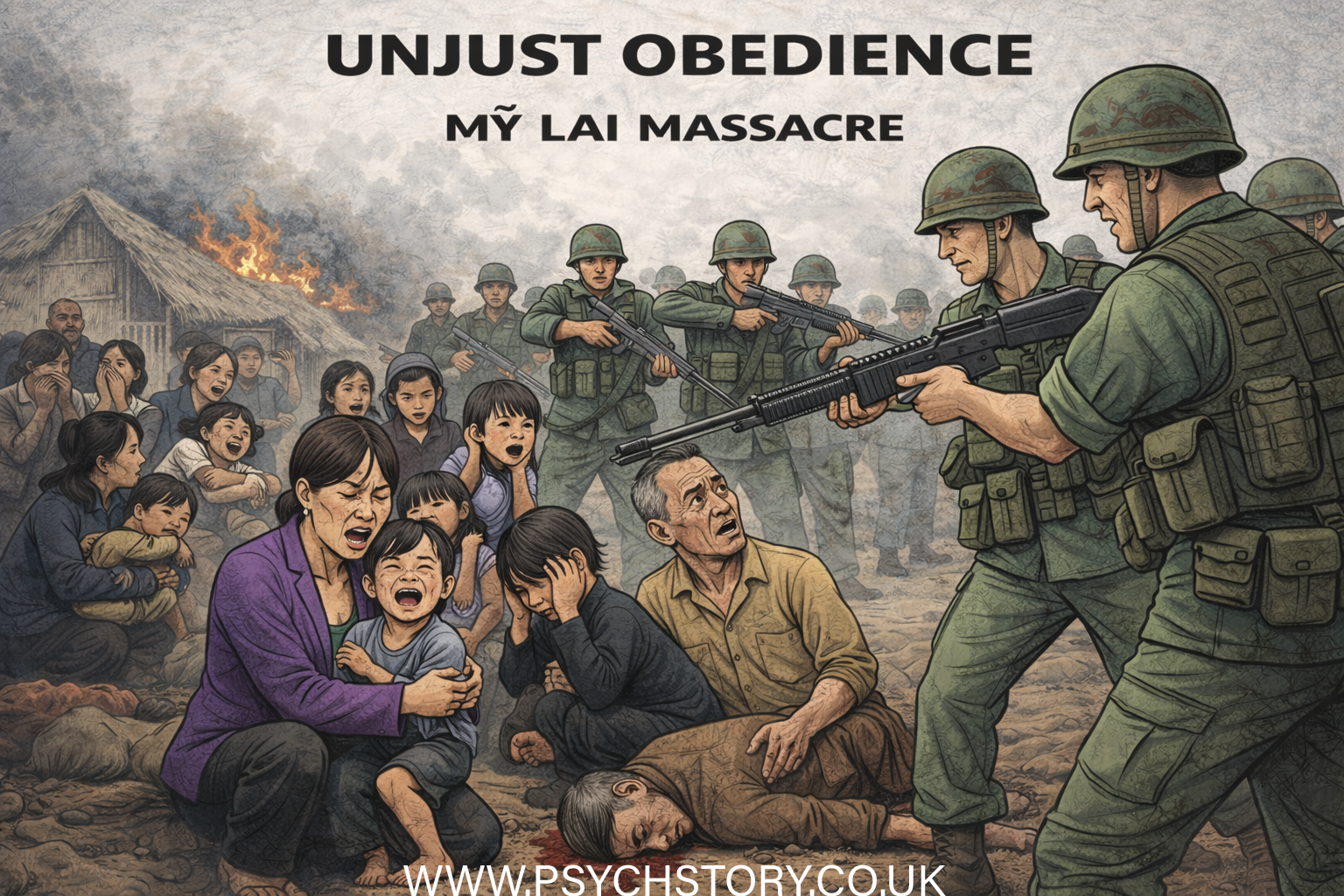
MY LAI MASSACRE (1969)

Paul Meadlo was a US Army soldier who participated in the mass killing of civilians at My Lai in March 1968. A Private First Class Meadlo from Goshen in rural Indiana, Meadlo was a member of 1st Platoon Company C under Lieutenant William Calley. Two days after the My Lai Massacre, Meadlo lost a foot after stepping on a landmine; he had been following Calley’s orders to move quickly through an area known to be mined.
In November 1969, a few weeks after Calley had been charged with murder, a film crew from television network CBS visited Goshen and interviewed Meadlo and members of his family.


BACKGROUND TO THE AGENTIC STATE

ADOLF EICHMANN
During the Nuremberg trials, Nazis perpetrators blamed their crimes on their superiors, they maintained that as military soldiers, they are trained not to question authority and therefore not personally responsible for the actions they took. Indeed in the early 1960s, former-Nazi Adolf Eichmann was put on trial in Jerusalem for war crimes. Eichmann had been one of the main organisers of the Holocaust but, in his trial, he said he was “only following orders.” Eichmann was executed for his crimes against humanity, but critics supposed this tendency towards blind obedience was part of the German national character.
But Yale University psychology professor Stanley Milgram rejected dispositional (personality) explanations as he felt that the dispositional theories were rather simplistic, mainly because psychopathy is statistically rare and can’t account for the large number of Nazis that were willing to commit genocide. Others disagreed, arguing that everyone has blind obedience. Milgram was very interested in the idea that situational factors, that is, factors in the environment, could have a profound influence on behaviours such as obedience to an unjust command, which ultimately resulted in genocide.
STANLEY MILGRAM’S AGENCY THEORY
Milgram developed Agency Theory in the first place to answer the question, “Why did decent German citizens obey orders from Nazi rulers to commit genocide?” He also addressed related questions: “Could something like that happen anywhere?” “Could obedience to an unjust command be due to situational factors?”
STANLEY MILGRAM

AGENCY THEORY: AUTONOMOUS AND AGENTIC STATES
A core element of Milgram’s agency theory is that individuals can operate in two distinct psychological states. The autonomous state refers to behaviour that is self-directed. The individual acts according to their own values and accepts personal responsibility for the consequences of their actions. Decisions are internally regulated, and moral judgment remains intact. The agentic state occurs when an individual relinquishes personal control and acts as an agent for a legitimate authority figure. Behaviour is no longer guided by personal conscience, but by the perceived demands of the authority. Responsibility is not denied outright, but displaced.
THE AGENTIC SHIFT
Milgram described the transition between these states as the agentic shift. This is the psychological process by which an individual moves from autonomous functioning into an agentic role. During this shift, the individual redefines their position in the social hierarchy. They no longer see themselves as the originator of their actions, but as carrying out the wishes of someone with legitimate authority. Responsibility is transferred upwards, reducing personal accountability. The presence of a legitimate authority issuing direct orders is the key trigger for this shift. Once in the agentic state, obedience becomes more likely because the individual no longer experiences themselves as fully responsible for the outcomes of their behaviour.
MORAL STRAIN
Moral strain refers to the acute psychological tension that arises when an individual is required to act in a way that conflicts with their internal moral standards. In Milgram’s framework, this tension emerges from a direct clash between two competing systems: obedience to authority and adherence to personal conscience. This is not a mild discomfort but a measurable state of stress, often expressed through physiological and behavioural indicators such as trembling, sweating, stuttering, nervous laughter, or visible distress. Milgram’s observations showed that participants did not act as indifferent agents. Many showed clear signs of internal conflict, indicating that obedience was not effortless but achieved through the suppression or reorganisation of moral responsibility. This is where the concept of defence mechanisms becomes relevant. Participants displaced responsibility onto the authority figure, reducing personal accountability. This psychological manoeuvre allows individuals to maintain a self-concept of being moral while engaging in harmful behaviour.
Applied to real-world contexts such as the Holocaust, moral strain provides a mechanism for understanding how ordinary individuals could participate in atrocities. The argument is not that perpetrators lacked moral awareness, but that this awareness was overridden or managed through the agentic shift. By construing themselves as instruments of authority rather than autonomous agents, individuals could reduce the psychological burden of their actions
BINDING FACTORS
Binding factors are situational conditions that both initiate and sustain obedience. They increase the likelihood that an individual will enter the agentic state and make it progressively harder to exit once obedience has begun. Their function is not simply to trigger compliance, but to stabilise it. They reduce psychological resistance, minimise perceived alternatives, and limit the individual’s capacity to disengage.
Stanley Milgram identified these factors as mechanisms that “bind” the individual into a course of action. Once a person has begun obeying, these factors operate cumulatively, narrowing the psychological space in which refusal feels possible.
Binding factors work by restructuring how the situation is perceived. Responsibility is displaced onto the authority figure, the consequences of actions are obscured or distanced, and the individual becomes embedded in a structured sequence of behaviour that feels difficult to interrupt. This creates a form of behavioural inertia. Each act of obedience increases the pressure to continue, both externally from the authority and internally through the need for consistency.
Examples of binding factors include :
Legitimate authority (uniforms, badges, official ID, reputation, stamps, seals, etc)
Buffers (proximity)
Gradual commitment
Socialisation to obedience
LEGITIMATE AUTHORITY
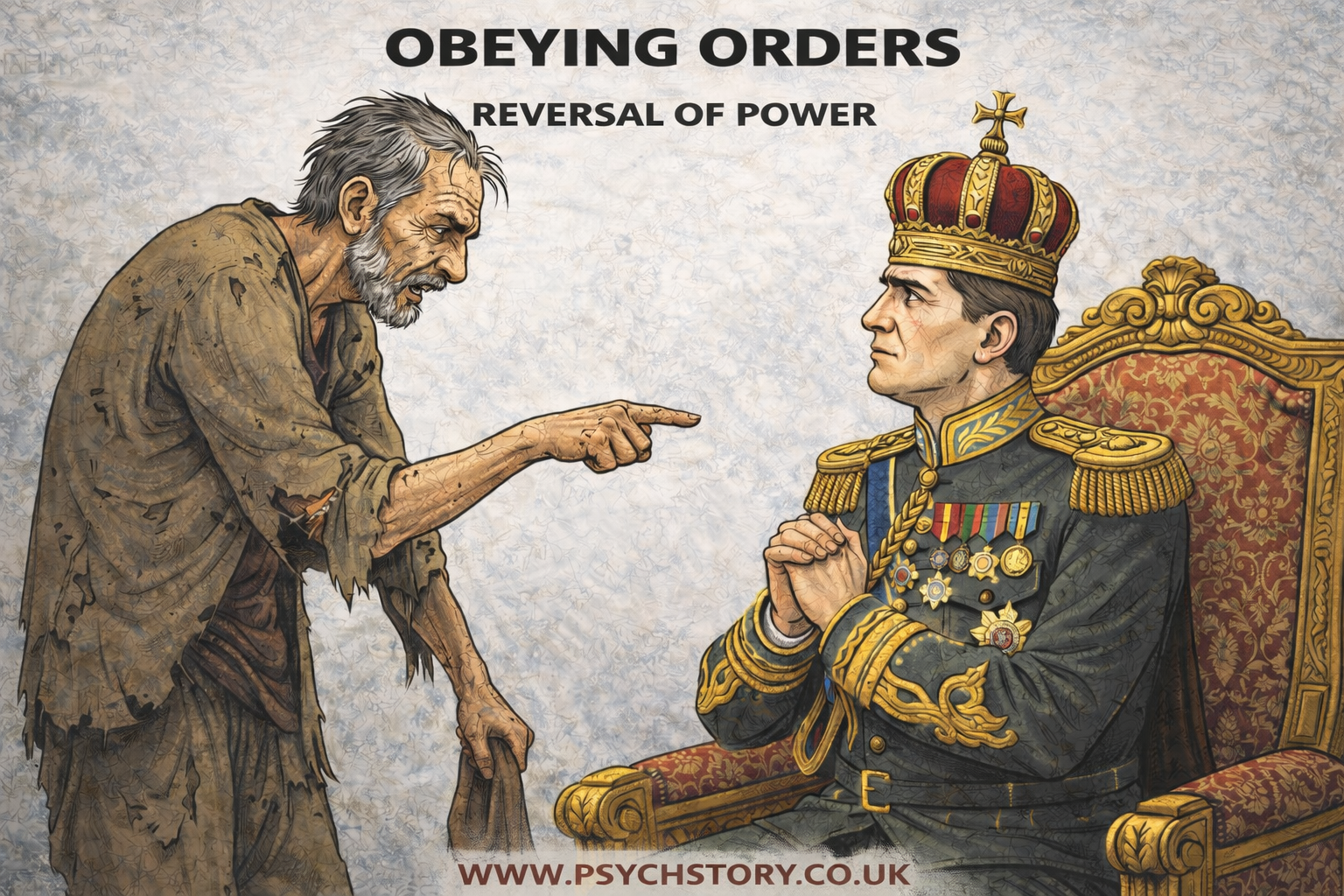
Legitimate authority refers to the recognised right of an individual or institution to give orders, combined with the expectation that those orders should be obeyed. This legitimacy is not inherent in the person themselves but is granted by society. It is communicated through cues such as role, status, and institutional backing. A doctor, police officer, teacher, or military officer is obeyed not simply because of who they are as individuals, but because they occupy a socially validated position of authority.
Stanley Milgram argued that people enter an agentic state when they perceive authority as legitimate. In this state, responsibility is displaced onto the authority figure, making obedience more likely even when the आदेश conflicts with personal conscience. Leonard Bickman provided supporting evidence. Participants were significantly more likely to obey a man dressed as a security guard than the same man in ordinary clothes. This demonstrates that obedience is driven by perceived legitimacy rather than the instruction itself. Legitimacy also applies to institutions. Orders issued within structured systems such as governments, the military, or medical organisations are more likely to be followed because they are embedded within a recognised hierarchy of authority.
AQA SPECIFICATION NOTE
The AQA specification refers to “uniform” as a factor affecting obedience. This is a simplification. Uniforms are not a separate explanation; they are one of the signals of legitimate authority. The underlying mechanism remains the same. People obey because they perceive the authority as valid, and the uniform is simply one of the cues that communicates that legitimacy.
PEOPLE ARE SOCIALISED TO BE OBEDIENT
Obedience is not spontaneous; it is the product of prolonged social conditioning. From early childhood, individuals are systematically taught to comply with authority figures. Parents, teachers, and institutional structures reinforce obedience through reward and punishment mechanisms. Operant conditioning plays a central role. Compliance is rewarded with approval, safety, or privileges, while disobedience is punished through reprimand or social exclusion. Over time, this conditioning becomes internalised, forming a default behavioural response. By adulthood, obedience is not typically experienced as external coercion but as a normative expectation. This explains why individuals often comply automatically in hierarchical situations without explicit reflection. Milgram’s argument is that this lifelong conditioning creates a predisposition towards obedience that can be activated in structured authority contexts.
GRADUAL COMMITMENT
Gradual commitment refers to the process by which individuals become incrementally involved in increasingly serious actions, making withdrawal progressively more difficult. Each step establishes a behavioural and psychological precedent, increasing the likelihood of further compliance. What begins as a minor, seemingly inconsequential action can, through repetition and escalation, culminate in behaviour that would have been rejected outright at the outset.
In Milgram’s procedure, the escalation from 15 volts to 450 volts exemplifies this mechanism. Participants were not instructed to administer a single extreme shock; instead, they progressed through a structured sequence of small, successive increases. Each decision required only a marginal extension of prior behaviour, but collectively resulted in actions that conflicted sharply with personal conscience.
This process aligns with the “foot in the door” phenomenon. Once an individual has complied with an initial request, there is a tendency to maintain behavioural consistency. To refuse a later request would require acknowledging that earlier compliance was unjustified, which threatens self-perception. Continued obedience, therefore, functions to preserve a coherent self-image.
The mechanism extends beyond laboratory contexts. In gang recruitment, new members are often initially required to commit minor, low-risk offences, such as vandalism or small-scale theft. These acts serve to normalise deviance and establish commitment. Over time, expectations escalate to more serious crimes, with each stage building on prior compliance.
A similar pattern can be observed in large-scale historical events. In Nazi Germany, persecution of Jewish populations did not begin with extermination. It progressed through incremental stages: social and legal exclusion, identification through compulsory symbols such as the Star of David, restrictions on movement and employment, confiscation of property, forced relocation into ghettos, and ultimately deportation to concentration and extermination camps. Each stage was framed as administratively justified within the system, allowing individuals to participate in isolated steps without confronting the full trajectory of the process. By the time the most extreme actions were reached, the cumulative effect of prior compliance made disengagement both psychologically and structurally difficult.
Gradual commitment, therefore, demonstrates how ordinary individuals can become involved in increasingly harmful actions without a single decisive shift. Instead, behaviour evolves through a series of small, connected steps, each of which appears manageable in isolation but collectively produces significant moral consequences
THE PRESENCE OF ‘BUFFERS’
Buffers reduce the emotional impact of harmful actions by increasing psychological or physical distance from the consequences. They function by limiting direct exposure to the victim, thereby reducing empathic engagement. In essence, buffers operate through reduced proximity, and reduced proximity weakens empathy. The further removed an individual is from the immediate effects of their actions, the easier it becomes to carry them out.
In Milgram’s variations, obedience was highest when the learner was neither seen nor clearly heard, and lowest when participants were required to place the learner’s hand onto a shock plate. This demonstrates that proximity intensifies moral awareness. When the consequences of an action are immediate and visible, empathy is activated and resistance increases. When those consequences are obscured or abstracted, disengagement becomes more likely.
The concept extends beyond the laboratory. In warfare, buffers are deliberately engineered. Pilots dropping bombs operate at a physical and psychological distance from their targets. In the case of Hiroshima and Nagasaki, those involved in delivering the bombs were not confronted with the human consequences in any immediate or sensory way. The victims were reduced to coordinates, targets, or mission objectives. This abstraction removes the direct empathic response that would arise from face-to-face harm.
Similarly, modern military practices such as drone strikes further amplify buffering. Operators may be thousands of miles away, interacting with screens rather than people. The act is mediated through technology, creating a layer of detachment that reduces emotional impact.
Bureaucratic systems also function as buffers. Large-scale harmful outcomes are often the product of fragmented roles, where each individual performs a small, seemingly neutral task. No single person experiences the full consequence, which diffuses responsibility and weakens moral resistance. This was evident in historical atrocities in which administrative roles, transport logistics, and enforcement were separated, preventing individuals from directly confronting the consequences of their actions.
Everyday examples follow the same principle. Purchasing pre-packaged meat removes the sensory and emotional reality of killing an animal. Industrial processes conceal the act itself, allowing consumption without direct moral engagement.
The underlying mechanism is consistent. Reduced proximity leads to reduced empathy, and reduced empathy facilitates obedience. While the specification identifies buffers, it is this relationship between distance, empathy, and moral disengagement that explains their psychological power.
RESEARCH SUPPORT FOR MILGRAM’S AGENCY THEORY
PROXIMITY BUFFERS AND EMPATHY
Please note that the specification asks for a discussion of uniform, but the uniform is really just “LEGITIMACY OF AUTHORITY”
So you can use the L. Bickman (1974) study on the power of uniforms, or any of Milgram’s variations above in which the legitimacy of authority has been removed, e.g., moving the offices to Bridport or removing the experimenter from the room and giving instructions by phone.
BICKMAN (19974)
BICKMAN showed that uniform acts as a symbol of authority, as participants were more likely to obey a guard than an ordinary civilian. The degree and basis of the social power of uniformed figures were investigated in two field experiments. In the first experiment, subjects were stopped in the street by an experimenter dressed in one of three ways: a civilian, a milkman, or a guard. They were asked to pick up a paper bag, give a dime to a stranger, or move away from a bus stop. The results indicated that the subjects complied more with the guard than with the civilian or milkman. In the second field experiment, designed to examine the basis of the guard's power, subjects were asked to give a dime to a stranger under conditions of either surveillance or non-surveillance. The guard's power was not affected by the surveillance manipulation. A logical analysis of social power indicated that the guard's power was most likely based on legitimacy. This supports the idea that legitimate authority affects obedience, as there were drops in obedience levels. However, two questionnaire studies indicated that college students did not perceive the guard as having either more. power or more legitimacy than the milkman or civilian.
LEGITIMACY OF THE AUTHORITY FIGURE RESEARCH
This was supported by Milgram’s research. He showed that levels of obedience fell when he removed the legitimate authority figure by dressing the experimenter more casually, removing his white coat. In another variation, the observation was moved from the prestigious Ivy League university to a seedy office in a run-down city. The results showed that the participants in the Bridgeport study were less likely to obey because they did not see the researchers as qualified. Moreover, in another variation of Milgram’s experiment, teachers were given orders by telephone, thereby reducing the perceived authority figure's presence and lowering levels of obedience.
EVALUATION OF MILGRAM’S AGENCY THEORY
Many social psychologists still use Agency Theory to explain atrocities from the Holocaust to the Vietnam War’s My Lai massacre to the abuse of prisoners at Abu Ghraib. But David Mandel feels that using situational explanations as an excuse for evil behaviour is offensive to Holocaust survivors, as it mitigates the role of racism and, in doing so, removes the ability for societies to better understand the mechanisms behind genocide and xenophobia.
INTERNAL VALIDITY: RESISTING OBEDIENCE
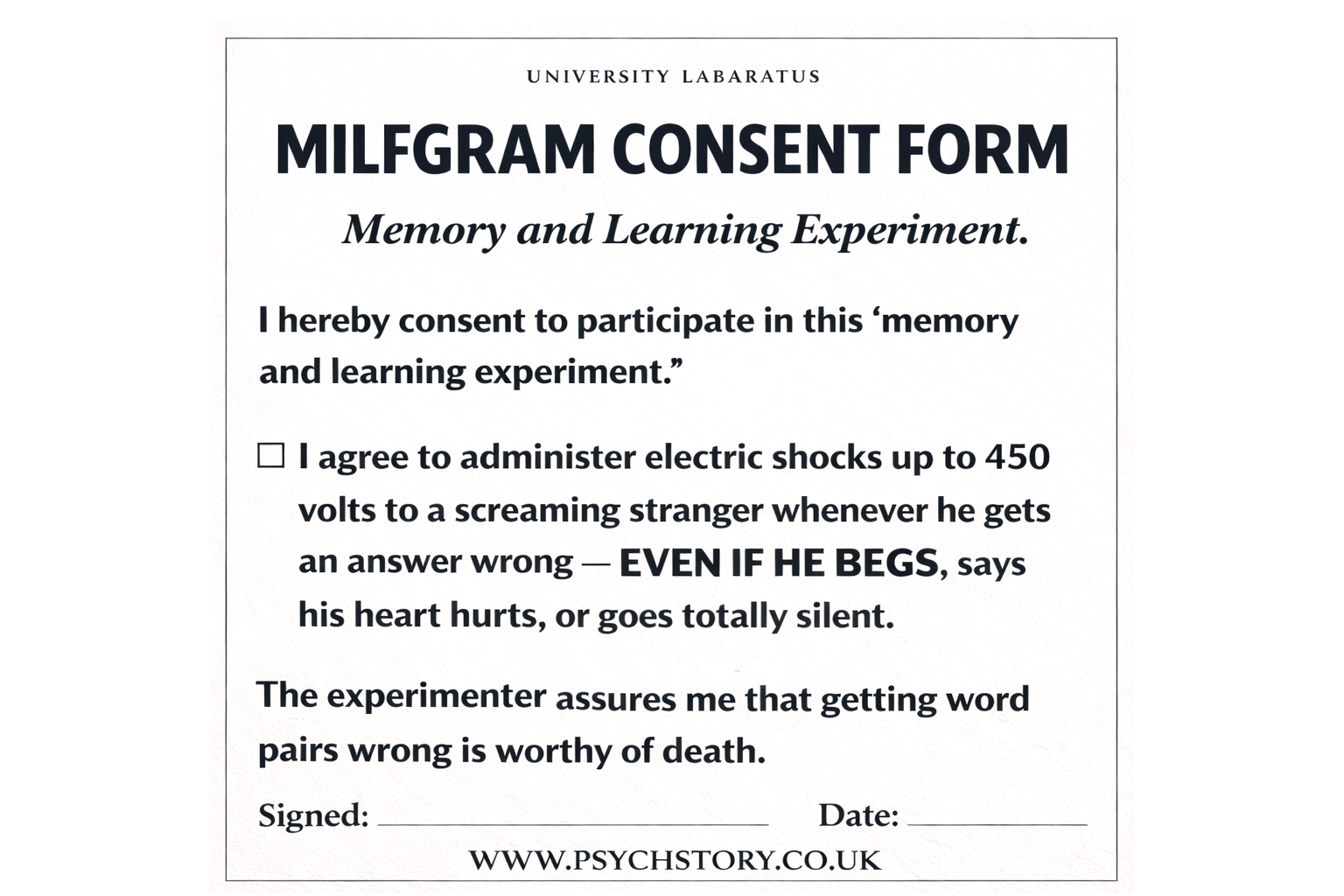
“Until they emerged from the lab, the participants didn’t know that the shocks weren’t real, that the cries of pain were pre-recorded, and that the learner—railroad auditor Jim McDonough—was in on the whole thing, sitting alive and unharmed in the next room. They were also unaware that they had just been used to prove the claim that would soon make Milgram famous: that ordinary people. “All ethics were broken: deceiving participants, causing psychological/physical harm, and providing no informed consent. “
After analysing the conversation patterns from audio recordings of 117 study participants, Hollander found that Milgram’s original classification of his subjects—either obedient or disobedient—failed to capture the true dynamics of the situation. Rather, he argued, people in both categories tried several different forms of protest—those who successfully ended the observation early were simply better at resisting than those who continued shocking.
“Participants said things like ‘I can’t do this anymore’ or ‘I’m not going to do this anymore,’” he said, even those who went all the way to 450 volts. “I understand those practices to be a way of trying to stop the observation in a relatively aggressive, direct, and explicit way.”It’s a far cry from Milgram’s idea that the capacity for evil lies dormant in everyone, ready to be awakened with the right set of circumstances. The ability to disobey toxic orders, Hollander said, is a skill that can be taught like any other—all a person needs to learn is what to say and how to say it.
DEMAND CHARACTERISTICS IN MILGRAM’S STUDY
Moreover, Milgram’s research has serious issues with internal validity, as many researchers believe his participants were not behaving authentically.
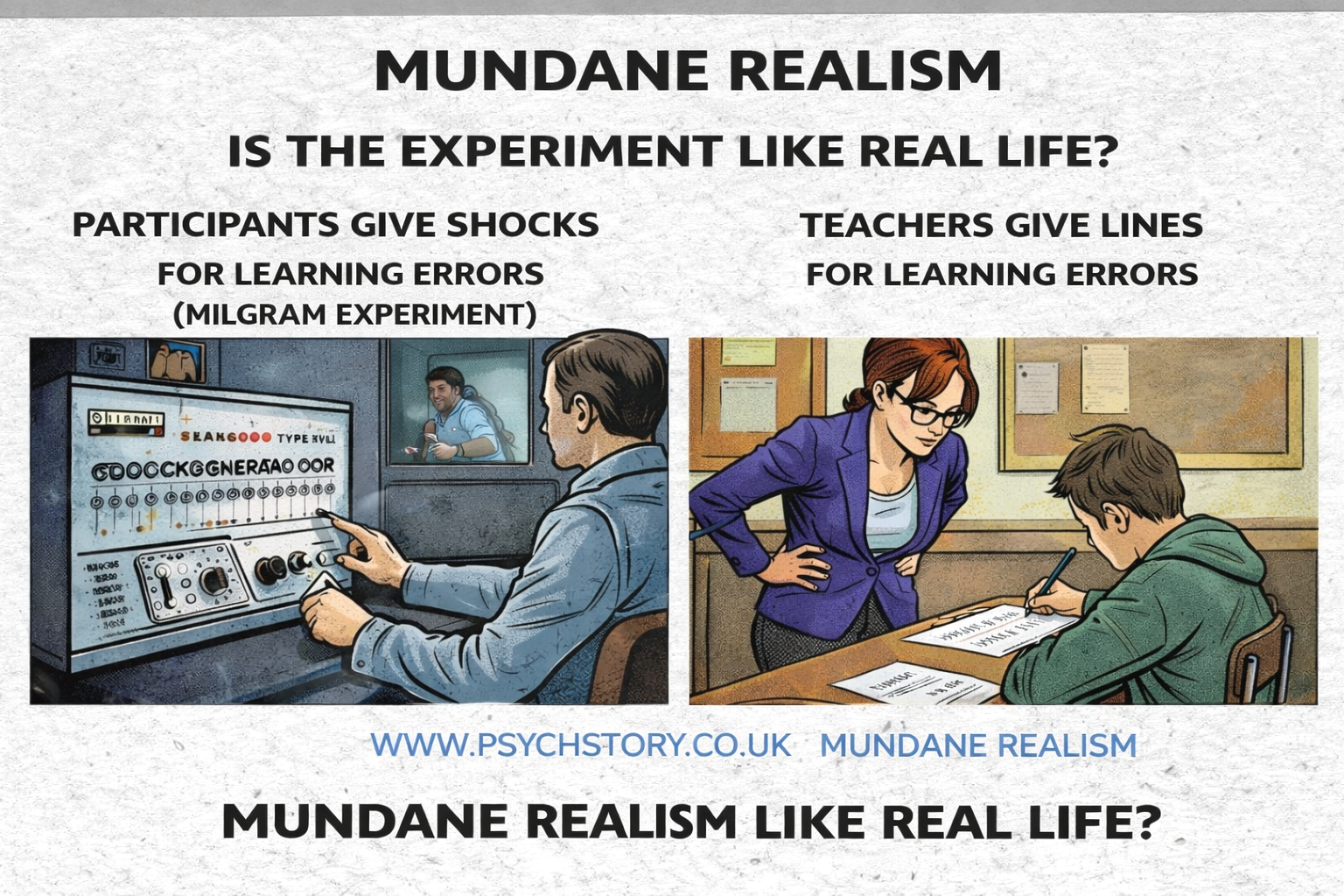
Orne and Holland found the notion that Milgram’s participants believed they could legally execute a member of the public for no apparent, meaningful reason ridiculous. Whichever way you view it (manslaughter, murder, grievous bodily harm), participants were being asked to commit, arguably, the worst social taboo for a crass learning theory that had little social benefit – and “to top it off”, they were in one of the world’s most prestigious universities where being inconspicuous was out of the question. Moreover, the participants’ disbelief would have been further confounded by the presence of the “experimenter”. Why didn’t he throw the switches himself? The logical conclusion formed by many of the participants would have been that the role of the teacher was unnecessary, and they may have then wondered why they were there, say many critics of Milgram.
Orne and Holland believed that you couldn’t defy the logic of the ordinary man in this way. Moreover, many participants are quite aware of the research restraints imposed by law, e.g., no physical harm. They concluded that the participants must have played along with Milgram to please him (demand characteristics). Therefore, they didn’t obey an unjust command, and the results are meaningless and lack internal validity. The authors also cite hypnosis research showing that people can't be compelled to actually harm others if it's really clear that the victims will be injured
Indeed, records of Milgram’s research came to light after his death and revealed that many of his participants were aware of the aims of his study. This means that if the study lacked validity, it cannot be used to support Milgram’s theory. One silver lining of Milgram is that it can inoculate people against such drone-like behaviour. It can help people to resist. Simply knowing how far we can be manipulated helps allow individuals to say, "No”. The counterargument is that the ability to resist obedience to unjust authority also depends on the severity of the sanction for disobeying an order. In Nazi Germany, for instance, protecting Jewish people could have devastating consequences for a person, whereas people constantly park on single yellow lanes because the punishment is trivial. It may be, therefore, that agency theory is only relevant to understanding why people obey “just orders” or “unjust orders” with catastrophic consequences.
EXTERNAL VALIDITY ISSUES IN MILGRAM’S STUDY
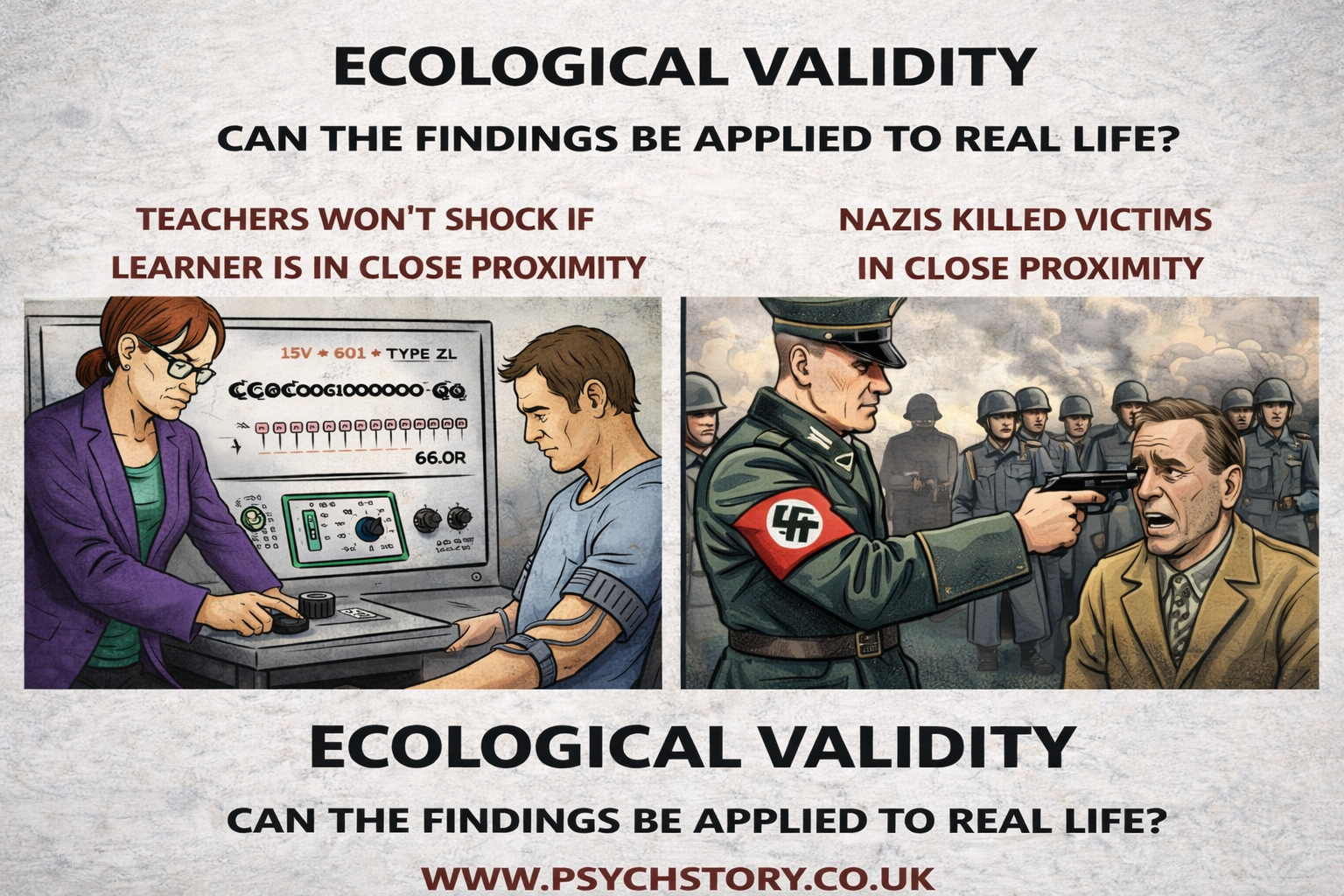
ECOLOGICAL VALIDITY IN MILGRAM’S STUDY
David Mandel criticised Milgram’s research for lacking external validity because he said real soldiers in the SS had not displayed the same behaviours as Milgram’s participants had in the variations. In other words, the Nazis still killed Jews despite being in close proximity or without supervision, and some even went on killing sprees of their own volition. Mandel believes this is evidence that the agentic state did not exist. Nazis didn’t need to be given orders to kill, so they must have been operating from an autonomous state.
POPULATION VALIDITY IN MILGRAM’S STUDY: THE PARTICIPANTS WERE NOT SADISTS, BUT MAYBE THE SS WERE
Milgram’s participants were not sadists nor in a sadistic frenzy when they shocked the learner, nor hate-mongers, and they often exhibited great anguish and conflict in the observation by showing signs of serious distress and anxiety, such as nervous laughing fits. Some even had seizures. These were not willing accomplices, but participants were essentially forced to act a certain way. This is the complete opposite of the designers and executioners in the Final Solution, who had a clear "goal" set beforehand.
MORAL STRAIN IN MILGRAM’S STUDY
Many participants tried not to look at the experimenter or even look up from the shock generator; according to Milgram, this is evidence of moral strain. In Milgram’s observational studies, moral strain was shown among participants who obeyed (weeping, groaning, shaking, fainting), not among those who disobeyed. Milgram’s theory suggests that the Agentic State is an escape from moral strain, but this is not what is observed in his studies; if participants were in the agentic state, they would not have shown moral strain. Moreover, Interviews with veterans reveal that the majority do feel guilty about atrocities committed in combat, which is why so many suffer from PTSD. For example, Paul Meadlo, a US Army soldier who was ordered to kill over 400 civilians in the My Lai Massacre, claimed to see women and children in his sleep and said that he suffered from insomnia due to thinking about the things he had done. This means he was in an autonomous state while following orders.
MILGRAM’S PARTICIPANTS AND DENIAL OF PERSONAL CULPABILITY:
According to Milgram, some participants convinced themselves that the shocks weren't dangerous (even though "DANGER" was written on the shock generator); Milgram argues that many people in Nazi Germany used denial to avoid moral strain, e.g., they refused to believe what was going on in the death camps because it was too painful.
“The mass of ordinary Germans did know about the evolving terror of Hitler’s Holocaust, according to a new research study. They knew concentration camps were full of Jewish people who were stigmatised as sub-human and race-defilers. They knew that these, like other groups and minorities, were being killed out of hand. They knew that Adolf Hitler had repeatedly forecast the extermination of every Jew on German soil. They knew these details because they had read about them. They knew because the camps and the measures which led up to them had been prominently and proudly reported step by step in thousands of officially-inspired German media articles and posters according to the study, which is due to be published simultaneously in Britain and the US early next month and which was described as ground-breaking by Oxford University Press yesterday and already hailed by other historians. The reports, in newspapers and magazines all over the country, were phases in a public process of “desensitisation” which worked all too well, culminating in the killing of 6m Jews, says Robert Gellately. His book, Backing Hitler, is based on the first systematic analysis by a historian of surviving German newspaper and magazine archives since 1933, the year Hitler became chancellor. The survey took hundreds of hours and yielded dozens of folders of photocopies, many of them from the 24 main newspapers and magazines of the period.”
— John Ezard The Guardian Sat 17 Feb 2001
DETERMINISM AND AGENCY THEORY
Milgram’s agency theory presents a strongly deterministic account of human behaviour. It proposes that, under conditions of legitimate authority, individuals enter an agentic state in which they no longer see themselves as autonomous actors but as instruments executing another person’s wishes. Responsibility is displaced onto the authority figure, and moral self-regulation is weakened. Within this framework, obedience is not the product of individual cruelty or pathology, but of situational pressures embedded in social hierarchies. This has significant implications for the nature of human agency. If behaviour can be so powerfully shaped by authority, then the capacity for independent moral judgement appears fragile. Individuals may believe they are acting freely, yet their behaviour is constrained by social roles, expectations, and perceived legitimacy. The transition from autonomous to agentic state suggests that moral responsibility is not fixed but context-dependent, raising questions about how far individuals can be held accountable for actions carried out under authority.
Milgram’s conclusion that “ordinary people” are capable of destructive obedience is often interpreted as pessimistic. It challenges comforting assumptions that harmful behaviour is confined to a minority of deviant individuals. Instead, it implies that the potential for harmful action is widespread, contingent on situational factors rather than stable personality traits. This interpretation aligns with historical events such as the Holocaust, where large numbers of individuals participated in harmful acts within structured systems of authority. However, this view may be overly deterministic. Not all participants in Milgram’s studies obeyed, and many showed signs of distress, hesitation, or resistance. This suggests that agency is not entirely overridden, and that individuals retain some capacity for moral judgement even under pressure. Factors such as personality, prior beliefs, and social support can moderate obedience, indicating that behaviour results from an interaction between situational forces and individual differences rather than pure determinism.
Furthermore, framing human behaviour as universally susceptible to authority risks oversimplification. It neglects cultural, social, and historical variation in obedience, as well as the role of dissent and resistance. A more balanced interpretation is that Milgram’s work reveals a vulnerability within human psychology rather than an inevitability. The capacity for harmful obedience exists, but it is neither universal nor unavoidable. The theory is therefore not simply depressing but cautionary. It exposes the conditions under which moral agency can be eroded and highlights the importance of critical thinking, responsibility, and resistance to illegitimate authority.
ALTERNATIVE THEORIES TO MILGRAM’S AGENCY THEORY
THE AUTHORITARIAN PARENT
PLEASE NOTE! There are numerous other theories that explain unjust obedience. Some exam boards require students to learn the Authoritarian personality. This is not a great alternative theory but it is often included so students can analyse its flaws. . It’s definitely not there because it's a good theory. Therefore, I think it’s a bad alternative theory to suggest in place of Milgram because it makes it look like you are unaware of the Authoritarian Personality’s limitations. Nevertheless, AQA will credit A03 for using it as an alternative theory, so use it if you must!
Theodor Adorno (1950) argues that some people have an “Authoritarian Personality” because they love following rules and being subordinate to authority figures. But conversely, they also have suppressed rage at being subordinate to their authoritarian parents during their childhood. So when they are adults, they take this unconscious, pent-up rage and displace it towards a person or object that doesn’t feel threatening or have power - such as a minority group. This theory suggests that obedience to evil orders stems from a dysfunctional personality, not from a social situation; it is therefore known as a dispositional theory. But this is not a good alternative theory to present in an essay, as it’s pretty much been discredited. Psychopathy is statistically rare, and Nazis were not. Moreover, the F scale, the tool used to measure the Authoritarian Personality, was invalid.

OTHER THEORIES ON THE CAUSES OF UNJUST ODEDIENCE
According to James Waller (Becoming Evil), the subjects of Milgram's observation were assured in advance that no permanent physical damage would result from their actions. However, the Holocaust perpetrators were fully aware of their hands-on killing and maiming of the victims. In the opinion of Thomas Blass—who is the author of a scholarly monograph on the observation (The Man Who Shocked The World) published in 2004—the historical evidence pertaining to actions of the Holocaust perpetrators speaks louder than words:
“ My own view is that Milgram's approach does not provide a fully adequate explanation of the Holocaust. While it may well account for the dutiful destructiveness of the dispassionate bureaucrat who may have shipped Jews to Auschwitz with the same degree of routinization as potatoes to Bremerhaven, it falls short when one tries to apply it to the more zealous, inventive, and hate-driven atrocities that also characterized the Holocaust”
The truth is that obeying unjust commands is probably down to a host of variables that are hard to untangle, such as nationalism, in-group bias, survival, DNA and socialisation. Some researchers have interpreted the events of the Holocaust as more relevant to a Social Identity Theory explanation. The learner was, after all, similar in all demographics to the participants, e.g, a white American Male, in other words, possibly a member of their own in-group. Moreover, the laboratory subjects themselves did not know their victims and were not motivated by racism or other biases; they had no reason to hurt the learner or hate him and nothing to gain by doing so. On the other hand, the Holocaust perpetrators displayed an intense devaluation of the victims through a lifetime of personal development. For example, when the behaviour of perpetrators (e.g., Nazis) is understood to derive from identification and commitment to, an ingroup (e.g., German or Aryan race) and a cause that is believed to be noble and worthwhile (e.g., protect the German economy from outsiders - Jews are outsiders). Members of an in-group will protect the qualities of their Klan (all Germans are lovely) and demonise and fabricate negative qualities in the out-group (e.g., Jews).
Evolutionary theory is a similar explanation to social identity theory in many ways, as it suggests that in-group members are xenophobic to out-group members as a survival mechanism in a hostile environment. Surprisingly, Milgram did actually believe that some aspects of the Agentic Shift were caused by natural selection. He argued that obedience was a survival trait that enabled early human tribes to flourish. He thought that the early humans who were disobedient would not have survived the dangers of the prehistoric world, and thus not their genes. But this makes his theory confusing, as on the one hand, he denies dispositional theories, which would include biological causes of personality, but he accepts that biological mutations shape the brain.
Another alternative theory is the Social Impact Theory, which suggests that everyone applies Social Force to others to get what they want. This is similar to Milgram’s idea of the Agentic State because people find it hard to resist pressures to obey. Both theories regard people as passive, doing whatever social pressure makes them do. However, Social Impact Theory ignores the importance of moral strain.

SUMMING UP MILGRAM AND AGENCY THEORY
That said, there's a reason Milgram's observation endures today. Whether it's evolutionarily or socially drilled into us, it seems that humans are capable of doing terrible things, and that is always worth researching. “To a remarkable degree,” Peter Baker wrote in Pacific Standard in 2013, “Milgram’s research has come to serve as a kind of all-purpose lightning rod for discussions about the human heart of darkness.
UNLESS YOU ARE SPECIFICALLY ASKED TO COMMENT ON THE ETHICS IN MILGRAM’S STUDY, I WOULD PROBABLY NOT INCLUDE IT. FOR EXAMPLE, IF YOU ARE TO DISCUSS MILGRAM’S EXPLANATIONS FOR OBEDIENCE. THEN YOU ARE BEING ASKED TO EVALUATE HIS THEORY NOT THE ETHICS.
POINTS FOR COMMENTARY ON MILGRAM’S AGENCY THEORY
Genocide is a significant humanitarian concern, as is the end justifying the means with Milgram’s research; whereas Zimbardo abused his participants for a lot less social gain, e.g., learning about offender aggression? Could it have been done differently? Most people deny they would go to 450 volts when learning about Milgram’s experiment, so surely a “role play” would be pointless? This leads nicely into the next point: what should take priority when designing research: protection of participants or the pursuit of scientific knowledge? If we protect participants too much, e.g., by not deceiving them and ensuring informed consent, then the study's outcome will be worthless because the results lack internal validity. Demand characteristics, social desirability bias, the Hawthorne effect, etc., cause contrived behaviours; this is a massive hurdle for experimental psychologists to overcome. And of course, there need to be ethical rules in place; nobody wants to see a return of Tuskegee and other similar horrors, but has the pendulum swung too heavily on one side? Of the three cardinal rules of the BPS ethical code, which could be eliminated or relaxed?
Protection from physical and psychological harm
The right to informed consent
The right not to be deceived
Protection from harm is a brainer; it has to stay on the list! But defining physical harm is not that problematic; it's easy-ish to operationalise. What constitutes psychological harm is less straightforward. And there are mixed reactions to the perception of psychological harm with Milgram. For example, “Team, Milgram” would argue that participants were free to go at any time; they didn’t have to obey. The fact that they didn’t act as they wanted was ultimately their choice. And big deal, they learned something unpleasant about themselves, but perhaps in the future, they will be less subordinate, less blind. Milgram’s study highlighted issues that were probably already apparent in their lives, e.g., fear of talking to their boss or standing up for themselves. Lastly, did Milgram really treat them so differently from their real-life experiences? Try telling the absolute truth all day? Who lies to you (sibling, daughter, son, parent, boss, friend, advert, newspaper, politician, company, government)?