WHAT GOES IN THE APPENDICES
WHAT IS AN APPENDIX?
Appendix: singular / Appendices: plural.
Appendices appear at the end of a research report. They contain supporting material relevant to the research that would interrupt the flow of the main report, or that is too lengthy to include in it.
NECESSITY TEST: if a reader needs the information to follow your core scientific argument, it goes in the main text. If it only verifies or expands on your methods, it goes in an appendix.
GENERAL RULES FOR ORGANISING APPENDICES
LABELLING: label multiple sections with sequential letters (Appendix A, Appendix B) in the order they are first mentioned in the text.
FORMATTING: start each new appendix on a fresh page with a clear, centred title, following standard BPS style guidelines.
Psychology reports written for assessment therefore require students to understand not only which materials belong in the appendices, but also how to write and design participant documents, including consent forms, debriefing forms, standardised instructions and recruitment advertisements
WHAT GOES IN THE APPENDICES OF A RESEARCH REPORT
SAMPLING METHODS: details of methods used for other sampling techniques, e.g. random number calculators or formulas, or the process followed if snowball sampling was used.
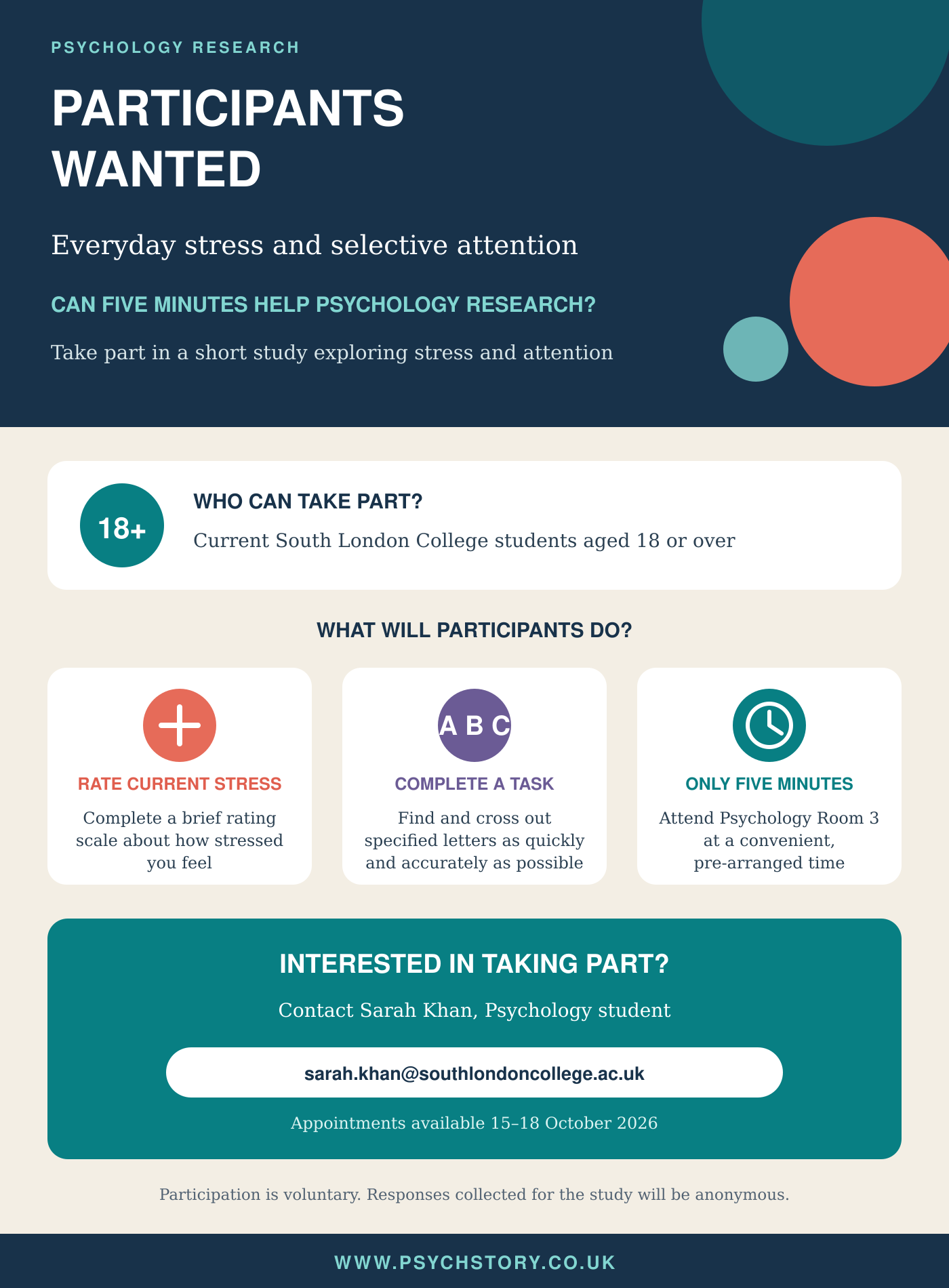
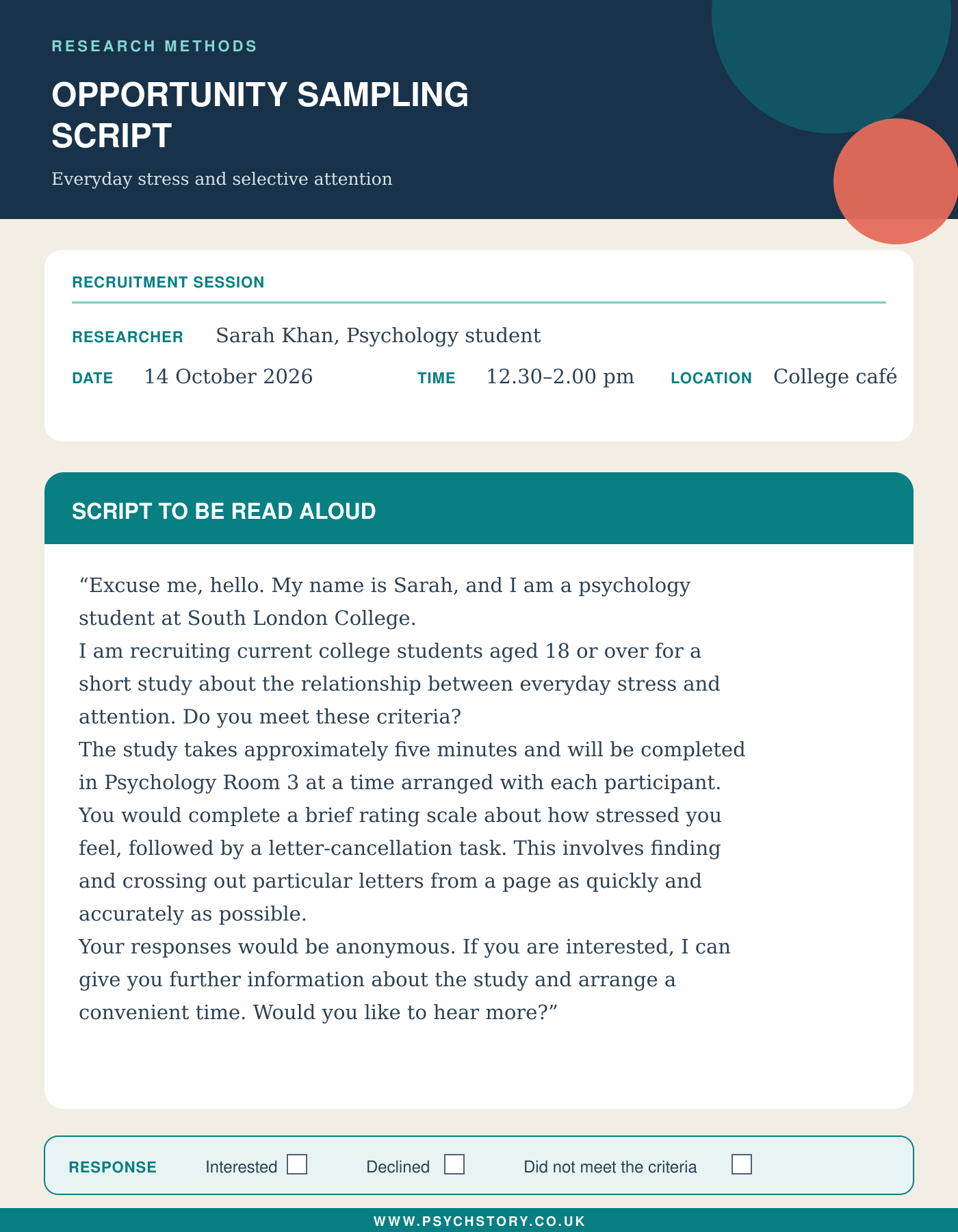
RECRUITMENT MATERIALS: a copy of any advertisements used to recruit participants, or scripts used when approaching participants for opportunity samples. Present adverts exactly as they appeared during recruitment, including the purpose of the study, eligibility criteria, compensation (if applicable), and contact information for the researchers or research institution.
PARTICIPANT MATERIALS: informed consent forms, standardised instructions, and debriefing statements.
RESEARCH INSTRUMENTS: a full copy of any surveys, questionnaires, Likert scales, or interview protocols used to collect data.
STIMULUS MATERIALS: detailed descriptions, scripts, or links to any video, audio, and visual stimuli shown to participants.
TECHNICAL DETAILS: extended apparatus descriptions, complex equipment specifications, or coding manuals.
MARK SCHEMES AND SCORING PROCEDURES.
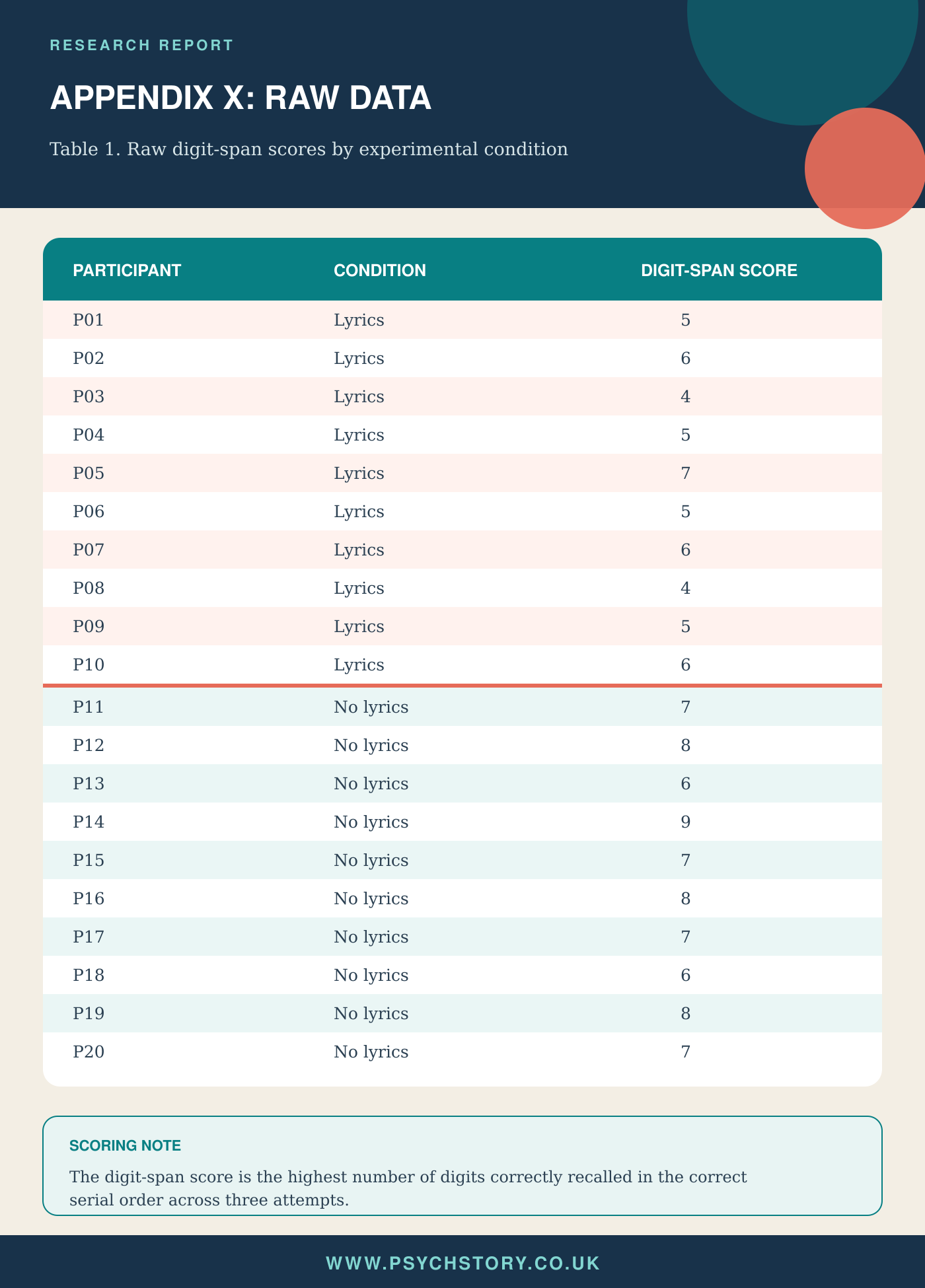
RAW DATA AND STATISTICS: a copy of the raw data collected during the study, plus any large supplementary data sets, detailed demographic breakdowns, or supplementary calculation tables, and inferential statistics.
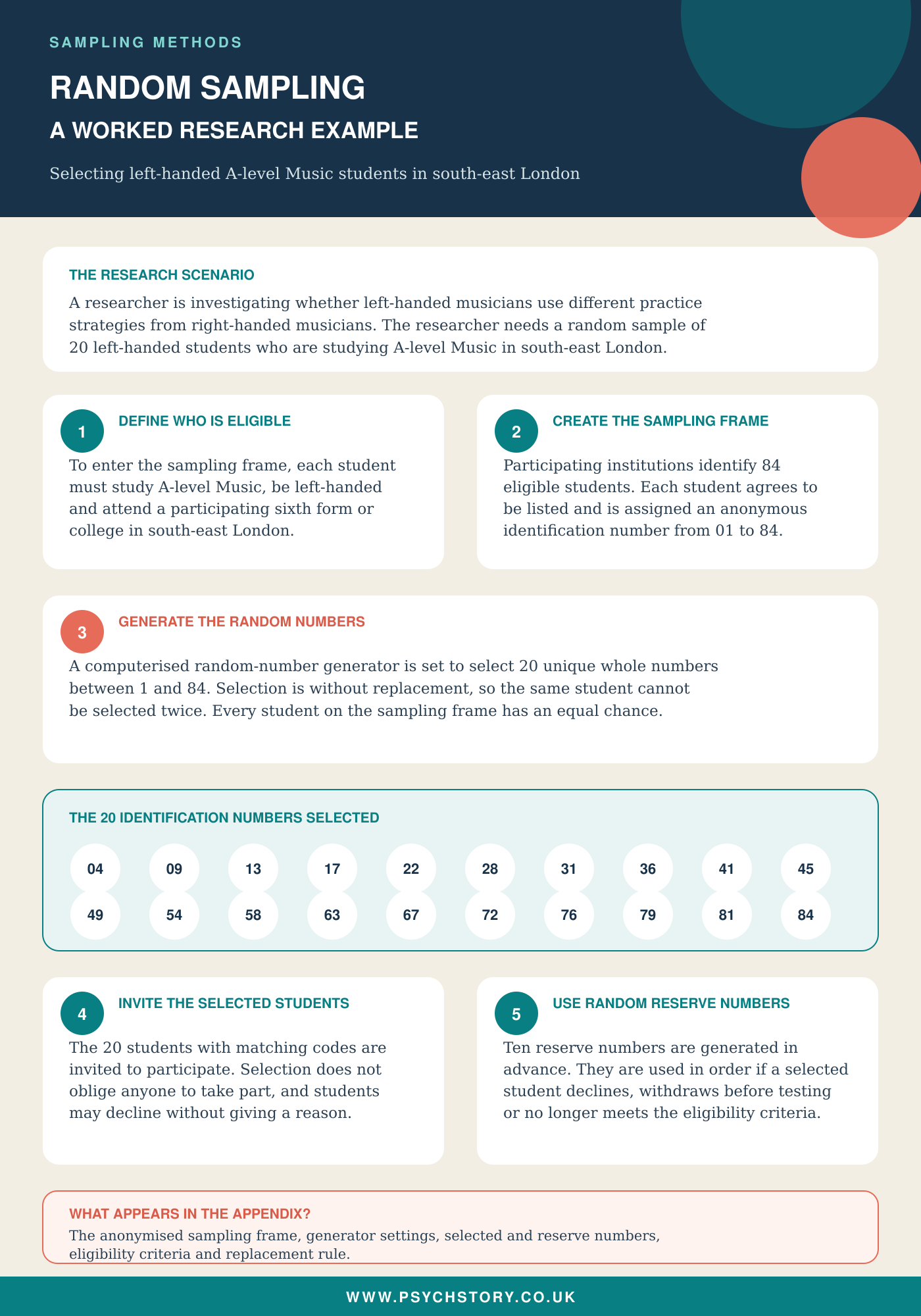
SAMPLING METHODS
The appendices should contain any materials or procedural details needed to show exactly how participants were selected. The main report identifies and briefly explains the sampling method, whereas the appendix provides supporting evidence that would be too detailed for the method section. This allows the reader to check whether the stated sampling method was followed and whether every eligible person had the intended chance of selection.
For random sampling, the appendix should include the sampling frame, with names replaced by participant numbers or codes to protect confidentiality. It should also record the random-number generator, calculator, table or formula used, the range of possible numbers entered and the numbers generated. State any rules for handling duplicate numbers, ineligible selections, or people who declined to participate. For example, a researcher might number 120 eligible students from 001 to 120, use a random-number generator to select 30 unique numbers and generate replacements for anyone who did not meet the criteria or declined to participate.
For systematic sampling, the appendix should show how the sampling interval was calculated and how the starting point was selected. If 200 eligible people were available and a sample of 20 was required, the interval would be calculated as 200÷20=10200 \div 20 = 10. A random starting number between 1 and 10 would then be selected, after which every tenth person would be approached.
For stratified sampling, the appendix should include the relevant proportions within the target population and the calculations used to reproduce those proportions in the sample. For example, if 60% of the population were female and the required sample contained 40 participants, the researcher would calculate 0.60×40=240.60 \times 40 = 24 and recruit 24 female participants. The same procedure would be used for each remaining category.
For snowball sampling, the appendix should explain how the first participants were located, what eligibility criteria were applied and how participants were asked to refer other suitable people. It should record the recruitment chain using anonymous codes rather than names. The researcher should also explain how privacy was protected, particularly because one participant may know that another person belongs to the population being studied. Potential participants should not be enrolled automatically following a referral. They must receive the study information and decide independently whether to contact the researcher or consent to participate.
For opportunity or volunteer sampling, the appendix may contain the recruitment script, advertisement, online notice or email used to invite participants. It should also identify where and when recruitment occurred, the eligibility criteria applied and how the researcher responded when more people volunteered than were required. (see the Recruitment Methods Section below for further details).
Only information relevant to the sampling procedure should be included. Participants’ names, contact details and other identifying information should not appear in the research report or its appendices
RECRUITMENT MATERIALS
A copy of any advertisements used to recruit participants, or scripts used when approaching participants for opportunity samples. Present adverts exactly as they appeared during recruitment, including the purpose of the study, eligibility criteria, compensation (if applicable), and contact information for the researchers or research institution
ADVERT EXAMPLE FOR A VOLUNTARY SAMPLE
SCRIPT EXAMPLE FOR AN OPPORTUNITY SAMPLE
PARTICIPANT MATERIALS
Forms used to give information to, and gain consent from, participants, for example: informed consent forms, standardised instructions, and debriefing statements
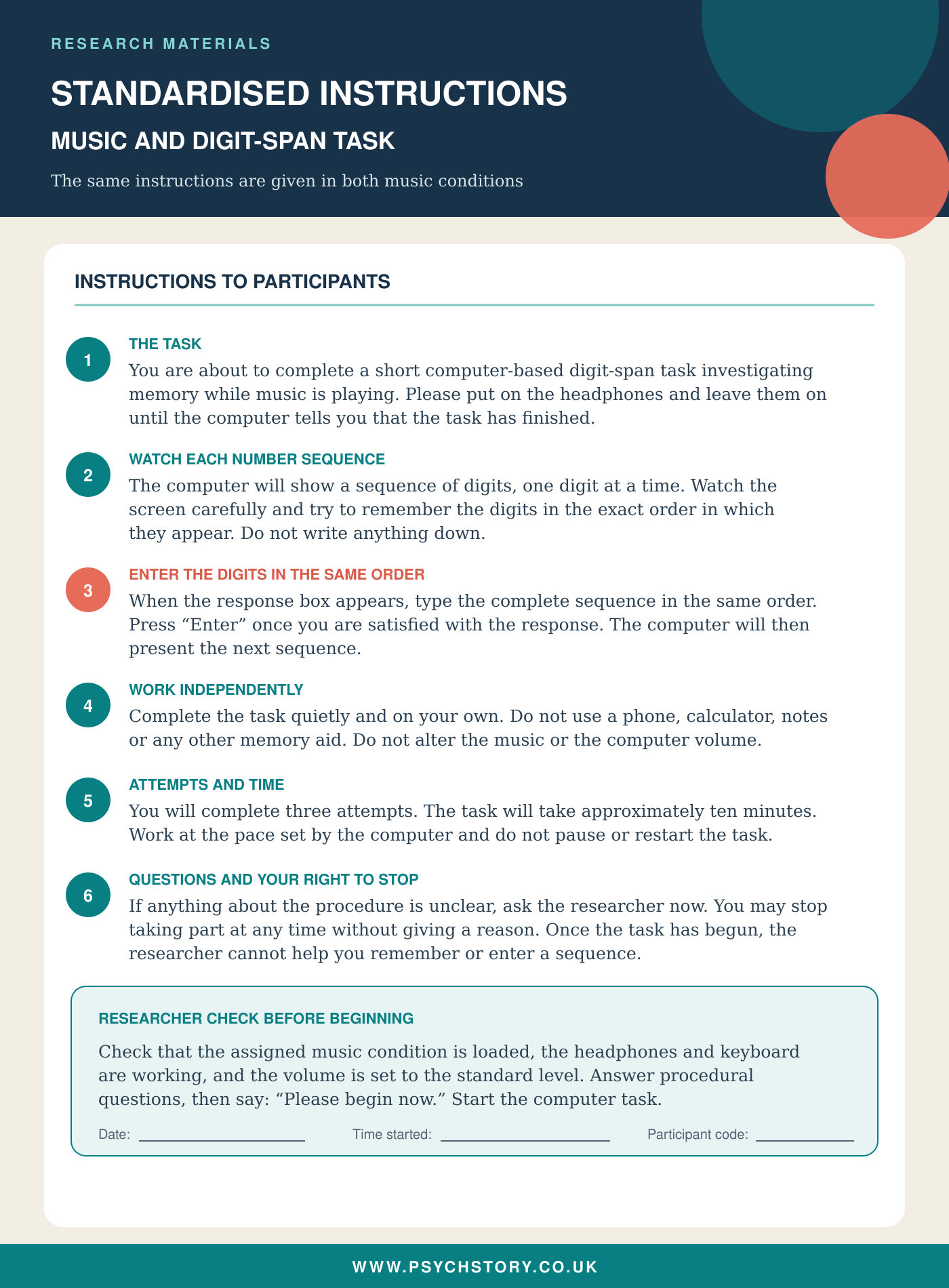
STANDARDISED INSTRUCTIONS
Standardised instructions are a prepared set of directions given to every participant before a study begins. They explain exactly what the participant must do, how the task should be completed, what materials may be used and when the participant should begin or stop. The researcher may read the instructions aloud or give them to participants to read independently. Whichever method is chosen must be used consistently throughout the investigation.
The purpose of standardised instructions is to ensure that all participants receive the same information in the same way. If a researcher explains the task differently to different participants, variations in the researcher’s wording, tone or level of assistance could influence their behaviour. The findings might then reflect differences in the instructions rather than the factor being investigated. Standardisation therefore reduces experimenter effects, improves the internal validity of the research and makes the procedure easier for another researcher to replicate.
The instructions should contain all the information needed to complete the task correctly. This normally includes what participants will see or hear, what response they must make, how their response should be recorded, how long they have, whether they may ask questions and what they must do with the research materials afterwards. Ethical information about withdrawal, confidentiality and the use of the data is normally explained fully in the participant information and consent forms. However, relevant rights may be repeated in the instructions when participants need to be reminded that they may stop the task or alert the researcher if they become uncomfortable.
Some investigations require more than one set of standardised instructions because participants complete different tasks or experience different conditions. Any differences between the sets should be limited to those required by the research design. All other wording, timings and guidance should remain the same so that the intended condition is the only systematic difference between participants.
For example, the following instructions could be used in a memory investigation involving research materials placed inside numbered envelopes:
INSTRUCTIONS TO PARTICIPANTS
Open Envelope One and remove Sheet One.
Study the pictures and words on Sheet One carefully. Do not write anything down or discuss the items with anyone else.
When the researcher says “stop”, return Sheet One to Envelope One and seal the envelope.
Turn over Sheet Two and read the instructions printed at the top of the page.
Complete the task on Sheet Two independently. Do not return to Sheet One or ask another participant for help.
When the task is complete, return both sheets and the envelopes to the researcher.
Please do not discuss the purpose, materials or procedure with anyone who may participate later, as prior knowledge could influence their responses.
If anything about the procedure is unclear, ask the researcher before the task begins. You may stop taking part at any time without giving a reason.
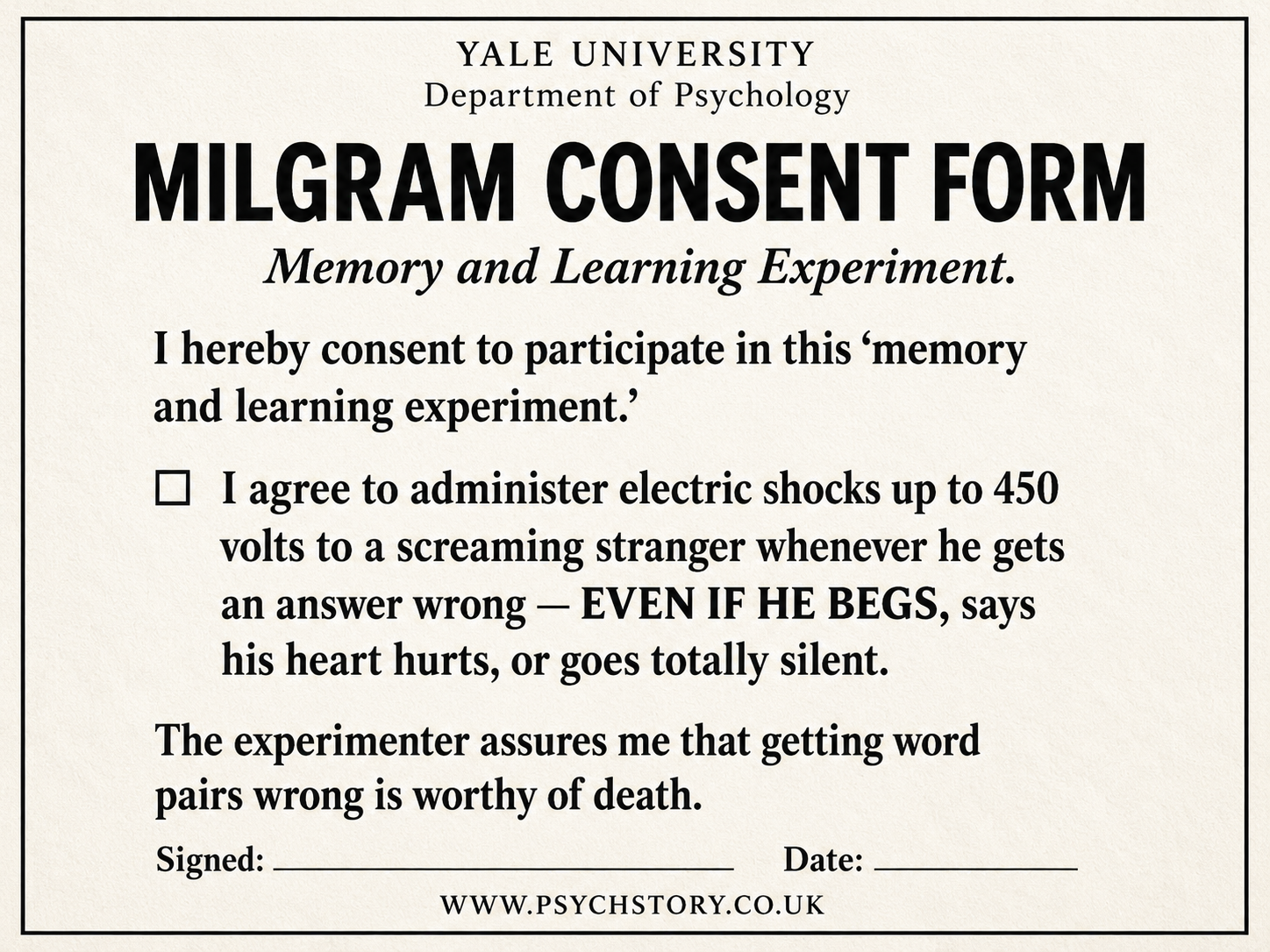
CONSENT FORMS
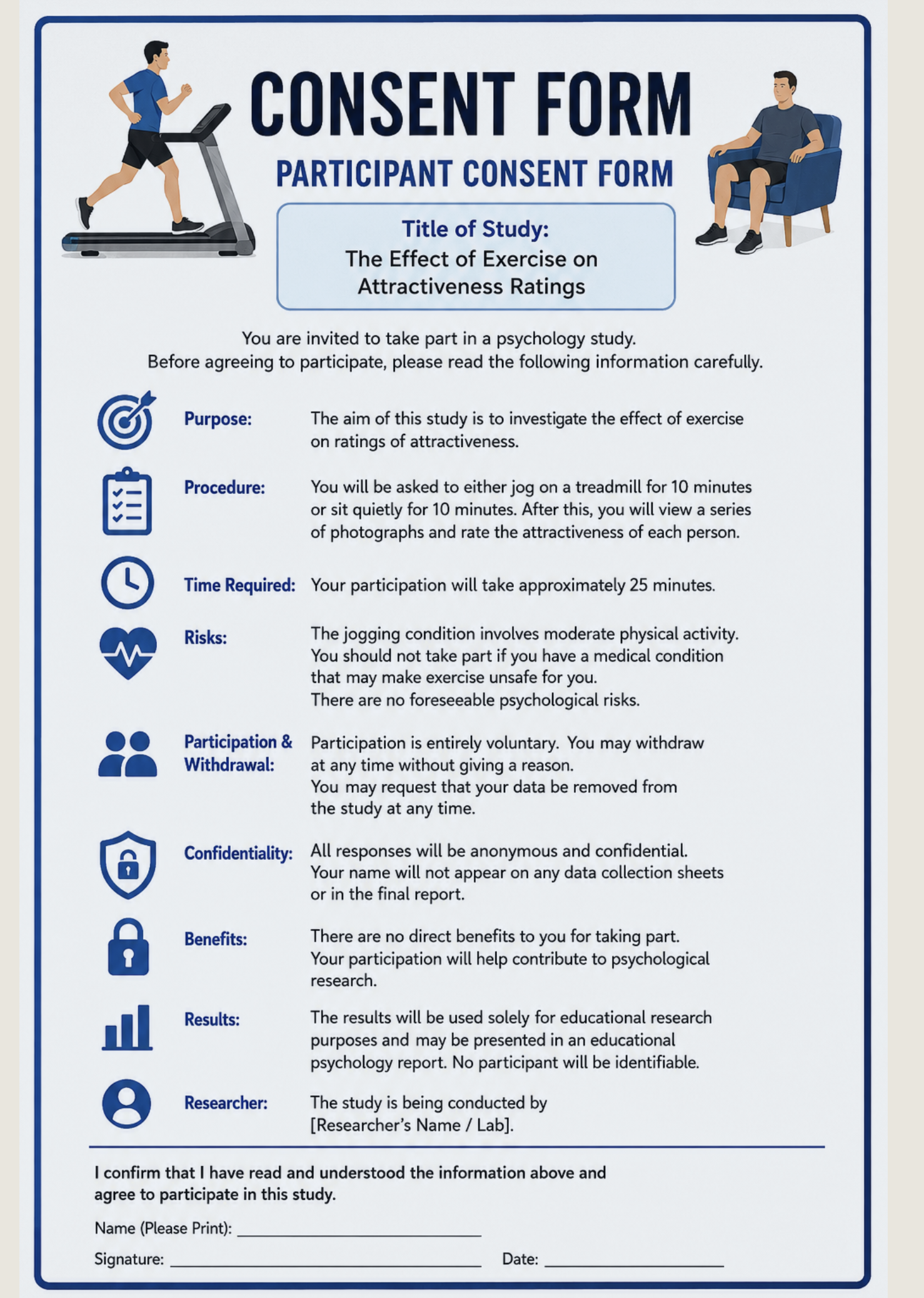
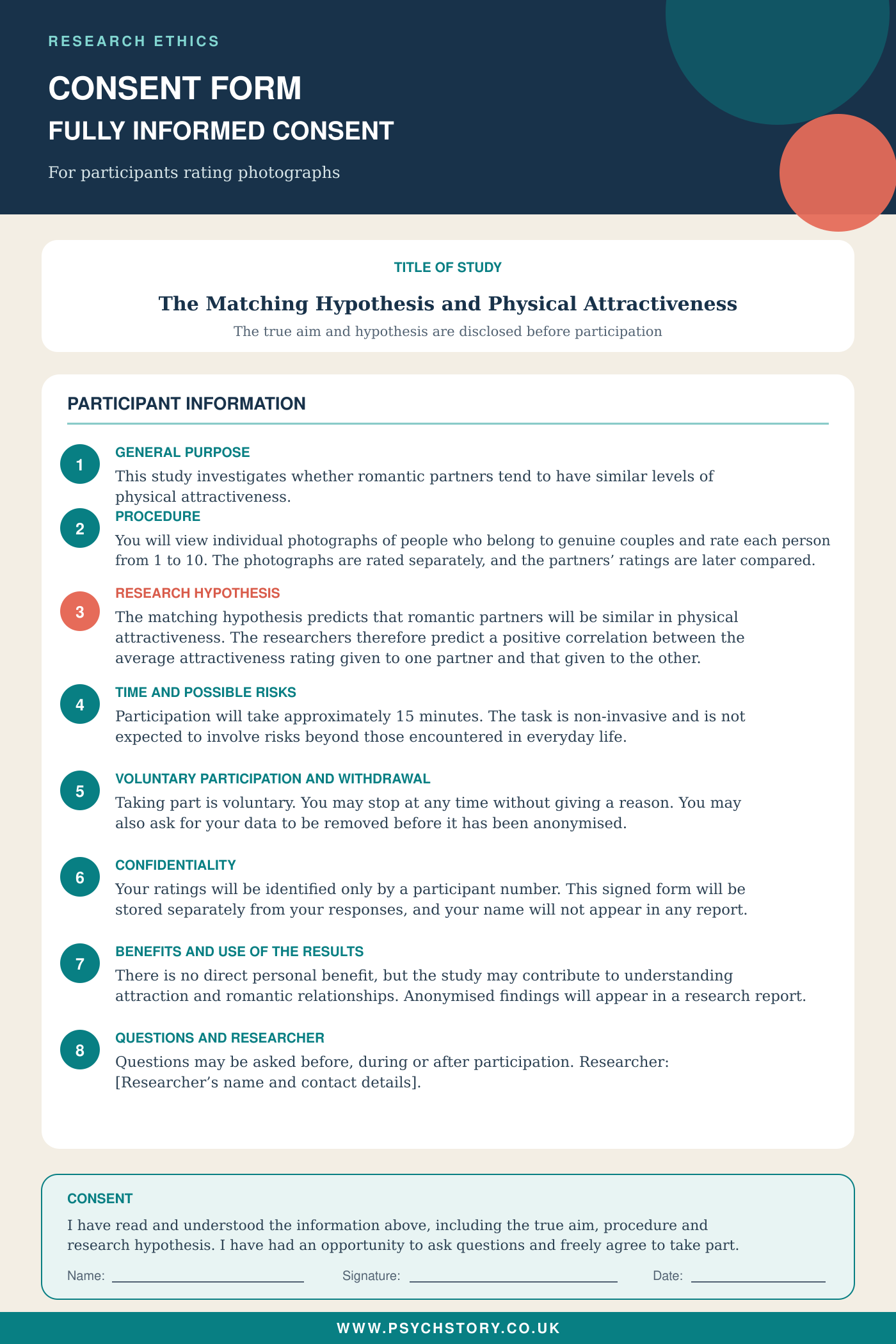
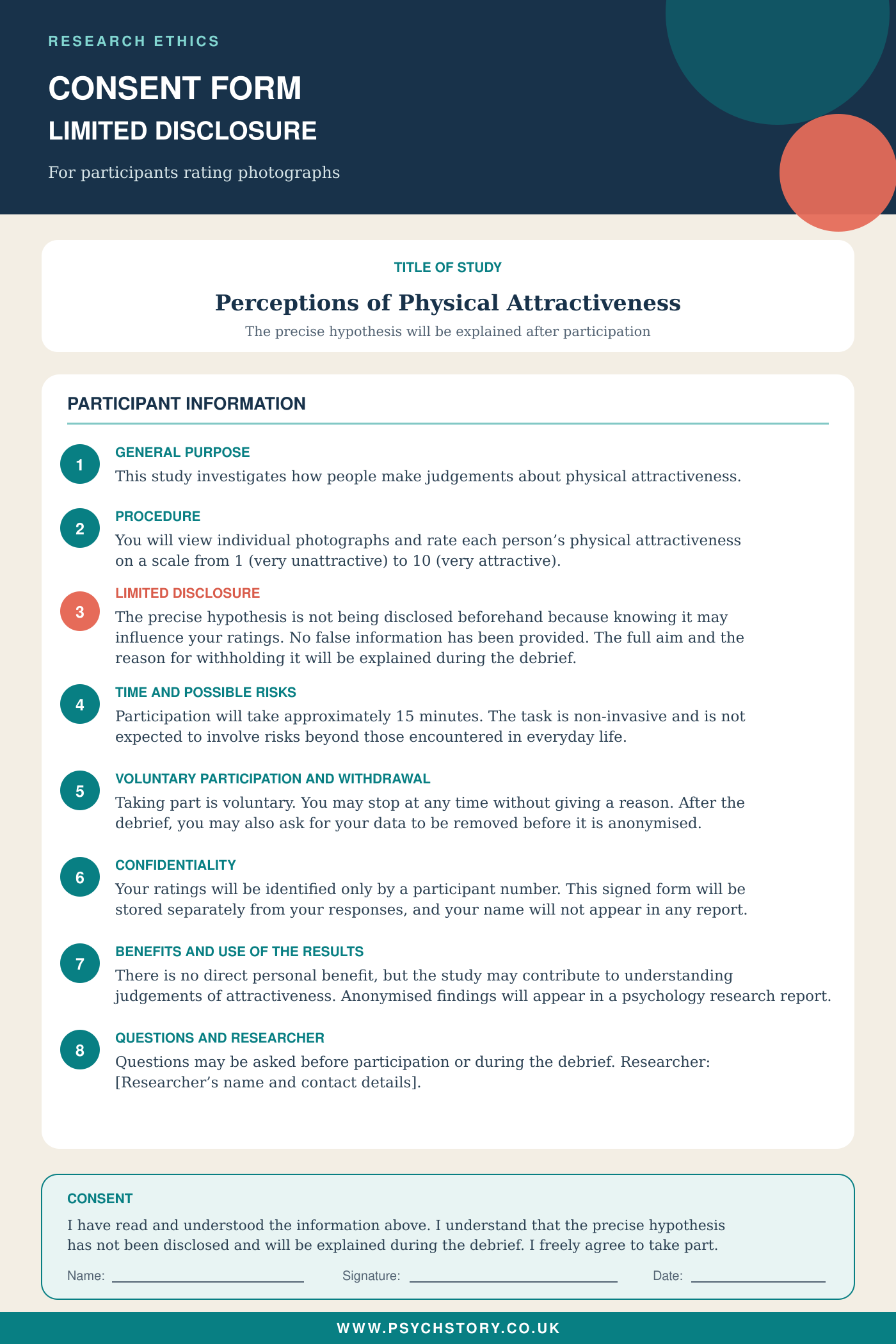
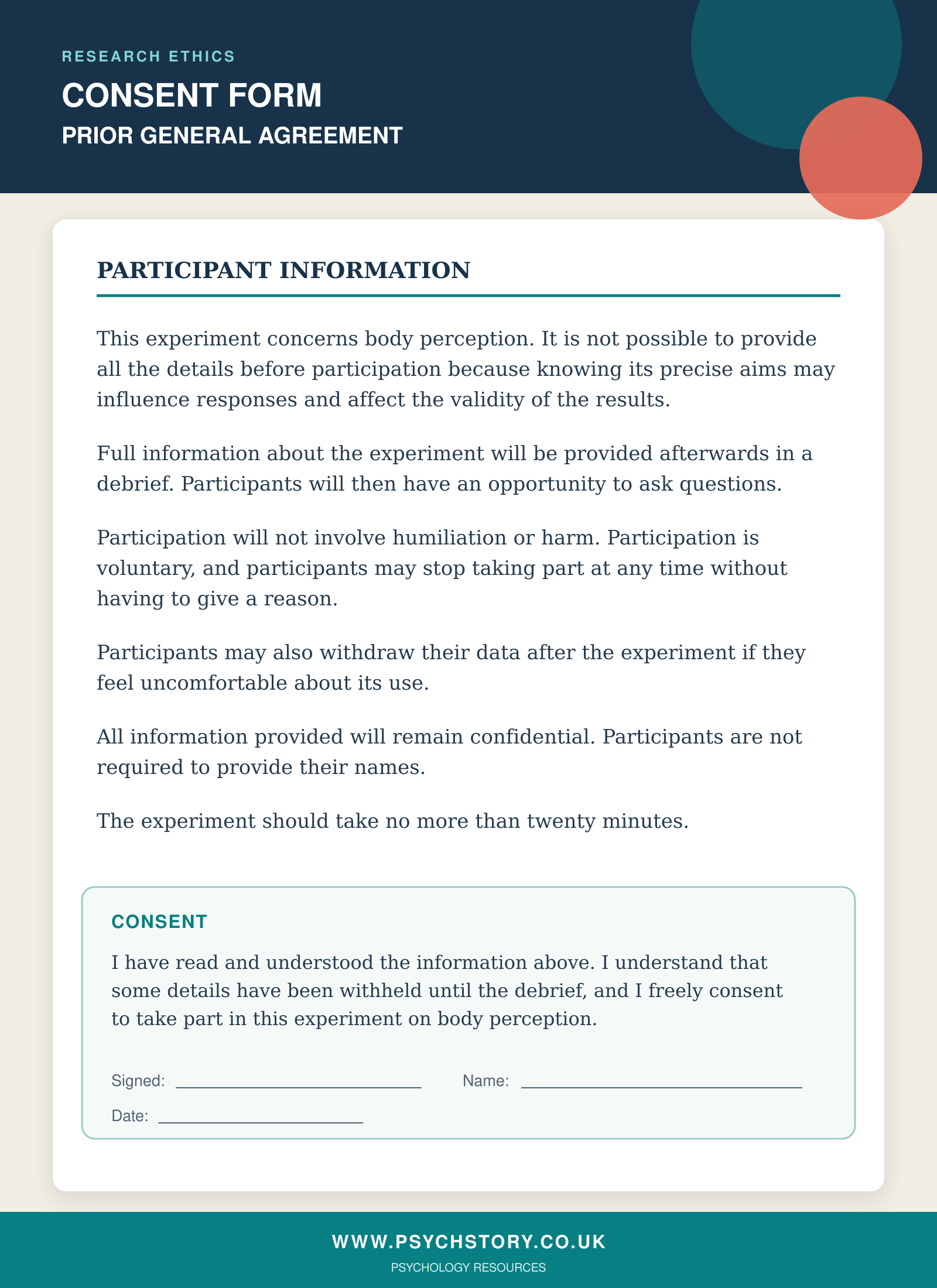
A consent form provides potential participants with enough information to decide whether they are willing to take part in a study. It explains what participation will involve, how long the study will take, any potential risks, how personal information will be protected, and the participant’s right to stop participating or withdraw their data. The form is needed because informed consent is a fundamental ethical requirement in psychological research. Researchers must respect participants’ autonomy, meaning their right to make voluntary, informed decisions. Signing the form records that the participant understands what has been explained and has freely agreed to take part without pressure or coercion
When writing consent forms, each participant should be made aware of the following:
The purpose of the experiment;
The aim and procedure of the experiment;
The risks related to the execution of the task;
The time required;
The conditions of participation and withdrawal;
The benefits obtained in participating;
The confidentiality of the results;
How and where the results will be published;
The person/lab responsible for the experiment.
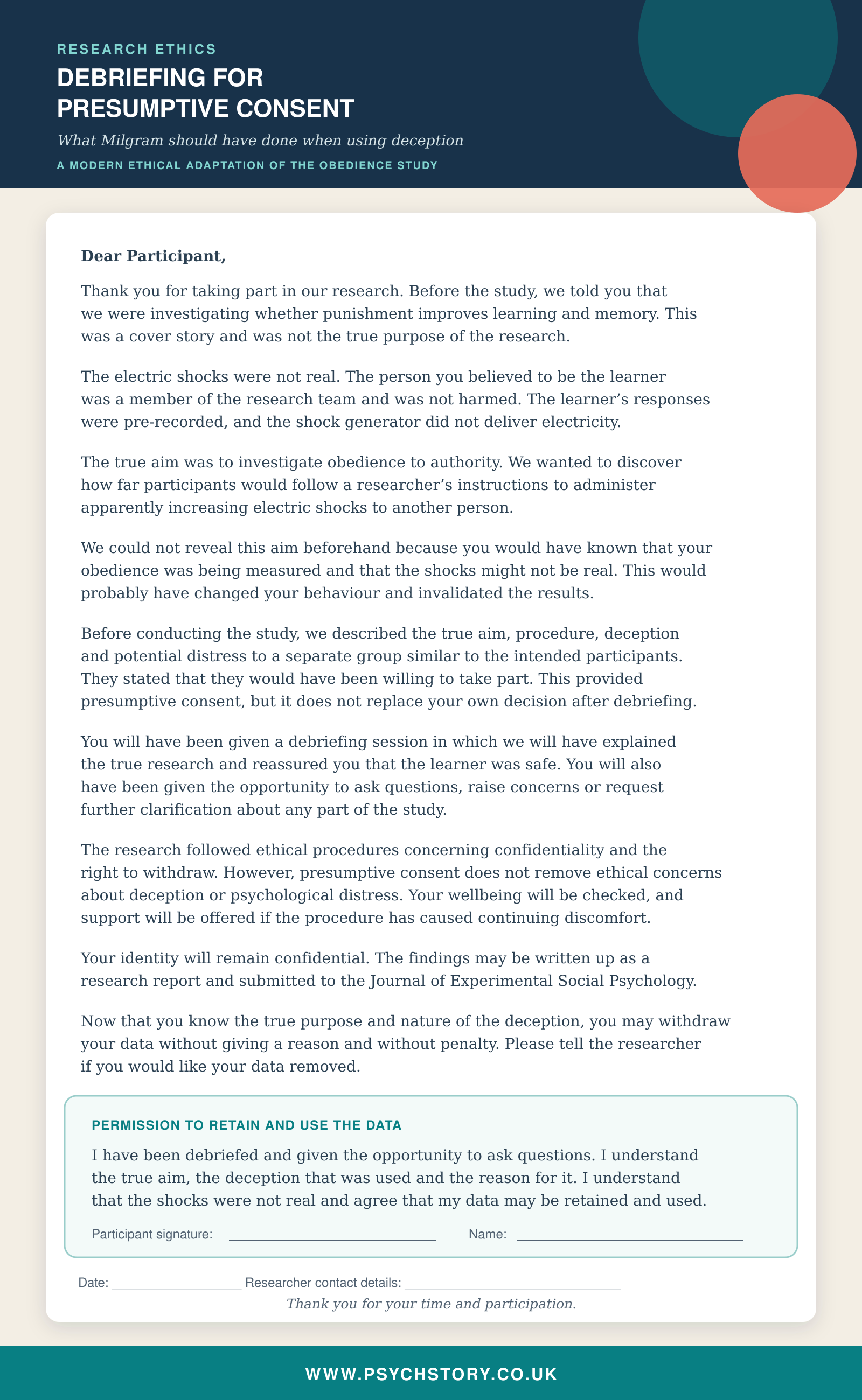
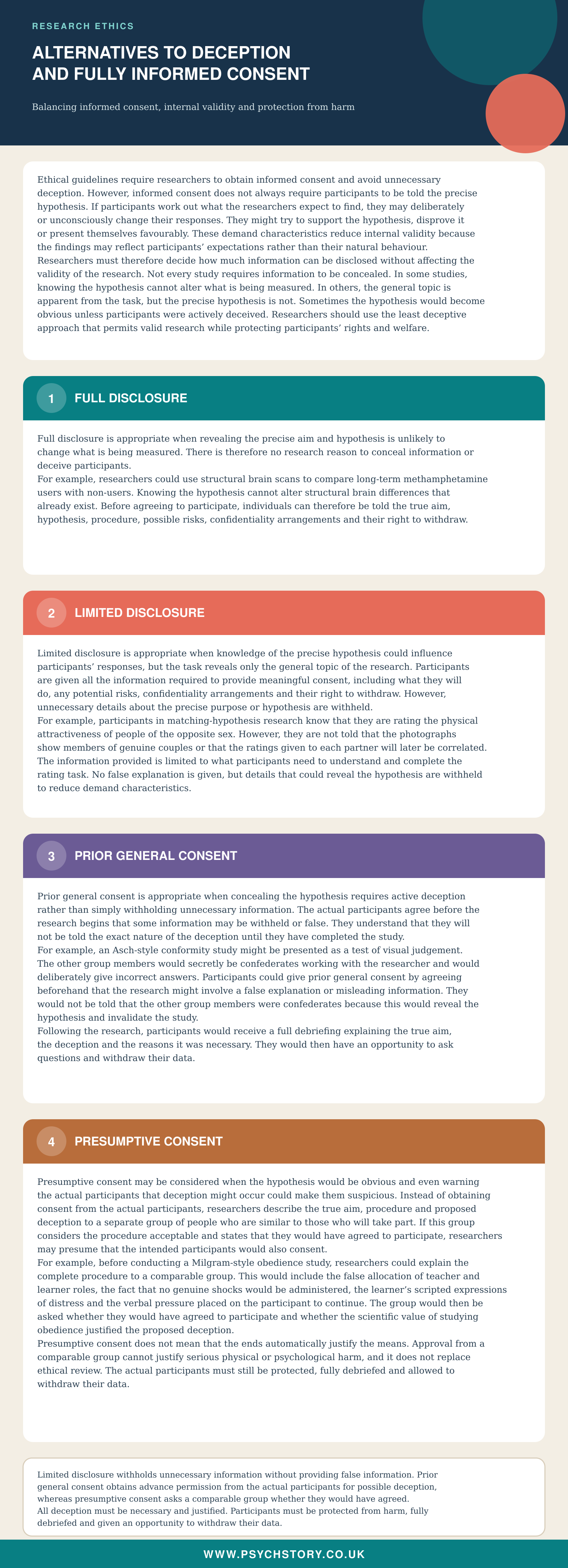
ALTERNATIVES TO DECEPTION AND FULLY INFORMED CONSENT
EXAMPLES OF CONSENT FORMS
RESEARCH INSTRUMENTS
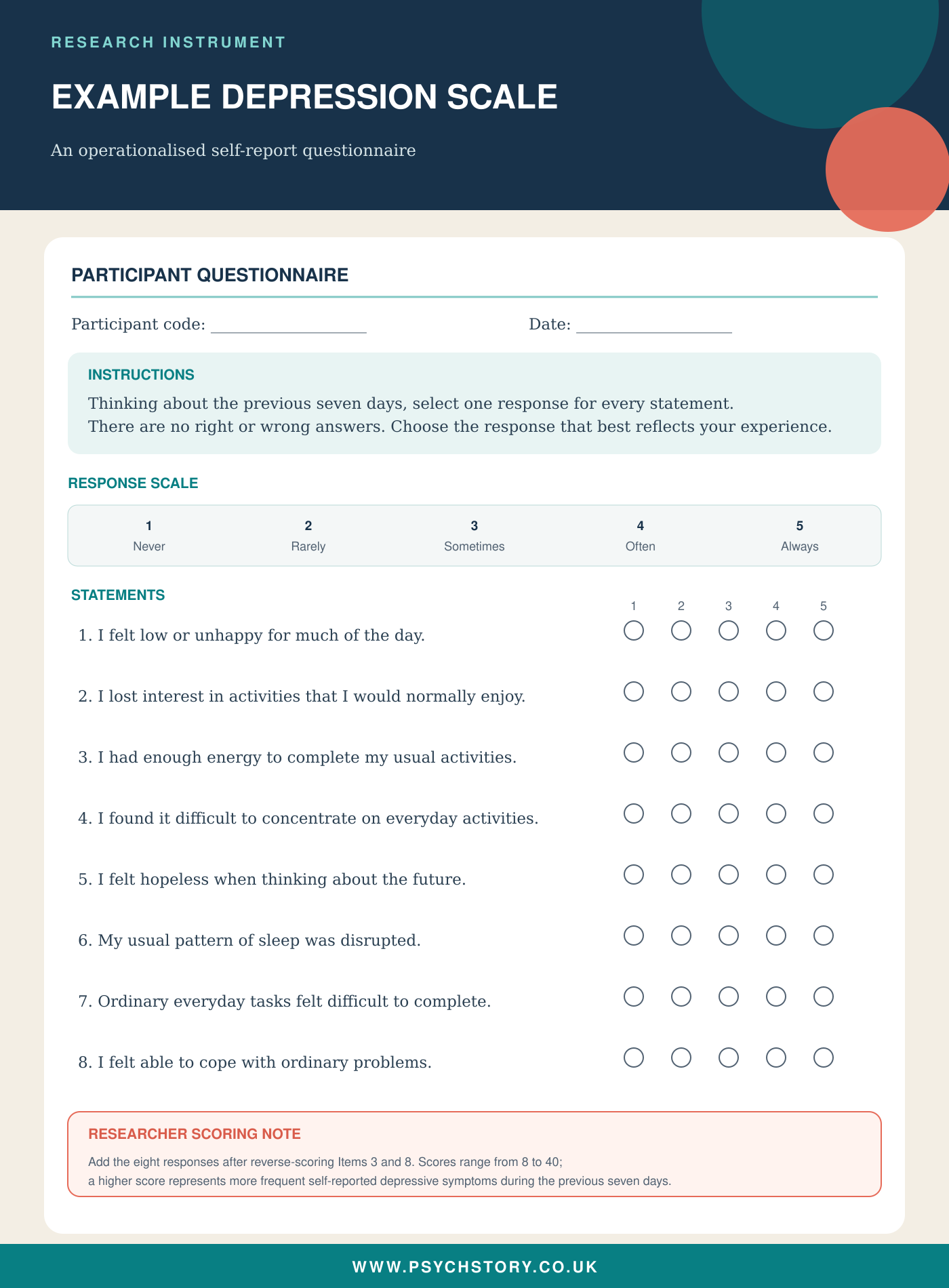
Research instruments are the materials used to collect information from participants. The appendices should contain a complete, blank copy of every questionnaire, survey, rating scale, psychological test, observation schedule or interview protocol used in the research. This allows the reader to see exactly what participants were asked, how the variables were operationalised and how responses were recorded.
The instrument must show the operationalised measure of each variable. Operationalisation means defining an abstract concept in a form that can be observed or measured. Researchers cannot directly measure concepts such as memory, aggression, attractiveness, conformity or anxiety. They must specify what observable response or numerical score will represent each concept in the particular investigation.
For example, memory might be operationalised as the highest number of digits recalled in the correct serial order across three attempts. Physical attractiveness might be operationalised as the mean rating given to each photograph on a scale from 1, meaning “very unattractive”, to 10, meaning “very attractive”. Aggression might be operationalised as the number of times a child hits, kicks or pushes another person during a ten-minute observation. These definitions show precisely how each variable was measured rather than merely naming the general concept.
A questionnaire or survey should be reproduced exactly as it was presented to participants. This includes its title, instructions, questions, operationalised wording, response options and the order in which they appeared. A blank copy should normally be included rather than completed questionnaires, which may contain confidential information.
A Likert scale should show each complete statement and every response category. For example:
Listening to music helps me to concentrate.
1 — Strongly disagree
2 — Disagree
3 — Neither agree nor disagree
4 — Agree
5 — Strongly agree
If responses to several statements were combined, the appendix should show which items formed the scale. Negatively worded items and any reverse-scoring rules should be explained in the scoring procedure, rather than being marked on the version seen by participants.
An interview protocol should include the standard opening statement, every planned question, any prompts or follow-up questions and the closing statement. Questions must use clear wording and must operationalise the topic sufficiently for responses to be compared. For example, asking “How often have you felt anxious during the past seven days?” is more precise than asking whether the participant is “usually an anxious person”.
An observation schedule should contain operationalised behavioural categories and show how each behaviour was recorded. Categories must describe actions that can be directly observed. “The participant interrupts another speaker before that person finishes” is observable, whereas “the participant is rude” requires a subjective interpretation. The schedule should also state whether researchers recorded the frequency, duration or presence of each behaviour and whether event sampling or time sampling was used.
If an established psychological instrument was used, the appendix should provide its full name, identify its author and include an appropriate reference. Copyright restrictions must be followed, and evidence of permission should be included where reproduction is restricted.
Each instrument should appear in a separately labelled appendix. Place any scoring rules, coding frameworks, or researcher-only information separately so the appendix preserves an accurate copy of what participants actually saw.
MARK SCHEMES AND SCORING PROCEDURES
A mark scheme or scoring procedure explains exactly how participants’ responses were converted into numerical data. Include it in the appendices when responses cannot be interpreted from the task materials alone. This allows the reader to understand how the raw data were produced and enables another researcher to score the same responses consistently.
The scoring procedure must identify what counts as a correct, incorrect, incomplete or missing response. It should also explain how ambiguous answers were treated, whether partial marks were available and how the final score was calculated. Where responses require interpretation, such as observations, interviews, or open-ended questionnaires, provide clear behavioural or coding categories. This reduces subjective judgement and improves the reliability and replicability of the research.
For example, a digit-span task could be scored using the following procedure:
DIGIT-SPAN SCORING PROCEDURE
One mark is awarded only when every digit in a sequence is recalled in the correct serial order.
No mark is awarded when a digit is omitted, added, repeated or placed in the wrong position.
Partially correct sequences do not receive partial marks.
A blank or unfinished response is recorded as incorrect rather than as missing data if the participant was presented with the sequence.
The participant’s digit-span score is the longest sequence recalled correctly.
If three attempts are completed, the highest digit span achieved across the three attempts is recorded as the participant’s final score.
Responses affected by a documented technical problem are recorded as missing data and are not scored as incorrect.
Where qualitative responses are coded, the appendix should include the coding framework and examples showing how responses were classified. If more than one researcher scored the data, it should also explain how disagreements were resolved and whether inter-rater reliability was assessed. Any reverse scoring, total scores, subscale scores, cut-off points or transformed scores must also be clearly documented
RAW DATA AND STATISTICS
The appendices should contain the complete raw data collected during the study. They may also include statistical material that is too detailed to present in the results section, such as demographic breakdowns, supplementary tables, worked calculations and computer output from inferential tests. The results section should report the important findings, whereas the appendices provide the supporting evidence showing how those findings were obtained.
Alongside the raw-data table, this chapter could demonstrate:
DEMOGRAPHIC INFORMATION
A table summarising relevant characteristics of the sample, such as age, sex or experimental condition. Identify participants using codes rather than names to maintain confidentiality.
PROCESSED DATA
A table showing how raw scores were organised or transformed before analysis. This might include condition totals, difference scores, mean scores calculated from several trials, percentages or coded questionnaire responses.
DESCRIPTIVE STATISTICS
A supplementary table containing the mean, median, mode, range and standard deviation for each condition or group. The main results section may report the most relevant statistics, while the complete table can be placed in an appendix.
WORKED CALCULATIONS
One example showing how a statistic was calculated from the raw data, such as the mean, range, percentage change or standard deviation. You do not need to show the same calculation repeatedly for every condition.
INFERENTIAL STATISTICS
The complete calculation or statistical software output for the inferential test. This should identify the test used, sample size, calculated value, significance level and decision about the null hypothesis. Any ranks, differences, tied ranks or expected frequencies used in the calculation may also be included.
SUPPLEMENTARY ANALYSES
Additional analyses that are relevant but not essential to answering the main research question. These might include separate results by age or sex, checks for unusual scores, assumption testing or an analysis conducted after excluding incomplete data.
Each item should appear as a separate, clearly labelled appendix, for example:
Appendix A: Raw data
Appendix B: Participant demographics
Appendix C: Descriptive statistics
Appendix D: Worked calculations
Appendix E: Inferential statistical test output
.
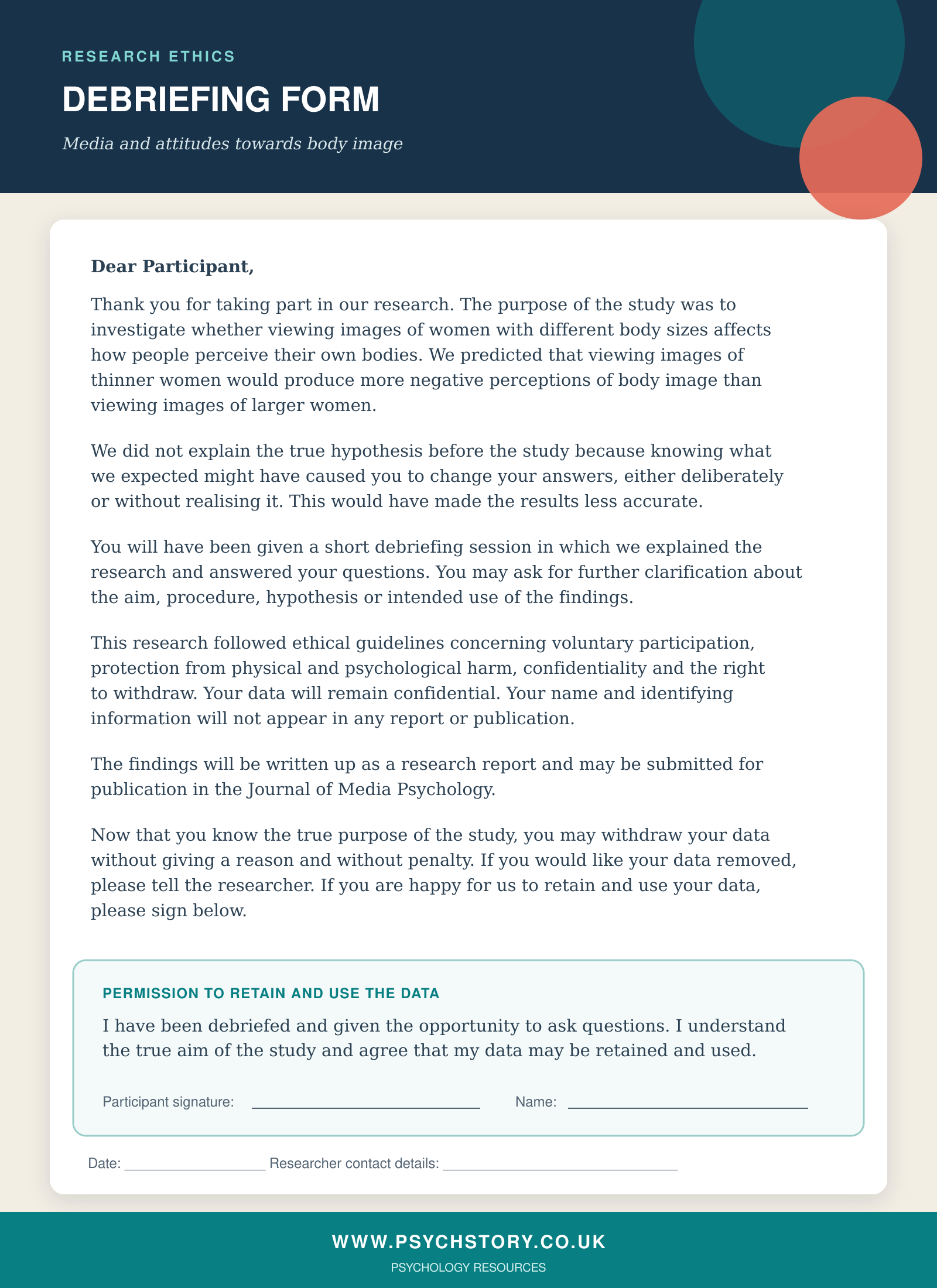
DEBRIEFING FORMS
Debriefing is a critical process that occurs after participants have completed their involvement in a study. It involves providing them with comprehensive information regarding the study's objectives, procedures, and outcomes. This ensures that participants fully understand the nature of the study, have the opportunity to ask questions, and are informed of any potential deception or stress-inducing elements involved in the research.
This practice is a fundamental component of ethical research guidelines. It upholds principles of transparency, respect, and dignity for participants, while also safeguarding against potential harm resulting from their participation. Debriefing aligns closely with ethical principles such as obtaining informed consent, maintaining confidentiality, and providing debriefing after the study has concluded.
During debriefing, participants are thanked for their contribution, and the study's aim is reiterated, along with references to ethical guidelines. Additionally, the confidentiality of participants' results is emphasised to protect their privacy. Measures are taken to ensure that participants' names are not disclosed on any study materials, further preserving confidentiality. Participants are also reminded of their right to withdraw their data from the study if they wish to do so, reinforcing their autonomy and control over their information.
Overall, debriefing serves as a crucial aspect of research ethics, promoting transparency, participant understanding, and the protection of participants' rights and well-being.
DEBRIEFING ESSENTIALS
Explanation of the purpose and aim of the study
Reference to ethical guidelines followed in the research
Assurance of confidentiality regarding participant data
Opportunity for participants to withdraw their data
Invitation for participants to ask questions or seek clarification
Appreciation and thanks for their participation
DEBRIEFING EXAMPLES