
BORN UNFINISHED: WHY HUMAN BABIES ARRIVE EARLY
The human brain is not born whole. From the first breath, it is unfinished—a living structure shaped by every sound, every touch, every thought. This capacity for change, called brain plasticity, is what defines us. The brain is not fixed; it remakes itself in response to experience. Every moment leaves its mark. We are never the same person twice.
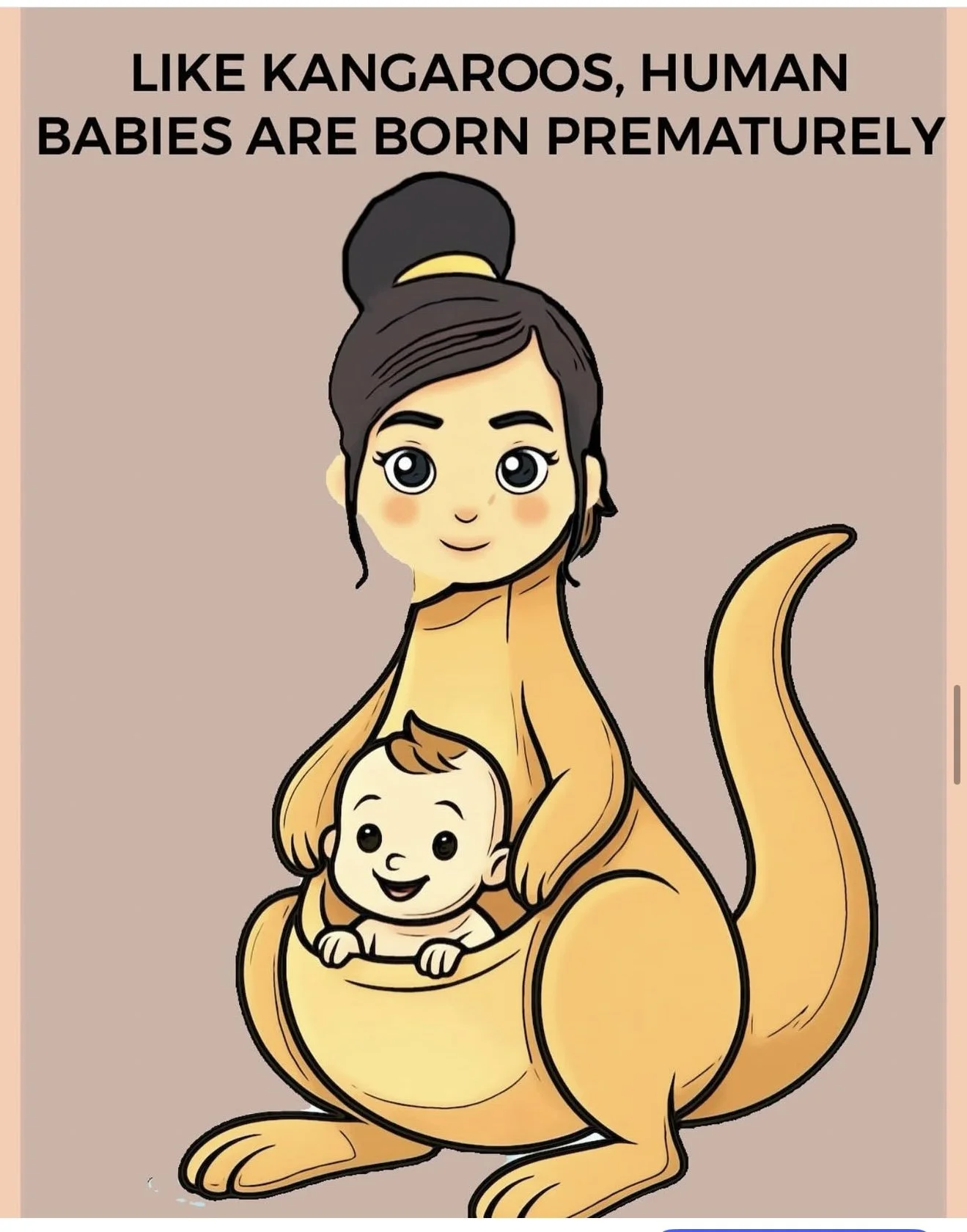
At no time is this more critical than at the start of life. Humans are born helpless, but uniquely so. At birth, the brain is less than 30% of its adult size—a framework waiting for experience to complete it. In this way, we are not so different from kangaroos: both species have been naturally selected to deliver their young prematurely. In humans, the immaturity is even more extreme.
Some researchers estimate that a human foetus would need eighteen to twenty-one months in the womb to match the brain maturity of a newborn chimpanzee. Instead, we are born early, requiring years of external growth. Evolution traded early independence for vulnerability, so that experience could sculpt what genes alone could not. This is where nature and nurture fuse. We are born with the hardware; the world installs the software.
During critical periods, the brain wires itself in response to the environment with extraordinary speed. What we are exposed to—words, faces, movement—becomes structure.
Childhood is not just a stage; it is the construction of the brain itself. Phone screens, fragmented attention, drug exposure, stress, language, learning: all of it lays down circuits that endure.
Plasticity is not inherently good. It is neutral. The brain will adapt to whatever it meets. Good or bad, what is repeated is installed. Childhood experience becomes anatomy.