THE NATURE VERSUS NURTURE DEBATE

AQA SPECIFICATION:
NATURE-NURTURE DEBATE
THE RELATIVE IMPORTANCE OF HEREDITY AND ENVIRONMENT IN DETERMINING BEHAVIOUR
THE INTERACTIONIST APPROACH.
THE NATURE-NURTURE DEBATE
Nature versus nurture is a long-standing debate in psychology about the balance between two competing factors that shape personality, disposition, behaviour, and ultimately a person’s fate. It is concerned with how these influences interact over time to produce the individual differences we observe between people. Ultimately, the argument is what makes a person who they are. Is it genetics and brain structure (nature), reflecting biological determinism, or is it upbringing and the environment (nurture), reflecting the role of experience, learning, and social context?
The expression “nature and nurture” in English has been in use since at least the Elizabethan period and can be traced back to medieval French.


THE NATURE DEBATE
EVOLUTION AND NATURAL SELECTION: Behaviour has been shaped by adaptive pressures over time. Traits that increased survival and reproductive success were more likely to be passed on to subsequent generations. Natural selection therefore shapes the biological systems that underlie behaviour, including brain structure, emotional responses, and behavioural tendencies. Certain behaviours can be understood as adaptive solutions to ancestral problems. For example, attachment behaviours such as crying, clinging, and proximity seeking increase infant survival by maintaining closeness to caregivers (John Bowlby). Fear responses to specific stimuli such as snakes, spiders, and heights reflect evolutionary preparedness, as these posed threats in ancestral environments (Martin Seligman). Aggression may have evolved as a strategy for competition over resources or mates, increasing reproductive success (David Buss). Preferences for calorie-dense foods reflect adaptation to food-scarce environments. Evolution does not produce perfect behaviour. Traits that were once adaptive may be maladaptive in modern environments. For example, preference for high sugar and fat foods now contributes to obesity, and heightened anxiety responses may lead to chronic stress disorders.
GENETICS AND HEREDITY The influence of heredity and genetics on behaviour. Inherited traits are carried in your genes. Parents pass on these genes to their children, who then pass them on to future generations. This genetic information is encoded in DNA (deoxyribonucleic acid). The average human body contains vast amounts of DNA. If all DNA molecules were unravelled and placed end to end, they would extend for millions of kilometres. Around 99.9% of human DNA is identical across the species. The remaining 0.1% accounts for individual differences in both physical and psychological characteristics. Genes influence the development and functioning of the brain and nervous system, including neurotransmitter activity, hormone regulation, and brain structure. These biological systems underpin behaviour, meaning genetic variation contributes to differences in cognition, emotion, and personality. Example: Twin studies demonstrate genetic influence by showing higher concordance rates for traits such as intelligence, personality, and schizophrenia in monozygotic twins compared to dizygotic twins (Irving Gottesman). Intelligence shows substantial heritability, increasing across development (Robert Plomin). Genetic influence is not deterministic. Most behaviours are polygenic, meaning they are influenced by many genes acting together. Gene–environment interaction means that genetic predispositions may only be expressed under certain environmental conditions. Epigenetic mechanisms can switch genes on or off in response to environmental input, altering behaviour without changing the DNA sequence. INHERITED CHARACTERISTICS (EXAMPLES) Temperament differences observable in infancy, such as reactivity and self regulation (Alexander Thomas and Stella Chess) Personality traits such as extraversion and neuroticism (Hans Eysenck) General cognitive ability and processing speed (Robert Plomin) Genetic vulnerability to mental disorders such as schizophrenia and depression (Irving Gottesman) Biological sensitivity to stress and emotional reactivity (linked to serotonin and cortisol systems). There are probably hundreds if not thousands of other inherited characteristics which we don’t know about yet because they’re hidden in our genetic code or DNA.
THE BRAIN AS BIOLOGICAL HARDWARE The brain operates as a biological system in which structure and function determine behaviour. Behaviour arises from neural activity, and if the underlying biological “hardware” is altered, behaviour changes in systematic and predictable ways. Damage to specific brain regions leads to corresponding behavioural deficits, supporting a biological basis of behaviour. For example, damage to the frontal lobes results in impaired impulse control, poor decision-making, and personality changes, as demonstrated in the case of Phineas Gage. Neurodegenerative diseases further illustrate this principle. Parkinson’s disease involves degeneration of dopamine-producing neurons, leading to motor impairments and cognitive changes. Alzheimer’s disease leads to progressive memory loss and cognitive decline due to widespread neural degeneration. Other examples include encephalitis, which can cause marked personality and behavioural changes due to inflammation of the brain, and traumatic brain injury, which can impair judgement, emotional regulation, and social behaviour. These cases demonstrate that behaviour is directly dependent on the integrity of brain structure and function.
THE CENTRAL AND PERIPHERAL NERVOUS SYSTEMS (CNS AND PNS): The nervous system is divided into the central nervous system (CNS) and the peripheral nervous system (PNS). The CNS, consisting of the brain and spinal cord, is responsible for processing information, integrating sensory input, and generating behaviour. The PNS connects the CNS to the rest of the body, transmitting sensory information to the brain and motor commands to muscles and organs. The PNS includes the somatic nervous system, which controls voluntary movement, and the autonomic nervous system, which regulates involuntary functions such as heart rate and digestion. The autonomic system is further divided into the sympathetic and parasympathetic branches. The sympathetic nervous system prepares the body for action by producing the fight-or-flight response. This involves increased heart rate, heightened alertness, and mobilisation of energy, which underpin behaviours such as aggression or escape. The parasympathetic nervous system restores the body to a state of calm, reducing arousal and conserving energy. This system demonstrates how biological mechanisms directly produce behavioural responses to environmental stimuli.
NEUROTRANSMITTERS (CHEMICAL SIGNALS IN THE BRAIN)
Neurotransmitters are chemical messengers that transmit signals between neurons. Behaviour is influenced by the balance and functioning of these chemicals within neural circuits.
Dopamine is associated with reward, motivation, and movement. Dysregulation of dopamine pathways is implicated in schizophrenia, where excessive dopamine activity is linked to positive symptoms such as hallucinations and delusions.
Serotonin regulates mood, impulse control, and emotional stability. Low levels of serotonin are associated with depression, anxiety, and increased aggression.
Noradrenaline is involved in arousal and alertness, and is particularly active during stress responses. Elevated levels are linked to anxiety and heightened vigilance.
GABA is the primary inhibitory neurotransmitter in the brain. It reduces neural activity, and low levels are associated with anxiety due to insufficient inhibition of neural firing.
These examples demonstrate that variations in neurochemical activity are directly linked to differences in behaviour and mental states.
THE ENDOCRINE SYSTEM AND HORMONES
The endocrine system consists of glands that release hormones into the bloodstream. Hormones travel more slowly than neurotransmitters but produce longer-lasting effects on behaviour.
Testosterone is associated with aggression, dominance, and competitive behaviour. Higher levels are linked to an increased likelihood of aggressive responses in certain contexts.
Cortisol is released in response to stress and plays a key role in the body’s stress response. Chronic elevation of cortisol is associated with anxiety, impaired immune function, and negative effects on cognition.
Oxytocin is involved in social bonding, attachment, and trust. It plays a key role in maternal behaviour and pair bonding.
Oestrogen influences mood, emotional regulation, and cognitive function, with fluctuations linked to changes in mood and behaviour.
These hormonal systems demonstrate how biological processes regulate behaviour over longer time scales.
BRAIN STRUCTURE
Different brain regions are specialised for specific functions, and behaviour depends on the organisation and interactions among these areas.
The frontal lobes are involved in higher cognitive processes such as decision making, planning, impulse control, and personality. Damage to this region leads to disinhibition and poor judgment.
The temporal lobes are associated with memory, language processing, and auditory perception. The hippocampus, located within the temporal lobe, is critical for memory formation.
The occipital lobes are responsible for visual processing, while the parietal lobes are involved in spatial awareness and integration of sensory information.
The limbic system, including the amygdala and hippocampus, plays a central role in emotion, fear responses, and memory. The amygdala is particularly important in processing threat and aggression.
This specialisation supports the idea that behaviour can be explained in terms of underlying brain structures.
LOCALISATION AND PLASTICITY
Specific functions are localised to particular areas of the brain, but the brain also has the capacity to adapt in response to experience or damage. For example, Broca’s area is responsible for speech production. Damage to this area results in Broca’s aphasia, characterised by impaired speech production. However, through neural plasticity, other areas of the brain can sometimes compensate for lost function, particularly following injury. Plasticity is especially evident during early development but continues throughout life. Experience can strengthen neural connections, while unused connections may be pruned. This demonstrates that even within a biological framework, behaviour is dynamic and capable of change
These facts have led many to speculate as to whether psychological characteristics such as behavioural tendencies, personality attributes, and mental abilities are also “wired in” before we are even born
The nature side of the debate holds that individuals do not control their behaviour and are not responsible for their own actions.

EXTREME NATURE POSITION (NATIVISM)
Those who adopt an extreme hereditary position are referred to as nativists. This perspective assumes that the characteristics of the human species are the product of evolution, and that individual differences arise from each person’s unique genetic inheritance. Behaviour, personality, and cognitive abilities are therefore seen as largely biologically determined.
A common principle within this approach is that the earlier a behaviour or ability appears in development, the more likely it is to have a genetic basis. The extent to which a trait is influenced by genetic factors is estimated using heritability coefficients, which indicate the proportion of variation within a population that can be attributed to genetic differences.
Examples of strong nature positions can be seen across psychology. Noam Chomsky argued that language acquisition is driven by an innate language acquisition device, suggesting that children are biologically prepared to develop language. Similarly, Sigmund Freud proposed that human behaviour is influenced by innate drives, including Thanatos, a death instinct underlying aggression.
Nativists also emphasise the role of maturation in development. Maturation refers to biologically programmed changes that unfold according to an internal timetable, often described as a biological clock. These changes occur relatively independently of environmental input and are driven by genetic processes.
A clear example is physical development during puberty, where hormonal changes trigger predictable transformations in the body. However, nativists extend this principle beyond physical growth, arguing that maturation also underlies the emergence of key psychological functions. These include the development of attachment in infancy, the progression of language, and aspects of cognitive development, all of which are seen as unfolding according to innate biological processes rather than being solely shaped by experience
RESEARCH METHODS USED BY THE BIOLOGICAL APPROACH
ABLATION AND LESION STUDIES (LOSS OF FUNCTION): Ablation involves the removal or destruction of brain tissue, usually in animal research, in order to observe the effects on behaviour. Lesion studies examine damage to specific brain areas, either experimentally or as a result of injury or disease. The underlying logic is that if a particular function is lost or altered following damage, the affected brain region is likely to be involved in that function. For example, damage to the frontal lobes is associated with impaired decision making and increased aggression, while lesions in the hippocampus disrupt memory formation. These methods provide relatively strong evidence for localisation of function, although animal findings do not always generalise directly to humans.
ELECTRICAL STIMULATION (GAIN OF FUNCTION): Electrical stimulation involves applying electrical currents to specific areas of the brain and observing the resulting behaviour or experience. This method allows researchers to identify the functions of specific brain regions by producing immediate, observable effects. For example, stimulation of the motor cortex can produce movement in specific body parts, while stimulation of limbic areas can evoke emotional responses such as fear or pleasure. Unlike lesioning, which removes function, stimulation demonstrates what a brain area does when activated, providing complementary evidence.
COGNITIVE NEUROLOGY AND CASE STUDIES: Cognitive neurology examines individuals with brain damage or neurological disorders to understand the relationship between brain structure and behaviour. These cases often arise naturally through accidents or disease. Classic examples include Phineas Gage, whose frontal lobe damage led to profound personality change, and patient HM, whose hippocampal damage resulted in severe anterograde amnesia. Historically, such insights were gained through post-mortem examination. More recently, techniques such as MRI and fMRI allow researchers to observe brain structure and function in living individuals. This approach provides detailed, in-depth evidence, although findings are often based on single cases and may not generalise.
COGNITIVE NEUROSCIENCE (BRAIN IMAGING AND EXPERIMENTAL TASKS): Cognitive neuroscience investigates the relationship between brain activity and cognitive processes using non-invasive imaging techniques combined with controlled tasks. Unlike cognitive neurology, which relies on naturally occurring damage, this approach studies the intact brain as it actively processes information. Techniques such as fMRI measure changes in blood flow associated with neural activity, while EEG records electrical activity across the scalp. Participants are typically given specific cognitive tasks, such as memory, decision making, or emotional recognition, and patterns of brain activation are analysed. For example, fMRI studies show increased amygdala activity during fear processing and prefrontal cortex activation during decision-making and impulse-control tasks. This method provides direct, real-time evidence of localisation of function in the living brain.
COMPARATIVE PSYCHOLOGY AND ETHOLOGY: Comparative psychology studies behaviour across different species to identify biological continuities and evolutionary patterns. Ethology, a related approach, focuses on behaviour in natural environments. If a behaviour is observed across species, particularly those with shared evolutionary ancestry, it is likely to have a biological basis. For example, attachment behaviours in humans and imprinting in animals, as demonstrated by Lorenz, suggest innate mechanisms shaped by evolution. These approaches support biological explanations by showing that many behaviours are not uniquely human but are rooted in shared evolutionary history.
EVOLUTIONARY COMPARISON: Evolutionary explanations analyse behaviour in terms of adaptive value. Traits that increased survival or reproductive success are more likely to have been passed on through natural selection. For example, aggression may be understood in terms of competition for resources, while attachment behaviours promote infant survival. Cross-cultural consistency in certain behaviours also supports an evolutionary basis, suggesting they are not solely learned. This approach provides an ultimate explanation of behaviour, focusing on why it exists rather than how it operates at a neural level.
NEUROTOXINS AND CHEMICAL MANIPULATION: Neurotoxins and pharmacological agents are used to alter neurotransmitter systems and observe the effects on behaviour. This method allows more direct investigation of the role of brain chemistry. For example, drugs that increase dopamine activity can produce symptoms resembling schizophrenia, while drugs that enhance serotonin can reduce depression and anxiety. Similarly, substances that disrupt neural functioning can lead to predictable behavioural changes. These methods provide strong evidence for the role of neurotransmitters and brain chemistry, although ethical constraints limit their use in humans.
NON-EXPERIMENTAL RESEARCH METHODS OF THE GENETIC APPROACH
METHODS THAT ANALYSE THE FREQUENCY OF A TRAIT IN FAMILIES.
These methods were developed before advances in molecular genetics, when researchers could not directly observe or manipulate genes. As a result, they rely on indirect evidence. The core logic is straightforward: if a trait is influenced by genes, then individuals who share more genetic material should show greater similarity. All of these methods are correlational. They measure the degree of similarity between individuals and use this to infer genetic influence, rather than demonstrating cause and effect.
FAMILY STUDIES AND CONCORDANCE RATES: Family studies examine how often a trait or disorder occurs among relatives. The key measure used is the concordance rate, which is essentially a correlation. It represents the percentage likelihood that if one person has a trait, another related individual also has it. The critical comparison is between relatives of different genetic relatedness. First-degree relatives share approximately 50 per cent of their genes, second-degree relatives share less, and so on. If concordance rates decrease as genetic relatedness decreases, this suggests a genetic contribution. For example, the risk of schizophrenia is around 1 per cent in the general population, increases to approximately 10 per cent in first-degree relatives, and rises to around 40 to 50 per cent in monozygotic twins. This pattern supports a genetic explanation. However, family members also share environments, so these findings cannot fully separate genetic and environmental influences.
PEDIGREE ANALYSIS: Pedigrees are diagrammatic family trees that track the presence of a trait across generations. They allow researchers to observe patterns of inheritance over time. If a trait appears consistently across generations, this suggests a genetic basis. Some disorders, such as Huntington’s disease, show clear inheritance patterns. In contrast, complex behaviours such as schizophrenia do not follow a simple pattern, indicating that multiple genes are likely involved.
TWIN STUDIES: Twin studies build on family studies by comparing monozygotic twins, who share 100 per cent of their genes, with dizygotic twins, who share approximately 50 per cent. Concordance rates are again used as the measure, meaning this remains a correlational method. If a trait is genetic, monozygotic twins should show higher concordance than dizygotic twins. In schizophrenia research, this pattern is consistently found. However, concordance in monozygotic twins is not 100 per cent, which shows that environmental factors also play a role. Across a wide range of traits, monozygotic twins show correlations of around 0.6, while dizygotic twins show around 0.3. This indicates that most traits are partly genetic and partly environmental, rather than being fully determined by either.
SEPARATED MONOZYGOTIC TWINS: A limitation of twin studies is that monozygotic twins raised together often share a highly similar environment. This makes it difficult to separate genetic and environmental influences. Studies of monozygotic twins raised apart address this issue by examining individuals who share identical genes but different environments. If high similarity persists, this strengthens the case for genetic influence. These studies are rare and are not entirely free from environmental confounds, such as shared prenatal conditions.
CHILDREN OF DISCORDANT MONOZYGOTIC TWINS: This method examines identical twins in which one twin has a disorder and the other does not. Their children are then studied. Because the twins are genetically identical, their children have equal genetic risk. If the children of both twins show similar rates of the disorder, this supports a genetic explanation. If only the children of the affected twin show higher rates, environmental factors may be implicated. This design is methodologically sound but difficult to conduct due to the specificity of the required sample.
ADOPTION STUDIES: Adoption studies compare adopted individuals with both their biological and adoptive families in order to separate genetic and environmental influences. If a trait is genetic, the adopted individual should show greater similarity to their biological relatives. If the trait is environmental, greater similarity should be found with adoptive relatives. For example, in schizophrenia research, individuals with a biological parent diagnosed with the disorder are more likely to develop it, even when raised in a different environment. Adoption studies are therefore particularly useful in disentangling nature and nurture, although they remain correlational rather than causal
METHODS THAT DIRECTLY INVESTIGATE GENES AND BIOLOGICAL MECHANISMS
These methods were developed alongside advances in molecular genetics, allowing researchers to move beyond indirect inference and examine genetic material and biological processes more directly. Rather than relying on patterns of similarity among relatives, these approaches analyse DNA and cellular mechanisms, and, in some cases, involve controlled manipulation of genetic variables.
The core logic differs from non-experimental methods. Instead of asking whether people who share genes are similar, these methods examine how specific genes and biological mechanisms are associated with behaviour. Some approaches remain correlational, particularly those that identify associations between genetic variation and traits. Others, such as experimental breeding, allow stronger causal inference by systematically altering genetic combinations and observing the effects across generations.
Overall, these methods provide more precise and direct evidence about the genetic basis of behaviour, although they still face limitations in fully isolating cause and effect in complex human traits
GENE SEQUENCING AND DNA ANALYSIS: Gene sequencing involves analysing DNA to identify specific genes associated with particular traits or disorders. This represents a major shift from earlier indirect methods to direct examination of genetic material. One approach involves studying families. Researchers divide individuals into affected and unaffected groups and compare their DNA to identify shared genetic segments. These regions can then be narrowed down to specific genes that may contribute to the disorder. Genome-wide association studies (GWAS) extend this approach by analysing genetic variation across thousands of individuals. These studies identify small differences in DNA that are associated with traits such as intelligence, personality, or mental illness. Findings show that most psychological traits are polygenic, influenced by many genes, each contributing a small effect. Because human environments are complex and difficult to control, some genetic research is also conducted using animal models under controlled laboratory conditions.
EXPERIMENTAL BREEDING (ANIMAL STUDIES): Experimental breeding involves selectively breeding animals to enhance or reduce particular traits across generations. By controlling mating, researchers can observe how behavioural characteristics are passed on.For example, animals can be bred for high or low anxiety, aggression, or learning ability. If these traits change systematically across generations, this provides strong evidence for genetic influence. This method allows a level of experimental control that is not possible in humans, although generalisation from animals to humans must be made cautiously.
CYTOGENETIC TECHNIQUES Cytogenetics involves the microscopic examination of chromosomes within cells. This allows researchers to identify structural abnormalities, such as extra, missing, or damaged chromosomes. For example, conditions such as Down syndrome are associated with an extra copy of chromosome 21. Cytogenetic techniques can also identify deletions or duplications of genetic material linked to developmental and psychological disorders. These methods provide direct evidence of genetic abnormalities, although they are typically limited to large-scale chromosomal changes rather than subtle genetic variation.
BIOCHEMICAL TECHNIQUES Biochemical methods examine processes at the cellular and molecular level, particularly the role of neurotransmitters, hormones, and enzymes. These techniques may involve analysing blood or tissue samples, or manipulating chemical systems in experimental settings. For example, altering serotonin levels can affect mood and behaviour, while dopamine dysregulation is linked to schizophrenia. Biochemical approaches help to explain how genetic information is expressed through biological systems, linking genes to brain function and ultimately to behaviour.
EVIDENCE FOR THE NATURE DEBATE
EVIDENCE FOR THE BIOLOGICAL APPROACH
Evidence for the biological approach is derived from multiple, independent lines of research. Its strength lies in the convergence of findings across genetics, brain structure, neurochemistry, hormones, and pharmacological manipulation. This allows behaviour to be linked to identifiable biological mechanisms using established empirical methods.
GENETIC EVIDENCE
Behavioural genetics demonstrates that psychological traits exhibit systematic variation with genetic relatedness. Family, twin, and adoption studies consistently show that traits such as intelligence, personality, and vulnerability to mental disorders are heritable.
For example, Bouchard et al. (1990) studied monozygotic twins raised apart and found strong correlations in intelligence (around 0.70), despite different environments. This suggests a substantial genetic contribution to cognitive ability.
Research into specific genes also supports biological explanations. Variants of the DRD2 gene have been associated with addiction, particularly in relation to dopamine reward pathways (Blum et al., 1990). The COMT gene has been linked to differences in cognitive performance and dopamine regulation in the prefrontal cortex (Egan et al., 2001).
Evolutionary genetics provides further support. Neel (1962) proposed the “thrifty genotype” hypothesis, suggesting that genes promoting efficient fat storage were adaptive in environments of scarcity but contribute to obesity in modern environments. This demonstrates how behaviour and physiology can be shaped by genetic adaptations.
BRAIN STRUCTURE AND LOCALISATION
Evidence from brain damage and neurological disorders provides strong support for localisation of function. Specific cognitive and behavioural changes reliably follow damage to particular brain areas.
Damage to Broca’s area in the left frontal lobe results in expressive aphasia, where speech production is impaired but comprehension remains relatively intact. This is commonly observed following a stroke.
Damage to the right parietal lobe can lead to hemispatial neglect, where individuals fail to attend to one side of space (Behrmann et al., 1997).
In Alzheimer’s disease, degeneration of the hippocampus and surrounding cortical areas leads to progressive memory loss and cognitive decline (Braak and Braak, 1991).
These findings demonstrate that behaviour and cognition depend on the integrity of specific brain structures.
NEUROCHEMICAL EVIDENCE
Neurotransmitters play a central role in regulating behaviour, and disruptions to these systems produce predictable effects.
Low levels of serotonin have been linked to impulsive aggression and violent behaviour (Linnoila et al., 1983).
Excess dopamine activity in mesolimbic pathways is associated with positive symptoms of schizophrenia, while reduced dopamine activity in mesocortical pathways is linked to negative symptoms (Howes and Kapur, 2009).
Endorphins are involved in pain reduction and reward, and their dysregulation is implicated in addiction. For example, opioid dependence is linked to alterations in endogenous opioid systems.
These associations are supported by pharmacological evidence, in which altering neurotransmitter levels alters behaviour.
HORMONAL EVIDENCE
Hormones released by the endocrine system influence behaviour over longer timescales.
Testosterone has been linked to aggression and dominance. Dabbs et al. (1995) found higher testosterone levels in violent offenders compared to non-violent controls.
Cortisol regulates the stress response. Dysregulated cortisol patterns are associated with chronic stress, anxiety, and depression (Sapolsky, 2004).
Oxytocin plays a role in social bonding and attachment. Kosfeld et al. (2005) found that oxytocin administration increased trust in economic exchange tasks.
Hormonal influences demonstrate that behaviour is shaped not only by brain structure but also by chemical signalling systems throughout the body.
PHARMACOLOGICAL AND NEUROTOXIN EVIDENCE
Drugs and neurotoxins provide some of the strongest evidence for biological causation because they directly alter brain chemistry and produce systematic behavioural effects.
L-DOPA, used in the treatment of Parkinson’s disease, increases dopamine levels and improves motor function, demonstrating the role of dopamine in movement.
Selective serotonin reuptake inhibitors increase serotonin availability and reduce symptoms of depression, supporting the role of serotonin in mood regulation.
Substances such as amphetamines increase dopamine activity and can induce psychotic like symptoms, providing a model for understanding schizophrenia.
Chronic alcohol use damages the prefrontal cortex and cerebellum, leading to impaired judgment, coordination, and emotional regulation.
Neurotoxins such as MPTP selectively destroy dopamine neurons and produce Parkinsonian symptoms, offering direct evidence of the link between neurochemistry and behaviour.
CONCLUSION OF THE NATURE DEBATE
Across genetics, brain structure, neurochemistry, hormonal systems, and pharmacological manipulation, evidence consistently demonstrates that behaviour has a biological basis. The strength of the biological approach lies in this convergence, where different methods, measuring different systems, lead to the same underlying conclusion that behaviour is rooted in the functioning of the body and brain
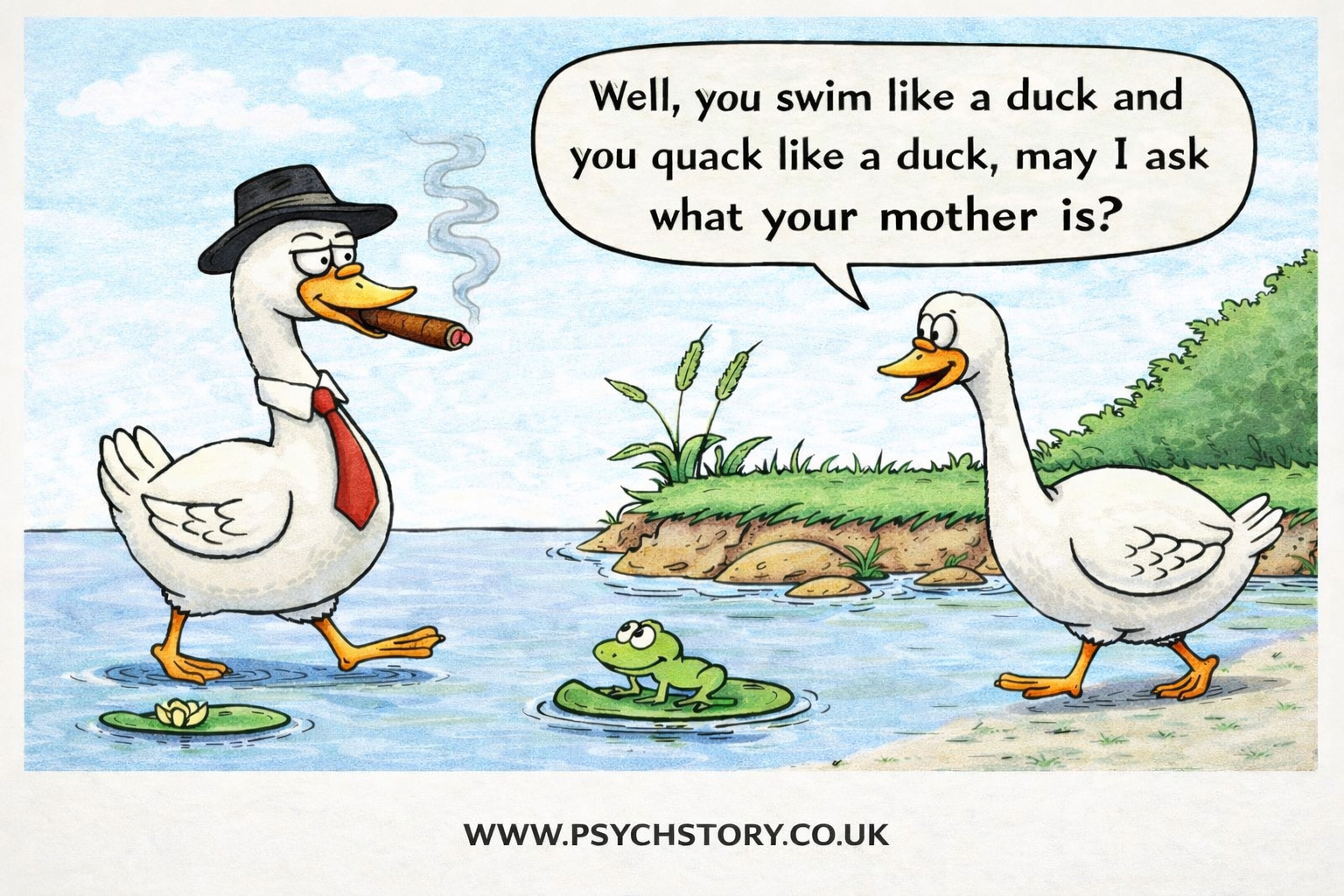
THE NATURE DEBATE
Nurture assumes that behaviour, personality, and psychological development are shaped by environmental experience rather than being biologically predetermined. From this perspective, individuals are not born with fixed behavioural patterns or psychological characteristics. Instead, these develop over time through interaction with the environment, including learning, upbringing, social influences, and cultural context.
LEARNING THROUGH EXPERIENCE (BEHAVIOURISM AND SOCIAL LEARNING) Behaviourist approaches argue that behaviour is acquired through interaction with the environment via conditioning. Classical conditioning explains how associations form between stimuli, as demonstrated by Pavlov’s dogs, in which a neutral stimulus came to elicit a physiological response. Operant conditioning explains behaviour in terms of reinforcement and punishment. Skinner showed that behaviour can be shaped through consequences, with reinforcement increasing the likelihood of a response and punishment reducing it. Social learning theory extends this by showing that behaviour is also learned through observation and imitation. Bandura (1961, 1977) demonstrated that children exposed to aggressive role models were more likely to reproduce aggressive behaviour, even in the absence of direct reinforcement. This suggests that behaviour is learned not only through direct experience but also through observing others within a social context.
UPBRINGING AND EARLY EXPERIENCE (PSYCHODYNAMIC AND DEVELOPMENTAL INFLUENCES): Psychodynamic theory emphasises the importance of early childhood experiences in shaping personality. Freud argued that personality develops through a series of psychosexual stages, and that early experiences, particularly those involving caregivers, have lasting effects on emotional development and behaviour. Bowlby’s theory of attachment highlights the importance of early relationships in shaping later social and emotional functioning. Disruptions in early attachment, such as maternal deprivation, have been linked to long-term difficulties in relationships and emotional regulation. Ainsworth’s Strange Situation studies demonstrated how different patterns of caregiving lead to distinct attachment styles, which influence behaviour across the lifespan. These approaches emphasise that personality and emotional development are not fixed at birth but are shaped by early environmental input.
CULTURE, SOCIAL CONTEXT, AND ZEITGEIST: Behaviour is also shaped by the broader social and cultural environment. Cultural norms, values, and expectations influence how individuals think, feel, and behave. Cross-cultural research demonstrates that behaviours such as parenting styles, gender roles, and attitudes towards authority vary widely between societies, indicating that they are learned rather than biologically determined. The concept of zeitgeist refers to the influence of a particular time period's cultural climate. For example, changing societal attitudes towards mental health, gender, and identity demonstrate how behaviour and self-concept are shaped by historical and social context rather than fixed biological factors. Vygotsky’s sociocultural theory emphasises the role of social interaction and language in cognitive development. He argued that higher cognitive functions develop through interaction with more knowledgeable others, highlighting the importance of the social environment in shaping thinking.
LANGUAGE, COGNITION, AND ENVIRONMENTAL INPUT
Environmental explanations also account for the development of language and cognition. Behaviourist accounts propose that language is acquired through imitation and reinforcement. Although challenged by nativist theories, environmental input remains essential. Children deprived of social interaction, such as in cases of extreme neglect, show severe deficits in language and cognitive development, demonstrating the necessity of environmental experience. Educational experiences further shape cognitive development. Differences in schooling, literacy exposure, and social opportunity contribute to variation in intellectual performance, supporting the role of nurture in shaping cognitive abilities.ENVIRONMENTAL DETERMINISM: At its most extreme, the nurture position suggests that behaviour is entirely determined by environmental factors. From this perspective, individuals are the product of their experiences, and behaviour can be predicted and controlled by manipulating the environment. However, as with extreme nature positions, this view is limited. Environmental influences are powerful, but they interact with biological factors, making it difficult to attribute behaviour solely to nurture.
CONCLUSION: The nurture approach demonstrates that behaviour, personality, and cognitive development are shaped by learning, relationships, and the wider social and cultural environment. Evidence from conditioning, social learning, attachment research, and cross-cultural studies all support the view that experience plays a central role in determining who we become.
EXTREME NURTURE POSITION (EMPIRICISM)
The extreme nurture position, associated with empiricism, argues that behaviour, personality, and psychological characteristics are entirely the product of environmental experience. At birth, the individual is viewed as a tabula rasa, a blank slate, with no innate knowledge, abilities, or behavioural tendencies. All psychological development is therefore acquired through interaction with the environment.
From this perspective, differences between individuals arise from their exposure to different experiences. Learning is the central mechanism. Behaviour is shaped through conditioning, reinforcement, observation, and social interaction. What a person becomes is determined by how they are raised, the models they observe, and the cultural context in which they develop.
Behaviourist approaches represent the clearest expression of this position. Watson argued that, given control of the environment, any infant could be trained to become any type of individual, regardless of biological background. Skinner similarly maintained that behaviour is the result of reinforcement histories, with no need to refer to internal or innate processes. Within this framework, the mind was treated as a “black box,” meaning that internal mental processes could not be directly observed or measured and were therefore excluded from scientific explanation. Psychology, in this view, should focus only on observable stimuli and behavioural responses. Bandura extended this account through social learning theory, demonstrating that behaviours such as aggression can be acquired through observation and imitation, as shown in the Bobo Doll studies (Bandura, 1961; 1977).
Environmental explanations also account for behaviours that are clearly acquired rather than inherited. Skills such as riding a bicycle, speaking a particular language, or adopting cultural practices depend entirely on exposure and learning. A child raised in a different cultural environment would acquire a different language, norms, and behavioural patterns. Similarly, practices such as ear piercing may appear across generations but are transmitted through social learning rather than genetic inheritance.
However, even within behaviourism, not all theorists adopted a completely blank slate position. Some later behaviourists acknowledged biological constraints on learning. For example, Seligman proposed the concept of preparedness, suggesting that organisms are biologically predisposed to learn certain associations more easily than others, such as fear of snakes or spiders. This indicates that while behaviour is learned, the capacity to learn may be influenced by biological factors.
Despite these qualifications, the extreme empiricist position maintains that environmental experience is the primary determinant of behaviour, and that psychological characteristics are constructed through learning rather than inherited.
RESEARCH METHODS OF THE NURTURE APPROACH
Methods used to investigate nurture focus on how behaviour is shaped by experience, learning, and environmental context. Compared to biological research, these methods face greater difficulty in establishing clear cause-and-effect relationships. Environmental influences are complex, difficult to isolate, and often cannot be manipulated without ethical constraints. As a result, much of the evidence is either experimental but limited in scope or naturalistic but correlational, leaving it open to confounding variables. The strongest causal evidence comes from controlled learning experiments, particularly in behaviourism and animal research.
CLASSICAL CONDITIONING (CONTROLLED EXPERIMENTS): Classical conditioning experiments demonstrate how behaviour can be learned through association between stimuli. Pavlov’s work showed that physiological responses such as salivation can be conditioned through repeated pairing of a neutral stimulus with an unconditioned stimulus. Watson and Rayner (1920) extended this to humans in the Little Albert study, in which a neutral stimulus (a white rat) was paired with a loud noise to elicit a conditioned fear response. This provided direct experimental evidence that emotional responses can be learned from the environment. These experiments offer strong internal validity because variables are tightly controlled. However, they are often criticised for ethical concerns, particularly for inducing fear in human participants.
OPERANT CONDITIONING (LABORATORY LEARNING STUDIES): Operant conditioning research examines how behaviour is shaped by consequences. Skinner used controlled laboratory experiments, often with animals such as rats and pigeons, to demonstrate how reinforcement and punishment influence behaviour. For example, animals learned to press levers or peck keys to receive rewards, showing that behaviour can be systematically shaped through reinforcement schedules. These studies demonstrate clear cause-and-effect relationships between environmental input and behavioural output. However, findings are often based on highly artificial settings, raising questions about ecological validity and whether such behaviours generalise to complex human actions.
SOCIAL LEARNING THEORY (OBSERVATIONAL EXPERIMENTS): Social learning research investigates how behaviour is acquired through observation and imitation. Bandura’s Bobo Doll experiments showed that children exposed to aggressive models were more likely to imitate aggressive behaviour, even without direct reinforcement. This method combines experimental control with social realism, demonstrating that behaviour can be learned vicariously. It provides strong evidence for environmental influence beyond simple conditioning. Limitations include demand characteristics, as participants may infer the study's purpose and behave accordingly, and questions about whether short-term imitation reflects long-term behavioural change.
NATURAL AND FIELD EXPERIMENTS (REAL WORLD ENVIRONMENTS): Natural experiments examine behaviour in real-world settings where variables are not directly controlled by the researcher. For example, studies of institutionalisation, such as Rutter et al. (2007) on Romanian orphans, show how deprivation and lack of social interaction affect cognitive and emotional development. Field experiments, conducted in natural environments, attempt to balance realism with some degree of control. For example, Piliavin et al. (1969) studied helping behaviour on a subway, demonstrating how social context influences behaviour. These methods have higher ecological validity but lack control over extraneous variables, making causal conclusions more difficult.
LONGITUDINAL AND DEVELOPMENTAL STUDIES: Longitudinal studies track individuals over time to examine how environmental factors influence development. For example, attachment research by Ainsworth (1978) and later follow-up studies show how early caregiving experiences relate to later social and emotional outcomes. These studies provide insight into long-term environmental effects but are time-consuming, expensive, and vulnerable to attrition. They are also correlational, as it is not possible to control all environmental influences across time.
CROSS-CULTURAL STUDIES: Cross-cultural research compares behaviour across different societies to identify the role of cultural environment. For example, Mead (1935) demonstrated variation in gender roles across cultures, suggesting these behaviours are learned rather than biologically fixed. Berry (1967) showed differences in conformity between collectivist and individualist cultures, indicating that social norms shape behaviour. These studies provide strong evidence for environmental influence but may be affected by cultural bias and difficulties in ensuring the equivalence of measures across cultures.
DEPRIVATION AND ISOLATION STUDIES: Studies of extreme deprivation provide evidence for the role of environment in development. Cases such as Genie (Curtiss, 1977) demonstrate that a lack of social and linguistic input leads to severe deficits in language and cognitive functioning. Institutional studies, such as those on Romanian orphanages, show that early deprivation can lead to long-term emotional and behavioural difficulties. These studies provide powerful evidence but are ethically sensitive and cannot be experimentally replicated.
ANIMAL STUDIES AND CONTROLLED ENVIRONMENTS: Animal research allows greater experimental control over environmental variables. For example, Harlow’s studies on attachment in rhesus monkeys demonstrated the importance of contact comfort over feeding, showing that emotional development depends on environmental experience. Seligman’s work on learned helplessness showed that exposure to uncontrollable stressors leads to passive behaviour, which has been used to model depression. While these studies allow causal conclusions, their applicability to human behaviour is limited by species differences and ethical concerns.
EVALUATION OF METHODS: Research into nurture is methodologically challenging. Environmental variables are numerous, interacting, and difficult to isolate. Human studies are often constrained by ethical considerations, preventing controlled manipulation of key variables such as deprivation or trauma. Many findings are therefore correlational, making it difficult to establish a clear cause-and-effect. Experimental studies provide stronger evidence but are often artificial and limited in scope. Animal studies offer control but raise issues of generalisability. Demand characteristics and social desirability can also affect human research, particularly in observational and experimental studies involving social behaviour. Despite these limitations, a wide range of methods consistently demonstrate that behaviour can be shaped by environmental experience, providing substantial support for the nurture approach
RESEARCH EVIDENCE FOR THE NURTURE DEBATE
Environmental characteristics are those that are acquired through experience rather than inherited through genetic transmission. They arise from interaction with the physical, social, and cultural environment, and are shaped through learning, exposure, and socialisation processes. These characteristics are not present at birth but develop over time in response to environmental input.
EDUCATION AND SOCIAL CLASS – Educational outcomes show consistent environmental patterning. The Coleman Report (1966) demonstrated that family background and peer environment were stronger predictors of academic achievement than school funding alone, shifting emphasis away from innate ability towards social context. Bernstein (1971) identified class-based differences in language use, distinguishing between elaborated and restricted codes, with elaborated code supporting abstract thinking required for academic success. Hart and Risley (1995) further showed that by age three, children from higher socioeconomic backgrounds had been exposed to significantly more language than those from lower-income households, and this early environmental difference predicted later vocabulary and academic performance.
BELIEFS, VALUES, AND RELIGION – Belief systems are transmitted through cultural immersion rather than biological inheritance. Individuals typically adopt the religious and moral frameworks of their surrounding environment, and cross-cultural variation demonstrates that these systems are learned. Hofstede’s research on cultural dimensions showed systematic differences in values such as individualism and collectivism across societies, indicating that behaviour and worldview are shaped by cultural context rather than genetic transmission.
LANGUAGE AND ACCENT – Language acquisition is dependent on environmental exposure. The case of Genie (Curtiss, 1977) demonstrated that severe deprivation of linguistic input during critical developmental periods results in lasting deficits in language ability, despite later intervention. Kuhl’s research on infant phoneme discrimination shows that infants initially possess universal speech perception, which becomes specialised based on environmental exposure, illustrating how experience shapes even basic perceptual systems.
SOCIAL LEARNING AND AGGRESSION – Behaviour can be acquired through observation without direct reinforcement. Bandura’s Bobo Doll experiments (1961, 1977) demonstrated that children imitate aggressive behaviour modelled by adults, showing that environmental exposure alone can produce behavioural change. Anderson and Bushman’s meta-analyses of violent media effects further support this, finding consistent associations between exposure to violent content and increased aggression, reinforcing the role of environmental modelling.
SOCIAL INFLUENCE AND CONFORMITY – Behaviour is highly sensitive to situational context. Asch (1951) demonstrated that individuals conform to group opinion even when the group's opinion is clearly incorrect, while Milgram (1963) showed that participants would administer what they believed to be harmful electric shocks under the authority of an experimenter. Zimbardo’s Stanford Prison Experiment (1971) illustrated how rapidly individuals adopt behaviours consistent with assigned social roles, indicating that behaviour is shaped by environmental conditions rather than fixed internal traits.
ECOLOGICAL SYSTEMS AND DEVELOPMENT – Bronfenbrenner’s ecological systems theory (1979) proposes that development is shaped by multiple layers of environmental influence, from immediate relationships to broader cultural systems. This framework demonstrates that behaviour cannot be understood in isolation, but must be viewed within interacting environmental contexts.
ATTACHMENT, DEPRIVATION, AND INSTITUTIONALISATION – Early environmental conditions have lasting developmental consequences. Rutter’s Romanian orphan studies (2007) found that children raised in deprived institutional environments showed cognitive and emotional impairments, but earlier adoption into enriched environments improved outcomes, demonstrating both environmental causation and potential for recovery. Bowlby’s work on maternal deprivation similarly highlights the importance of early attachment experiences in shaping emotional development.
TRAUMA AND PSYCHOLOGICAL OUTCOMES – Exposure to adverse environments produces measurable psychological effects. The Adverse Childhood Experiences study (Felitti et al., 1998) found a graded relationship between early trauma and later mental and physical health outcomes, with increased exposure predicting a higher risk of depression, addiction, and chronic illness. This cumulative pattern cannot be explained by genetics alone and highlights the impact of environmental experience.
HEALTH, DIET, AND THE ENVIRONMENT – Rapid increases in obesity rates demonstrate strong environmental influence. The Foresight Report (2007) identified factors such as food availability, urban design, and sedentary lifestyles as key drivers. Neel’s thrifty gene hypothesis (1962) suggests a genetic predisposition for efficient energy storage, but modern environments activate this predisposition, showing that environmental conditions play a critical role in behavioural and physiological outcomes.
GENE EXPRESSION AND ENVIRONMENT (EPIGENETICS) – Environmental factors can regulate gene expression. Meaney’s research on rats demonstrated that variations in maternal care alter stress responses through epigenetic mechanisms. Caspi et al. (2003) found that individuals with a genetic vulnerability to depression were significantly more likely to develop the disorder only when exposed to stressful life events, demonstrating that environmental input determines whether genetic risk is expressed.
CULTURAL VARIATION IN GENDER ROLES – Gendered behaviour varies across cultures, indicating environmental influence. Mead (1935) documented differences in gender roles across societies, while Eagly’s social role theory (1987) argues that gender differences arise from societal expectations and division of labour rather than biological determinants.
ENVIRONMENTAL EXPRESSION IN BIOLOGY – Environmental influence extends beyond behaviour. Hydrangea flowers change colour depending on soil pH, demonstrating that even physical traits can be shaped by environmental conditions. This illustrates the broader principle that phenotype is not always a direct expression of genotype.
CONCLUSION – The evidence for nurture is extensive and convergent. Experimental, longitudinal, and cross-cultural research consistently demonstrate that behaviour is shaped by environmental input. While genetic factors provide a basis, environmental conditions influence development, expression, and outcomes, supporting the central role of nurture in shaping psychological characteristics
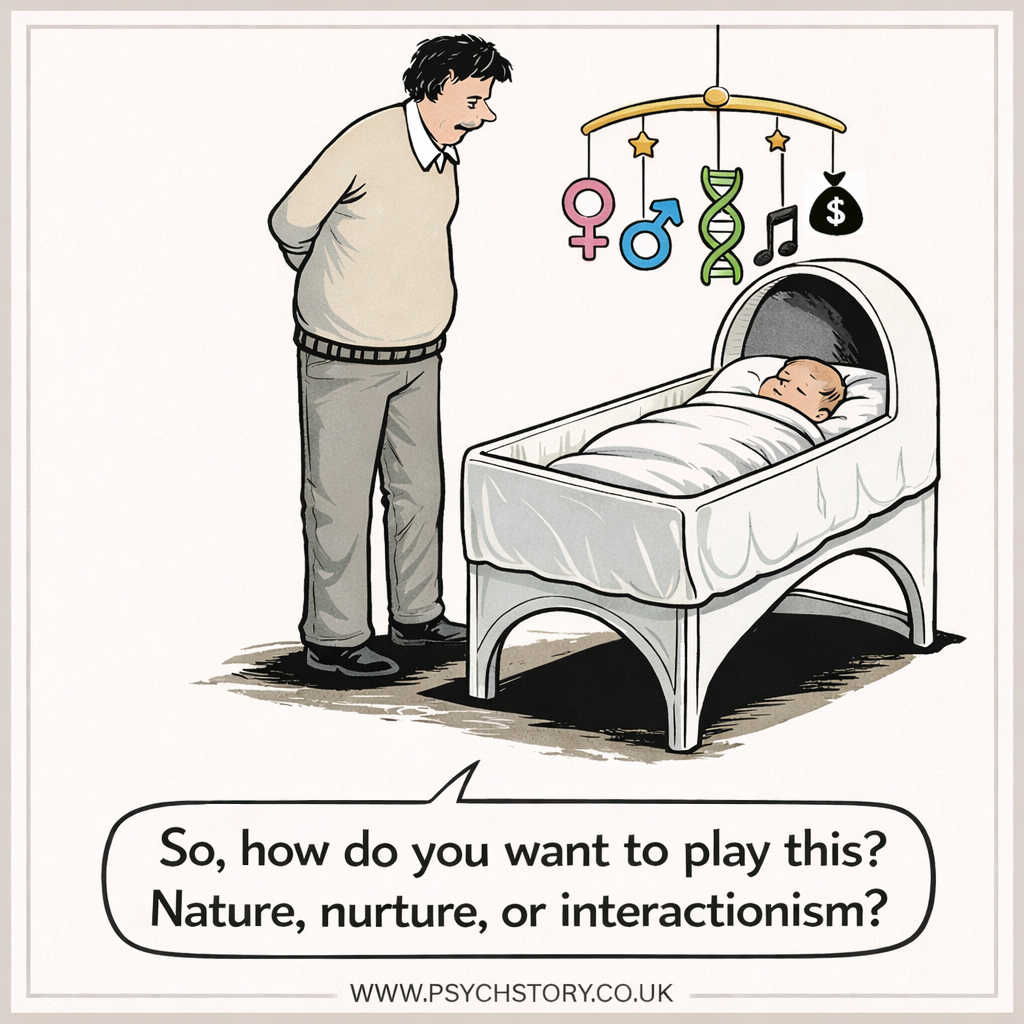
EVALUATION OF THE NATURE VERSUS NURTURE DEBATE ESSAY STYLE
Behavioural geneticist Robert Plomin (2018) has argued that genes play the dominant role in explaining individual differences:
“In the Nature-Nurture War, Nature Wins. Environmental influences are important, too, but they are largely unsystematic, unstable and idiosyncratic.”
Plomin suggests that while the environment does matter, its effects are often random, short-term, and unique to each person, rather than consistent and predictable.
Scott Barry Kaufman (2019) strongly disagreed with this framing. He argued that Plomin’s conclusion can be misleading because twin studies measure only what causes differences between people, not what is necessary for normal development. Kaufman wrote:
“Take the most essential element: a child needs to be raised in a family, almost any kind of family, to develop the ability to speak a language. Since every single person in twin studies checks that box (i.e., is raised in a family of some sort), this factor never varies and thus does not predict differences in language ability.
But does this mean that the variable ‘has a family’ doesn’t matter in determining whether or not a person develops the ability to speak a language? Of course not! That’s like saying that water has no influence on a fish’s development because all fish live in water.
Just because a variable doesn’t vary doesn’t mean it has no causal impact on a particular outcome.
The parenting factors that are statistically associated with differences between individuals should never be confused with the parenting factors that cause the development of a trait within an individual. Genes could ‘account for’ 100% of the variability in a trait in a particular twin study, but this does not mean that environmental factors are therefore unimportant in the development of the trait; parents still matter and will always matter.
It turns out that parenting matters, just in a way different from what was originally assumed. Genes matter to the extent that they support parenting because, like any other behaviour, parenting behaviours are influenced by genes, and parents matter to the extent that they support the expression of genes..
DISCUSSION POINTS – Evidence exists on both sides of the debate, but neither position is sufficient on its own. Biological research provides clear support for the natural world. For example, variants of the MAOA gene have been associated with an increased risk of aggressive and antisocial behaviour, particularly the low-activity MAOA L variant. Similarly, dopamine receptor genes such as DRD2 have been linked to reward sensitivity and addictive behaviours. However, this evidence does not demonstrate inevitability. Individuals carrying these genetic variants do not uniformly develop the associated behaviours, which immediately raises the limitation of a purely biological account.
Equally, there is strong support for nurture. Social learning research demonstrates that behaviour can be acquired through observation and imitation. Bandura’s work showed that exposure to aggressive models increases the likelihood of aggressive responding, even without direct reinforcement. Broader research on social influence, cultural norms, and environmental deprivation further supports the idea that behaviour is shaped by external conditions. However, environmental explanations alone also fail to account for individual differences. Not all individuals exposed to the same environment respond in the same way, indicating that underlying biological differences must play a role.
LIMITATIONS OF EXTREME POSITIONS – Both the nature and nurture positions, when taken as independent explanations, are reductionist. Biological traits do not operate in a vacuum. Their expression depends on environmental conditions. For example, possession of the MAOA L variant does not lead to psychopathy in the absence of environmental adversity. Research shows that individuals with this genotype are significantly more likely to develop antisocial behaviour only when exposed to childhood maltreatment. Similarly, genetic predispositions linked to addiction, such as variants of the DRD2 gene, require an environment in which addictive substances or behaviours are available. In this sense, genes create a vulnerability, not a predetermined outcome. This relationship is best understood through the concept of phenotype. The phenotype refers to the observable characteristics of an individual, including behaviour, which arise from the interaction between genotype and environment. The genotype provides the biological potential, but the environment determines how, whether, and to what extent that potential is expressed. Without the appropriate environmental input, genetic predispositions may remain dormant.
INTERACTIONIST APPROACH – Contemporary psychology adopts an interactionist position, rejecting the dichotomy between nature and nurture. Behaviour is the product of continuous interaction between biological and environmental factors. One key framework is the diathesis stress model, which proposes that psychological disorders arise from an interaction between a biological vulnerability and environmental stressors. Neither factor alone is sufficient. A genetic predisposition may remain unexpressed in the absence of stress, while environmental stress alone may not produce the disorder without underlying vulnerability.
Neurodevelopmental research further supports this interaction. Experience-dependent plasticity refers to the brain’s readiness to develop certain functions, such as language or vision, given typical environmental input during critical periods. If this input is absent, development is impaired, as demonstrated in cases of deprivation. In contrast, experience-dependent plasticity refers to learning that occurs throughout life, shaped by individual experiences, such as acquiring skills or knowledge. This demonstrates that the brain is not fixed at birth but is continually shaped by environmental interaction.
Epigenetics provides the most direct challenge to the nature-nurture dichotomy. Environmental factors can influence gene expression by activating or silencing genes without altering the DNA sequence. For example, variations in the C4 gene have been linked to schizophrenia, but environmental factors such as stress or early adversity may influence whether this genetic risk is expressed. This shows that genes are not static instructions but are responsive to environmental conditions.
INTERACTIONIST APPROACH SUMMARY
Behaviour is not caused by nature or nurture alone
The best explanation is nature via nurture
Genes provide potential; environment shapes expression
Continuous feedback loop between biology and experience
GENOTYPE AND PHENOTYPE
Genotype = genetic makeup (fixed)
Phenotype = observable characteristics (changeable)
The environment determines how genetic potential is expressed
Example: intelligence requires stimulation and education
EPIGENETICS
The environment alters gene expression without changing DNA
Mechanisms: DNA methylation, histone modification
Shows nurture works through biology
Example: Agouti mouse study (diet → gene expression → phenotype)
DIATHESIS–STRESS MODEL
Behaviour = genetic vulnerability + environmental trigger
Example: schizophrenia
MZ concordance ≈ 46% → genes important but not sufficient
Stress is needed for the disorder to develop
EXPERIENCE EXPECTANT PLASTICITY
The brain expects universal experiences
Occurs during critical/sensitive periods
Needed for normal development
Examples: language exposure, visual input, face recognition
EXPERIENCE DEPENDENT PLASTICITY (STRUCTURAL PLASTICITY)
Lifelong learning based on individual experience
No critical period
Repetition strengthens neural pathways
Causes physical brain changes
Example: London taxi drivers → larger hippocampus
GENE–ENVIRONMENT INTERACTION
Same genes → different outcomes in different environments
Same environment → different effects depending on genotype
Example: MAOA-L + childhood abuse → increased aggression
EVIDENCE FOR INTERACTIONISM
Twin studies: high but not 100% concordance
Epigenetics: environment affects gene activity
Plasticity: experience changes brain structure
Diathesis–stress: disorders require both vulnerability and trigger
CONCLUSION
Nature and nurture cannot be separated
Behaviour emerges from their interaction
Development = dynamic interplay, not fixed proportions
EVIDENCE FOR THE INTERACTIONIST APPROACH
Genes, Interactions, and the Development of Behaviour
Diathesis stress model: Schizophrenia: MZ concordance is 46%
Epigenetics: Agouti Mouse Study
MAOA L PSYCHOPATH GENE
KEY TAKEAWAYS FOR THE INTERACTIONIST APPROAC
The nature versus nurture debate concerns the extent to which particular aspects of behaviour are products of inherited (i.e., genetic) or acquired (i.e., learned) influences.
Nature is what we think of as pre-wiring and is influenced by genetic inheritance and other biological factors.
Nurture is generally taken as the influence of external factors after conception, e.g., the product of exposure, life experiences, and learning on an individual.
Behavioural genetics has enabled psychology to quantify the relative contribution of nature and nurture concerning specific psychological traits.
Instead of defending extreme nativist or nurturist views, most psychological researchers are now interested in investigating how nature and nurture interact in a host of qualitatively different ways. For example, epigenetics is an emerging field that shows how environmental factors influence gene expression.
NATURE VIA NURTURE IN DETAIL
FOR THOSE WANTING A MORE DETAILED EXPLANATION OF THE MECHANISMS IN INTERACTIONISM, READ BELOW.
THE NATURE OF NURTURE
Nurture explanations often assume that correlations between environmental factors and behaviour are causal. For example, children who are read to more frequently tend to develop stronger reading ability, suggesting that parental input directly improves literacy. Similarly, exposure to stress is associated with higher levels of depression. However, behavioural genetics challenges this assumption by arguing that these apparent environmental effects may partly reflect underlying genetic differences (Plomin and Bergeman, 1991).
Individuals do not simply receive environments passively. They select, shape, and evoke environments in ways that are consistent with their genetic predispositions. A child with a genetic inclination towards language and verbal ability is more likely to enjoy being read to, attend more closely, and request books. This, in turn, encourages parents to read more frequently, creating an enriched literacy environment. The environment, therefore, appears to be the cause of improved reading ability, when in reality it is partly a consequence of the child’s genetic tendencies. This is known as gene-environment correlation, and it demonstrates that nurture can be influenced by nature.
This challenges the validity of treating nature and nurture as separate, competing explanations. Environmental influences are not independent forces acting on a blank slate. Instead, they are intertwined with biological predispositions from the outset.
GENE–ENVIRONMENT INTERACTION – NATURE AND NURTURE AS A DYNAMIC SYSTEM
Gene–environment interaction refers to the principle that environmental influences do not operate uniformly across individuals, and genetic influences do not operate independently of context. The same environmental exposure can produce different outcomes depending on an individual’s genotype, and the same genotype can lead to different behavioural or psychological outcomes depending on the environment in which it is expressed.
This directly challenges the simplistic framing of nature versus nurture as competing explanations. Instead, it demonstrates that genes set a range of possible responses, while the environment determines how, when, and to what extent those genetic potentials are expressed. For example, two individuals exposed to the same stressful life event may respond very differently, not because the environment differs, but because their genetic sensitivity to stress differs. Equally, an individual with a genetic predisposition for a particular trait, such as high cognitive ability, will only realise this potential under conditions that provide appropriate stimulation, education, and opportunity.
This interaction is bidirectional. Environments shape gene expression, but individuals also actively select and create environments that align with their genetic tendencies. A child with a genetic predisposition to reading is more likely to seek out books, enjoy literacy-based activities, and elicit more reading interactions with caregivers. In this way, genetic predispositions influence the environments individuals experience, which in turn further reinforce those predispositions.
Gene–environment interaction, therefore, provides a more precise account of development than either biological determinism or environmental determinism alone. It recognises that outcomes emerge from continuous, reciprocal processes in which biological and environmental factors are inseparably linked. Nature does not act in isolation, and nurture is not applied to a passive organism; rather, both operate together in shaping behaviour, cognition, and development across the lifespan
GENOTYPE AND PHENOTYPE (EVALUATION)
The relationship between nature and nurture is more accurately understood through the distinction between genotype and phenotype. The genotype refers to an individual’s genetic makeup, encoded in their DNA and inherited from their parents. This genetic constitution remains fixed throughout life. The phenotype refers to the observable characteristics of the individual, including behaviour, personality, and cognitive ability. Crucially, the phenotype is not determined by genes alone, but by the interaction between genetic potential and environmental input.
This means that genes do not produce behaviour directly. Instead, they create a range of possible outcomes that are shaped by experience. For example, an individual may have a genetic predisposition for high intellectual ability, but without appropriate environmental stimulation, such as education, language exposure, and cognitive challenge, this potential may not be realised. Conversely, enriched environments can enhance the development of cognitive skills, allowing genetic potential to be more fully expressed.
A clear illustration is phenylketonuria (PKU), a genetic disorder caused by a defective gene that disrupts phenylalanine metabolism. If untreated, this leads to severe intellectual impairment. However, when individuals are placed on a strict low phenylalanine diet from an early age, normal cognitive development can occur. The genotype remains unchanged, but the phenotype is altered through environmental intervention. This demonstrates that genetic effects are not fixed outcomes, but depend on environmental conditions.
Overall, the distinction between genotype and phenotype shows that behaviour cannot be understood in purely biological or purely environmental terms. Observable characteristics emerge from the interaction between inherited potential and environmental experience, reinforcing the view that nature and nurture are fundamentally interconnected
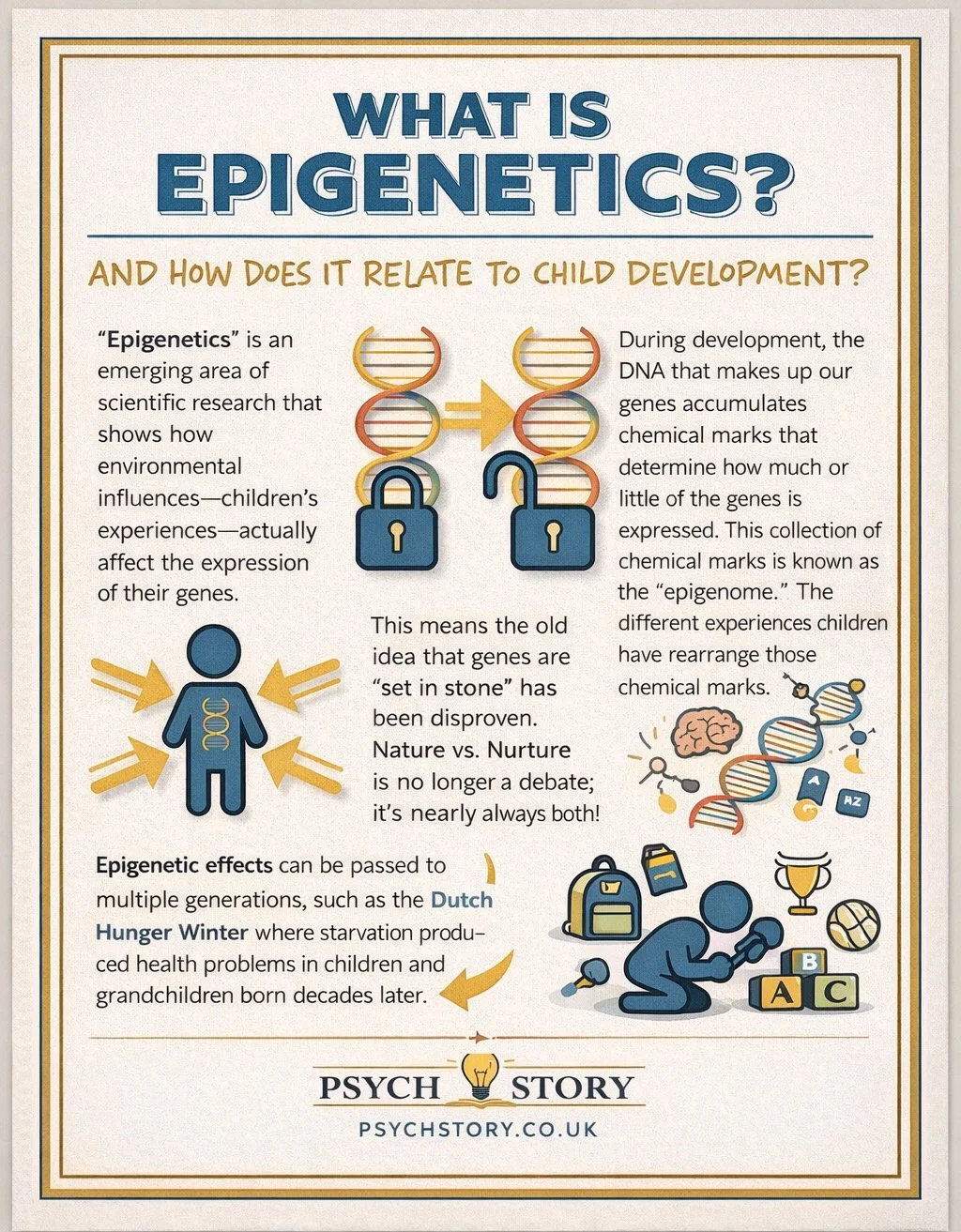
EPIGENETICS (NATURE AND NURTURE INTEGRATED)
Epigenetics provides direct evidence that the nature-versus-nurture distinction is not a simple opposition. Instead, it shows that environmental experiences can influence gene expression, meaning that nurture operates through biological mechanisms. Genes provide the underlying potential, but the environment determines how, when, and to what extent this potential is realised.
Epigenetics refers to changes in gene expression that occur without altering the DNA sequence itself. Rather than changing the genetic code, epigenetic mechanisms regulate whether genes are switched on or off. The two most well-established processes are DNA methylation, which typically reduces gene expression, and histone modification, which alters the accessibility of genes to transcription. These mechanisms allow environmental factors to directly shape biological functioning.
This provides a clear resolution to the nature-versus-nurture debate. Behaviour cannot be understood as purely genetic or purely environmental, because environmental input can modify gene activity. For example, early life experiences such as stress, nutrition, and caregiving can produce lasting changes in gene expression, particularly in systems involved in stress regulation and emotional processing.
Research provides strong support for this interactionist position. Meaney and colleagues demonstrated that variations in maternal care in rats led to epigenetic changes in genes regulating the stress response. Offspring that received high levels of care showed reduced stress reactivity, while those that received low care showed heightened responses. These differences were not due to genetic variation, but to environmental influence acting on gene expression.
Human studies show similar patterns. McGowan et al. (2009) found altered methylation of genes linked to stress regulation in individuals with a history of childhood abuse. In addition, epigenetic mechanisms have been implicated in disorders such as schizophrenia, where genes involved in neural development, including the C4 gene, may be influenced by environmental factors.
Epigenetics also explains how experience can produce lasting biological change. Through experience-dependent plasticity, environmental input can shape neural systems over time. In some cases, these changes may even be transmitted across generations, although this remains an area of ongoing research.
THE INTERACTIONIST APPROACH – EPIGENETICS (NATURE AND NURTURE INTEGRATED)
Epigenetics refers to changes in gene expression that occur without altering the underlying DNA sequence. Rather than changing the genetic code itself, epigenetic mechanisms regulate whether genes are activated or silenced. This provides direct evidence that the distinction between nature and nurture is not a simple opposition. Environmental factors do not merely act alongside genes; they influence how genes are expressed, meaning that nurture operates through biological processes.
The most well-established epigenetic mechanisms include DNA methylation, which typically reduces gene expression, and histone modification, which alters gene accessibility for transcription. Through these processes, experiences such as stress, nutrition, and social interaction can leave lasting biological marks. Genes, therefore, provide a range of potential outcomes, but environmental input determines how, when, and to what extent this potential is realised.
Evidence for this interaction comes from both animal and human research. Meaney and colleagues demonstrated that variations in maternal care in rats produced long-term changes in stress reactivity through epigenetic modification of genes regulating the hypothalamic-pituitary-adrenal axis. Offspring receiving high levels of care exhibited reduced stress responses, whereas those receiving low levels of care exhibited heightened reactivity. These differences were not due to genetic variation but to environmental influence acting directly on gene expression.
Human research shows comparable patterns. McGowan et al. (2009) found altered methylation of genes associated with stress regulation in individuals with a history of childhood abuse. Similarly, epigenetic mechanisms have been implicated in disorders such as schizophrenia, in which genes involved in neural development, including the C4 gene, may be influenced by environmental factors.
Natural experiments also support this position. During the Dutch Hunger Winter at the end of the Second World War, individuals exposed to famine in utero had an increased risk of metabolic and health problems across the lifespan. These effects were not due to changes in DNA sequence but to environmental conditions that affect gene expression during development. There is also evidence that such effects can extend to subsequent generations, suggesting that epigenetic changes may be transmitted, although typically only across a limited number of generations.
Further support comes from controlled animal studies. Waterland and Jirtle’s agouti mouse study demonstrated that dietary changes during pregnancy altered the expression of a gene linked to coat colour and obesity in offspring. Mice with identical genetic makeup developed different physical and behavioural outcomes depending on maternal diet, illustrating how environmental factors can regulate gene expression.
Epigenetics, therefore, provides a clear framework for understanding behaviour as the product of nature via nurture. Biological systems are not fixed at birth but are shaped and modified by environmental experience across development. This also explains why it is not possible to separate behaviour neatly into genetic or environmental causes. Advances in genetics, including polygenic analysis and genome mapping, have increased understanding of genetic influence, but they also reinforce the point that genes operate within environmental contexts.
Overall, epigenetics demonstrates that behaviour arises from the continuous interaction between biological predispositions and environmental input. There is no simple way to isolate these influences, as they are reciprocal and interdependent throughout development.
EXPERIENCE EXPECTANT PLASTICITY (DEVELOPMENTAL PLASTICITY): AN INTERACTIONIST ACCOUNT OF BRAIN DEVELOPMENT
Experience expectant plasticity, also known as developmental plasticity, illustrates how nature and nurture operate together rather than in opposition. The human brain is not fully formed at birth. Instead, it is biologically prepared to receive specific types of environmental input at particular stages of development. Genes provide the basic neural architecture and the expectation that certain experiences will occur, while the environment supplies the input required to complete that development.
In early infancy, the brain undergoes rapid synaptogenesis, producing an excess of neural connections. This reflects biological readiness for experience rather than completion. The brain “expects” exposure to universal stimuli such as faces, language, and patterned visual input. When these inputs are present, neural circuits are stabilised and strengthened. When they are absent, the relevant connections may fail to develop and are subsequently pruned away. In this way, development depends on both genetic programming and environmental activation.
This process is closely linked to critical or sensitive periods. During these windows, the brain shows heightened sensitivity to specific forms of input that are necessary for typical development. For example, exposure to language in early childhood is essential for normal linguistic competence. Similarly, visual experience is required for the proper development of the visual cortex. If these inputs are not received within the appropriate timeframe, development may be permanently disrupted. Animal studies support this pattern. Songbirds such as finches must hear adult song before sexual maturity in order to produce species-typical vocalisations. Without this input, the behaviour does not emerge correctly, despite intact biological potential.
Experience expectant plasticity, therefore, represents a universal developmental process shaped by evolution. The brain is preconfigured to acquire certain abilities, but these abilities only emerge fully when the expected environmental conditions are met. This demonstrates that genetic predispositions require environmental input to be expressed
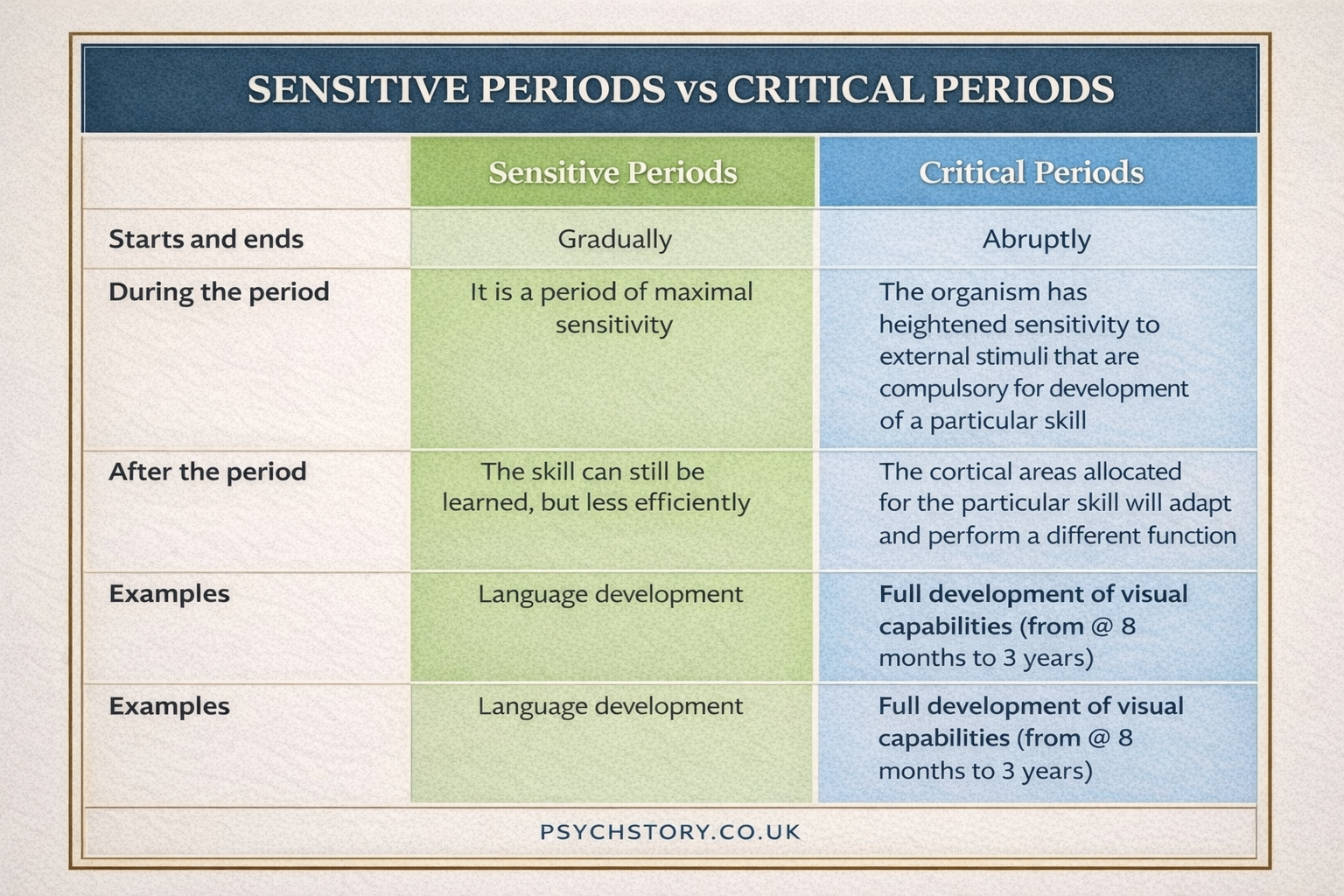
EXPERIENCE EXPECTANT AND EXPERIENCE DEPENDENT PLASTICITY (STRUCTURAL PLASTICITY) – AN INTERACTIONIST ACCOUNT OF BRAIN DEVELOPMENT
Experience expectant plasticity illustrates how nature and nurture operate together as an integrated system rather than as competing explanations. The human brain is not a complete or fixed structure at birth. Instead, it is biologically prepared to be shaped by specific types of environmental input that it “expects” to encounter. Genetic factors provide the underlying neural architecture, including the timing of development and the general organisation of brain systems, but this architecture requires environmental activation in order to develop normally.
During early development, the brain undergoes rapid synaptogenesis, producing a surplus of synaptic connections. This overproduction reflects evolutionary preparation for a range of possible environments. The brain is effectively waiting for input. When expected experiences occur, such as exposure to light, language, and social interaction, the relevant neural pathways are stabilised and strengthened through repeated activation. When these experiences do not occur, the corresponding connections are not maintained and are removed through synaptic pruning. This process increases neural efficiency by retaining only those pathways that are functionally relevant to the individual’s environment.
Experience-dependent plasticity is therefore universal. It applies to all members of the species and is tied to critical or sensitive periods in development. These are biologically timed windows during which the brain is especially responsive to particular forms of input. For example, exposure to language in early childhood is necessary for the development of normal grammar and phonology. Children who are deprived of linguistic input during this period show persistent deficits that are difficult or impossible to fully reverse. Similarly, visual development depends on patterned visual input in infancy. If this input is absent, as demonstrated in studies of visual deprivation, the visual cortex does not develop typical functionality.
Animal research supports this framework. In songbirds such as finches, there is a critical period during which the bird must hear adult song in order to develop normal vocalisations. Without this exposure, the bird fails to produce the species typ’ typical song, even though the biological mechanisms for doing so are present. This demonstrates that genetic potential alone is insufficient; environmental input is required to trigger and refine development.
In contrast, experience-dependent plasticity refers to changes in the brain that result from individual experiences across the lifespan. Unlike experience-expectant processes, this form of plasticity is not restricted to critical periods and does not depend on universal inputs. Instead, it reflects ongoing learning, practice, and environmental interaction. Every time a skill is learned or repeated, neural pathways are modified. Connections that are frequently used become stronger and more efficient, while those that are rarely used may weaken.
Experience-dependent plasticity accounts for individual differences. Two individuals with similar genetic starting points may develop very different neural structures depending on their experiences. Learning to drive, acquiring a second language in adulthood, or developing expertise in a profession all involve repeated activation of neural circuits, leading to structural changes in the brain. This is why it is also referred to as structural plasticity.
Empirical evidence demonstrates these effects. Research on London taxi drivers has shown increased volume in the posterior hippocampus, a region associated with spatial navigation. This change is linked to the extensive experience of navigating complex city layouts. Unlike experience-expectant processes, which are time-limited and universal, experience-dependent plasticity is continuous and reflects the cumulative impact of an individual’s life experiences.
The distinction between the two forms of plasticity is therefore critical. Experience expectant plasticity involves biologically anticipated input that must occur for normal development, often within restricted time periods. Experience-dependent plasticity involves additional, non-universal learning that can occur at any point in life and contributes to individual variation.
INTEGRATION OF NATURE AND NURTURE
Together, these processes provide a clear interactionist account of brain development. Nature does not operate independently of nurture, and nurture does not act on a blank slate. Instead, genetic systems are designed to respond to environmental input, and environmental experiences shape biological structures.
Experience-dependent plasticity demonstrates that the brain requires specific inputs to develop species-typical functions. Experience-dependent plasticity demonstrates that the brain remains adaptable, continuously shaped by learning and experience throughout life. Development is therefore best understood as an ongoing interaction in which biological potential is realised, modified, and refined through environmental engagement
TEST YOUR KNOWLEDGE QUESTIONS
Explain what is meant by the nature versus nurture debate in psychology. (2 marks)
Outline how both genetic and environmental factors contribute to human development. (4 marks)
Explain one way in which nature and nurture interact to influence behaviour. (4 marks)
Discuss how nature and nurture work together to shape human development. (6 marks)
Explain why the nature versus nurture debate is considered a false dichotomy. (4 marks)
Discuss the view that behaviour cannot be explained by nature or nurture alone. (6 marks)
Explain how genetic factors influence personality. (4 marks)
Discuss the relative influence of nature and nurture on personality development. (6 marks)
Explain how nature and nurture influence intelligence. (4 marks)
Discuss the extent to which intelligence is determined by genetic factors. (6 marks)
Outline one example of how nature and nurture influence behaviour. (2 marks)
Explain how nature and nurture influence human behaviour using one example. (4 marks)
Discuss how nature and nurture contribute to the development of behaviour. (6 marks)
Explain how nature and nurture influence social and emotional development. (4 marks)
Discuss the role of nature and nurture in the development of social and emotional characteristics. (6 marks)
Explain how nature and nurture may influence the development of substance abuse. (4 marks)
Discuss the role of nature and nurture in explaining addiction or substance misuse. (6 marks)
Outline what twin studies suggest about the nature versus nurture debate. (2 marks)
Explain how twin studies contribute to our understanding of nature and nurture. (4 marks)
Discuss the strengths and limitations of twin studies in investigating nature and nurture. (6 marks)
Explain how nature and nurture influence child development. (4 marks)
Discuss the extent to which child development is shaped by nature and nurture. (6 marks)
Explain how nature and nurture influence violent or antisocial behaviour. (4 marks)
Discuss the extent to which violent behaviour can be explained by nature or nurture. (6 marks)
Explain how nature and nurture influence sexual orientation. (4 marks)
Discuss the extent to which sexual orientation can be explained by biological and environmental factors. (6 marks)
Outline one criticism of the nature versus nurture debate. (2 marks)
Explain why asking “which is more important, nature or nurture” may be misleading. (4 marks)
Discuss the usefulness of the nature versus nurture debate in psychology. (6 marks)
POSSIBLE EXAM QUESTIONS
WHAT PSYCHOLOGY APPROACHES ARE NATURE AND WHAT APPROACHES ARE NURTURE? (7 MARKS)
Which of the following terms best represents the view that biology and environment work together to determine behaviour? Shade one box only. (Total 1 mark)
A: Determinism
B: Ethnocentrism
C: Holism
D: Interactionism
E: Reductionism
Read the item and then answer the questions that follow. Researchers used a test to measure the mathematical reasoning ability of pairs of identical and non-identical twins. If both members of a pair scored similarly on the test, they were said to be ‘concordant’. This type of study is known as a concordance study. The outcome of the research, with the concordance rates expressed as a percentage
THE CONCORDANCE RATE FOR MATHEMATICAL REASONING ABILITY
GENETIC RELATIONSHIP CONCORDANCE RATES
Identical twins
(100% shared genes) 58%Non-identical twins
(50% shared genes) 14%What is meant by the ‘nature-nurture debate’ in psychology? (Total 2 marks).
Briefly explain the outcome of the study in relation to the nature-nurture debate. (Total 2 marks)
Nature deals with anything that is determined by genes and hereditary factors. What are some examples of characteristics that are influenced by nature? (Total 4 marks)
Nurture deals with anything that is heavily influenced by the environment. What are some characteristics that are influenced by nurture? (Total 4 marks)
You may be thinking that both nature and nurture are well-defined. Since they are so well-defined, why is there such a huge debate about nature versus nurture? Discuss the nature-nurture debate in psychology (Total 16 marks).
Discuss the nature-nurture debate in psychology. Refer to at least two topics you have studied in your answer. (Total 16 marks)
Nature and nurture interact; both are vital to understanding and explaining human behaviour.’Referring to this statement, discuss the nature-nurture debate in psychology. (Total 16 marks).
ESSAY WRITING
EXAMINER’S COMMENTS FOR 16 MARKER QUESTIONS
Students generally demonstrated sound knowledge and understanding of the nature-nurture debate and used relevant terminology correctly. It was also evident that students were knowledgeable about the standing of different approaches in psychology in relation to the debate. Disappointingly, some students seemed to be writing a ‘pre-prepared’ essay on the nature-nurture debate, which did not quite fit the question, again illustrating the requirement to read the question carefully and plan an answer to the specific question set. The answer required a reference to the statement concerning the interaction between nature and nurture. Many answers did refer to interactionism, often using appropriate examples such as Phenylketonuria (PKU), schizophrenia, and/or language development. However, some students offered little or no discussion of the interaction between nature and nurture, which restricted the marks that could be awarded. The skill of using topics/approaches/research to illustrate points raised in the essay on the nature-nurture debate seems to be improving. However, some answers still begin to read like a PSYB3 answer, where, for example, there might be a whole page on theories of crime, with a detailed outline of research, followed by an evaluation of the research, with the focus of the debate lost. The best answers made clear, succinct references to topic areas and research to illustrate the debate.
Given that a nature-nurture question has not appeared as an extended writing question before, students might have been expected to be better prepared. In fact, answers to this question were generally very disappointing, with marks often limited to Level 2 due to basic misunderstandings. The main problem seems to have been a complete lack of understanding of the concept of ‘a debate’. This was evident right at the start of the vast majority of answers, where paragraphs would typically begin with ‘The nature debate argues that…’ or ‘According to the nurture debate…’. Similar problems arose where attempts at discussion included phrases such as ‘One strength of the nature debate is…’ or ‘One criticism of the nurture debate is…’ Inevitably, it was quite hard to award much credit for such answers because the sentences did not make a great deal of sense. Further problems arose for students who offered an ‘approaches’ answer, describing and evaluating the biological and learning approaches in turn, with hardly any reference to nature or nurture. Not surprisingly, the focus on treatments was not usually successful, since the debate is really about the origins of behaviour. A relatively small number of competent students recognised the complexities of the debate and referred to constructivism, niche picking, and the reciprocal effects of nature and nurture.
MARK SCHEMES FOR 16 MARKER QUESTIONS
THE NATURE VERSUS NURTURE DEBATE – AO1 STRUCTURE
The nature versus nurture debate centres on whether human behaviour is primarily determined by biological inheritance (nature) or shaped by environmental experience (nurture).
The nature position argues that behaviour is largely the product of heredity, with characteristics and abilities being innate and biologically determined. This view is grounded in nativism, which proposes that knowledge and behavioural tendencies are inborn and present at birth.
The nurture position argues that behaviour is the result of environmental influences, learning, and experience. This view is rooted in empiricism, which proposes that all knowledge is acquired through interaction with the environment. This is illustrated by John Locke, who described the mind as a tabula rasa, or blank slate, on which experience writes
A03 POSSIBLE DISCUSSION POINTS
Use of evidence to support the influence of nature, e.g., twin studies showing higher concordance for MZ pairs than DZ pairs
Use of evidence to support the influence of nurture, e.g., studies of social learning
Need to take an interactionist approach rather than a dichotomous view
Links with approaches in psychology, e.g., how the biological approach supports the nature side of the debate.
Use of examples from topics to support arguments
Credit other relevant material.
THE NATURE VERSUS NURTURE DEBATE – AO3 STRUCTURE
The nature-versus-nurture debate concerns whether human behaviour is shaped primarily by genetic inheritance or by environmental experience, but contemporary psychology no longer treats these as competing or separable causes. The nature position proposes that behaviour is biologically determined. It emphasises heredity, genes, neurobiology, and innate mechanisms, and is rooted in nativism, which argues that abilities and knowledge are inborn. Examples often cited include genetic conditions such as Down syndrome, where biological inheritance clearly constrains development.
The nurture position proposes that behaviour is shaped through experience. It emphasises learning, culture, upbringing, and environmental exposure, and is rooted in empiricism, particularly the idea of the mind as a blank slate, where knowledge is acquired through interaction with the environment. However, this binary framing is now considered outdated. Advances in neuroscience, genetics, and epigenetics have shown that behaviour cannot be attributed to nature or nurture in isolation. Instead, development is understood as an ongoing reciprocal interaction between genes and environment. Genes do not operate in isolation. Their expression is regulated by environmental input, meaning that nurture influences how biological systems function. At the same time, genetic predispositions shape how individuals respond to their environments. This creates a continuous bidirectional process, more accurately described as a dynamic feedback loop or gene–environment interaction.
As a result, the debate has shifted from asking which factor is more important to questioning whether such a distinction is meaningful at all. Attempts to assign proportions, such as estimating intelligence as a percentage of genetic versus environmental factors, are increasingly seen as oversimplifications. Interactionist approaches suggest that traits emerge from the inseparable interplay between biological potential and environmental experience. This position is often summarised as nature via nurture. Be”. Behaviour is not caused by genes or the environment separately, but by how environmental experiences are biologically embedded through neural, hormonal, and genetic mechanisms.
Therefore, the modern AO1 understanding is that the nature versus nurture debate is no longer about opposition, but about integration
MODEL ANSWER: DESCRIBE AND EVALUATE THE NATURE–NURTURE DEBATE IN PSYCHOLOGY (16 MARKS)
A01:
The nature–nurture debate concerns whether human behaviour is primarily determined by biological inheritance or by environmental experience. Historically, this has been presented as a dichotomy in which nature refers to innate influences such as genes, neurochemistry, and inherited characteristics, while nurture refers to learning, upbringing, and environmental exposure. The debate is often framed as whether behaviour is inborn or acquired, although this binary distinction is now widely regarded as overly simplistic.
The nature position is rooted in nativism, which proposes that knowledge and behaviour are largely innate. From this perspective, psychological characteristics are influenced by genetic inheritance. For example, research into schizophrenia indicates a strong genetic component, with concordance rates of approximately 40% in monozygotic twins compared to around 7% in dizygotic twins. This suggests that greater genetic similarity increases the likelihood of developing the disorder. In more deterministic cases, conditions such as Huntington’s disease are entirely genetic, demonstrating that some aspects of behaviour and cognition can be directly determined by inherited biological mechanisms.
In contrast, the nurture position is grounded in empiricism, particularly the work of John Locke, who described the mind as a tabula rasa. According to this view, behaviour is learned through interaction with the environment. Behaviourist explanations illustrate this clearly. For example, attachment may be explained through classical conditioning, in which a neutral stimulus becomes associated with food, and through operant conditioning, in which behaviours are shaped and maintained through reinforcement. These explanations emphasise that behaviour is acquired through experience, highlighting the role of environmental input in shaping development
A03:
A central criticism of the traditional nature–nurture debate is that it presents a false dichotomy. Treating biological and environmental influences as independent causal forces misrepresents how development actually occurs. Contemporary research demonstrates that these influences are inseparable and operate through continuous reciprocal interaction. Rather than asking which is more important, the more accurate question concerns how genetic predispositions and environmental inputs combine to produce behaviour. This shift reflects a move away from proportion-based thinking, such as assigning percentages to intelligence or personality, towards an interactionist framework in which such quantification becomes conceptually flawed.
One way this interaction is illustrated is through gene–environment interaction. The same genetic predisposition can lead to different outcomes depending on environmental conditions, and the same environment can have different effects depending on an individual’s genotype. Plomin et al. proposed the concept of passive influence, whereby parents provide both genetic material and an environment shaped by their own genetically influenced traits. For example, a parent with a vulnerability to mental illness may transmit this vulnerability genetically while also creating a more unstable or stressful home environment. In this case, what appears to be an environmental effect is partly genetic in origin, demonstrating that nature and nurture are not independent pathways but overlapping systems.
Further support for this position comes from the concept of gene–environment correlation, where individuals actively select, modify, or evoke environments that are consistent with their genetic predispositions. For example, a child with a genetic predisposition for reading may seek out books, enjoy literacy activities, and elicit more reading interactions with caregivers. This creates a feedback loop in which genetic tendencies shape environmental exposure, which in turn reinforces those same tendencies. This reciprocal process undermines the idea that environmental influences can be understood without reference to underlying biological factors.
Neuroplasticity provides clear biological evidence that nurture directly alters nature. Maguire et al. demonstrated that London taxi drivers had an enlarged hippocampus, with structural changes correlated with years of navigational experience. This finding shows that repeated environmental demands can lead to measurable changes in brain structure. Crucially, this is not limited to early development or critical periods. Experience-dependent plasticity operates across the lifespan, meaning that learning, practice, and experience continuously reshape neural architecture. This challenges deterministic interpretations of nature by demonstrating that biological systems remain dynamic and responsive to environmental input.
Epigenetics extends this argument further by showing that environmental factors regulate gene expression itself. Environmental experiences such as stress, nutrition, and early caregiving can influence whether specific genes are activated or suppressed, without altering the DNA sequence. This means that genes do not function as fixed instructions but as potentials that are expressed differently depending on context. Research by Meaney and Szyf demonstrated that variations in maternal care in rats produced long-term changes in stress regulation through epigenetic mechanisms. These changes persisted into adulthood, indicating that early environmental input can become biologically embedded. Human research, including studies of individuals exposed to early adversity, shows similar patterns of altered gene expression, particularly in systems linked to stress and emotional regulation.
The diathesis–stress model provides a clear applied example of this interactionist perspective. It proposes that psychological disorders arise from the interaction between a biological vulnerability and environmental stressors. For instance, an individual may inherit a predisposition to depression or schizophrenia, but the disorder will only develop if triggered by environmental factors such as trauma or chronic stress. This explains why concordance rates in twin studies are significantly below 100 per cent, even for genetically influenced disorders. Genetic vulnerability alone is insufficient; environmental conditions determine whether that vulnerability is expressed.
At a broader level, the debate has been further challenged by advances in cognitive neuroscience and behavioural genetics, which have made it increasingly difficult to separate biological and environmental explanations. Technologies that allow detailed examination of brain structure and function have shown that experience continuously modifies neural systems, while genetic research has revealed that most psychological traits are polygenic, involving multiple interacting genes rather than a single deterministic factor. This complexity makes reductionist accounts, whether purely biological or purely environmental, inadequate.
In conclusion, the nature–nurture debate is no longer a question of opposition but of integration. Behaviour cannot be understood in terms of isolated genetic or environmental causes, as each operates through the other in a continuous feedback system. The most accurate account is therefore interactionist, often described as nature via nurture, in which genetic potential is shaped, constrained, and expressed through environmental experience across the lifespan
GOOD NATURE VS NURTURE ESSAY TOPICS
The extent to which biological inheritance and environmental experience jointly shape behaviour and personality
Sex differences in behaviour: an evaluation of biological influences and socialisation processes
The origins of sexual orientation: assessing genetic, hormonal, and environmental explanations
Nature and nurture in cultural analysis: a critical examination of McClary’s The Blasphemy of Talking Politics During Bach Year
The relative contribution of genes and environment to child development across cognitive, emotional, and social domains
Entrepreneurial behaviour: innate predispositions or environmentally shaped outcomes
The causes of violent behaviour: evaluating biological vulnerability and environmental triggers
Gender development as an interaction between biological factors and cultural expectations
The influence of nature and nurture across the lifespan: from infancy to adulthood
Criminal behaviour: integrating biological theories with environmental explanations, including somatotype theory
Human behaviour and environmental degradation: innate tendencies versus learned patterns
Evolutionary explanations of behaviour within a modern interactionist framework
Personality development: the interplay between genetic predisposition and lived experience
Twin and adoption studies as evidence in the nature–nurture debate: strengths and limitations
Nature versus nurture as a scientific, philosophical, and cultural issue in psychology
The development of extreme behaviour: evaluating biological risk and environmental influence in serial offending
The interaction of biological, cultural, and familial factors in shaping behaviour
Nature versus nurture in the construction of identity and monstrosity in Mary Shelley’s Frankenstein
A psychological analysis of the nature–nurture theme in Frankenstein using contemporary theory
The evolution of psychology through the lens of the nature–nurture debate and the rise of interactionism
FURTHER READING
Best Nature vs Nurture Essay Topics & Essay Examples
Nature versus Nurture and Learning among Children
Of great concern to modern researchers is determining the degree to which nature and nurture influence a child's development and the provision of learning experiences.
As Nature Made Him: Summary and Analysis
As aforementioned, the author of this book provides a useful analysis of this aspect of personality. One of the greatest questions readers get answered in this book is the nature vs nurture debate in sexuality […]
Alcoholism-Nature vs Nurture Debate
The analysis of the physiological effects of alcohol shows that alcohol displays feelings of superiority and fearless behaviour, and also reduces an individual’s fear.
In most cases, nature determines the physical characteristics that, in effect, influence an individual's behaviour. These are traits largely determined by socio-cultural environmental factors or the way individuals are socialised […]
Human Development: Nature or Nurture?
Studies and theories examining the impact of nature on personal development and personality traits show that heredity is an important factor in development.
Nature vs. Nurture: New Science Stirs Debate on How Behaviour Is Shaped
A prime example of this type of debate is the question of whether nature or nurture has a greater bearing on the development of the diverse individual behavioural differences that exist.
Physical and Mental Wellbeing: Nature versus Nurture
In conclusion, the debates on nature versus nurture reveal that both innate health conditions and external factors shape the outcomes for an individual's physical and mental well-being.
Nature” Versus “Nurture”: Effects on Child Development
Consequently, a child’s behaviour cannot be viewed as solely attributable to the genetic composition of the parents and the hereditary characteristics.
Violent Behaviour: Nature vs Nurture
Considering this circumstance, shifts in one’s attitudes are likely to be attributed to changes in conditions, as reported by families with children.