
THEORY OF MIND
Specification: The development of social cognition: including theory of mind.
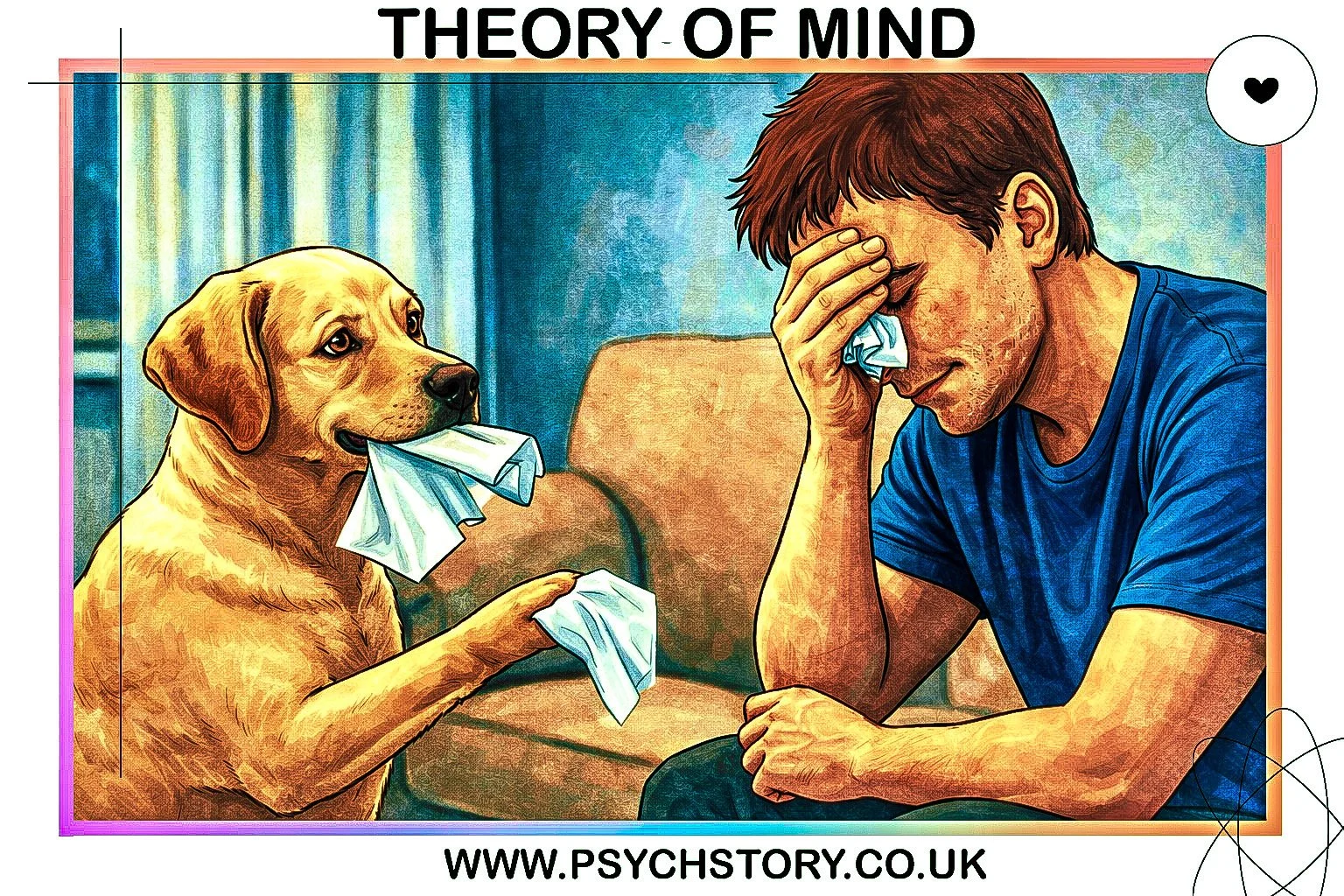
Read the following extract, and explain how it fits with the idea that ToM is a challenge for autistic people:
One of the most recurrent problems throughout middle childhood was my constant failure to distinguish between my knowledge and that of others. Very often my parents would miss deadlines or appointments because I failed to tell them of these matters. For instance, my parents missed the school’s Open House in my fifth grade and my mom asked me afterward ‘why didn’t you tell us about it?’ ‘I thought you knew it’, I replied.
WHAT IS AUTISM
Autism spectrum disorder is a neurodevelopmental condition defined in DSM 5 and DSM 5 TR by a specific pattern of symptoms, present from early development, causing clinically significant impairment, and not better explained by intellectual disability alone.
DSM 5 ASD diagnostic criteria in plain terms
A. Persistent differences in social communication and social interaction across contexts. These typically include all three:
Social-emotional reciprocity differences
Examples: atypical back-and-forth conversation, reduced sharing of interests or emotions, difficulty with social initiation or response..
In typical conversation, people naturally take turns speaking, respond to what the other person says, and adjust their responses based on social cues such as tone, facial expression, and interest. This creates a smooth exchange of ideas.
In autism, this conversational reciprocity can be different. Examples include:
• Difficulty starting a conversation or responding when someone speaks to them.
• Giving very short or literal answers that do not extend the conversation.
• Talking at length about a specific interest without noticing whether the other person wants to change the topic.
• Not asking questions back when someone shares information.
• Missing cues that signal when it is someone else’s turn to speak.
• Difficulty interpreting humour, sarcasm, or implied meaning during conversation.
For example, if someone says, “I went to the cinema yesterday,” a typical response might be “What did you see?” or “Was it good?” which continues the interaction. A person with atypical conversational reciprocity might respond with a factual comment unrelated to the social exchange, abruptly change the topic, or not respond at all.
Nonverbal communication differences: Examples: atypical eye contact, facial expression, gesture use, body language, integration of verbal and nonverbal signals..
DIFFERENCES IN NONVERBAL COMMUNICATION: One of the core diagnostic features of autism involves differences in how individuals use and interpret nonverbal communication signals. In everyday social interaction, communication relies not only on spoken language but also on a range of nonverbal cues such as eye contact, facial expressions, gestures, posture, and tone of voice. These cues help people interpret meaning, regulate conversation, and understand emotional states.
In autism, these nonverbal signals may be used, interpreted, or integrated with spoken language less automatically.
EYE CONTACT: Eye contact normally helps regulate conversation and signals attention, interest, and emotional engagement. In autism, patterns of eye contact may differ from typical expectations. Some individuals may avoid or reduce eye contact because it feels uncomfortable or overwhelming, while others may use eye contact in ways that seem unusual or poorly timed within the flow of conversation. Reduced eye gaze may make it harder to track social cues such as emotional expressions or conversational turn-taking.
FACIAL EXPRESSIONS: Facial expressions are an important way of conveying emotions and reactions during social interaction. Autistic individuals may display fewer spontaneous facial expressions, or their expressions may not always match the emotional tone of the situation. In addition, recognising subtle emotional expressions in others can sometimes be more difficult, which may affect the interpretation of social situations.
GESTURE USE: Gestures such as pointing, nodding, shrugging, or waving are commonly used to reinforce or replace spoken communication. In autism, gestures may be used less frequently, used differently, or not fully integrated with speech. For example, a child may not naturally point to share interest in an object or event (known as joint attention), which is an important early social communication behaviour.
BODY LANGUAGE AND POSTURE: Body posture and movement can convey attitudes such as confidence, uncertainty, boredom, or engagement. Autistic individuals may show differences in posture, movement, or spatial positioning during interaction. For example, they may stand at unusual distances from others or find it difficult to interpret others' body language.
INTEGRATION OF VERBAL AND NONVERBAL SIGNALS: In typical communication, verbal language and nonverbal cues work together to convey meaning. Tone of voice, facial expression, and gesture often modify or reinforce what is being said. For example, sarcasm often depends on tone and facial expression rather than literal words. In autism, integrating these signals can be more difficult, meaning that spoken language may be interpreted more literally or without the contextual cues that typically clarify meaning
Developing, maintaining, and understanding relationships
Examples: difficulty adjusting behaviour to different social contexts, difficulty with imaginative social play, difficulty making or keeping friends, reduced interest in peers.
B. Restricted, repetitive patterns of behaviour, interests, or activities. At least two are required:
Repetitive movements, use of objects, or speech
Examples: hand flapping, rocking, lining up objects, echolalia, repetitive phrases.Insistence on sameness, routines, ritualised patterns
Examples: distress at small changes, rigid routines, a need for the same route, difficulties with transitions.Highly restricted, fixated interests
Examples: intense focus on a narrow topic, unusual intensity or persistence.Sensory differences
Hyper- or hypo-reactivity to sensory input, or unusual interest in sensory aspects of the environment. Examples: distress at sounds, fascination with lights, sensory seeking, unusual pain or temperature response.
C. Symptoms present in the early developmental period
They may become clearer later when social demands increase.
D. Clinically significant impairment
In social, educational, occupational, or other important functioning.
E. Not better explained by intellectual disability or global developmental delay
Social communication difficulties are greater than expected for the developmental level.
Common associated features worth knowing for A level background
Many autistic people have differences in executive functioning, attention, and sensory processing. Co-occurring conditions are common, including ADHD, anxiety, depression, specific learning difficulties, sleep problems, and epilepsy in a subset. Regression can occur in some children, often involving language or social skills.
SEVERITY LEVELS OF AUTISM IN DSM
DSM includes levels based on support needs, separately for social communication and for restricted, repetitive behaviours:
DSM 5 AUTISM SEVERITY LEVELS
LEVEL 1 REQUIRING SUPPORT
Individuals can usually use spoken language and function relatively independently but show clear difficulties with social interaction. They may struggle to initiate or maintain conversations, interpret social cues, and adapt behaviour across situations. Restricted interests or rigid routines may interfere with everyday functioning.
LEVEL 2 REQUIRING SUBSTANTIAL SUPPORT
Social communication difficulties are more obvious and persist even with support. Interaction is limited and responses to others may be reduced or unusual. Repetitive behaviours, rigid routines, or highly restricted interests are frequent and interfere significantly with daily life. Language ability may be limited or atypical in some individuals.
LEVEL 3 REQUIRING VERY SUBSTANTIAL SUPPORT
Severe impairments in social communication and interaction. Individuals show minimal social engagement and may have very limited spoken language or rely heavily on alternative forms of communication. Repetitive behaviours, sensory sensitivities, and resistance to change are extreme and significantly disrupt daily functioning. Extensive support is required.
These are not fixed traits. They can vary by context, development, stress, and support.
WHAT CAUSES AUTISM?
WHAT CAUSES AUTISM
Autism is widely understood as a neurodevelopmental condition with multiple contributing causes, involving interactions between genetic factors and early brain development. No single cause has been identified. Instead, research suggests that autism arises from a combination of biological influences that affect how the brain develops and processes information.
GENETIC FACTORS
Genetics appears to play a major role in autism. Twin and family studies show a strong hereditary component. For example, identical twins show much higher concordance rates for autism than non-identical twins. Rather than being caused by a single gene, autism is believed to involve many genes that influence early brain development, synaptic functioning, and neural connectivity. These genes affect how neurons form connections, communicate with one another, and organise into networks during development.
BRAIN STRUCTURE AND FUNCTION
Neuroscience research has identified differences in several brain regions associated with social cognition. Brain imaging studies using functional magnetic resonance imaging have shown atypical activity in areas such as the amygdala, the superior temporal sulcus, and the medial prefrontal cortex.
The amygdala plays an important role in processing emotional signals, including facial expressions and fear responses. Differences in this region may affect how emotional information is interpreted.
The superior temporal sulcus is involved in interpreting social cues such as eye gaze, facial movements, and biological motion. Differences in this area may influence the perception of other people’s actions and intentions.
The medial prefrontal cortex contributes to higher-level social cognition, including reasoning about other people’s beliefs and intentions. Differences in this region may affect the ability to infer mental states.
MIRROR NEURON SYSTEM
Some researchers have proposed that autism may involve differences in the mirror neuron system. Mirror neurons are cells that activate both when an individual performs an action and when they observe someone else performing the same action. They are thought to contribute to imitation, empathy, and understanding others’ intentions. Differences in mirror neuron functioning have been suggested as a possible factor influencing social understanding in autism, although this explanation remains debated.
NEURAL CONNECTIVITY
Another influential idea concerns differences in connectivity between brain regions. Some theories suggest that autism involves altered communication between brain regions, particularly between frontal regions involved in higher-level reasoning and posterior regions involved in perception and sensory processing. These differences may affect how information from different sources is integrated, particularly social and sensory information.
THE COGNITIVE EXPLANATION OF AUTISM
Although biological research helps explain how autism may arise, this module focuses primarily on cognitive explanations because it falls under the Cognition and Thinking topic. Cognitive explanations examine how mental processes operate and how differences in these processes may produce the behavioural characteristics associated with autism.
Cognitive explanations are often described as proximal explanations. Proximal means close to the behaviour or symptoms being explained. These theories focus on the mechanisms of thinking that generate behaviour rather than the ultimate biological or developmental origins of those mechanisms.
In other words, cognitive theories explain how behaviour occurs at the level of mental processing, rather than why the underlying biological vulnerability exists in the first place.
This approach is similar to cognitive models studied elsewhere in psychology, such as models of memory. These models explain how information is encoded, stored, and retrieved without attempting to explain the biological origins of the brain systems involved. Cognitive explanations, therefore, focus on how mental processes operate as interacting systems.
When applied to autism, cognitive explanations focus on how differences in social cognition, social emotional reciprocity, and the interpretation of nonverbal communication influence behaviour and experience. One influential cognitive explanation is the theory-of-mind hypothesis, which proposes that autistic individuals may have difficulty attributing mental states such as beliefs, intentions, or knowledge to others.
Tasks such as the Sally-Anne false-belief test were designed to investigate this idea by examining whether autistic children find it harder to understand that other people can hold beliefs that differ from reality. Cognitive explanations, therefore, attempt to explain how the social and communicative characteristics of autism arise from differences in mental processing, rather than identifying the ultimate biological cause of the condition.
ORIGINS OF THE THEORY OF MIND
Early human environments were dangerous and unpredictable. Survival depended not only on physical abilities but also on the capacity to interpret the behaviour of other living beings. Humans needed to recognise that animals and other people were agents with their own goals, intentions, and knowledge. Being able to anticipate what another creature might do next could determine whether an individual survived or died.
In such environments, it was essential to interpret behaviour as purposeful rather than random. A sudden movement in the grass might signal the presence of a predator. Recognising that the animal had intentions, such as attacking or stalking prey, would allow rapid decisions about whether to flee or hide. Similarly, successful hunting required anticipating how prey would react and predicting their likely movements.
As human societies became more socially complex, the ability to understand other people's minds became even more important. Living in cooperative groups required individuals to infer others' knowledge, beliefs, or intentions. This made it possible to coordinate activities such as hunting, sharing resources, forming alliances, and detecting deception.
Psychologists refer to this cognitive capacity as the Theory of Mind. Theory of mind describes the ability to attribute mental states such as beliefs, intentions, desires, and knowledge to other individuals, and to understand that these mental states may differ from one’s own.
THE THEORY OF MIND IN DEPTH
Theory of mind refers to the ability to understand that other people possess internal mental states such as beliefs, intentions, desires, knowledge and emotions. These mental states cannot be directly observed, yet they guide behaviour. Theory of mind allows individuals to infer what another person might be thinking or feeling and to use this inference to explain and predict their actions.
In practical terms, this means recognising that other people do not necessarily know what we know, see what we see, or believe what we believe. Human social interaction depends heavily on this ability. Conversations, cooperation, deception, humour, persuasion and empathy all require the capacity to represent another person’s perspective and mental state. The concept of Theory of Mind was first introduced by David Premack and Guy Woodruff in 1978. Their research examined whether chimpanzees could understand others' intentions. In their study, chimpanzees were shown short filmed scenarios in which a human actor was trying to solve a problem, such as reaching for an out-of-reach object. The chimpanzees were then asked to choose between different pictures showing possible solutions.
If the chimpanzees selected the picture that helped the actor achieve their goal, this suggested they might understand the actor’s intention. Premack and Woodruff used the term “theory of mind” to describe the ability to attribute mental states such as beliefs, intentions, desires, and knowledge to others, and to use these mental states to explain and predict behaviour. They used the phrase “theory of mind ” to describe the cognitive ability to attribute mental states to others and to understand that behaviour is driven by these internal states rather than by external events. The Theory of Mind” reflects the idea that people construct an internal model of another person’s mind. Because thoughts and intentions cannot be directly observed, individuals must infer them from behaviour, context and prior knowledge.
Theory of mind, therefore, represents a major step in social cognition. Instead of interpreting behaviour purely in terms of visible actions, individuals begin to understand behaviour as the product of invisible mental processes. This ability allows humans to navigate complex social environments by anticipating how others are likely to think, feel and act.
Following this work, developmental psychologists began investigating how the theory of mind develops in children. Research by Heinz Wimmer and Josef Perner in 1983 introduced false belief tasks, which tested whether children understand that another person can hold a belief that differs from reality.
These studies showed that most children begin to understand false belief around age 4, suggesting that theory of mind develops gradually during early childhood.
HOW THE THEORY OF MIND DIFFERS FROM PERSPECTIVE TAKING
Perspective taking is narrower and more perceptual. It refers to the ability to recognise that another person may see or experience a situation differently from oneself because they occupy a different position or possess different information. The Theory of Mind goes further. It not only involves recognising different viewpoints but also understanding that behaviour is driven by internal mental states. Perspective taking allows a person to understand that someone else may not see an object from the same angle. Theory of mind allows a person to understand that someone may hold beliefs or intentions that differ from reality. In simple terms, perspective taking concerns different viewpoints, whereas the theory of mind concerns different minds.
HOW THE THEORY OF MIND DIFFERS FROM METACOGNITION
Metacognition refers to thinking about one’s own thinking. It involves monitoring, evaluating and regulating one’s cognitive processes. Examples include recognising that one does not understand something, planning how to solve a problem, or reflecting on whether a conclusion is correct. Theory of mind focuses on other minds, whereas metacognition focuses on one’s own mind. The three concepts, therefore, operate at different levels within social cognition: Perspective taking allows recognition that others may have different viewpoints. Theory of mind allows inference about the beliefs and intentions that guide their behaviour.
Metacognition allows reflection on and regulation of one’s own thinking processes
THE LINK BETWEEN THEORY OF MIND AND AUTISM
The connection between theory of mind and autism emerged from attempts to explain a long-standing puzzle in autism research. Clinicians had consistently observed that autistic individuals showed marked difficulties in social interaction, communication, and understanding other people’s behaviour. However, these difficulties could not always be explained by general intellectual impairment. Some autistic children had average or even above-average intelligence but still struggled to interpret other people’s intentions, beliefs, and emotions. Researchers, therefore, began to consider whether autism might involve a specific cognitive difference in understanding other minds.
A key theoretical influence was the work of Alan M. Leslie, who proposed that understanding other people’s beliefs depends on a specialised cognitive ability known as metarepresentation. Metarepresentation refers to the capacity to form a mental representation of another person’s mental representation. In simple terms, it means being able to think about what someone else is thinking.
It is important to distinguish metarepresentation from theory of mind, as the two concepts are closely related but refer to different levels of explanation. Metarepresentation refers to the underlying cognitive mechanism that allows the mind to represent beliefs and thoughts as mental representations rather than as direct reflections of reality. This mechanism allows individuals to recognise that a belief exists in a person’s mind and may differ from the actual state of the world. Theory of mind refers to the broader psychological capacity to attribute mental states such as beliefs, intentions, desires, and knowledge to other individuals and to use those mental states to interpret and predict behaviour.
In this sense, metarepresentation provides the cognitive mechanism, while theory of mind refers to the social cognitive ability that depends on that mechanism. The capacity to reason about what others think, know, or intend, therefore, depends on the ability to represent mental representations in the first place.
Building on Leslie’s theoretical work, Simon Baron-Cohen, Alan M. Leslie, and Uta Frith proposed in 1985 that autism might involve a difficulty in this metarepresentational system. If the mechanism responsible for representing other people’s mental states develops differently, individuals may find it harder to infer what other people believe, know, or intend. This proposal offered a cognitive explanation for the social communication differences commonly observed in autism. Social interaction requires individuals to interpret behaviour in terms of underlying mental states. If the cognitive system responsible for representing those mental states functions differently, predicting and interpreting other people’s behaviour becomes more difficult.
This idea became one of the most influential cognitive explanations of autism and formed the basis for a large body of research investigating how differences in social cognition may contribute to the characteristics associated with autism.
OTHER METHODS FOR TESTING FOR TESTING THEORY OF MIND
TAKE THE TEST: SOCIAL INTELLIGENCE TEST
OTHER METHODS USED TO MEASURE THE THEORY OF MIND
Several experimental tasks have been developed to assess theory-of-mind abilities beyond the Sally-Anne task and the Reading the Mind in the Eyes Test. These methods examine how individuals infer beliefs, intentions, emotions, and social meaning in different contexts. ToM can also be assessed in children under the age of 2 years, as suggested by Meltzoff (1988), using intentional reasoning tasks. In such tasks, Meltzoff found that 18-month-olds, after observing an adult struggling to place beads into a jar, dropped no beads and imitated the adult's intention, rather than the actual action (which would have been predicted by social learning theory). Therefore, we can assume that children as young as one and a half years old can understand and imitate intention, on the basis of observable behaviour, and so appear to have at least some understanding of ToM. • Since adults with Asperger’s Syndrome can easily perform on false belief tasks, they appear to perform less successfully on ‘The Eyes Task’, which involves identifying the emotion displayed by a character whose eyes can only be seen. Baron-Cohen et al concluded that since adults with AS continued to perform poorly on such tasks, they still suffered from ToM deficits, but these deficits simply had to be assessed in another way. This is in line with the original ToM theory and its link with autism!
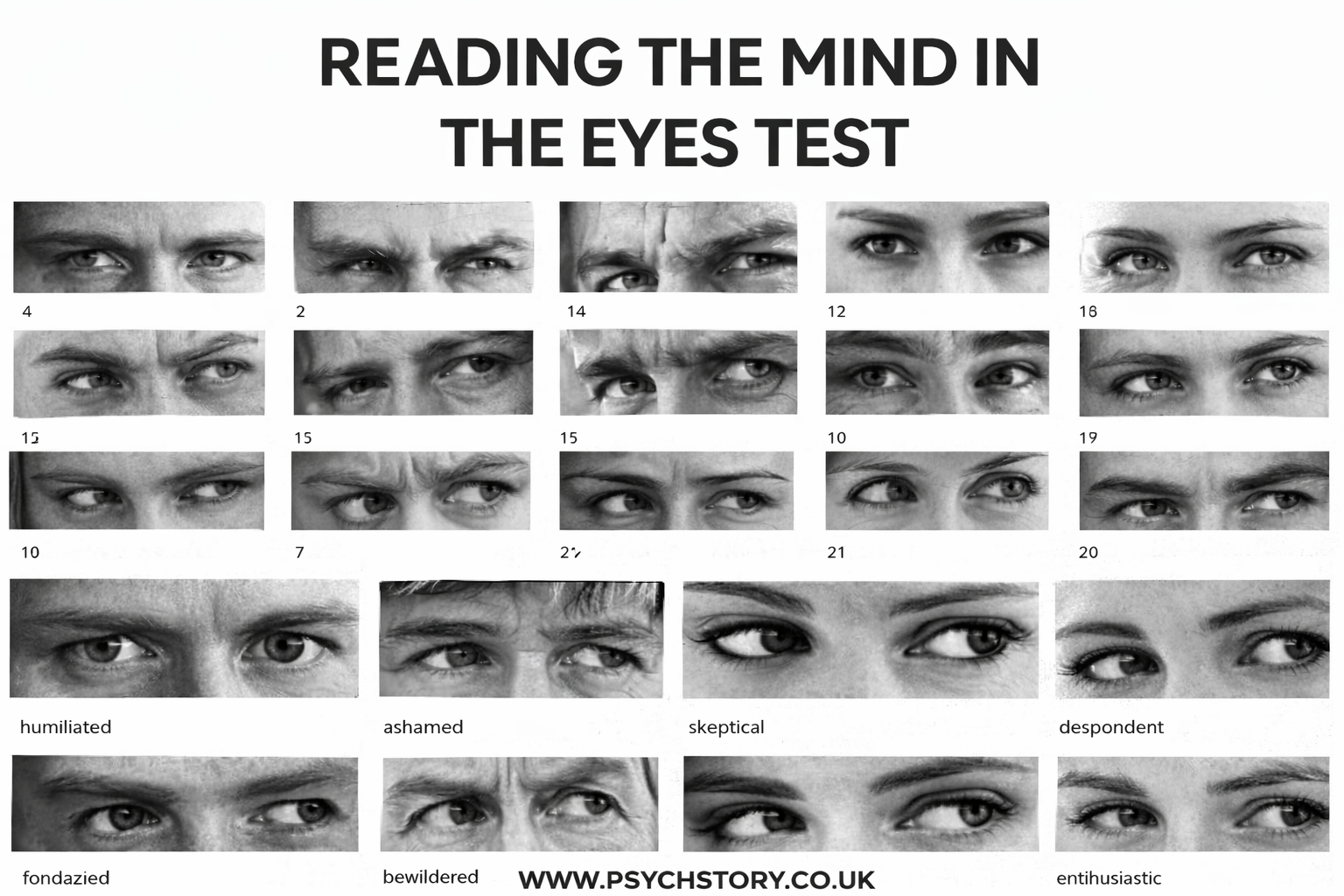
READING THE MIND IN THE EYES TEST: The Eyes Task, formally called the Reading the Mind in the Eyes Test, was developed by Simon Baron-Cohen and colleagues as a measure of theory of mind and mental state recognition. The test assesses a person’s ability to infer another person’s thoughts or emotions from subtle facial cues, particularly from the eye region. Participants are shown a series of photographs that show only the eyes of different faces. For each image, they must choose which of four words best describes the mental state expressed by the person in the photograph. The words typically describe complex emotional or cognitive states such as suspicious, reflective, anxious or playful. The task, therefore, tests the ability to interpret subtle social and emotional signals and to attribute mental states to others using limited visual information. It is widely used in research on social cognition, empathy and autism
FAUX PAS TEST: The Faux Pas Test, developed by Simon Baron-Cohen and colleagues, assesses whether individuals can detect socially inappropriate comments made without harmful intent. Participants read or listen to short stories in which one character unintentionally says something that could offend or embarrass another person. After the story, participants are asked questions such as whether someone said something they should not have said, why it was inappropriate, and whether the speaker intended to hurt the other person. To answer correctly, participants must recognise that the speaker lacks certain knowledge about the situation and therefore unintentionally commits a social mistake. The task, therefore, measures the ability to understand both another person’s mental state and the social consequences of their actions.
HAPPÉ’S STRANGE STORIES TEST: Francesca Happé developed the Strange Stories Test to assess more advanced theory-of-mind abilities. Participants are presented with short stories involving complex social situations such as sarcasm, irony, deception, persuasion or misunderstanding. They are then asked questions about why the characters said or did certain things. Correct responses require the participant to interpret the characters’ beliefs, intentions and motivations rather than simply describing the events in the story. The task, therefore, measures the ability to infer deeper social meaning behind communication, including non-literal language and implied intentions.
SMARTIES TASK: The Smarties Task is another widely used false belief paradigm that examines whether individuals understand that others can hold beliefs that differ from reality. Participants are shown a familiar container, such as a Smarties tube, and asked what they think is inside. After they answer “Smarties,” the container is opened to reveal an unexpected object, such as pencils. Participants are then asked what another person, who has not seen inside the container, will think is inside. Success on the task requires recognising that the other person will hold a false belief based on the container’s appearance. This task assesses the ability to separate one’s own knowledge from another person’s beliefs.
MOVIE FOR THE ASSESSMENT OF SOCIAL COGNITION (MASC): The Movie for the Assessment of Social Cognition is a more naturalistic method for measuring theory of mind. Participants watch a short film depicting a group of people interacting at a dinner party. The film pauses periodically, and participants are asked questions about what the characters are thinking, feeling or intending. Unlike static tasks, the MASC presents social information in a dynamic context, including facial expressions, tone of voice and body language. This allows researchers to examine how individuals interpret social cues in situations that more closely resemble real social interactions.
EVALUATION OF THE THEORY OF MIND
SALLY-ANNE EVALUATION AND DESCRIPTION
For an account of the Sally- Anne experimet and subsequent evaluation by Baron-Cohen et al: SALLY-ANNE EXPERIMENT CLICK HERE
ALTERNATIVE MEASURE OF THEORY OF MIND: THE READING THE MIND IN THE EYES TEST
An alternative method for assessing theory of mind is the Reading the Mind in the Eyes Test, developed by Baron Cohen and colleagues. Unlike false-belief tasks such as the Sally-Anne paradigm, which assess the ability to attribute beliefs, the Eyes Test focuses on the ability to infer mental states from subtle facial cues, specifically the eye region. It is therefore often treated as a more sensitive measure of advanced or adult theory of mind, particularly in populations where simpler tasks produce ceiling effects.
However, the task has been criticised for its low mundane realism. In everyday social interaction, the interpretation of mental states relies on a rich combination of cues, including full facial expressions, body language, tone of voice, contextual information, and verbal communication. The Eyes Test strips away most of this information and requires participants to make judgments based solely on static images of the eye region. This creates a highly constrained and artificial task environment, which does not reflect how social understanding typically operates in real life.
This limitation raises questions about what the task is actually measuring. Participants are required not only to interpret subtle visual cues but also to select from a set of complex mental state terms. This introduces additional demands, including vocabulary knowledge and verbal reasoning. As a result, performance may reflect linguistic ability and familiarity with emotion concepts as much as, or more than, theory of mind itself. In this sense, the task is not pure, and lower scores cannot be unambiguously interpreted as evidence of impaired understanding of mental state.
Despite these criticisms, the Eyes Test has demonstrated strong reliability across studies. Baron Cohen et al. (2001) reported that adults with autism spectrum conditions performed significantly worse than neurotypical controls. These findings have been replicated across different populations and contexts. Vellante et al. (2013) validated the task in an Italian sample and found similar performance patterns, suggesting cross-cultural consistency. Olderbak et al. (2015) conducted a large-scale psychometric analysis and confirmed that the test reliably measures individual differences in mental state recognition. Khorashad et al. (2015) also used the Eyes Test in genetic research and found consistent variation across participants.
These replications indicate that, although the task is simplified and artificial, it captures stable individual differences in the ability to decode mental states from limited visual information. However, the key issue remains interpretative. The task may measure a specific component of social cognition, namely the decoding of subtle visual cues under constrained conditions, rather than a general theory-of-mind ability. Consequently, while the Eyes Test provides a useful complementary measure, it does not resolve the broader limitations of the theory of mind as a single explanatory framework for social cognition
BOTTOM LINE
Both the DSM and ICD recognise that autistic individuals show differences in social communication and social processing. Findings from tasks such as the Sally Anne experiment are broadly consistent with this, as neurotypical children and children with Down syndrome tend to perform better on false belief tasks than autistic children. This does suggest that something in social cognition differs. However, what that “something” is remains open to interpretation.
The original conclusion drawn from this pattern of results was that autism involves a deficit in Theory of Mind, specifically in the ability to infer what another person knows, intends, or believes. This interpretation assumes that performance on false belief tasks directly reflects belief attribution. That assumption is too narrow.
Theory of Mind focuses on belief attribution, but social understanding is not reducible to this single process. Real social interaction depends on multiple interacting systems, including the ability to read nonverbal communication such as facial expression, eye gaze, tone of voice, and body posture. If these signals are not easily or automatically decoded, then inferring another person’s mental state becomes more difficult, even if the underlying capacity to understand minds is intact.
This shifts the explanation. The difficulty may not lie in an absence of Theory of Mind, but in the input into that system. If nonverbal cues are missed, misinterpreted, or processed more slowly, then the inference of beliefs and intentions is disrupted earlier. The apparent failure on false belief tasks may therefore reflect difficulty in reading and integrating social cues, rather than a core inability to represent mental states.
The distinction between cognitive and affective empathy reinforces this point. Cognitive empathy, which involves inferring others' thoughts and beliefs, appears to be more affected in autism. Affective empathy, which involves responding emotionally to others, is often intact. Many autistic individuals report strong emotional reactions once a situation is understood. This suggests that the issue lies less in emotional capacity and more in the decoding and interpretation of social information.
Taken together, the evidence supports the view that autism involves differences in social information processing rather than a simple, global deficit in Theory of Mind. Theory of Mind tasks capture one aspect of this process but neither isolate it nor account for the broader perceptual and cognitive differences that shape how social information is experienced and interpreted.
WHY THE INTERPRETATION REMAINS PROBLEMATIC
The core issue lies in how the results are interpreted rather than in the results themselves. The task is treated as a direct measure of mental-state understanding, yet it is not purely process-based. It does not isolate the Theory of Mind. Instead, it draws on multiple cognitive systems simultaneously, making any single conclusion about a deficit inherently unstable.
Even when general intelligence is ruled out, the task still depends on several additional demands. The child must inhibit their own knowledge of reality, maintain attention across a staged narrative, and tolerate a controlled, often unfamiliar testing environment. Each of these places a cognitive load on the participant. In autism, these demands are not neutral.
Sensory processing differences are particularly relevant here. Many autistic children experience heightened sensitivity to environmental stimuli, including visual detail, auditory input, and social cues. In a testing situation, this can lead to cognitive overload. Attention may be drawn to irrelevant or competing stimuli, reducing the capacity available for tracking the narrative or for holding the character's belief state in mind. The result is not a failure to understand another mind, but a failure to prioritise the specific information required by the task.
This has direct implications for interpretation. If a child is overloaded or distracted, they may default to the most salient or recently encoded information, which is the true location of the object, rather than the false belief held by the character. This response can appear as a Theory of Mind deficit, but it may instead reflect differences in attentional filtering or sensory regulation.
Cognitive style also plays a role. Autistic individuals are often more detail-focused and less likely to automatically integrate contextual information. In the Sally Anne task, the critical requirement is to suppress reality and privilege an inferred mental state. If processing is more literal or reality-based, the “incorrect” answer may actually reflect a consistent and logical response to the available information, rather than a misunderstanding of belief.
The interpretation becomes further problematic because it assumes a single correct cognitive route. It assumes that successful performance must involve explicit attribution of belief in the form defined by the researcher. This excludes alternative strategies or representations of social understanding. It also assumes that failure reflects the absence of ability, rather than a difference in how information is processed, prioritised, or expressed under artificial conditions.
The point, therefore, is not simply that the task is complex, but that its complexity introduces multiple points at which performance can diverge from expectation for reasons unrelated to Theory of Mind. Without isolating these factors, the conclusion that autistic individuals lack a Theory of Mind is not securely supported by the evidence
LIMITATIONS OF THE THEORY OF MIND AS A UNIFIED MECHANISM
A central problem with the theory-of-mind account is that the measures used to assess it do not behave as if they capture a single, coherent cognitive ability. Tasks that are all labelled as “theory of mind” often produce inconsistent patterns within the same individual. A person may pass a false-belief task but perform poorly on the Eyes Task, or show the reverse pattern. If these tasks were all measuring the same underlying mechanism, stronger convergence would be expected. The weak correlations suggest that these tasks are not pure processes. Instead, they draw on different combinations of language, working memory, attentional control, and inferential reasoning. This makes it difficult to claim that performance reflects a single, unified theory of mind capacity rather than a cluster of partially overlapping skills.
REPLICATION AND THE STABILITY OF EARLY FINDINGS
Early studies, particularly those using false belief paradigms, appeared to show a clear and robust difference between autistic and non autistic participants. However, subsequent research has produced a more variable picture. When larger samples are used, when tasks are modified, or when developmental level and language ability are more carefully controlled, the effect is often reduced or becomes less consistent. This does not mean that differences disappear, but it does weaken the claim that the theory of mind impairment is a universal and defining feature of autism. If findings are sensitive to task design and sample characteristics, then the original interpretation risks being overstated.
LIMITED PREDICTIVE VALIDITY FOR REAL-WORLD SOCIAL BEHAVIOUR
If theory of mind were the primary mechanism underlying social interaction, then performance on theory-of-mind tasks should map closely onto everyday social functioning. In practice, this relationship is weak. Some individuals who perform poorly on structured tasks navigate familiar social environments relatively effectively, while others who pass the tasks still report significant social difficulties. This suggests that laboratory measures may capture a narrow, decontextualised aspect of social reasoning that does not translate directly into real-world interaction. Everyday social behaviour involves dynamic, fast-moving exchanges rich in nonverbal cues and contextual information that are not adequately represented in simplified experimental tasks.
ALTERNATIVE EXPLANATIONS OF SOCIAL DIFFERENCES
A further limitation is that the theory-of-mind deficit model assumes a single core impairment. Increasingly, research points towards a more distributed explanation. Differences in attention to social stimuli, sensory processing, tolerance of ambiguity, communication style, and social motivation all contribute to how social information is processed. For example, if an individual is less likely to attend to eye gaze or facial expression or experiences sensory overload in social environments, then difficulties in inferring mental states may arise secondarily. In this account, the issue is not the absence of a theory of mind, but differences in how social information is accessed, prioritised, and interpreted.
Taken together, these points suggest that theory of mind is better understood as one component within a broader system of social cognition rather than a single explanatory mechanism. The deficit model captures an important aspect of social reasoning, but it does not account for the variability, context dependence, and complexity observed in real social behaviour
DISTINCTION BETWEEN THE THEORY OF MIND AND PERSPECTIVE TAKING
In principle, a distinction can be made, but in practice it is far less clear than textbooks often suggest.
Theory of Mind refers specifically to the ability to attribute mental states such as beliefs, intentions, and knowledge to others. It involves understanding that another person can hold a representation of the world that differs from reality and one’s own knowledge. The classic false-belief tasks, such as Sally-Anne, are designed to capture this capacity by requiring individuals to predict behaviour based on another person’s mistaken belief. Perspective-taking is a broader construct. It refers to the ability to adopt another person’s point of view. This can operate at multiple levels. At a basic level, it includes visual perspective taking, for example, recognising what another person can or cannot see. At a more complex level, it includes psychological perspective-taking, which overlaps heavily with Theory of Mind, as it involves considering another person’s thoughts, intentions, or feelings.
The difficulty arises because most tasks used to measure Theory of Mind also require perspective-taking. In the Sally-Anne task, the child must ignore their own knowledge and adopt Sally’s perspective to predict her behaviour. This means that success on the task could reflect belief attribution, perspective-taking, or both. As a result, the two constructs are theoretically distinct but empirically entangled. There is no clean way to isolate one from the other using standard experimental tasks. This creates a problem for interpretation. When a child succeeds or fails, it is not possible to determine with certainty whether the outcome reflects an ability or difficulty in representing mental states, an ability or difficulty in shifting perspective, or a combination of both.
For this reason, some psychologists argue that the distinction is more conceptual than functional. In real social cognition, understanding others’ minds and adopting their perspective are tightly integrated processes rather than separable systems
EVALUATION OF THE READING THE MIND IN THE EYES TEST
The “ Reading the mind in the eyes test is an alternative method for assessing TOM but has been be criticised for having low mundane realism because the procedure does not resemble the conditions under which people normally interpret emotions in everyday life. In real social interactions, emotional understanding relies on multiple sources of information, including the full facial expression, body language, tone of voice and verbal communication. By contrast, the Eyes Task requires participants to infer mental states using only photographs of the eye region.
Critics argue that this artificial restriction means the task does not closely mirror how emotional understanding occurs in natural social contexts. Participants must make judgments using far less information than would normally be available during everyday interactions. However, this limitation concerns the realism of the task, not necessarily the ecological validity of the findings. The Eyes Task has been replicated across multiple studies, suggesting that it still captures meaningful individual differences in the ability to recognise mental states.
For example, Simon Baron-Cohen and colleagues (2001) developed a revised version of the Eyes Test with improved photographs and a larger sample. The study again found that adults with autism spectrum conditions performed significantly worse than neurotypical adults when identifying mental states from images of the eye region. Further replications support the measure's reliability. Vellante et al. (2013) validated the Eyes Test in an Italian population and reported similar performance patterns across cultures. Olderbak et al. (2015) conducted a large psychometric evaluation and confirmed that the test reliably measures individual differences in mental state recognition. Khorashad et al. (2015) also used the Eyes Test in a large genetic study and found consistent variation in performance across participants.
These replications suggest that although the task is simplified and somewhat artificial, it still functions as a reliable experimental measure of mental state recognition. One remaining limitation is that performance partly depends on language ability, because participants must select from complex mental state vocabulary when identifying emotions
EVOLUTIONARY ORIGINS OF THE THEORY OF MIND
One explanation for the emergence of the theory of mind is that it evolved because understanding others' intentions and beliefs confers a major survival advantage. In complex social groups, individuals must constantly predict others' behaviour to cooperate, compete, avoid deception, and form alliances. The ability to infer another individual’s intentions would therefore have increased the chances of survival and reproductive success. For example, recognising whether another person intends to share resources, deceive, or attack would allow individuals to adjust their behaviour accordingly. From this perspective, theory of mind can be understood as an adaptation that allows humans to navigate highly social environments.
Evidence supporting this evolutionary explanation comes from studies of non-human animals. Research has shown that some highly social species display behaviours that resemble elements of the theory of mind. Great apes, such as chimpanzees, appear capable of understanding goal-directed behaviour and may recognise what another individual can or cannot see. For example, subordinate chimpanzees are more likely to approach food that dominant individuals cannot see, suggesting some sensitivity to others' visual perspective. Dolphins, elephants and certain corvid species have also demonstrated complex social reasoning that implies an ability to anticipate the behaviour of other individuals. These findings suggest that the evolutionary roots of social cognition may extend beyond humans and may have developed in species that rely heavily on social cooperation.
The evolutionary development of the theory of mind may also help explain certain human cognitive tendencies, such as animism. Animism refers to the tendency to attribute intentions, desires or mental states to non-living objects or natural events. Early humans often interpreted natural phenomena such as storms, disease or crop failure as the result of intentional forces or supernatural agents. This tendency may reflect an overextension of the cognitive system that evolved to detect agency in other individuals. In evolutionary terms, it may have been safer to assume that a movement in the environment was caused by an intentional agent rather than ignoring a potential threat. From this perspective, theory of mind may represent part of a broader cognitive system specialised for detecting agency and interpreting behaviour in social environments. Although this ability is highly developed in humans, comparative research suggests that its evolutionary foundations may be shared with other highly social mammals and birds
QUESTIONS ON THE THEORY OF MIND
Explain two limitations of the theory of mind as an explanation for autism. (Total 6 marks)
Conrad and Leonard are brothers. Conrad has autism, whereas Leonard does not. One day, they are playing ball with their father in the garden. When their father goes inside to answer the telephone, Leonard hides the ball in a bucket. Leonard giggles and says to Conrad, “Where do you think Dad will look for the ball?”.
1. Use your knowledge of the theory of mind and the Sally-Anne study to explain Conrad’s likely response. [4 marks]
2. Outline and evaluate the theory of mind as an explanation for autism. [8 marks]
3. Conrad and Leonard are brothers. Conrad has autism, whereas Leonard does not. One day, they are playing ball with their father in the garden. When their father goes inside to answer the telephone, Leonard hides the ball in a bucket. Leonard giggles and says to Conrad, “Where do you think Dad will look for the ball?”
4. Use your knowledge of the theory of mind and the Sally-Anne study to explain Conrad’s likely response. [4 marks]
5. Outline and evaluate the theory of mind as an explanation for autism. [8 marks]
• In a study of perspective-taking, a psychology student used a group of 9-year-old children. Each child was shown two pictures.
• Picture 1 showed an older child being unkind to a little boy.
• Picture 2 showed an older child being kind to a little boy.
The student asked the children to judge how sad the little boy would feel in each picture on a scale of 1–10. The student decided to test for a significant difference between the judgments of the two pictures. He proposed using an unrelated t-test to analyse the data.
6. Suggest a more appropriate statistical test of difference for the student to use with this data. Explain TWO reasons for your choice based on the description of the study. [5 marks]
7. The student who carried out the study selected the two pictures. He decided for himself which picture showed unkind behaviour and which showed kind behaviour. Explain how the study could be improved by selecting the pictures another way. [2 marks]
Read the following extract and explain how it supports the idea that Theory of Mind can be difficult for autistic individuals. (4 marks)
“One of the most recurrent problems throughout middle childhood was my constant failure to distinguish between my knowledge and that of others. Very often, my parents would miss deadlines or appointments because I failed to tell them about them. For instance, my parents missed the school’s Open House in my fifth grade and my mom asked me afterward ‘why didn’t you tell us about it?’ ‘I thought you knew it’, I replied.”
In your answer, refer to the concept of Theory of Mind.