AQA A-LEVEL PSYCHOLOGY SPECIFICATION

AQA A LEVEL PSYCHOLOGY 7182 SPECIFICATION 2025/2026
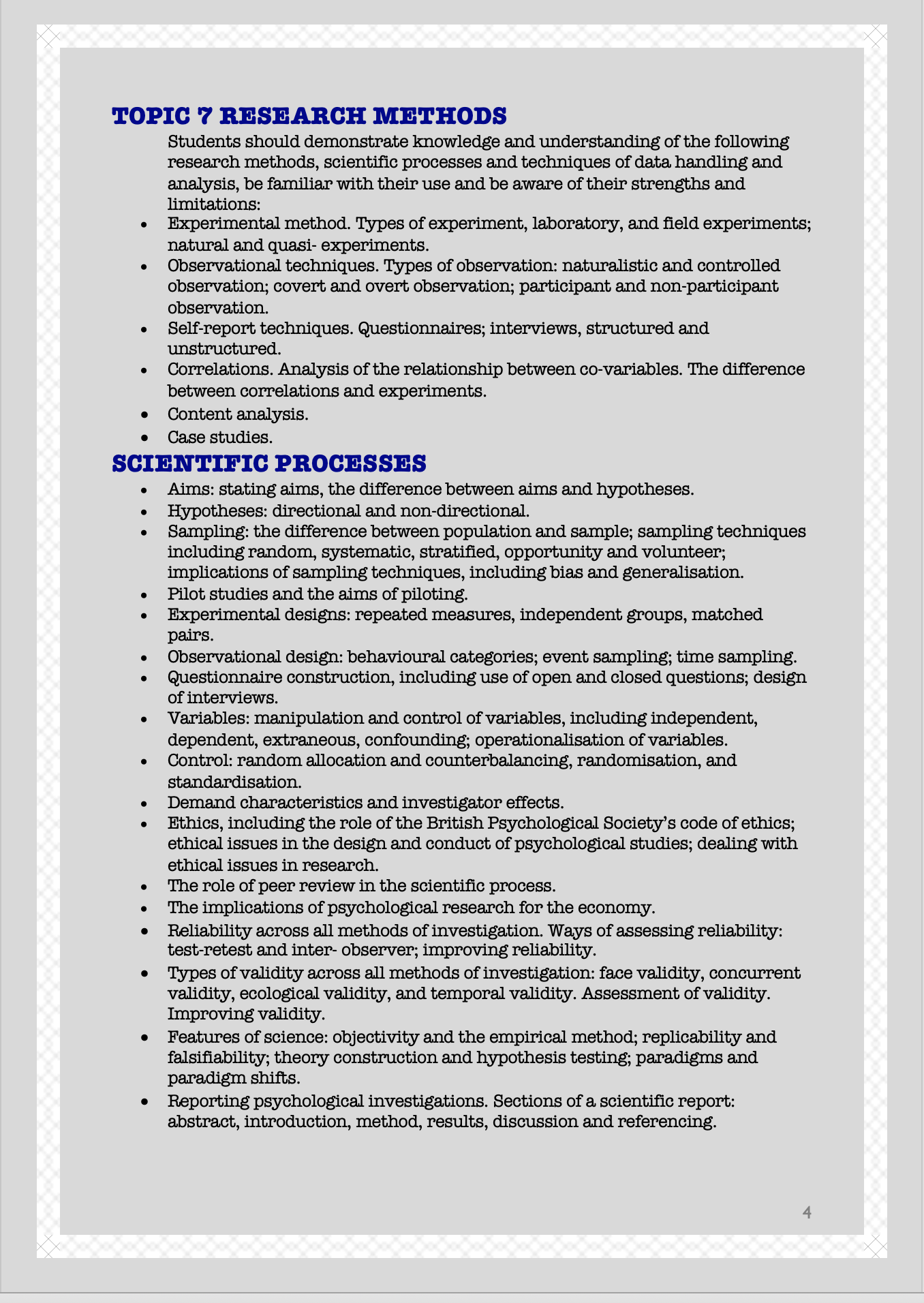
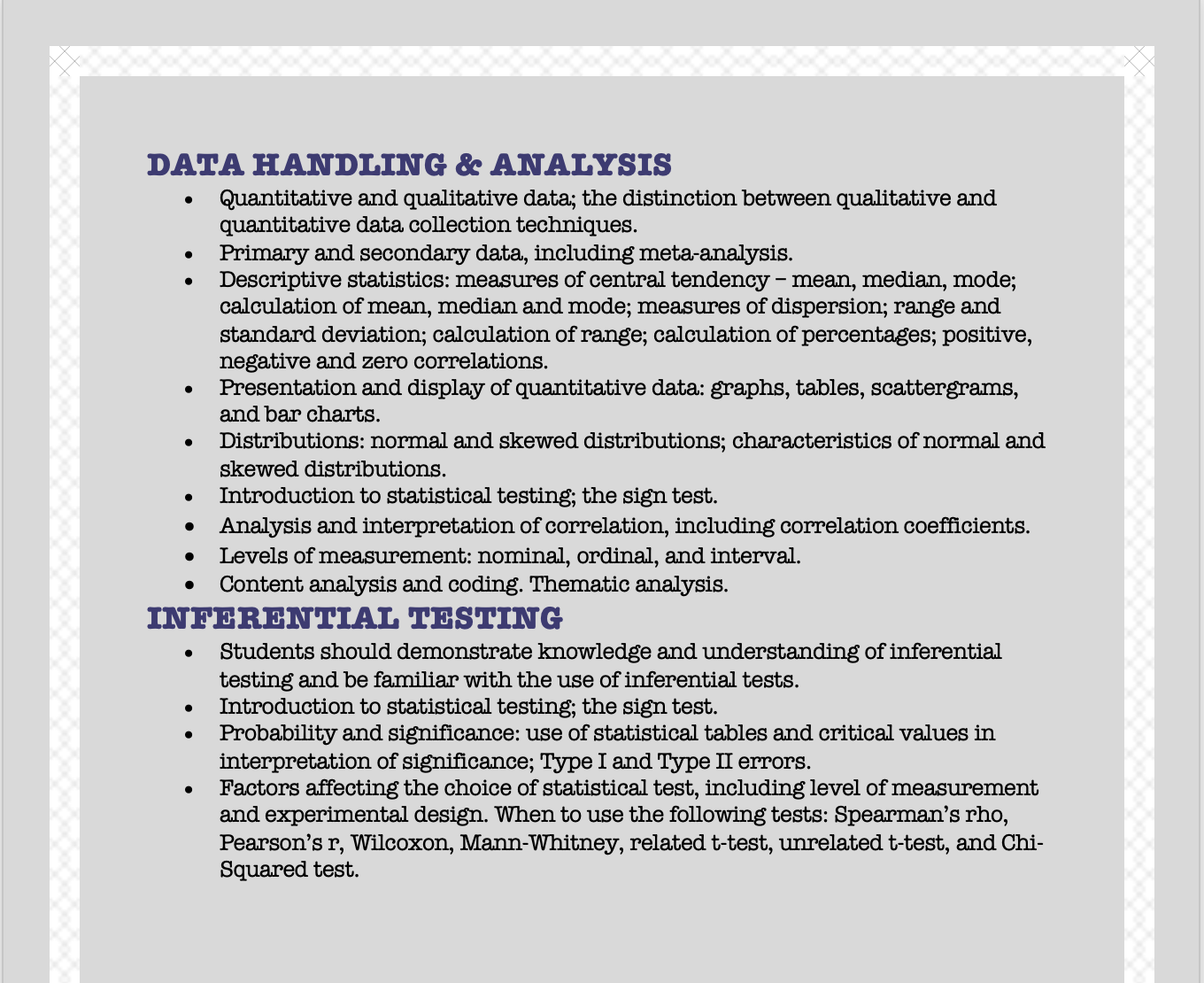
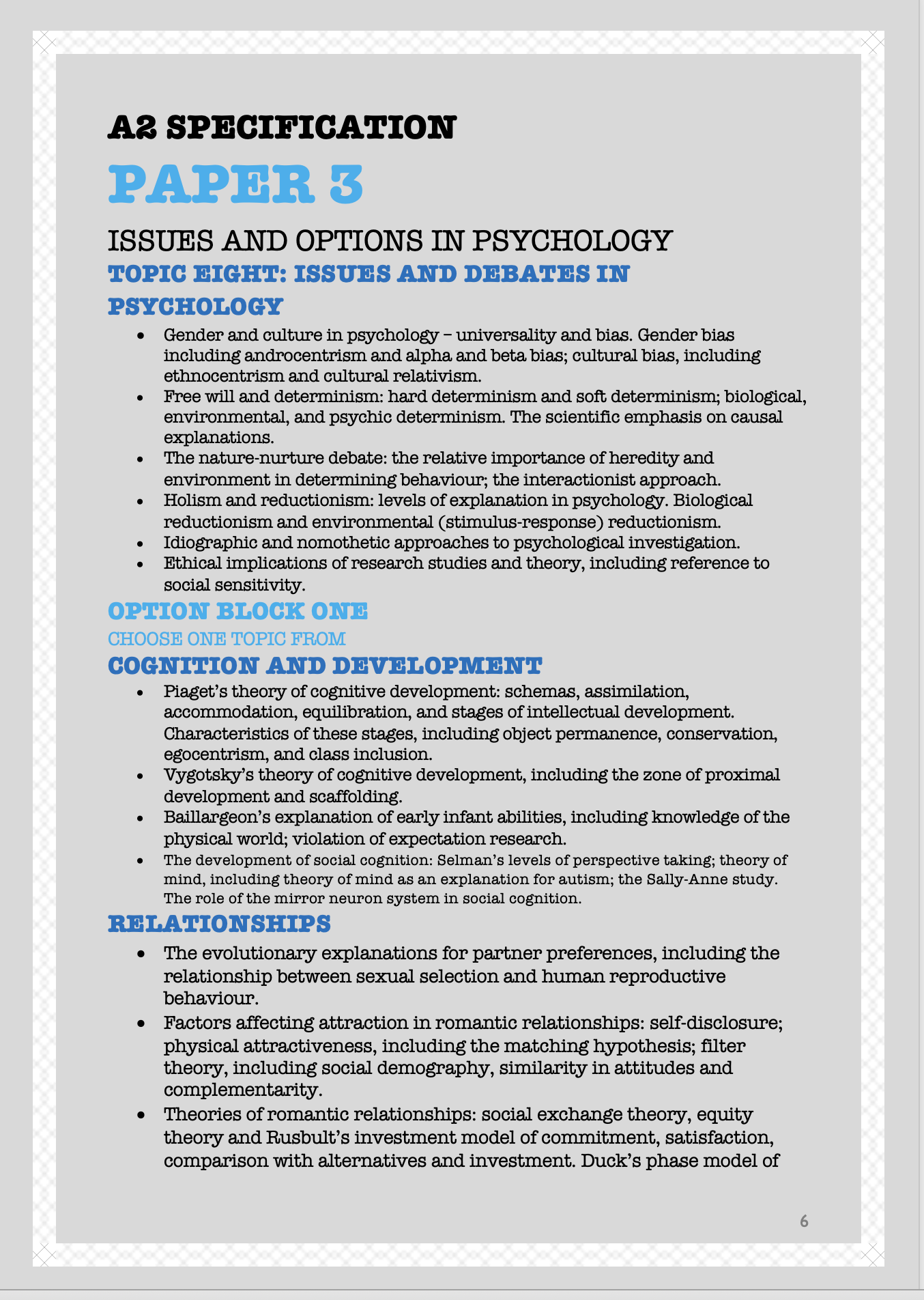
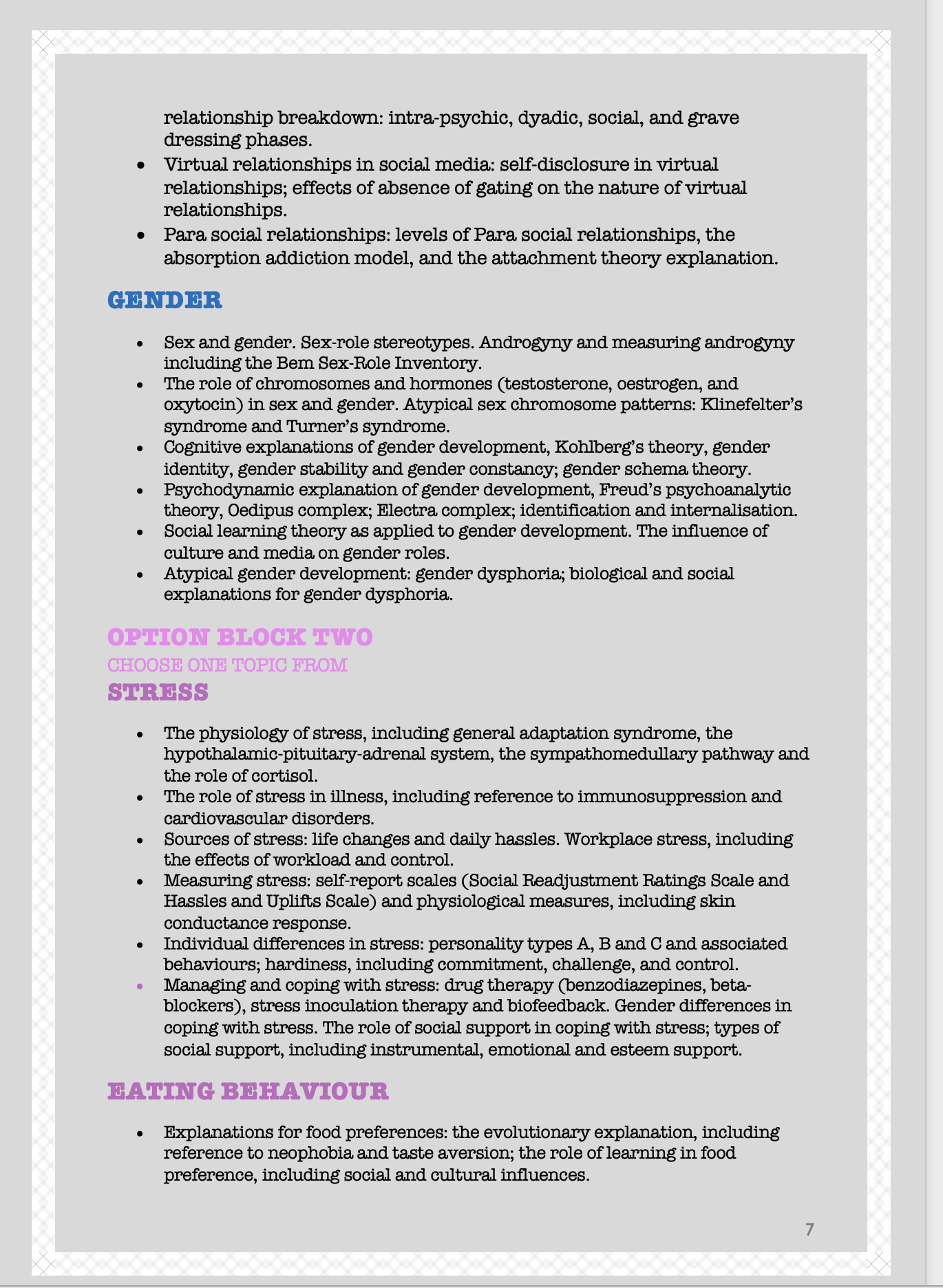
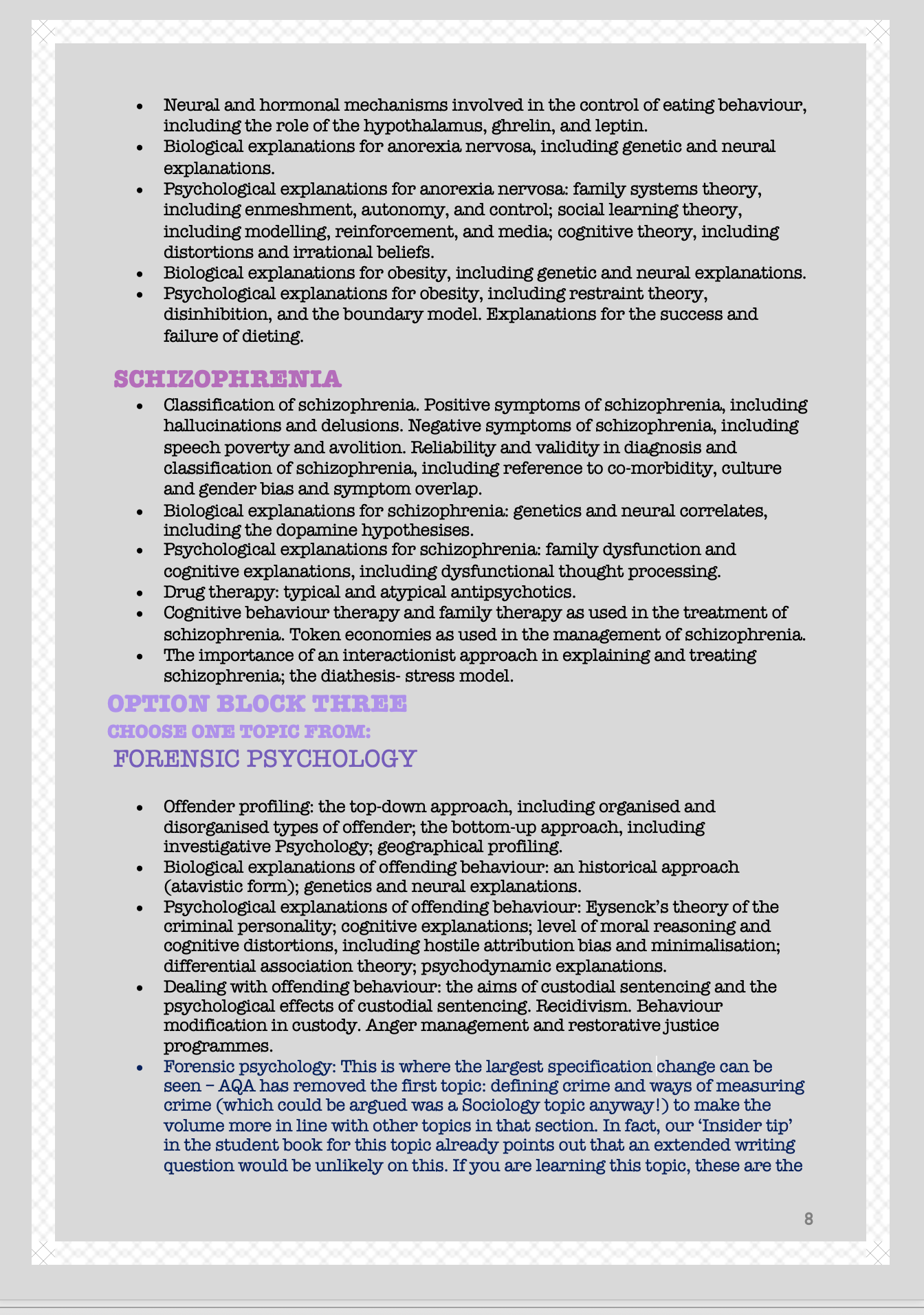
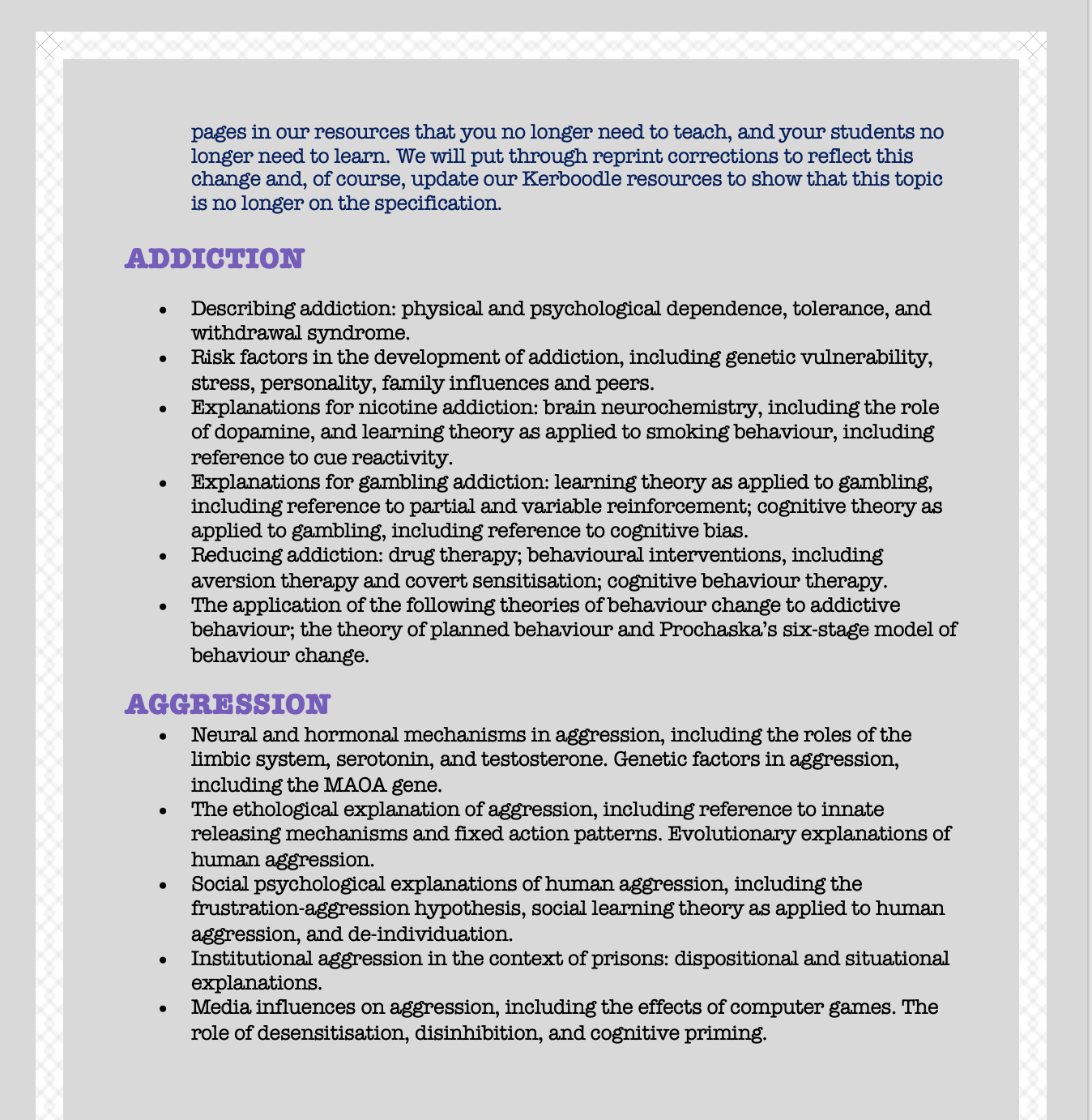
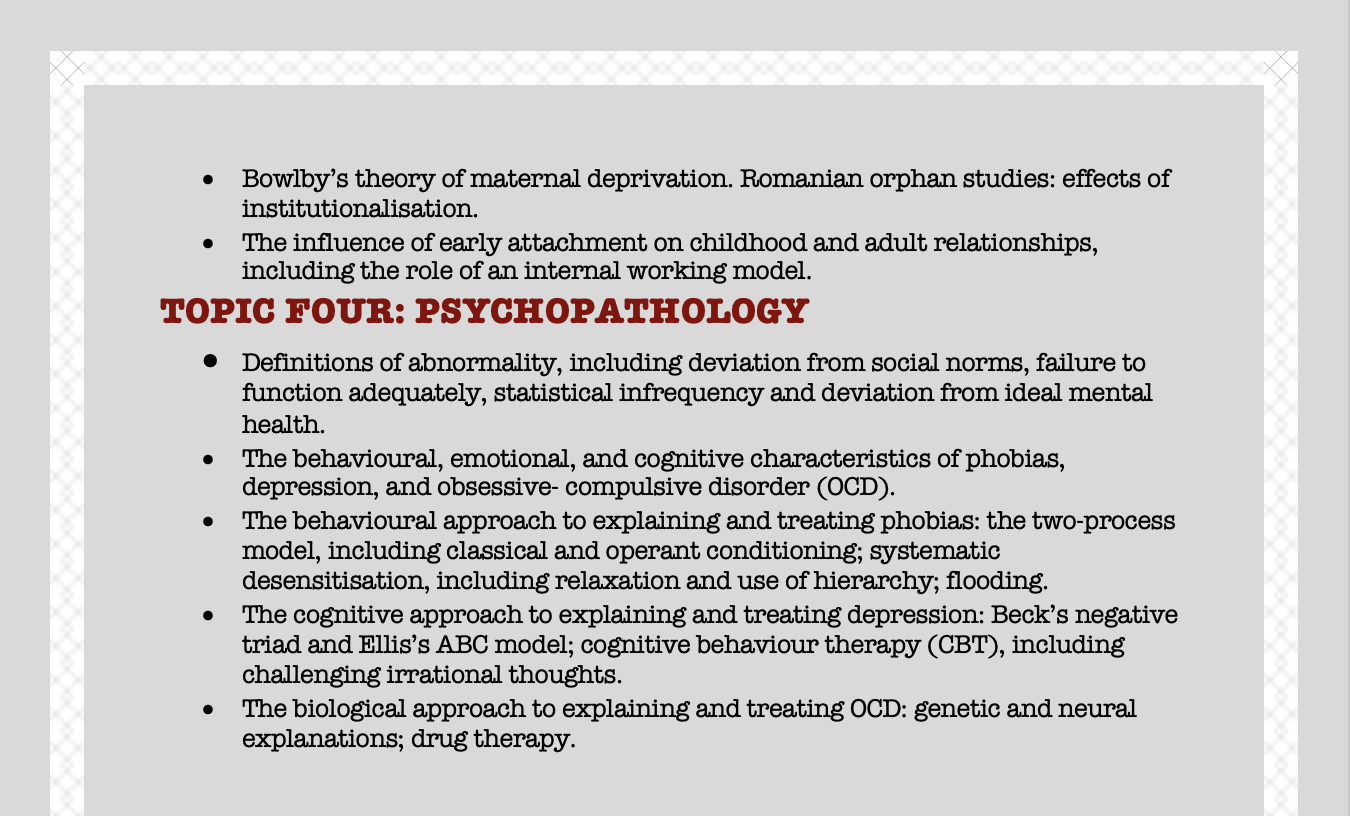
The first place to start when studying A Level Psychology is to locate the specification for your examination board. Below is an abridged version of the AQA A Level Psychology (7182) specification for 2025/26. I have excluded the sections intended for teachers and stripped the document down to reveal only the material that students are required to know. If you would like to view the full AQA specification, please click the link below:
https://www.aqa.org.uk/subjects/psychology/a-level/psychology-7182/specification
Your course specification is the definitive guide to what you need to learn. Textbooks can sometimes be misleading because they often include research studies, theories and additional material that are not specifically required by the examination board. One of the most important things to understand when beginning your A Level studies is exactly what is expected of you, and this means becoming familiar with the specification.
The specification outlines the content that must be learned for each paper and defines the boundaries of what can and cannot be examined. It identifies the theories, concepts, studies and researchers that students are expected to know, allowing you to focus your revision on the material that is actually required. Once you understand what is compulsory, you can direct your time and effort more effectively rather than being distracted by information that may be interesting but is unlikely to be rewarded in the examination.
The bottom line is simple: if it is not on the specification, you cannot be directly examined on it. For example, although Michael Rutter conducted much of the pioneering research on Romanian orphans, his name does not appear on the AQA specification. As a result, students are not required to know his name or cite his research specifically. This also means that other relevant research into Romanian adoptees may be used and credited in examination answers.
Another example concerns Milgram's obedience research. Many students unfamiliar with the AQA specification assume they should describe Milgram's original electric shock study when answering AO1 questions. However, the specification focuses on Milgram's variations and the agentic state explanation of obedience rather than the original baseline study itself. Consequently, students who describe only the original study in an AO1 answer are unlikely to gain credit because they have not addressed the material specified by AQA.
QUICK GUIDE TO THE AQA PSYCHOLOGY EXAMINATIONS
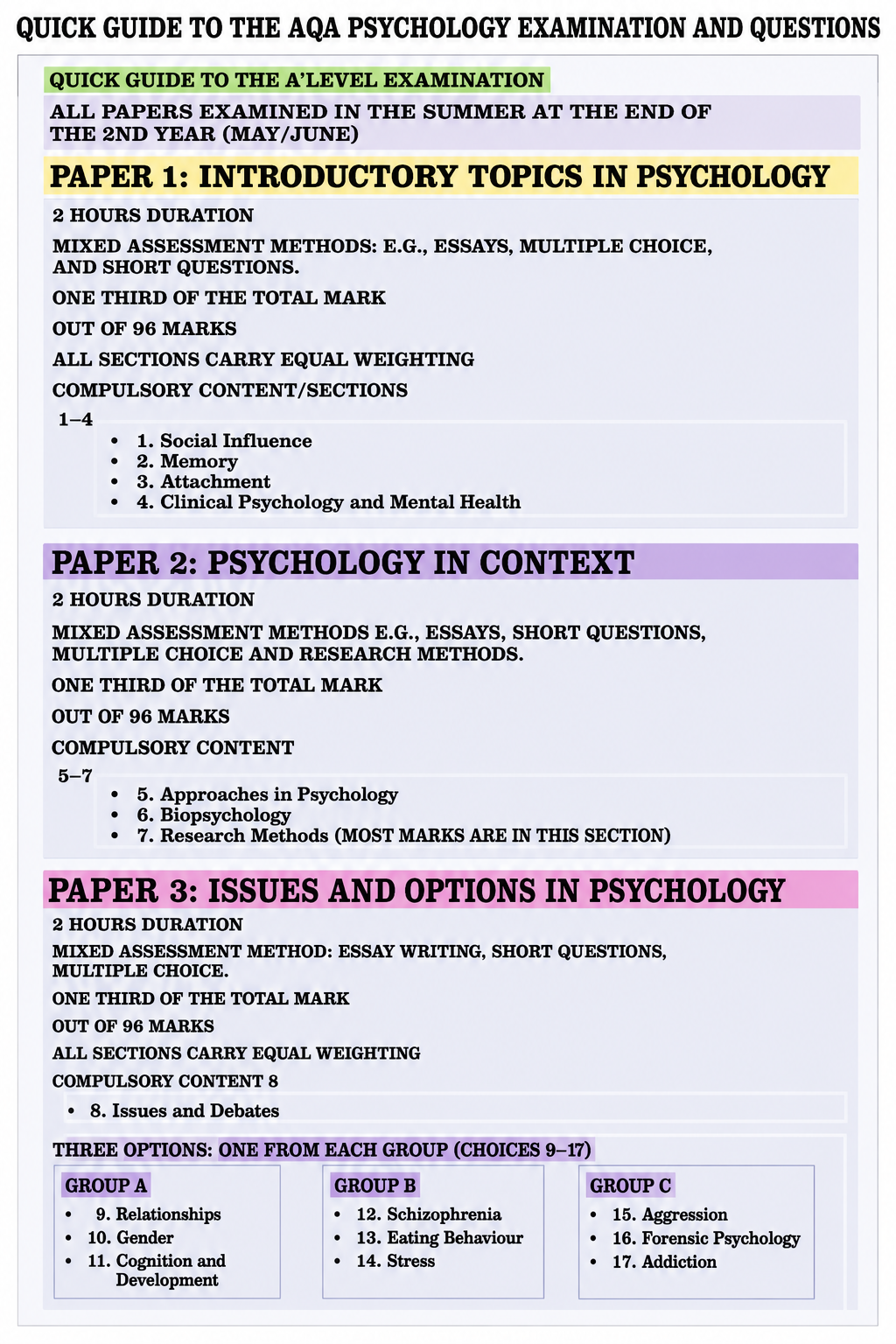
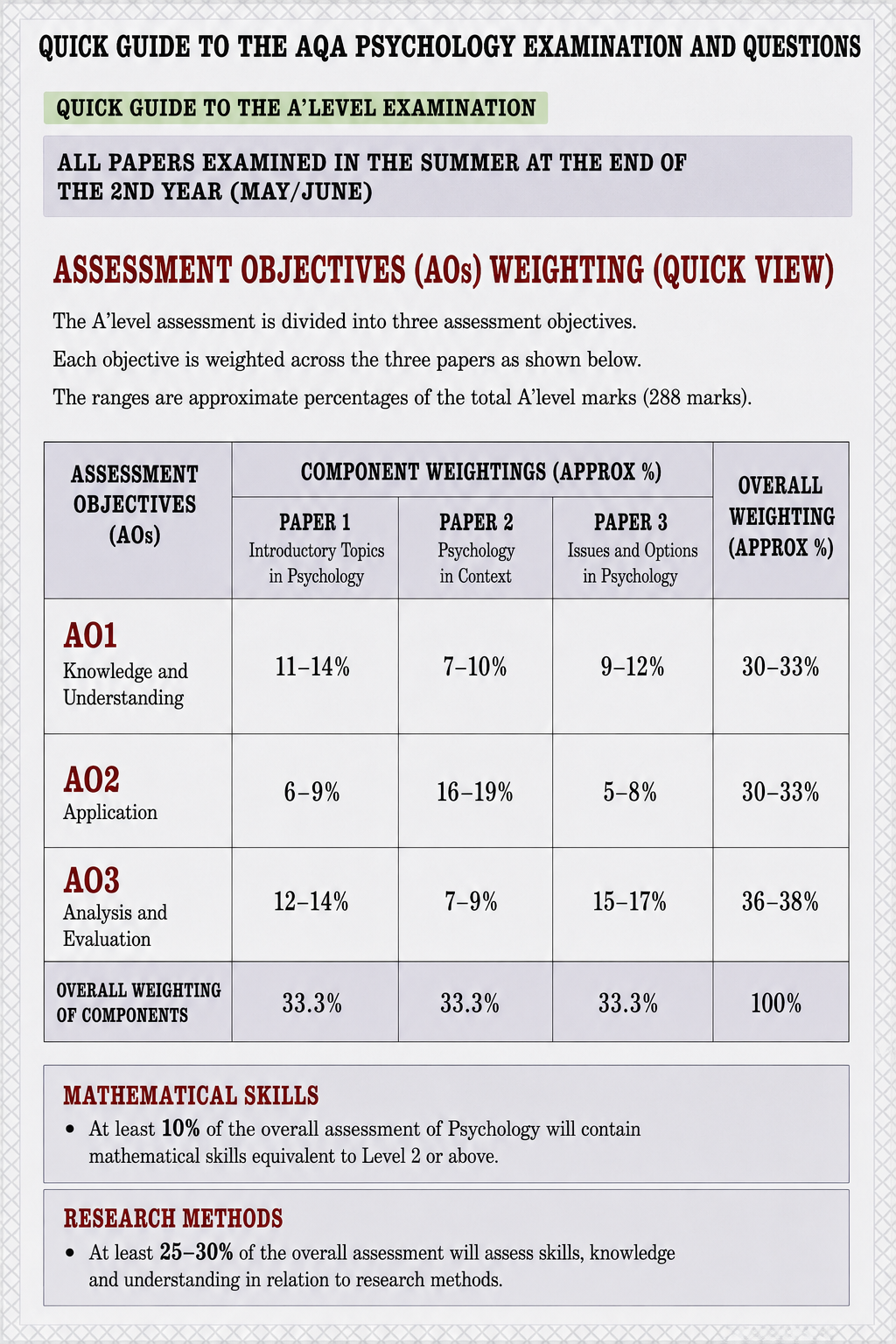
PAPER 1: INTRODUCTORY TOPICS IN PSYCHOLOGY
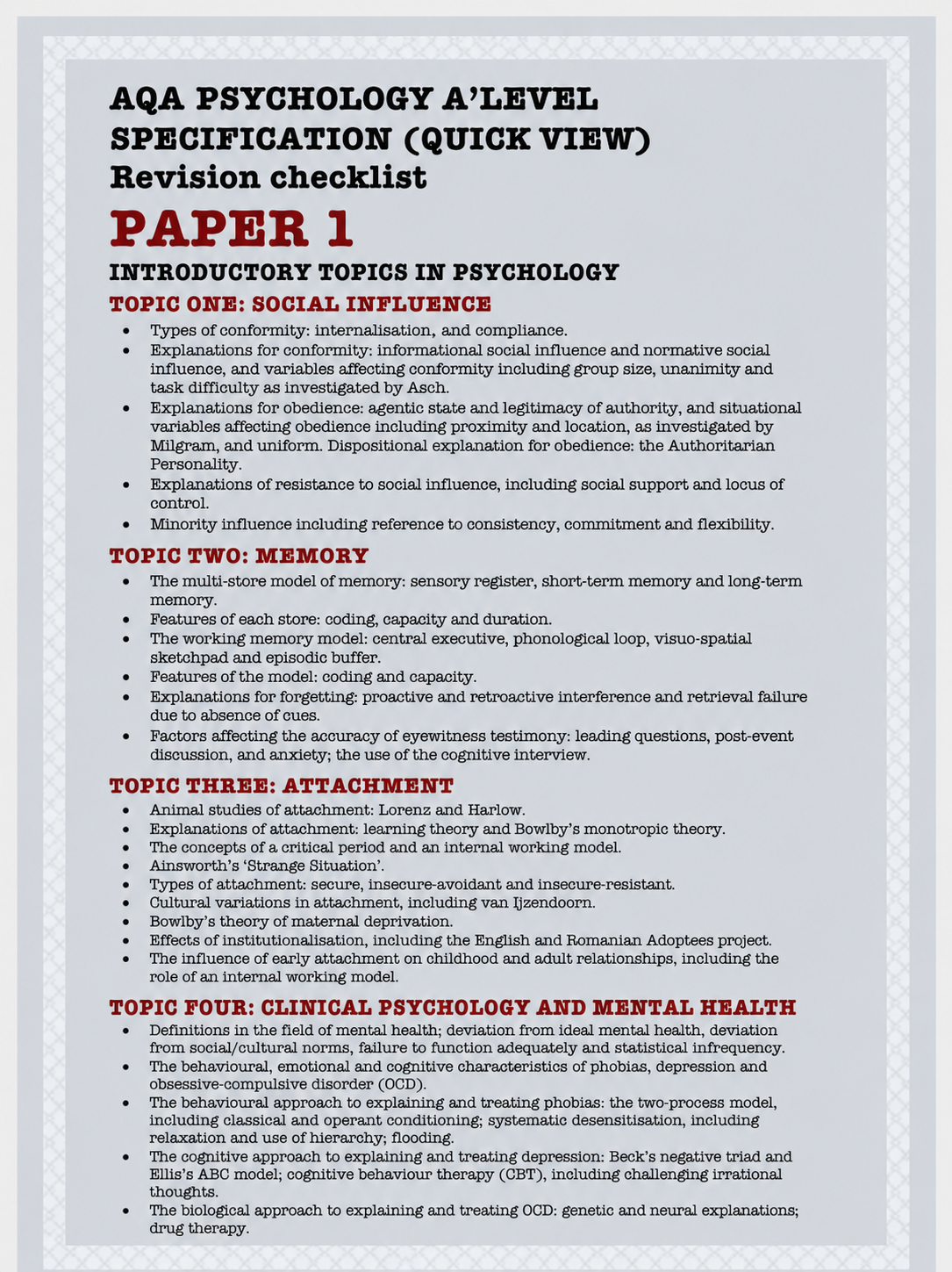
.
PAPER 2: PSYCHOLOGY IN CONTEXT
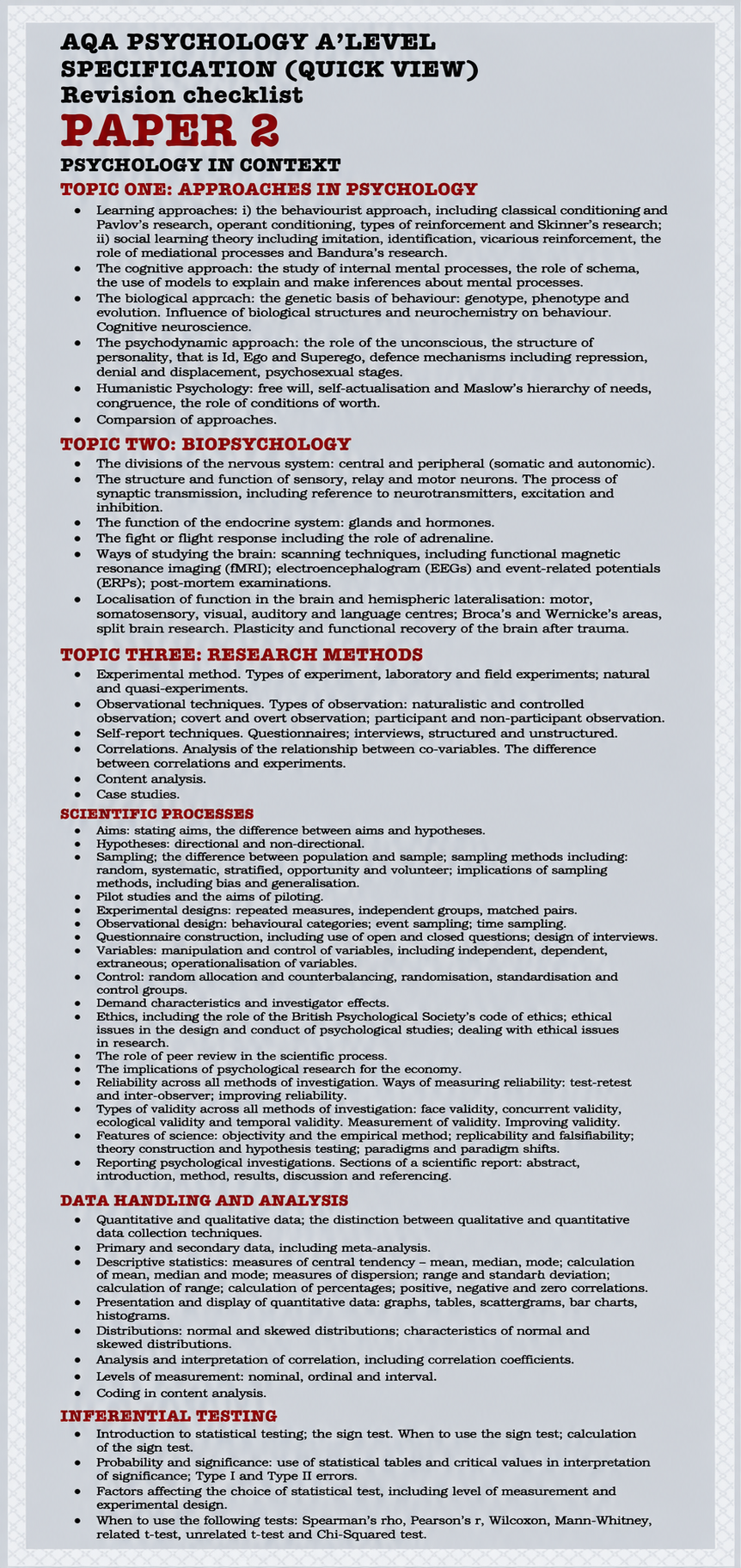
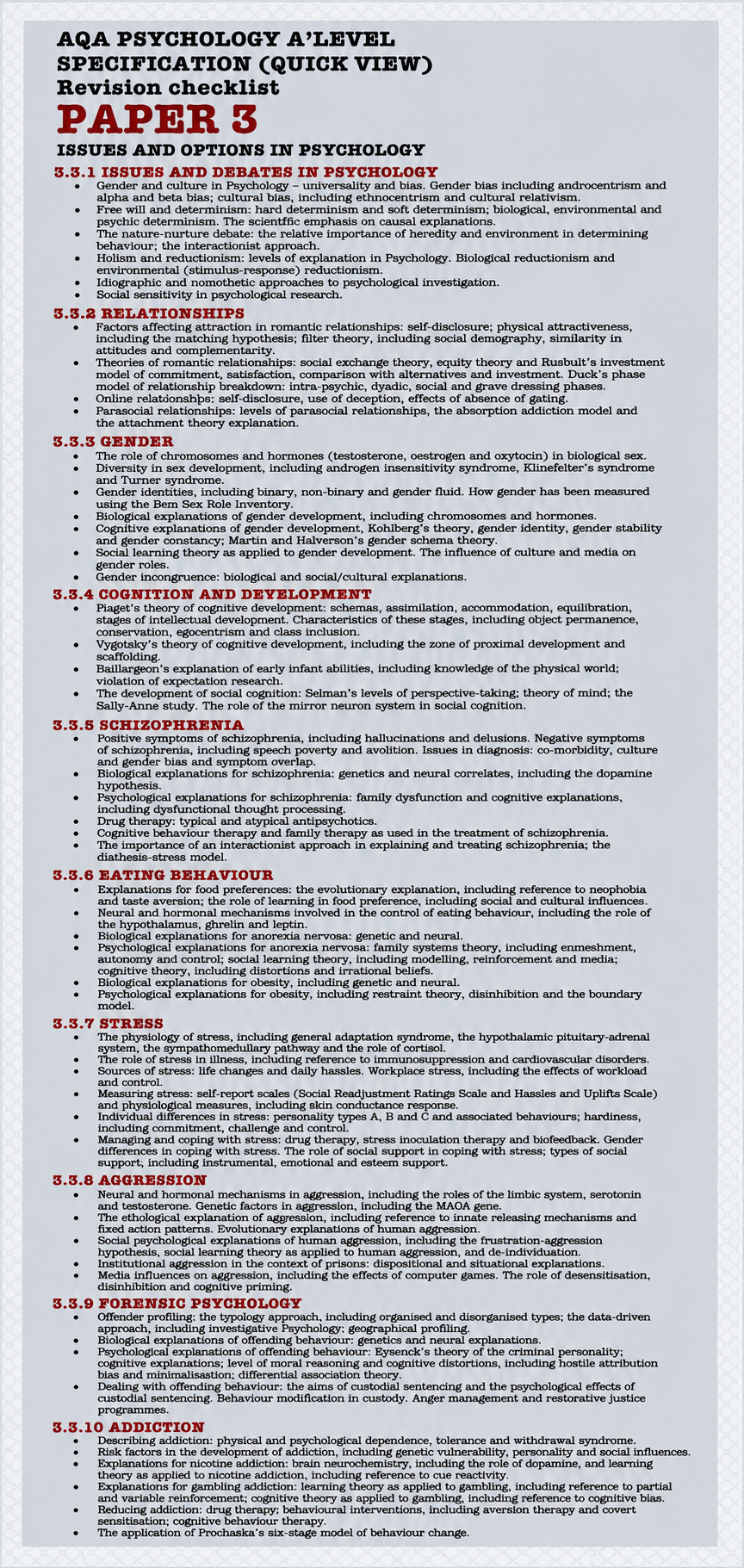
PAPER 3: ISSUES AND OPTIONS IN PSYCHOLOGY
Make it stand out
Whatever it is, the way you tell your story online can make all the difference.
AQA PSYCHOLOGY SPECIFICATION 2019-2025
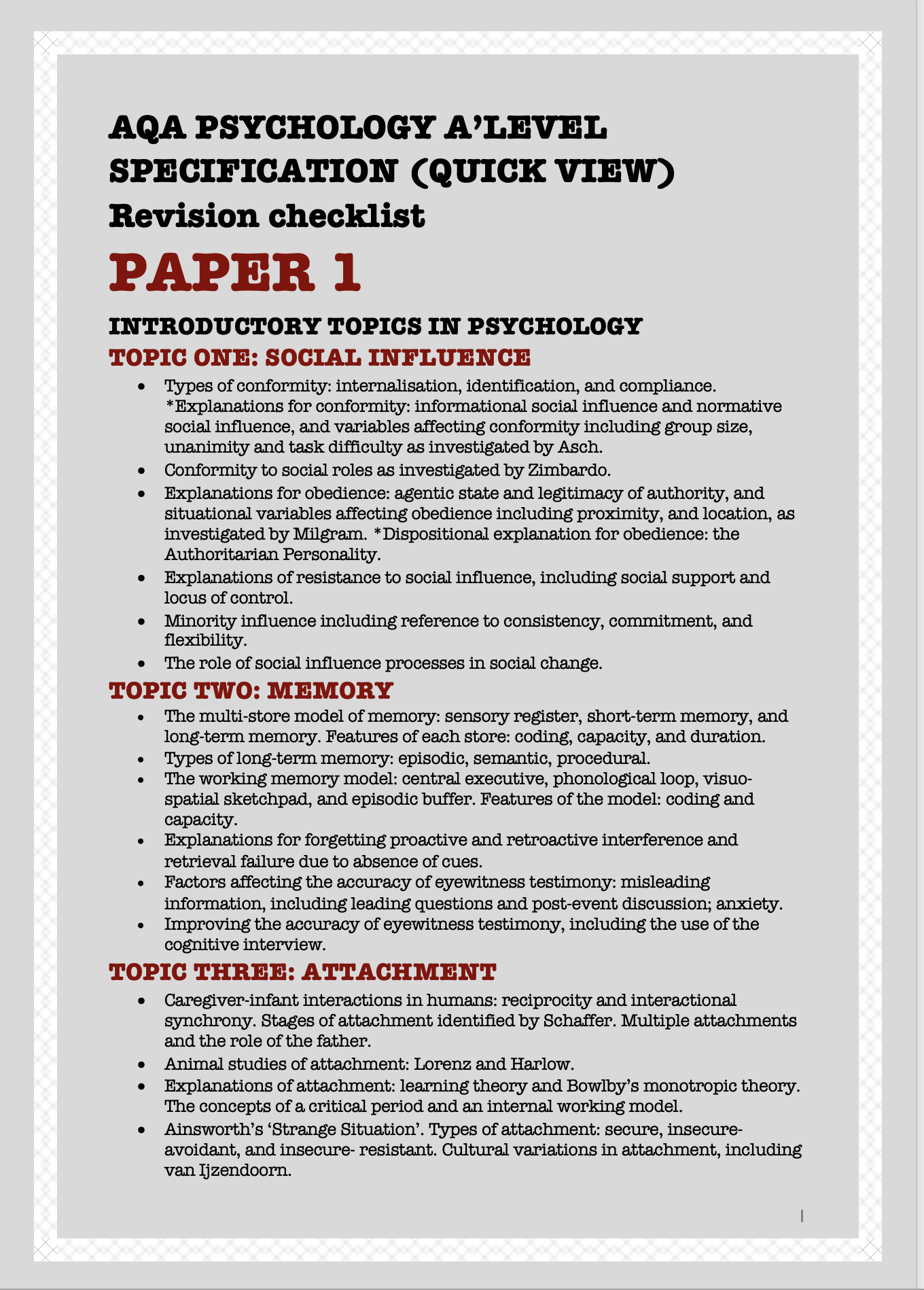

.