

SPECIFICATION: Ethics, including the role of the British Psychological Society’s code of ethics; ethical issues in the design and conduct of psychological studies; dealing with ethical issues in research
STUDIES THAT RAISED IMPORTANT ETHICAL CONCERNS
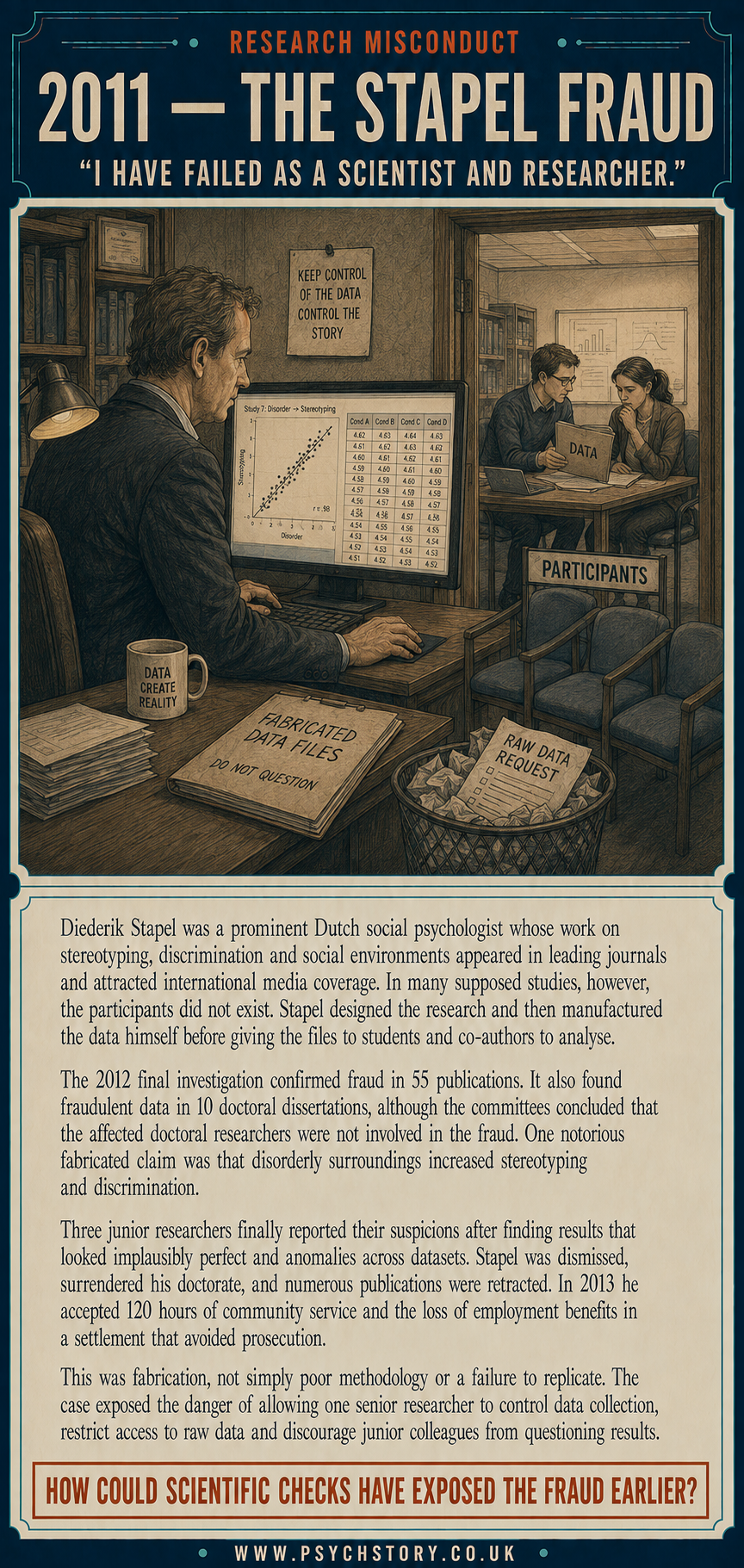
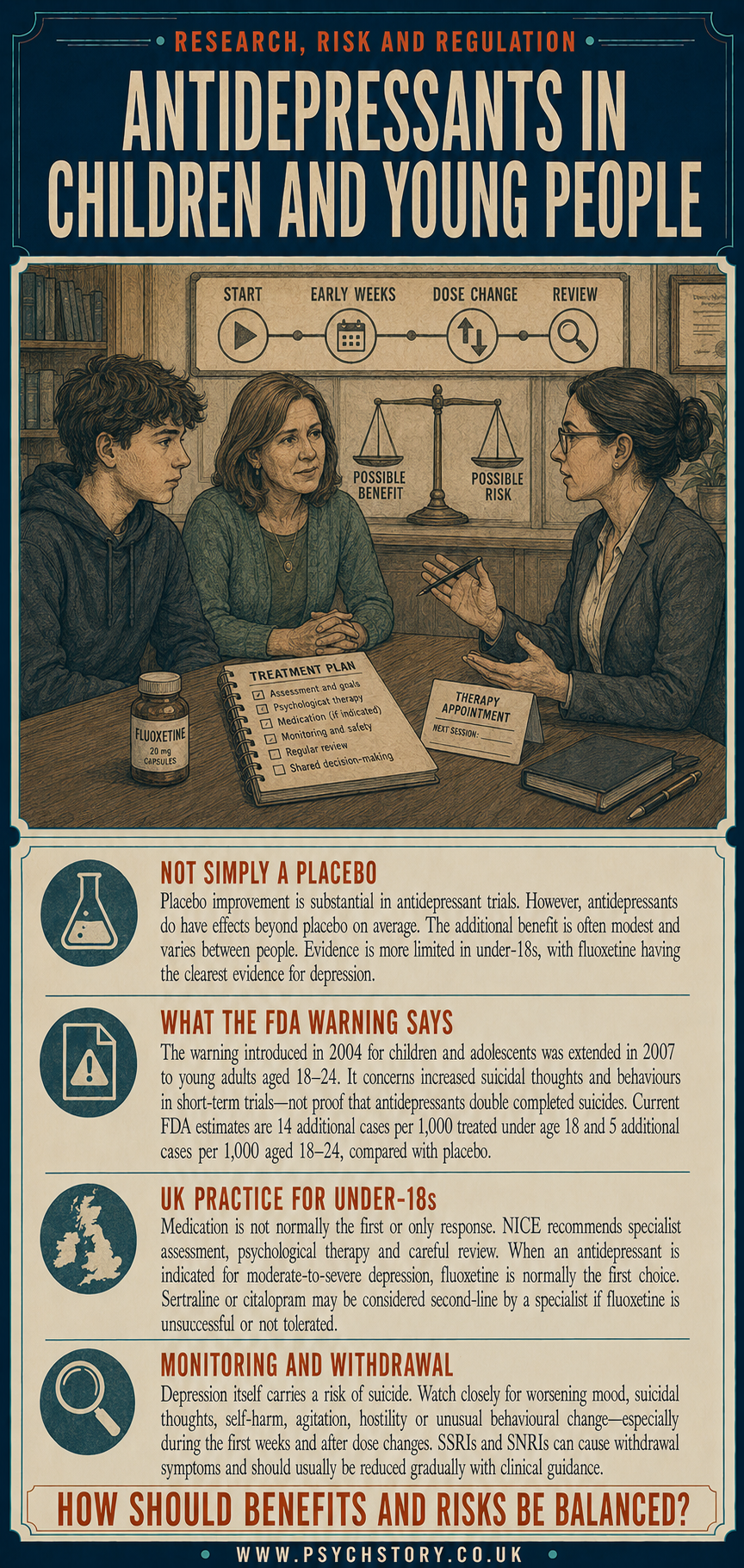
Ethical standards have changed considerably over time. Some of the following research took place before modern ethical codes were introduced, so it is more accurate to explain how it would conflict with present-day guidelines than to claim that researchers knowingly broke rules that already existed. It is also important to distinguish an established ethical violation from a concern that cannot be confirmed from surviving records.












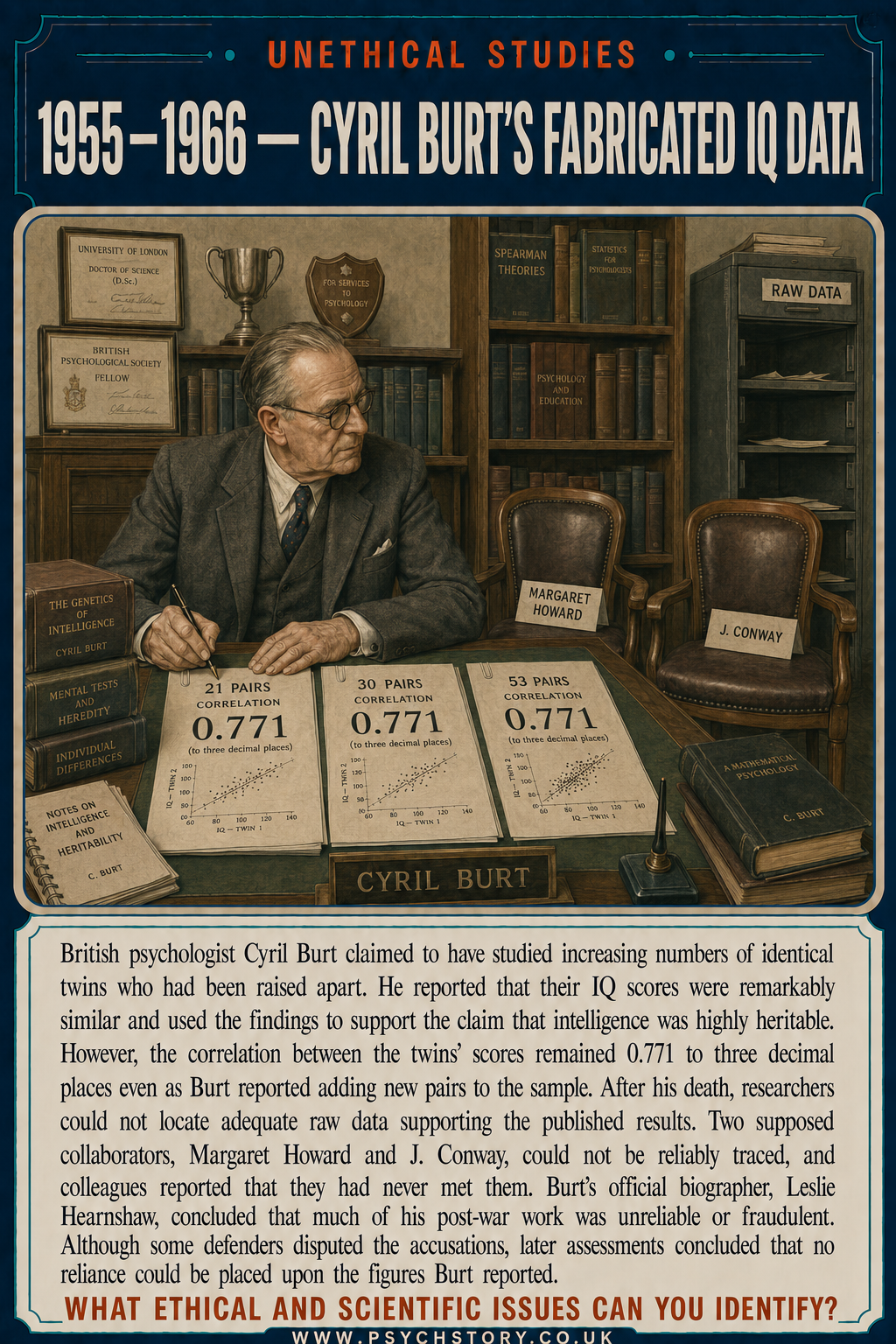
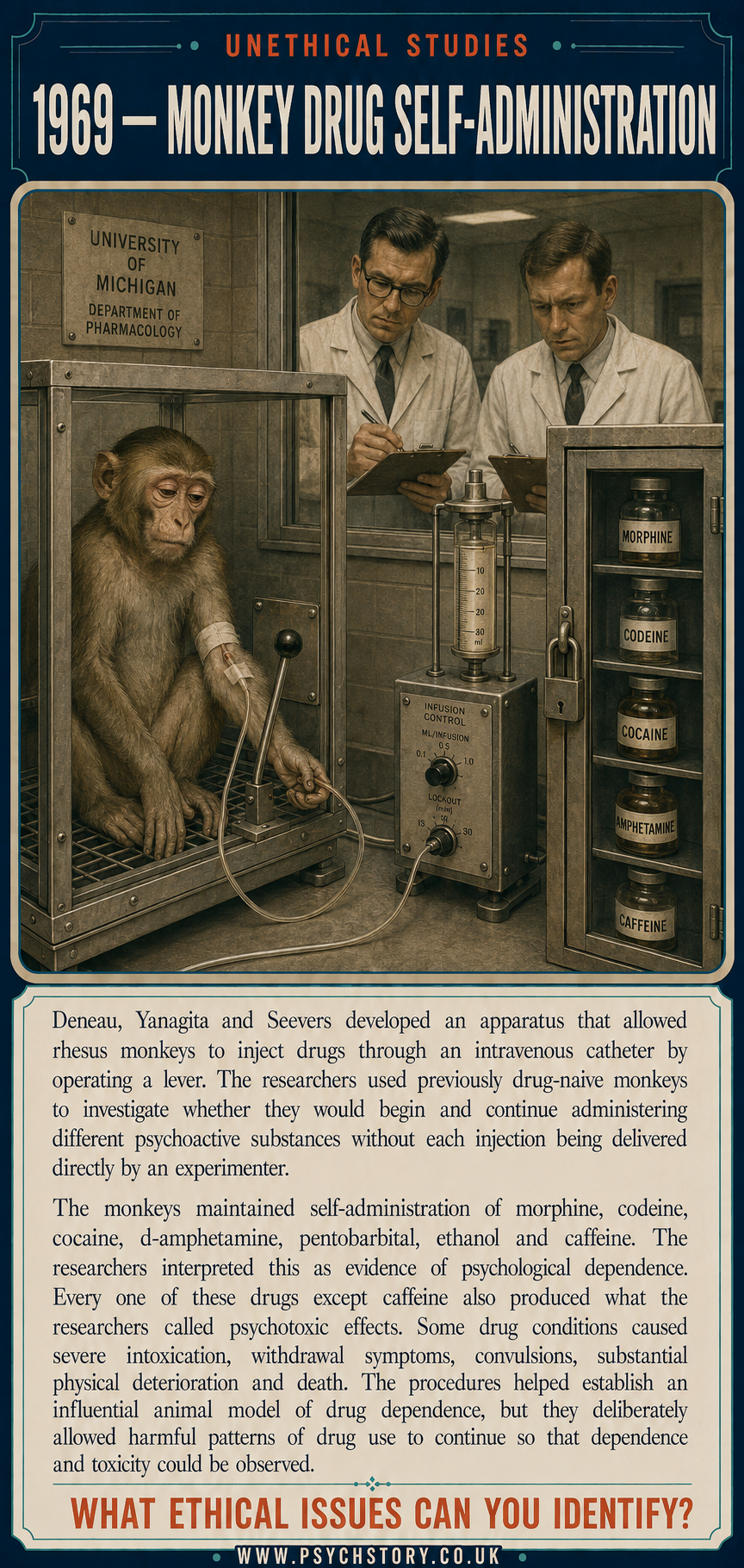
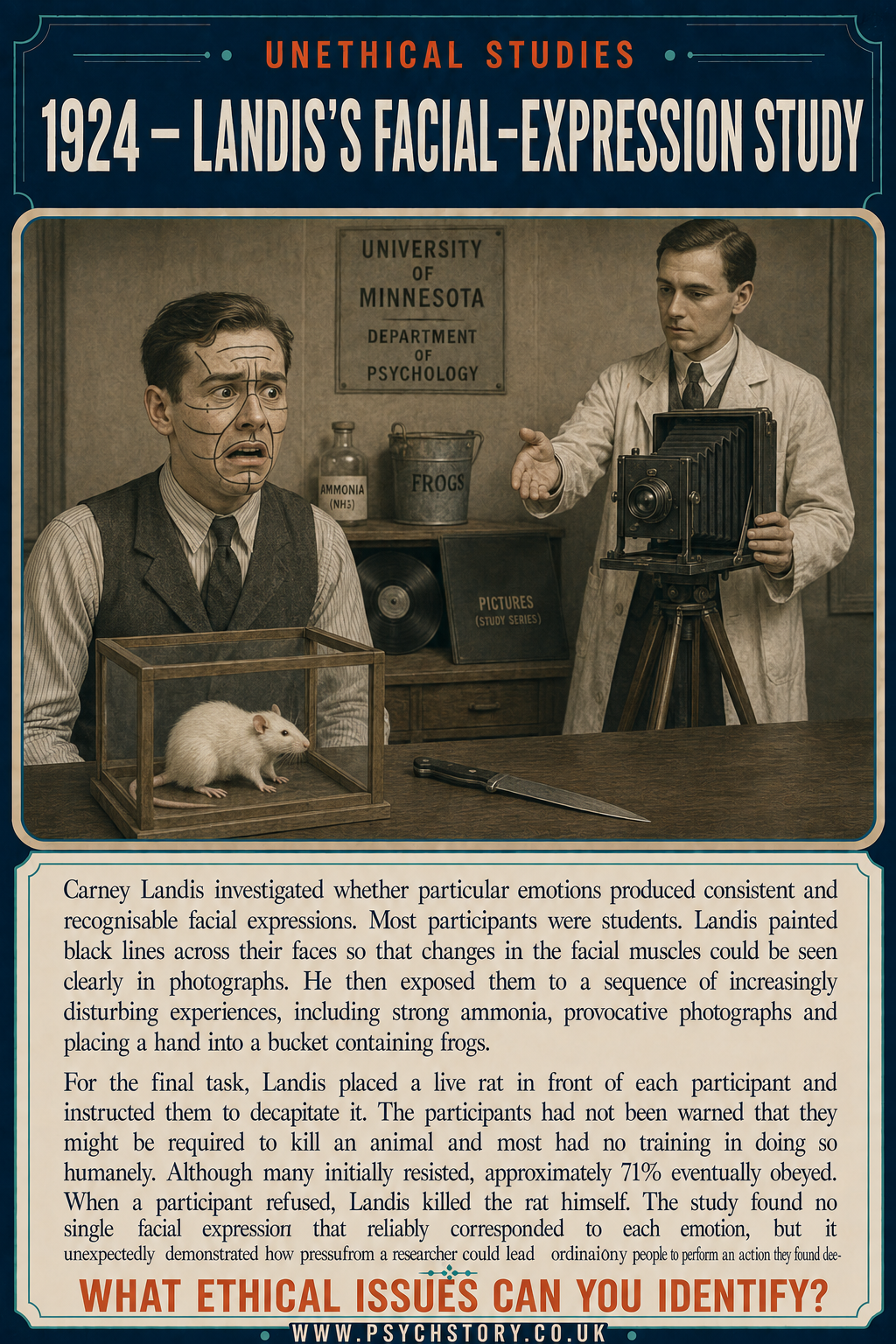

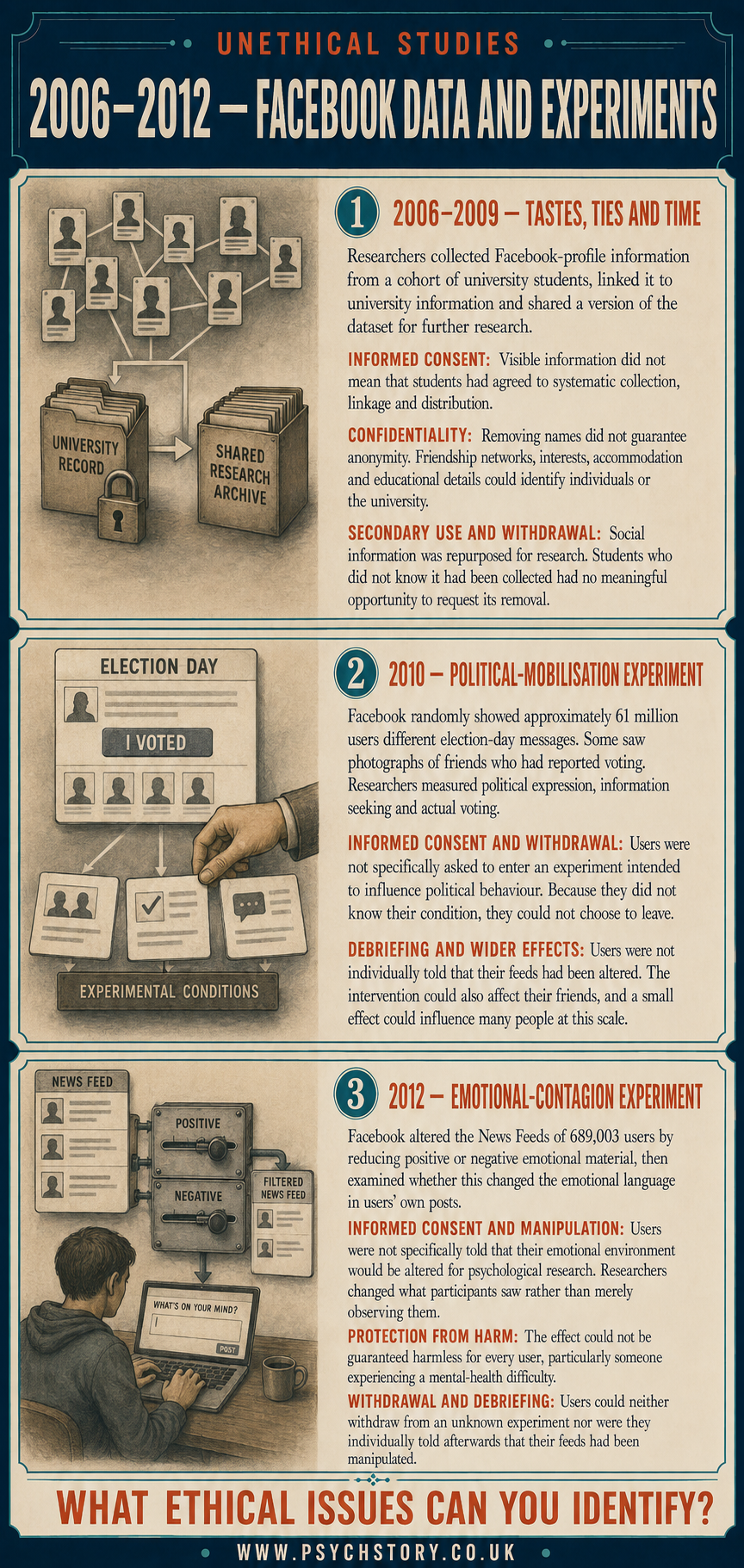

EVALUATING UNETHICAL STUDIES
Read through the following studies and consider whether each one breached ethical standards. If it did, explain precisely which aspects of the research created the ethical problem and why.
Pay particular attention to whether deception was used, whether participants could give informed consent, and whether they experienced physical, psychological or social harm. Consider whether participants could genuinely withdraw from the study and later withdraw their data.
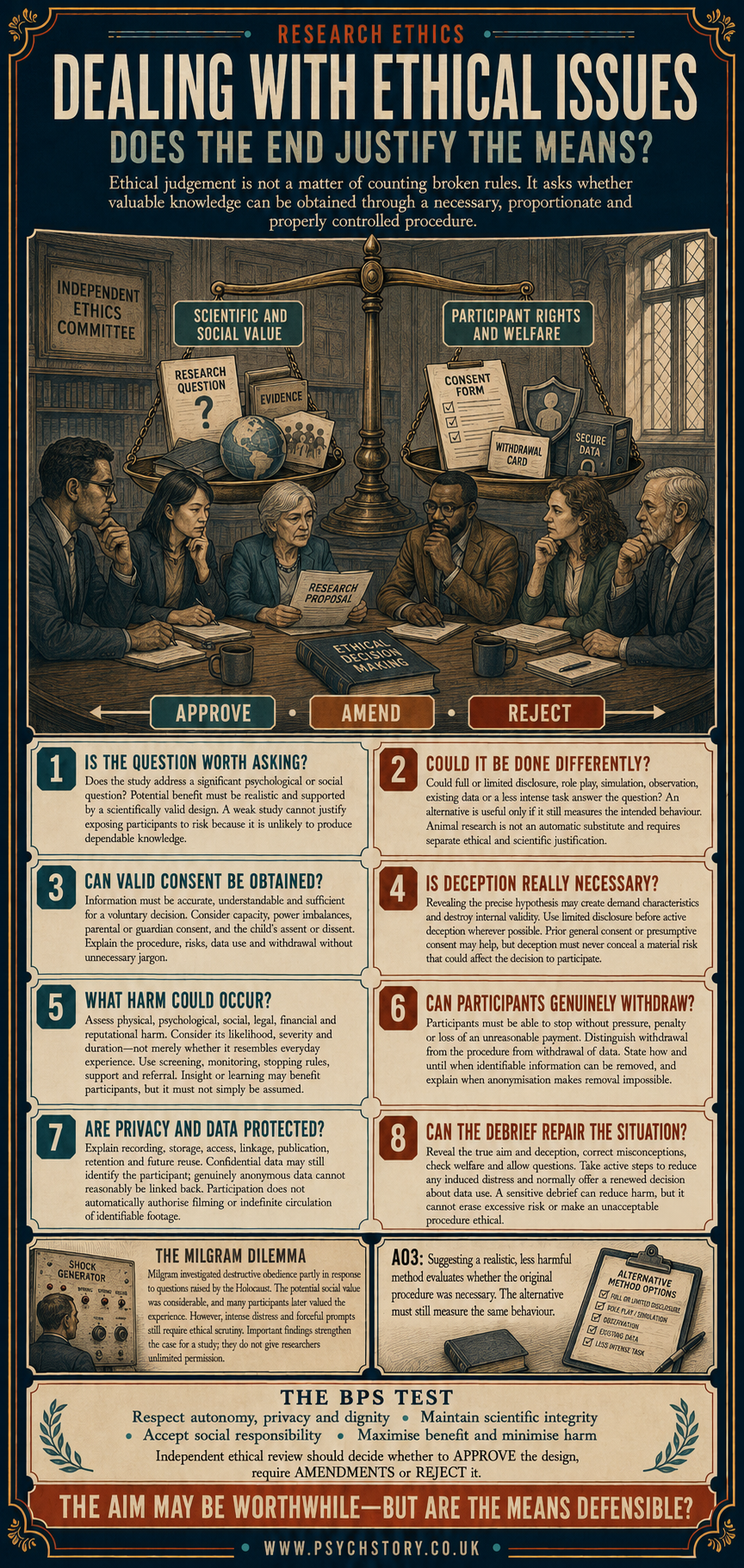
Finally, consider whether the importance of the research justified the methods used. Could the same question have been investigated differently, with less deception or harm, without making the research meaningless? Decide whether each study should have been approved, amended or rejected
ETHICS IN PSYCHOLOGICAL RESEARCH
Ethics are the moral codes laid down by professional bodies to ensure that their members or representatives adhere to certain standards of behaviour. All scientific bodies have such codes, but those in psychology are particularly important because of the subject matter. is human or animal.
Unlike most other sciences, almost all psychological research involves living beings capable of experiencing physical or psychological harm.
A power imbalance exists between researcher and participant. Participants often lack the expertise to judge risk for themselves, and may feel unable to refuse or withdraw, particularly in institutional settings (Milgram's lab-coated authority figure, Zimbardo's mock prison).
Deception is often central to the method itself. Many valid findings depend on participants not knowing the true aim of a study, since revealing it would distort their behaviour through demand characteristics. Few other sciences build deception into their basic method in this way.
Many participants cannot give full or free consent. Psychology frequently studies children, people with cognitive impairments, and people in acute distress, requiring entire consent frameworks — assent, guardian consent, capacity assessment — that most sciences never need.
Findings affect the wider community, not just the participant. Milgram's research revealed something uncomfortable about human behaviour in general. IQ research has historically been used to justify discrimination against entire racial and ethnic groups, most notoriously in the eugenics movement and Cyril Burt's fraudulent twin studies.
Findings shape how society treats vulnerable groups. Psychological research directly informs diagnosis, sentencing, custody decisions, education and immigration assessments, so a flawed or unethical study can materially affect real people's lives through policy, not just academic understanding.
Findings can be exploited to gain power over others. This risk runs across the whole discipline, not one perspective — behaviourist, biological, cognitive, psychodynamic, humanistic, social and developmental research have all produced insights that can be used to control behaviour as easily as to understand it. Skinner's work on reinforcement is one clear example.
Human participants are protected by the BPS Code of Human Research Ethics; animals are protected separately, under the BPS Guidelines for Psychobiological Investigations Involving Animals.
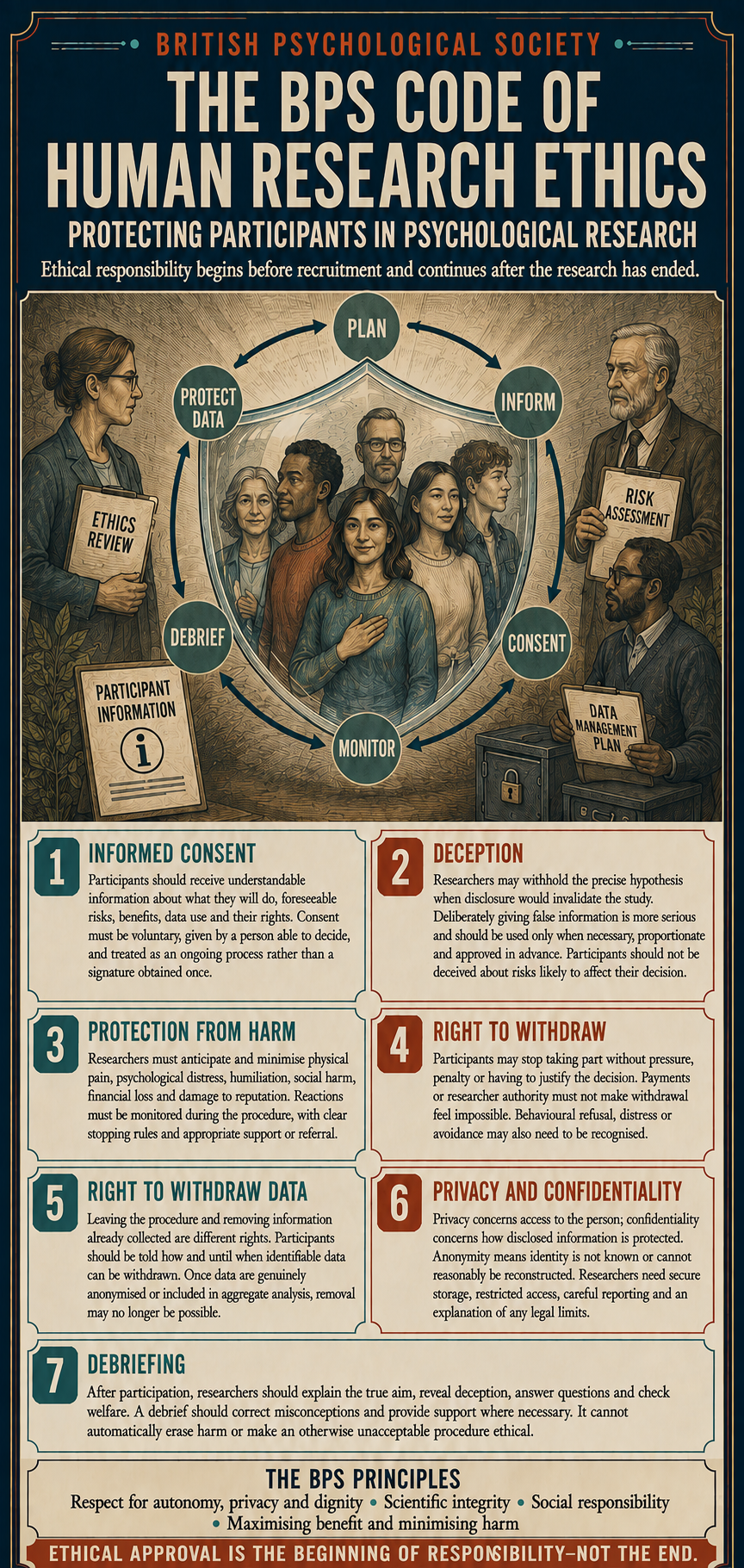
The current BPS Code of Human Research Ethics places ethical decisions within four broader principles:
Respect for the autonomy, privacy and dignity of individuals — participants' right to make free, informed decisions about their own involvement, and to have their privacy and personal dignity protected throughout.
Scientific integrity — research must be soundly designed, honestly conducted and honestly reported, since poor or dishonest science cannot ethically justify any risk to participants.
Social responsibility — researchers must consider the impact of their work on the wider social group, not just the individual participant, including how findings might be used or misused.
Maximising benefit and minimising harm — the potential value of the research must be weighed against the risk it poses, with harm kept to the minimum necessary to answer the question
WARNING: ETHICS HAS TWO SECTIONS IN AQA PSYCHOLOGY
AQA Psychology has two separate ethics sections, and they should not be confused.
Under scientific processes, ethics refers to the conduct and design of research, including BPS guidelines and issues such as consent, deception, and protection from harm.
In the debates section, ethics refers to the ethical implications of research and theory, meaning the consequences of psychological knowledge once it is applied or interpreted in society. This includes, but is not limited to, social sensitivity.
Questions in this section therefore centre on the conduct and design of research, including BPS guidelines and issues such as consent, deception, and protection from harm.. Questions about the wider impact, uses, and potential misuse of psychological explanations are in the debates sections.
WHY DOES PSYCHOLOGICAL RESEARCH NEED ETHICS?
The studies examined at the start of this section demonstrate what can happen when the pursuit of knowledge, professional ambition or commercial advantage is allowed to take priority over the people affected by research. They include very different procedures, populations and historical settings, so they should not be treated as though they all violated an identical checklist of rules. Instead, each exposes a particular way in which the relationship between researcher and participant can become abusive. Researchers usually possess greater knowledge, authority and control. They decide what participants are told, what will happen to them, which reactions will be recorded and how the resulting information will be interpreted. Ethical principles are needed because this power imbalance creates opportunities for exploitation, even when researchers believe their work has an important scientific purpose.
Independent ethical review therefore requires researchers to anticipate the specific risks created by a proposed study before recruiting anyone. It is not enough to add the words “consent”, “confidentiality” and “debriefing” to an application form. Reviewers must consider whether the question is worth investigating, whether the procedure can answer it, and whether the same knowledge could be obtained through a less harmful method. They must also consider who will be recruited, whether those people are especially vulnerable, what pressures might influence them and what will happen if the study does not proceed as planned. Ethical responsibility continues during and after the research: unexpected distress must be recognised, adverse events must be reported, data must be protected, and new uses of identifiable information may require fresh permission. The current BPS Code of Human Research Ethics places these decisions within four broader principles: respect for autonomy, privacy and dignity; scientific integrity; social responsibility; and the need to maximise benefit while minimising harm
MUST ETHICAL RESEARCH BE HARMLESS?
The existence of these protections does not mean that ethical research must be entirely comfortable. Psychology incapable of producing stress, frustration, embarrassment or moral conflict would be unable to investigate many important features of human behaviour. Research into trauma, prejudice, addiction, bereavement, obedience and mental disorder may involve difficult questions and emotionally demanding tasks. Even an ordinary interview can prompt a participant to remember painful events. The relevant question is therefore not whether the study creates any discomfort, but whether the risk is necessary, proportionate, understood as far as possible and carefully managed. This is where the argument that ethical regulation has “gone too far” deserves serious consideration. Excessively cautious committees can obstruct valuable research, exclude vulnerable groups from the evidence base or demand artificial procedures that no longer resemble real behaviour. If every challenging question is treated as harmful, psychologists may learn only about trivial behaviour from unusually protected participants. Vulnerable people may then be denied the opportunity to contribute to research about the conditions that affect them, while treatments and policies are developed using evidence from people unlike them. Ethical caution can itself have costs. However, this is not an argument for returning to unrestricted experimentation. It is an argument for reasoned ethical judgement rather than automatic prohibition. A demanding procedure may be acceptable when the question has genuine value, the risk cannot be reduced without destroying the study, participants are monitored, stopping rules are clear and meaningful support is available. A mildly stressful study with strong scientific value may be more defensible than a completely painless but badly designed study that wastes participants’ time and produces unreliable conclusions.
DOES THE END JUSTIFY THE MEANS?
Milgram’s obedience research brings this dilemma into focus. Participants believed that they might be seriously harming another person, and some showed unmistakable signs of strain. The experimenter’s prompts also made withdrawal appear more difficult than it should have been. These were substantial ethical costs. Yet the research produced evidence about the power of authority and the ease with which responsibility can be transferred to an apparently legitimate institution. It did not “explain genocide”, but it challenged the comforting belief that destructive obedience is confined to uniquely cruel or abnormal people. It is therefore possible to argue that the knowledge gained justified exposing a relatively small number of participants to temporary distress. Milgram reported that approximately 84 per cent of respondents later said they were glad to have participated, while only a small minority regretted it. Follow-up assessments found no clear evidence of lasting psychological damage. Those findings matter because ethical evaluation should consider the severity and duration of harm rather than assuming that visible distress necessarily produces permanent injury. The Open University summarises Milgram’s follow-up findings. Nevertheless, retrospective approval cannot settle the argument. Participants could not know beforehand how the experience would affect them, and a majority’s satisfaction cannot cancel the rights of a distressed minority. Nor should researchers assume that forcing participants to discover something disturbing about themselves is therapeutic. Some may have gained valuable insight into their susceptibility to authority; others may simply have been left believing that they were capable of cruelty. Research is not justified merely because the researcher thinks that the experience will be “good for” the participant. The end does not automatically justify the means, but the means cannot be assessed without considering the end. The ethical question is whether the expected knowledge is sufficiently important to justify the remaining risk after every reasonable safeguard has been introduced. Independent review is needed precisely because researchers are often emotionally, professionally or financially invested in believing that the answer is yes.
ETHICS ALSO PROTECTS THE TRUTH
Ethics is not concerned only with the treatment of participants. Research that is fabricated, distorted or selectively published is unethical even when nobody was visibly distressed during data collection. Participants contribute their time, disclose private information and sometimes accept discomfort because they believe that their contribution will be used to produce honest knowledge. Manipulating the results betrays that agreement. Poorly designed research also exposes people to inconvenience or risk without a reasonable prospect of producing anything valuable. Research findings can be distorted without anyone inventing an entire dataset. Researchers may measure several outcomes but report only those that produced significant results, remove inconvenient participants after seeing the findings, continue collecting data until significance appears or describe an unexpected result as though it had been predicted from the outset. These practices make chance findings appear more convincing and prevent readers from evaluating how the conclusion was actually reached. A survey of 2,155 psychological researchers found substantial self-reported use of such questionable practices. Approximately 35 per cent acknowledged presenting an unexpected result as though it had been predicted, while outright fabrication was much rarer. The study did not establish that 70 per cent of all psychologists routinely falsify research; it showed that a range of less dramatic practices that can mislead readers had become disturbingly normalised. John, Loewenstein and Prelec’s original study therefore supports a more precise criticism than the claim that most psychologists simply “lie”. Errors can also alter published conclusions without deliberate fraud. Bakker and Wicherts recalculated statistical results reported in 281 psychology articles. Approximately 18 per cent of the statistical results were reported incorrectly, and around 15 per cent of the articles contained at least one error that changed whether a result counted as statistically significant. Importantly, these consequential errors tended to favour the researchers’ hypotheses rather than undermine them. This pattern may reflect motivated reasoning, selective checking or publication pressure rather than conscious fabrication, but the effect on the scientific record can still be serious. The original analysis is available here. Selective publication can have consequences beyond academic reputation. A review comparing published antidepressant trials with the fuller evidence held by the United States Food and Drug Administration found that the published literature presented a substantially more favourable picture of effectiveness. Trials with positive results were far more likely to be published straightforwardly, while many negative or questionable trials remained unpublished or were reported in ways that conveyed a positive outcome. A clinician reading only the journals would therefore encounter a distorted evidence base, even if every individual table appeared statistically respectable. Turner and colleagues’ analysis illustrates why trial registration, predetermined outcomes and publication of negative findings are ethical requirements rather than administrative niceties. Modern safeguards consequently protect both participants and the reliability of the knowledge produced from their participation. Preregistration records the hypothesis and planned analysis before researchers know the results. Data sharing, where consent and confidentiality permit it, allows calculations to be checked. Trial registration makes missing studies more visible. Replication tests whether an effect survives beyond one sample and one laboratory. Clear declarations of funding and conflicts of interest help readers judge whether commercial or professional incentives may have influenced the research. Ethics should not make psychological research timid. Its purpose is to ensure that risks are taken for defensible reasons, that participants retain meaningful control and that the knowledge obtained is worthy of the trust placed in researchers. The central question is therefore not simply whether a study causes discomfort. It is whether the scientific value is real, whether the remaining risk is proportionate, whether participants are treated as persons rather than instruments and whether the eventual account of the evidence is complete and honest.
THE MAIN ETHICAL ISSUES IN PSYCHOLOGICAL RESEARCH
Ethical issues are connected, but they are not interchangeable. Deception may prevent fully informed consent; confidentiality may protect participants from social and psychological harm; and debriefing may help correct the effects of deception. Nevertheless, each issue raises a different question and should be considered separately. A researcher cannot demonstrate that a study is ethical simply by attaching every ethical term to it. The task is to identify the particular risks created by the procedure and explain how those risks will be prevented or managed.
.
CONSENT
Consent means that a person freely agrees to participate in research. It protects autonomy, meaning the participant’s right to decide what happens to them. Consent may be expressed in writing, verbally or, in appropriate low-risk situations, through a clear action. A signed form provides evidence that consent was recorded, but the signature alone does not make the consent valid.
For consent to be valid, three conditions are particularly important. The participant must have sufficient information, possess the capacity to understand and evaluate that information, and make the decision voluntarily. Voluntariness means that the decision is not produced by coercion, intimidation, excessive pressure or a misleading promise of benefit. Researchers must be especially careful when recruiting their own students, employees, patients or clients because an unequal relationship may make refusal feel unsafe. A student may agree because the researcher also teaches or assesses them, even if no explicit threat has been made.
Payment does not automatically invalidate consent, but it can create undue influence if the amount is so attractive that participants overlook risks or feel unable to withdraw. Milgram paid participants in advance and told them that the payment was theirs simply for attending. Nevertheless, the experimenter's authority and the formal laboratory setting may still have created a strong sense of obligation. Ethical analysis therefore considers the entire situation rather than assuming that payment either always coerces participants or can never influence them.
Consent should also be regarded as an ongoing process. A person who agrees at the beginning has not signed away the right to reconsider. Researchers must monitor participants throughout the procedure, respond to questions and obtain fresh consent when the research changes substantially. Agreement to one interview, experiment or use of data does not automatically authorise every future procedure.
INFORMED CONSENT
Informed consent means that the participant’s decision is based on sufficient, accurate and understandable information. Before agreeing, participants should normally be told the general purpose of the research, what they will be required to do, how long participation will take, any reasonably foreseeable risks or disadvantages, and how their information will be recorded and used. They should also be informed about confidentiality, withdrawal, complaints and the identity of the person or organisation responsible for the study.
Researchers should avoid unexplained technical terminology. Jargon is specialist language used within a particular profession or academic field. Terms such as random allocation, aversive stimulus, physiological arousal, data linkage or psychometric assessment may be familiar to a psychologist but meaningless or misleading to a participant. Information must be written for the people expected to read it, not for an ethics committee. It should explain specialist terms in ordinary language, use a readable format and be adapted where participants have language, communication, sensory or cognitive needs.
Comprehension is as important as disclosure. Giving someone a long, technical information sheet does not create informed consent if the person cannot understand it. Researchers may need to check comprehension by inviting questions or asking participants to explain the procedure in their own words. This is sometimes called a teach-back check. It helps establish whether the participant has understood rather than merely signed.
CAN CONSENT EVER BE COMPLETELY INFORMED?
Fully informed consent is difficult in studies where revealing the exact hypothesis would alter participants’ behaviour. Asch obtained agreement to a visual judgement study, and Milgram recruited volunteers for what appeared to be research into learning and memory. Both obtained consent to participate in something, but neither disclosed the true psychological situation. Their participants therefore gave consent, but not fully informed consent.
This does not mean that informed consent is pointless whenever some information is withheld. Researchers can often provide everything a participant needs to evaluate the practical procedure and its risks without revealing the precise prediction. The relevant question is whether the withheld information would have made a reasonable person reconsider participation. Concealing a narrow hypothesis is different from concealing pain, humiliation, frightening deception or a substantial invasion of privacy.
Consent must also be distinguished from the lawful basis used to process personal data. Under UK data-protection law, ethical consent to participate in research and consent as a legal basis for processing data are not necessarily the same thing. Universities may process research data under a public-task basis, for example, while still requiring voluntary ethical consent for participation. The Information Commissioner’s Office explains this distinction.
CONSENT INVOLVING CHILDREN AND OTHER PARTICIPANTS WHO MAY LACK CAPACITY
When children participate, permission will normally be required from a parent or legally authorised guardian. This is sometimes called parental or proxy consent. The child should also receive an age-appropriate explanation and, where capable, be asked for assent. Assent means an affirmative willingness to participate from someone who does not have full legal authority to provide consent independently.
Parental consent does not give researchers permission to disregard the child’s response. Dissent means an expression of unwillingness to participate or continue. It may be verbal, but it may also be communicated through crying, resistance, avoidance, silence, attempts to leave or a marked change in behaviour. Researchers should not treat a frightened child as a passive object simply because an adult signed a form.
Similar principles apply when an adult’s decision-making capacity may be impaired. Capacity is not determined simply by diagnosis, age or disability. It concerns whether the person can understand, retain, and evaluate the relevant information and communicate a decision when required. Researchers must use accessible explanations and should not assume incapacity merely because someone communicates differently.
DECEPTION
Deception occurs when researchers intentionally prevent participants from understanding the true nature of a study. It may involve giving false information, creating a misleading situation or concealing facts that would substantially alter the participant’s interpretation of what is happening. Milgram told participants that the research concerned punishment and learning when its central purpose was to investigate obedience to authority. Participants were also led to believe that the learner was receiving genuine electric shocks.
A confederate, sometimes informally called a stooge, is someone who appears to be an ordinary participant but is actually working with the researcher and following a predetermined script. Asch used confederates who deliberately selected an incorrect comparison line. Milgram used a confederate who played the learner and pretended to receive shocks. Using a confederate normally involves deception because the genuine participant is misled about the person’s identity and role. However, a trained actor could be used without deception if participants were truthfully informed beforehand that the person was part of the research team.
ACTIVE DECEPTION AND LIMITED DISCLOSURE
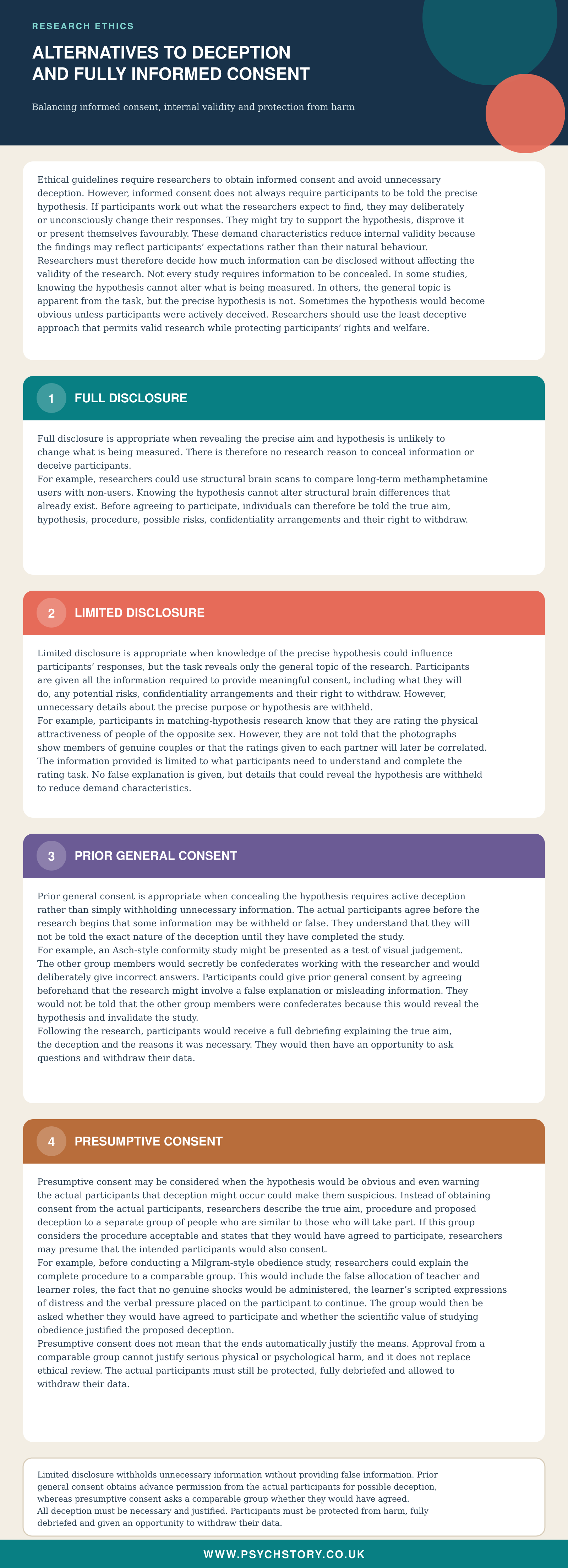
Active deception should be distinguished from limited disclosure. Active deception involves providing false information or constructing a false situation. Limited disclosure means that researchers give a truthful account of the task but do not reveal every detail of the hypothesis.
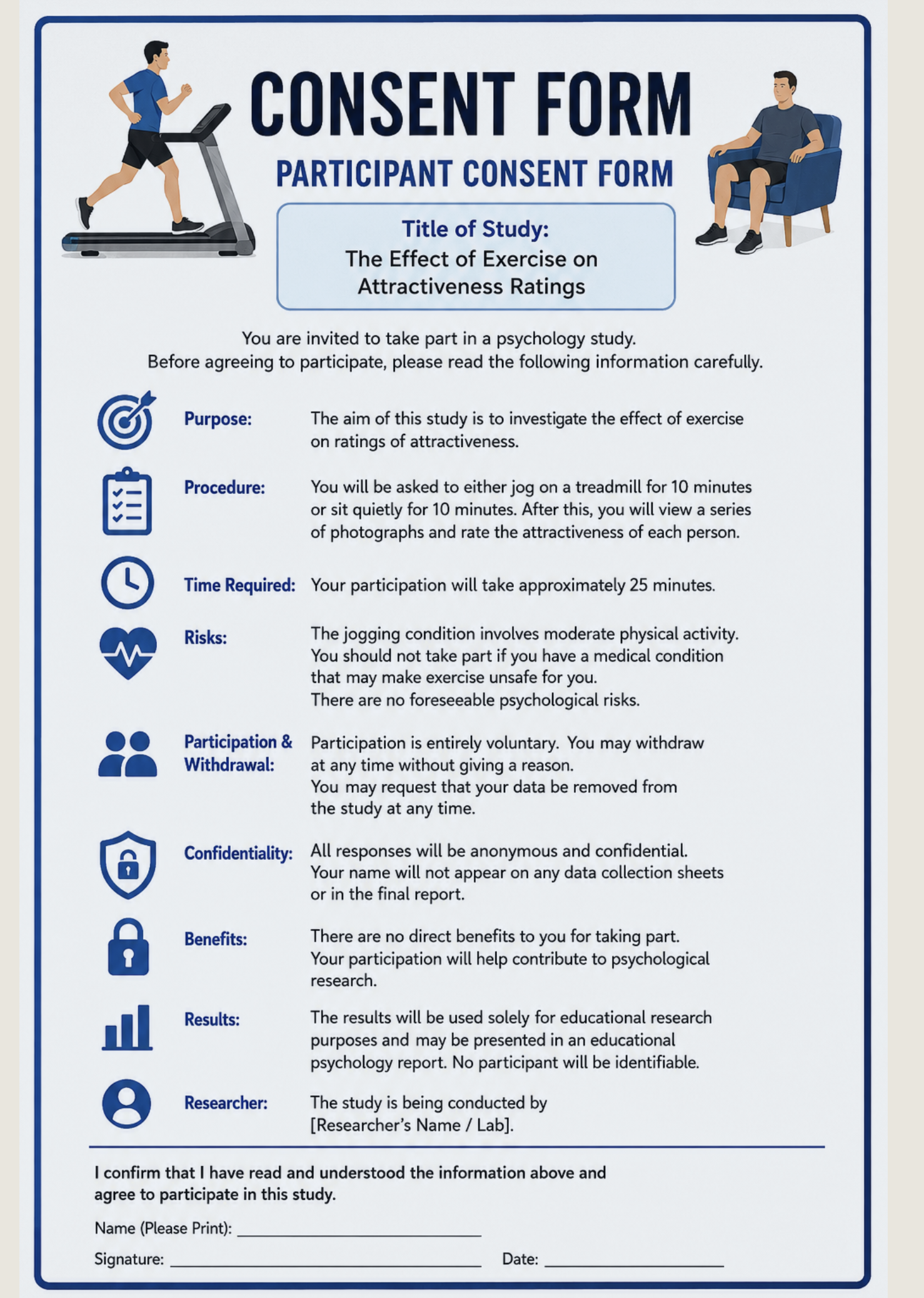
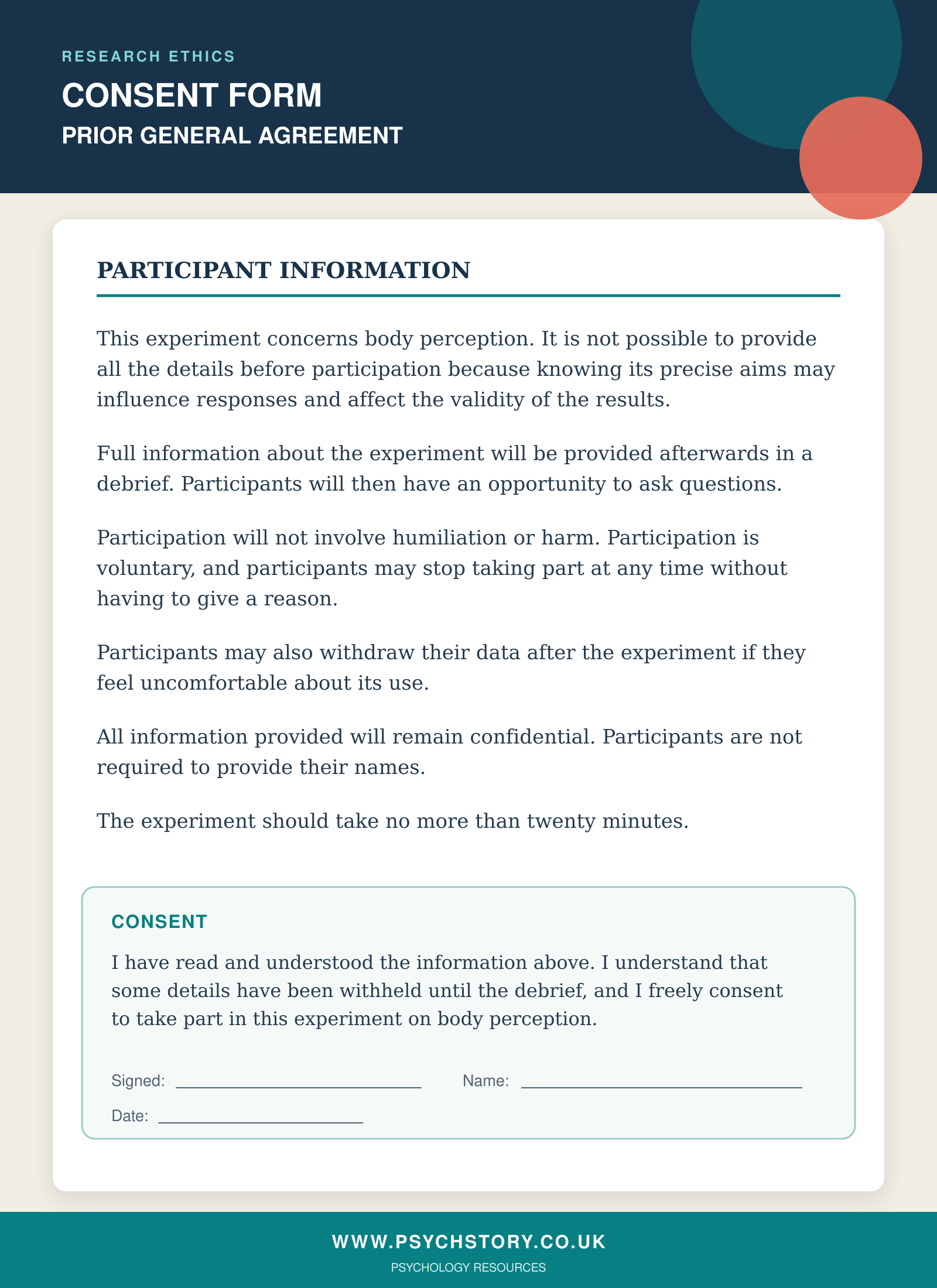
In matching-hypothesis research, participants might be told truthfully that they will rate the physical attractiveness of people shown in photographs. They may not be told that some photographs show members of genuine couples or that the partners’ ratings will subsequently be correlated. The information provided is limited, but participants still know what they will see and what they will be required to do. They are not given a false explanation of the task.
Researchers may use limited disclosure because knowledge of the hypothesis could produce demand characteristics. Demand characteristics are cues that allow participants to guess what behaviour the researcher expects. Once participants believe they understand the purpose, they may consciously or unconsciously alter their responses. Some attempt to confirm the prediction, others deliberately resist it, and others try to present themselves favourably.
For example, telling male participants that the Bem Sex Role Inventory is intended to assess how masculine or feminine they are could influence their answers. Participants might select responses that match how they wish to be perceived rather than describing their behaviour accurately. The scores would then partly measure self-presentation and awareness of the hypothesis rather than the intended psychological characteristic.
WHEN ACTIVE DECEPTION MAY BE NECESSARY
Sometimes limited disclosure is insufficient because the procedure itself would reveal the hypothesis. Milgram could not have told participants that the learner was a confederate and that the shocks were fake. Once they knew that nobody could be injured, pressing the switches would no longer place them in a genuine conflict between obedience and personal conscience. Similarly, Asch could not have explained that the other group members had been instructed to give incorrect answers. Participants would no longer experience authentic social pressure.
This explains the scientific reason for deception, but it does not automatically justify its use. Deception restricts autonomy because participants agree without knowing the complete truth. It may expose them to experiences they would have refused, cause humiliation when the deception is revealed and reduce trust in researchers. It is particularly difficult to justify when it conceals a serious risk, makes a dangerous procedure appear harmless or withholds information that would be central to a reasonable person’s decision.
An ethics committee should therefore ask whether the research has sufficient scientific or social value, whether the question could be answered without deception and whether the proposed deception is the least serious option available. Alternatives may include full disclosure, limited disclosure, role play, prior general consent or presumptive consent. Prior general consent involves warning potential participants that some authorised studies may withhold information or provide a misleading explanation, without revealing which particular study will do so. Presumptive consent involves explaining the proposed deception to a comparable group and asking whether they believe they would have agreed to participate. Neither method replaces debriefing or independent ethical review.
The BPS Code of Human Research Ethics requires deception and covert data collection to be explicitly justified. Deception should not be used merely because it is convenient, makes a study more dramatic or produces more publishable findings.
PROTECTION FROM PHYSICAL HARM
Physical harm includes injury, pain, illness, exhaustion and adverse physiological effects. Serious physical injury is comparatively unusual in contemporary psychological research, but risk may arise in studies involving exercise, sleep deprivation, substances, medical procedures, sensory stimulation or stressful simulations. It may also result indirectly when participants are encouraged to take risks or prevented from accessing treatment.
Researchers must conduct a risk assessment before the study begins. A risk assessment identifies possible harms, estimates their likelihood and severity, and specifies how they will be prevented or managed. The protocol should include stopping rules: predetermined signs or events requiring the procedure to be paused or terminated. Researchers also need an emergency plan and appropriately trained personnel where the procedure creates more than minimal risk.
Normal everyday experience can provide a useful point of comparison, but it is not an automatic ethical test. Everyday life contains serious hazards, and the existence of those hazards does not give researchers permission to reproduce them unnecessarily. A driving study, for example, should not expose participants to avoidable danger merely because road travel ordinarily carries some risk. The relevant judgement concerns the necessity and proportionality of the additional risk created by the research.
Milgram’s participants were not physically shocked, but some experienced physical manifestations of severe stress, including trembling, sweating and digging their fingernails into their skin. Such reactions demonstrate that the division between physical and psychological harm is not absolute. Psychological stress can produce physical symptoms, while physical procedures may have psychological consequences.
PROTECTION FROM PSYCHOLOGICAL HARM
Psychological harm includes more than a diagnosed mental disorder. It may involve intense fear, anxiety, shame, humiliation, loss of self-esteem, anger, confusion or disturbing insight into one’s own behaviour. It can also include longer-lasting effects such as intrusive memories, avoidance, damaged trust or deterioration in an existing mental-health condition.
Asch’s participants could reasonably have questioned their own perception when an entire group repeatedly gave an obviously incorrect answer. Milgram’s participants believed that they might be inflicting severe pain upon another person. Prisoners in the Stanford simulation experienced humiliation, loss of control and considerable distress. These procedures differed in severity, but each illustrates how a psychologically realistic situation can produce more than momentary inconvenience.
Ethical research does not have to be completely free from discomfort. If psychologists were forbidden to expose participants to any frustration, stress or emotionally difficult material, many important aspects of behaviour could not be investigated. The appropriate question is whether the anticipated distress is necessary, proportionate to the value of the research and managed through suitable safeguards.
Researchers should warn participants about the general nature of sensitive material without unnecessarily revealing the hypothesis. They should screen for relevant vulnerabilities where justified, monitor reactions during the procedure and make withdrawal straightforward. When a study concerns trauma, self-harm, abuse or another sensitive subject, researchers should also prepare appropriate support information and referral routes. A debriefing sheet containing a helpline is not sufficient if a participant is visibly experiencing an immediate crisis.
Psychological harm may also be social. Disclosure of sexual behaviour, mental-health information, criminal activity, political beliefs or stigmatised identities could damage relationships, employment, immigration status or personal safety. Protecting confidentiality is therefore an important way to protect participants from wider psychological and social consequences.
.
PRIVACY, CONFIDENTIALITY AND ANONYMITY
Privacy, confidentiality and anonymity are related but different concepts. Privacy concerns whether a researcher is entitled to enter a person’s physical, social or informational space. Confidentiality concerns how the researcher protects information entrusted to them. Anonymity means that the participant is not known or cannot reasonably be identified from the information available.
A study can be confidential without being anonymous. A researcher conducting interviews may know each participant’s name but replace it with a code, store the identifying key separately and prevent readers from discovering who made each statement. This is pseudonymisation, not anonymisation. Pseudonymised information remains personal data because the identity can be restored using separately held information.
Data are genuinely anonymised only when individuals are no longer reasonably identifiable, either directly or by combining the dataset with other available information. Removing names is not necessarily sufficient. An unusual occupation, age, location, medical history, photograph or detailed friendship network may identify someone even when no name appears. The Information Commissioner’s Office guidance consequently distinguishes effective anonymisation from merely removing obvious identifiers.
Researchers must comply with the UK GDPR and the Data Protection Act 2018 when processing personal data. This requires a lawful basis, transparency, data minimisation, appropriate security and clear limits on retention and access. However, it is inaccurate to say that the legislation simply requires every participant’s identity to remain confidential in all circumstances. Researchers may sometimes have to disclose information because of safeguarding duties, court orders or an immediate risk of serious harm. Any foreseeable limits to confidentiality should be explained before participation.
Filming creates a separate consent and privacy issue. The fact that Milgram’s and Zimbardo’s participants were filmed does not by itself establish a breach of confidentiality. The relevant questions are whether they knew they were being recorded, what they were told about the recording, whether they authorised identifiable publication and whether later circulation remained within the permission originally given. Consent to participate in a study is not automatically consent to be filmed, and consent to recording is not automatically permanent permission for worldwide circulation in documentaries, classrooms and online.
Using initials does not necessarily conceal identity either. Famous neurological patients such as H.M. and K.F. were presented through initials, but H.M. was later publicly identified as Henry Molaison. In a unique or widely discussed case, initials may function as a label rather than genuine anonymity. Researchers must consider whether the surrounding biographical information permits identification.
.
THE RIGHT TO WITHDRAW FROM THE RESEARCH
The right to withdraw from research means that participants may stop taking part without having to provide a reason and without suffering an inappropriate penalty. This right should be explained before the procedure starts and remain meaningful throughout it.
A right exists in practice only if participants understand it and can exercise it. Milgram maintained that participants were free to leave, but the experimenter’s increasingly forceful prompts suggested that continuation was required. In the Stanford Prison Experiment, requests to leave could become entangled with simulated parole procedures. In both cases, the formal option to withdraw did not ensure that participants experienced it as an unconditional choice.
Researchers should avoid language such as “you must continue” or “the experiment requires that you go on”. Standardised instructions should explain how to stop and what will happen afterwards. With children and people who have difficulty communicating, researchers must also recognise behavioural dissent. Withdrawal does not have to take the form of a formally expressed request.
Payment should normally be proportionate and structured so that leaving does not create a substantial financial loss. Participants may reasonably receive payment for the portion completed or retain an attendance payment. They should not feel compelled to endure escalating distress merely to earn money already promised.
THE RIGHT TO WITHDRAW PERSONAL DATA
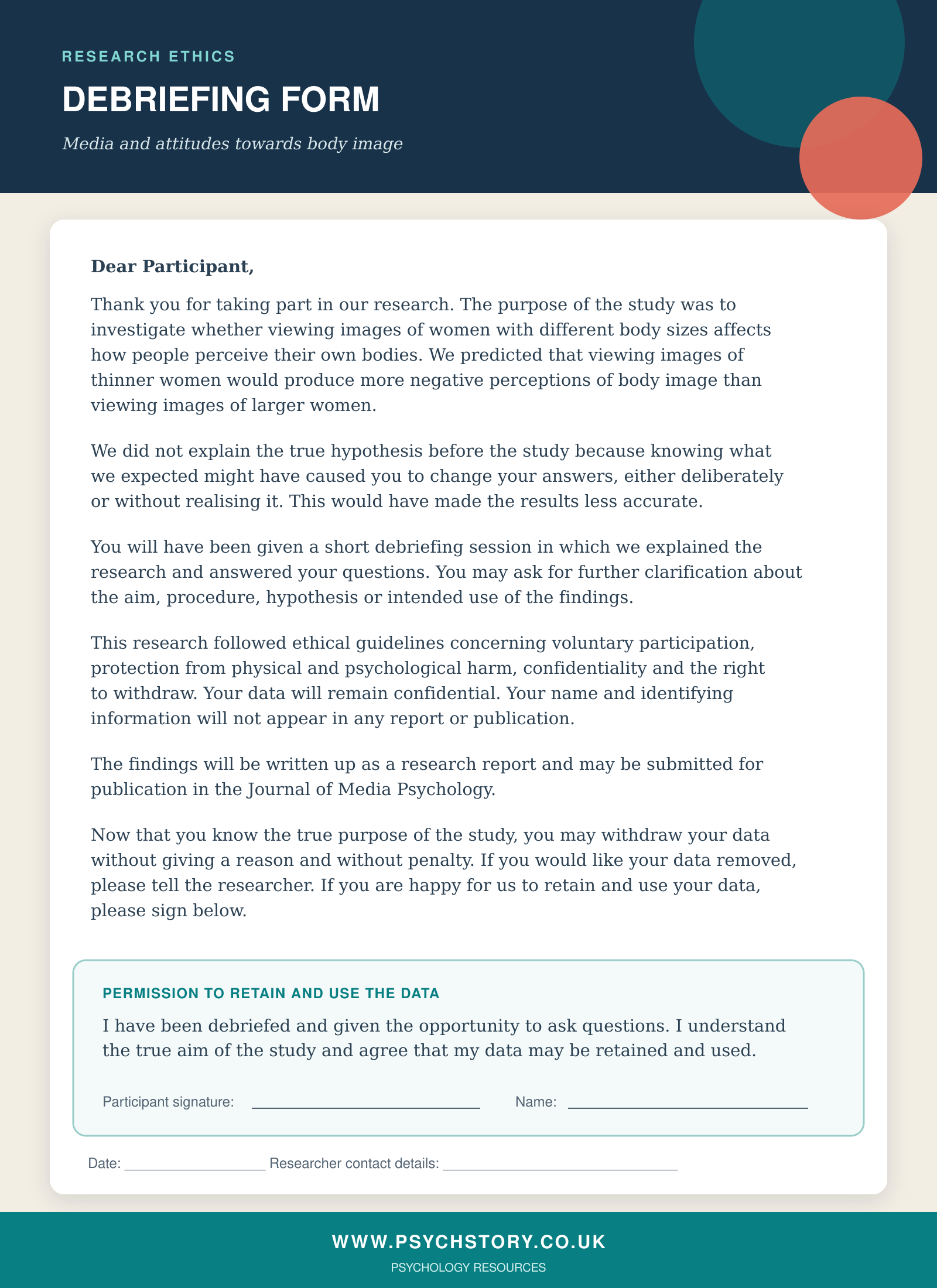
Withdrawing from the procedure and withdrawing data are not the same thing. A participant may stop answering questions immediately while allowing information already collected to remain in the study. Alternatively, they may request that identifiable information already provided is deleted. Researchers should explain whether data can be withdrawn, how to request it, and the deadline for doing so. A participant code may allow the researcher to locate a person’s responses without storing their name alongside them. Once data have been effectively anonymised, however, the researcher may no longer be able to identify which responses belong to that participant. Removal may also become impracticable once aggregated findings have been published. These limitations should be explained before consent rather than disclosed only when someone asks to withdraw. If serious deception has been used, the debrief should normally give participants a fresh opportunity to decide whether their information may be retained. This is sometimes described as retrospective consent or renewed consent. Use the terminology cautiously because a later decision does not transform the original participation into fully informed consent. It restores some control after the truth has been revealed, but it does not erase any distress or loss of autonomy that has already occurred.
DEBRIEFING
Debriefing is the process of explaining the study after participation has ended. It is good practice in most psychological research and essential when deception, limited disclosure, sensitive material or an unexpected adverse event has occurred. It should be treated as a planned part of the procedure rather than a hurried explanation added after data collection. A proper debrief should explain the purpose and hypothesis, identify information that was withheld or falsified, and explain why the chosen design was considered necessary. Participants should be told what happened in each condition and reassured where the false situation may have created a damaging belief. In Milgram’s research, for example, participants needed to learn promptly that the learner had not received electric shocks.
Researchers should check the participant’s welfare rather than merely asking whether everything is “fine”. If the study induced anxiety, embarrassment or a negative mood, active steps may be needed to reduce the effect. The aim is for the participant to leave in a psychological state at least as sound as when they arrived. A written information sheet may support the conversation, but it cannot replace an appropriate personal response when someone is visibly distressed. The debrief should provide an opportunity to ask questions, complain, obtain support information and, where possible, withdraw data after learning the truth. Participants may also be offered an accessible summary of the completed findings. This does not necessarily mean providing the full research report, which may be highly technical or unavailable for a considerable period.
Debriefing can also improve the research. Participants may reveal that they guessed the hypothesis, misunderstood an instruction, recognised a confederate or used an unexpected strategy. A process debrief explores how the participant interpreted the procedure and can identify demand characteristics, suspicion or methodological problems that would otherwise remain hidden. Nevertheless, debriefing cannot automatically justify an unethical study. A researcher cannot expose someone to excessive or avoidable harm on the assumption that an explanation afterwards will repair it. Debriefing is one safeguard within a wider ethical design. Its purposes are to restore accurate understanding, return control to the participant, identify and address harm, and repair as far as possible the breach of trust created by deception