
EXPRESSED EMOTION

EXPRESSED EMOTION IN AQA: HOW TO USE IT CORRECTLY
Expressed Emotion can be interpreted in two ways in AQA Psychology, and students often lose marks for using it incorrectly.
First, Expressed Emotion is sometimes presented in textbooks as a psychological cause of schizophrenia. However, students should be cautious with this interpretation. Highly expressed emotion in families does not cause schizophrenia, or at least there is no convincing way to prove that it does. Schizophrenia typically develops in late adolescence or early adulthood, meaning that most research examining family communication is retrospective. Families are studied after the disorder has already emerged. This makes it impossible to establish cause and effect. Researchers cannot go back in time to observe family interactions before the onset of schizophrenia, and findings are vulnerable to social desirability bias and attribution problems. It is therefore unclear whether dysfunctional communication contributed to schizophrenia or whether the stress of living with schizophrenia altered family behaviour. For this reason, Expressed Emotion should not be confidently used as a primary causal explanation.
Instead, Expressed Emotion is best understood as a factor influencing the course of schizophrenia. Research consistently shows that highly expressed emotion is associated with higher relapse rates, while low-expressed emotion is associated with better outcomes once the disorder has been diagnosed. In this sense, Expressed Emotion explains how family behaviour may affect relapse and recovery rather than initial onset.
Second, Expressed Emotion can be used correctly as the basis for psychological treatment. Family therapy explicitly targets high-expressed emotion by reducing criticism, hostility, and emotional overinvolvement and increasing warmth and positive regard. In this context, Expressed Emotion is measured using tools such as the CFI, FMSS, or patient-perceived expressed emotion, and therapy aims to change these patterns to reduce the risk of relapse.
Students should therefore match their use of Expressed Emotion to the question being asked. If the question is about explanations of schizophrenia, Expressed Emotion should be handled cautiously and framed in terms of relapse rather than cause. If the question is about treatments, Expressed Emotion can be used directly to explain how family therapy works and how outcomes are measured.
Learning the correct role of Expressed Emotion for different question types is essential for accurate application and high-level exam responses.
BACKGROUND TO EXPRESSED EMOTION
To fully understand the origins of Expressed Emotion (EE), one must trace its foundations to the 1950s, specifically to the pioneering research of George Brown. In 1956, Brown joined the Social Psychiatry (MRCSP) Unit in London, an institution established in 1948 to investigate the social determinants of mental illness. At the time, psychiatric treatment was undergoing a significant transformation, largely due to the introduction of chlorpromazine, the first widely used antipsychotic drug. This medication allowed patients with schizophrenia to achieve symptomatic stability, leading to their discharge from long-term psychiatric hospitals. However, what initially seemed like a breakthrough in treatment was soon overshadowed by the high relapse rates observed among discharged patients. Many of these individuals, despite their apparent recovery, would find themselves re-admitted to psychiatric care in a short period. This raised a critical question: What factors were responsible for these relapses?
To investigate this phenomenon, Brown and his colleagues conducted a comprehensive study of 229 men who had been discharged from psychiatric hospitals, with 156 of them diagnosed with schizophrenia. They aimed to determine the key factors influencing relapse rates and subsequent hospital readmission. The findings were startling and contradicted prevailing assumptions. Rather than medication non-compliance or symptom severity being the primary drivers of relapse, the study revealed that the strongest predictor of symptom recurrence was the type of home environment to which patients returned.
Patients who were discharged to live with their parents or wives were significantly more likely to relapse and require re-hospitalisation than those who went to live in lodgings or with their siblings. This suggested that the family dynamic played a crucial role in the post-treatment trajectory of schizophrenia. A particularly intriguing discovery was that patients who lived with their mothers had a reduced risk of relapse if they or their mothers were employed. This indicated that extended and intense family contact might contribute to emotional strain, thereby increasing the likelihood of relapse. In contrast, maintaining some level of external engagement, such as employment, appeared to serve as a protective factor by reducing the frequency of highly involved family interactions.
The implications of this study were profound. It highlighted the potential for social and familial factors to act as psychological stressors in individuals recovering from schizophrenia. This research laid the foundation for Expressed Emotion (EE) theory, which proposes that high levels of emotional involvement, criticism, and hostility within the family environment can significantly worsen the prognosis of schizophrenia (Brown et al., 1962, 1972). The study suggested that family dynamics were not just background influences but active determinants in the stability or deterioration of a patient’s mental health
THEORY OF EXPRESSED EMOTION (EE)
The Expressed Emotion (EE) theory was developed in the late 1970s. Because proving psychological theories about the cause of schizophrenia is problematic, researchers began focusing on how families might influence the course of the illness rather than its cause. EE research does not examine childhood experiences or past living conditions; it explores how family dynamics and communication affect relapse rates following successful treatment. The theory is primarily used in the treatment of schizophrenia, as patients from high-EE households are more likely to relapse.
However, findings from EE can be extrapolated to theories about what causes schizophrenia, as they suggest that psychological factors, such as hostile and critical communication, impact the disorder. This has led some researchers to argue that environmental stressors within the family may contribute to the onset of schizophrenia. However, EE is primarily a treatment-based theory, focusing on relapse prevention rather than the initial development of the disorder. Therefore, while EE findings highlight the importance of family interactions, they should not be taken as direct causal explanations for schizophrenia.
WHAT IS EXPRESSED EMOTION
Expressed Emotion refers to the emotional tone of family interactions and is used to assess the level of emotional stress within the family environment. It matters because levels of expressed emotion are linked to relapse rates in schizophrenia and directly inform the use of family therapy.
THE COMPONENTS OF EXPRESSED EMOTION
The five components of Expressed Emotion are
Critical Comments
Hostility
Emotional Overinvolvement
Warmth
Positive Regard.
High Expressed Emotion
The first three are associated with high expressed emotion, while warmth and positive regard are associated with low expressed emotion.
HIGHLY EXPRESSED EMOTION IN MORE DETAIL
HOSTILITY: Hostility is a negative attitude directed at the patient because the family feels that the disorder is controllable and that the patient is choosing not to get better. Problems in the family are often blamed on the patient, who has difficulty resolving them. The family believes that the cause of many of the family’s problems is the patient’s mental illness, whether it is or not.
EMOTIONAL OVER-INVOLVEMENT: Emotional over-involvement refers to a set of feelings and behaviours of a family member towards the patient, including overprotectiveness or self-sacrifice, excessive use of praise or blame, preconceptions, and statements of attitude. Family members who show high emotional involvement tend to be more intrusive. Therefore, families with high emotional involvement may believe patients cannot help themselves. Thus, high involvement will lead to strategies for controlling and carrying out tasks for patients. In addition, patients may feel very anxious and frustrated when interacting with family caregivers with high emotional involvement due to such high intrusiveness and emotional display towards them. Overall, families with high EE appear to be poorer communicators with their ill relatives, as they might talk more and listen less effectively.
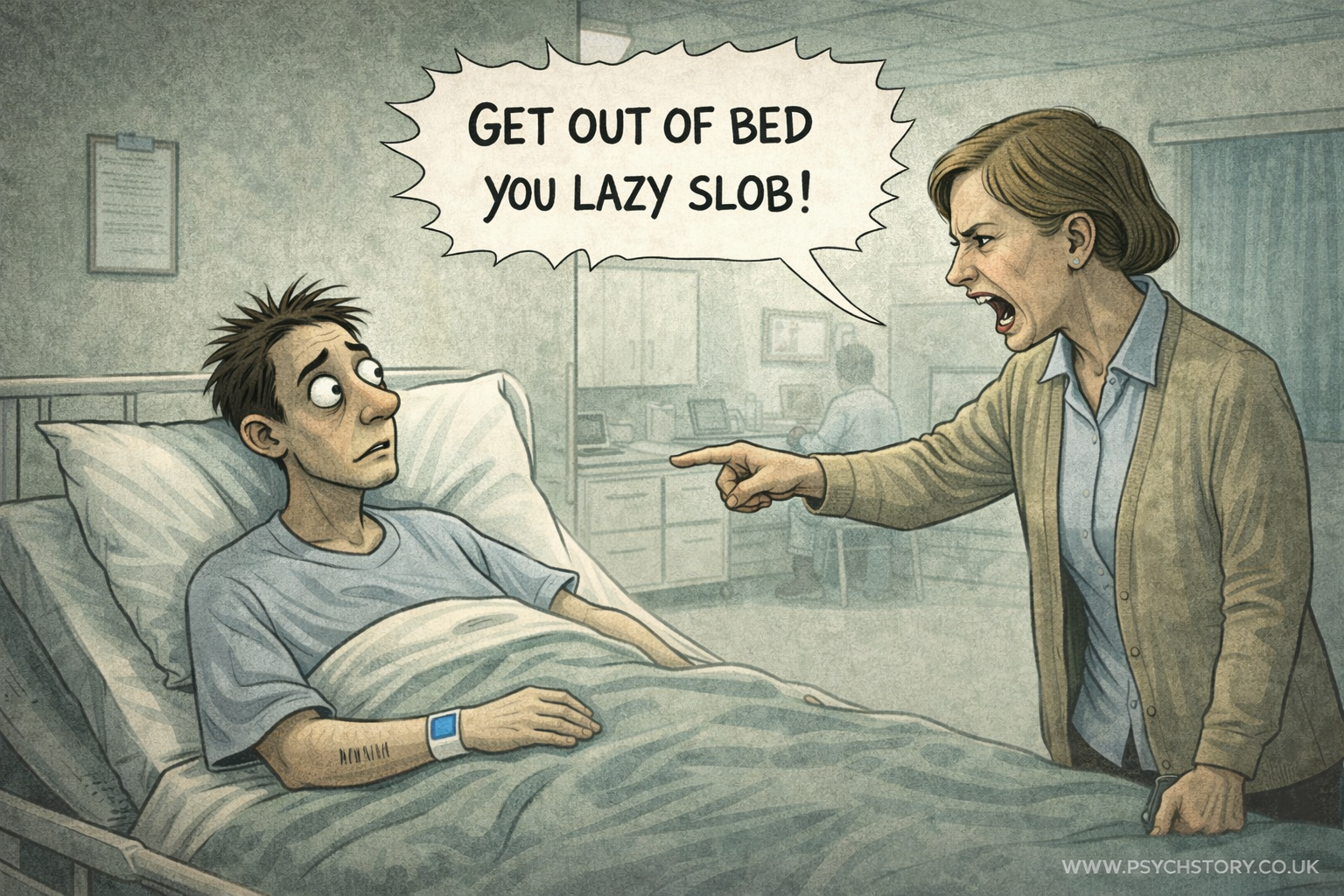
CRITICAL COMMENTS: Careful observations of direct communication between patients and caregivers show that critical caregivers become involved in angry exchanges with patients they seem unable to prevent or avoid. These potentially lead to physical violence, and it is the nature of some families with high EE. Patients who are unable to get up in the morning, who fail to wash regularly, or who do not participate in household tasks are criticised for being lazy and selfish; unfortunately, in this context, the caregivers fail to understand that these could be potential manifestations of negative symptoms of schizophrenia or any other psychotic disorder. By contrast, low-EE caregivers are better able to recognise aspects of the patient’s behaviour that indicate the illness. Examples: Family caregivers may express frustration in an increased tone, tempo, and volume, saying that the patient frustrates them, deliberately causes problems for them, that family members feel the burden of living with him, that living with him is harder, or that the patient is ignoring or not following their advice.
LOW-EXPRESSED EMOTION: Low-expressed emotion occurs when family members are more reserved in their criticism and feel that the patient lacks control over the disorder. When the family is more educated, it is more likely to exhibit low levels of emotional expression.
WARMTH: It is assessed by the caregiver's kindness, concern, and empathy when discussing the patient. It depends significantly on vocal qualities, with smiling a common accompaniment that often conveys an empathetic attitude from the relative. Warmth is a significant characteristic of the low EE family. Examples: Caregivers state that the patient tries to get along with everyone, makes a lot of sense, is easy to be around, and is good to have around. The patient’s behaviour is appropriate, as it is not his/her pre-morbid self.
POSITIVE REGARD: Positive regard comprises statements that express appreciation or support for the patient’s behaviour, as well as verbal/nonverbal reinforcement from the caregiver. Examples: The family states that they feel very close to the patient, appreciate the patient’s small efforts or initiatives in his day-to-day functioning, and can cope with the patient and enjoy being with him/her.
WHY EXPRESSED EMOTION MATTERS
High-expressed emotion environments are characterised by frequent criticism, hostility, and excessive emotional involvement and are associated with an increased likelihood of relapse in schizophrenia. Low-expressed emotion environments are characterised by greater warmth and positive regard and are associated with reduced relapse rates. Family therapy aims to reduce highly expressed emotion by decreasing criticism and hostility and increasing warmth and positive regard, thereby lowering relapse risk.
Family members who express emotions strongly are hostile, critical, and not tolerant of the patient. They feel like they are helping by having this attitude. They criticise not only behaviours related to the disorder but also behaviours unique to the patient's personality. High-expressed emotion is more likely to cause a relapse than low-expressed emotion.
HOW IS EXPRESSED EMOTION (EE) MEASURED?
EXPRESSED EMOTION (EE) is assessed through structured interviews and speech analysis to determine the levels of criticism, hostility, and emotional overinvolvement in family interactions. The three main methods used to measure EE are:
CAMBERWELL FAMILY INTERVIEW (CFI),
PATIENT’S PERCEPTION OF EE
FIVE-MINUTE SPEECH SAMPLE (FMSS)
The CAMBERWELL FAMILY INTERVIEW (CFI) is the most comprehensive and widely used method for assessing EE. This is a semi-structured, audio-recorded interview in which family members discuss their thoughts and feelings about the patient. The analysis focuses on both verbal and non-verbal cues, evaluating critical comments, hostility, and emotional intensity. High EE is characterised by frequent criticism, emotional over-involvement, or hostility, while low EE suggests a neutral or supportive family environment.
The CFI provides a detailed and reliable assessment of EE, making it the gold standard in research and clinical practice. However, it is time-consuming and requires trained professionals to conduct and analyse, limiting its accessibility in some settings.
PATIENT’S PERCEPTION OF EE
Another way to measure EE is from the patient’s perspective. This approach assesses how the patient perceives their family’s emotional responses toward them and their illness. Patients rate their relatives’ attitudes, including how protective, critical, or emotionally distant they seem. If a patient feels that their family members are overprotective or emotionally neglectful, this can increase stress levels and elevate the risk of relapse.
The patient’s perception of EE is particularly useful because it considers subjective experience, which may differ from external observations. However, it is important to acknowledge that patients with schizophrenia may have distorted perceptions due to paranoia or cognitive impairments, making this method less objective than direct family assessments.
FIVE-MINUTE SPEECH SAMPLE (FMSS)
The FIVE-MINUTE SPEECH SAMPLE (FMSS) is a quicker alternative to the CFI, often used in clinical settings where time is limited. In this method, a relative speaks uninterrupted for five minutes about the patient. The speech is then analysed for critical comments, hostility, and emotional over-involvement. While less comprehensive than the CFI, it allows for a fast, initial assessment of EE in families.
The FMSS is time-efficient, making it useful for large-scale studies and clinical practice. However, it is less detailed than the CFI and may require additional assessment methods to fully determine the family’s EE levels.
REDUCING EXPRESSED EMOTION IN FAMILIES
Family therapy reduces relapse in schizophrenia by systematically training relatives to lower levels of high expressed emotion and promote low expressed emotion. This training is structured, time-limited, and delivered by mental health professionals.
STRUCTURE AND DURATION OF FAMILY THERAPY
Family therapy is typically delivered over 6 to 12 months, involving regular sessions with the patient and close family members. Sessions may start weekly and then be spaced out over time. The aim is not to provide counselling but to teach families specific skills that reduce emotional stress within the household.
PSYCHOEDUCATION AND ATTRIBUTION TRAINING
Families are explicitly taught about the symptoms of schizophrenia and how these affect behaviour. Particular emphasis is placed on negative symptoms, which are often misinterpreted as laziness or lack of effort. Family members commonly assume negative symptoms are under voluntary control, while recognising that positive symptoms are not. Therapy challenges this attribution error by explaining that negative symptoms are illness-related, not deliberate, reducing blame and criticism.
SKILLS TRAINING AND COMMUNICATION PRACTICE
Families are trained in practical communication skills during sessions. Therapists model low criticism responses, help relatives rehearse neutral language, and practise responding to difficult situations without hostility. This training is active and structured rather than discussion-based.
MANAGING EMOTIONAL OVERINVOLVEMENT
Relatives are guided to recognise overprotective or intrusive behaviours and are coached in setting appropriate boundaries. Therapy focuses on supporting independence rather than reinforcing dependency, reducing emotional overinvolvement while maintaining support.
PROMOTING WARMTH AND POSITIVE REGARD
Families are trained to consciously increase warmth and positive regard by verbalising appreciation for effort rather than outcomes. This includes acknowledging small improvements and maintaining realistic expectations.
WHY TRAINING REDUCES RELAPSE
By changing how families interpret behaviour and respond emotionally, family therapy lowers expressed emotion over time. Reduced criticism and hostility decreases stress, which in turn lowers relapse risk, particularly when negative symptoms are no longer treated as controllable behaviour.
RESEARCH STUDIES ON EXPRESSED EMOTION
Research has consistently demonstrated a strong association between high levels of Expressed Emotion (EE) within families and increased relapse rates in individuals with schizophrenia. The pioneering study in this field was conducted by George Brown et al., who followed patients for nine months after hospital discharge. They found that patients returning to live with critical caregivers had a higher likelihood of relapse, suggesting that prolonged exposure to such environments adversely affects the course of schizophrenia.
Building upon this foundation, Kavanagh reviewed 26 studies examining the relationship between EE and schizophrenia relapse. The analysis revealed that the mean relapse rate was 48% for patients residing with high-EE families, compared to 21% for those in low-EE families, underscoring the significant impact of family emotional climate on patient outcomes.
Further reinforcing these findings, Bebbington and Kuipers analysed data from 1,346 patients and confirmed the link between high EE in family caregivers and increased relapse rates. Their study also highlighted the protective effect of reduced face-to-face contact for patients in high-EE families, suggesting that limiting exposure to high-EE environments can mitigate relapse risk.
In a meta-analysis, Butzlaff and Hooley examined the predictive power of EE on psychiatric relapse. Their results confirmed that EE is a reliable predictor of relapse in patients with schizophrenia, with high-EE environments significantly increasing the likelihood of symptom recurrence.
Additionally, Linszen et al. found that patients living in high-EE homes were four times more likely to experience relapse than those in low-EE environments. This study suggests that a high level of emotional expression in the family environment plays a critical role in exacerbating the patient's condition.
The influence of face-to-face contact was further explored by Vaughn and Leff, who discovered that increased interaction with high-EE relatives correlated with higher relapse rates among discharged patients. Their findings indicate that the more time a patient with schizophrenia spends with a high-EE family, the greater the risk of relapse.
Cultural factors have also been examined in EE research. For instance, Kalafi and Torabi studied EE within Iranian families and identified high levels of EE as a leading cause of relapse among patients with schizophrenia. This suggests that cultural dynamics, including mixed emotional expressions from parents, significantly influence patient outcomes.
Collectively, these studies underscore the critical role of family emotional environments in the progression and management of schizophrenia. High levels of EE—characterised by criticism, hostility, and emotional over-involvement—are consistently linked to increased relapse rates, highlighting the importance of family-focused interventions in treatment plans.
MODERN EVIDENCE ON EE AND FAMILY THERAPY
Post 2000 research has largely shifted from asking whether Expressed Emotion matters to how it can be modified most efficiently and which elements matter most.
Meta-analyses by Pharoah et al. (2010, updated 2017) found that family interventions targeting EE significantly reduced relapse and rehospitalisation rates in schizophrenia, particularly when interventions lasted at least nine months. Interventions that included structured psycho education and communication training were more effective than brief or informal approaches.
More recent work has focused on attributional change, particularly around negative symptoms. Studies have shown that relatives who interpret avolition and social withdrawal as controllable are more likely to respond with criticism. Interventions that explicitly reframe negative symptoms as illness-driven reduce critical comments and hostility more effectively than general education alone.
There has also been a move towards shorter, manualised family interventions. These do not attempt to replicate the full CFI-based model but instead target the most relapse-relevant components of EE, especially criticism and hostility. Evidence suggests these briefer interventions still produce clinically meaningful reductions in relapse, making them more practical for modern services.
Digital and hybrid approaches have also emerged. Recent studies indicate that online psychoeducation and structured family sessions can reduce perceived EE and improve family communication, particularly where access to long-term face-to-face therapy is limited. While the evidence base is still developing, outcomes are broadly consistent with traditional family therapy models.
Importantly, more recent research increasingly uses patient-perceived EE alongside observer-rated measures. Findings suggest that perceived criticism is often a stronger predictor of relapse than objectively coded EE, reinforcing the importance of how family behaviour is experienced rather than simply measured.
EVALUATION OF EXPRESSED EMOTION
EXPRESSED EMOTION: EVALUATING THE RESEARCH
Research has shown a strong and consistent link between high levels of expressed emotion (EE) in families and higher relapse rates in people with schizophrenia. High EE refers to family members showing frequent criticism, hostility, or emotional overinvolvement.
The pioneering studies by George Brown and colleagues found that patients discharged to high-custody homes were much more likely to relapse within nine months. Kavanagh’s review of 26 studies reported mean relapse rates of 48 per cent in high EE families versus 21 per cent in low EE families. Meta-analyses, including Butzlaff and Hooley’s, confirmed EE as a robust predictor of relapse.
More recent work has built on this and clarified what “EE predicts relapse” actually means. A 2021 meta-analysis and meta-regression found that global high EE predicts relapse, but it predicts early relapse within 12 months more strongly than later relapse. This is useful because it suggests EE is most relevant during the high-risk period after discharge. The same work also showed that EE is not one single risk factor. Critical comments were a key source of damage, while warmth was protective. In simple terms, it is not “family involvement” that is necessarily the problem; it is criticism and hostility in the family climate, as well as the absence of warmth.
Studies from 2020 to 2025, including scoping reviews in India and community-based work in Indonesia, continue to show high EE linked to higher relapse risk across cultures. Evidence also suggests that family interventions that include psychoeducation and communication training can reduce relapse and caregiver burden when they last at least nine months. The 2024 Cochrane review supports modest short-term reductions in relapse from these programmes, while also noting that the certainty of evidence varies due to study limitations.
Expressed emotion is best understood as a maintenance and relapse model, not a causal explanation for schizophrenia. The main strength of the theory is the consistency of findings linking high EE with relapse risk across different settings and cultures. Longitudinal research also supports the same pattern, with people returning to high EE family environments showing higher relapse rates than those returning to low EE homes, implying that family emotional climate can influence illness course.
Overall, large meta-analyses show that highly expressed emotion reliably predicts relapse in schizophrenia, particularly within the first year following discharge. Because of this evidence, EE remains accepted as an important psychosocial factor in relapse prevention.
EVALUATION OF EXPRESSED EMOTION AS A THERAPEUTIC APPROACH
Strengths include consistent links across cultures between EE and relapse, with criticism and hostility as the most damaging components, while warmth appears protective. A key strength of EE research is that it explains why families respond differently to different symptoms. Families often attribute positive symptoms such as hallucinations and delusions to illness, so they respond with less criticism. However, negative symptoms such as apathy, withdrawal, and lack of motivation are often misinterpreted as laziness or choice, leading to increased criticism and high EE.
Early criticisms argued that EE research did not clearly distinguish which components mattered most. For example, was the relapse risk driven by emotional overinvolvement, criticism, or hostility? More recent research has moved away from asking whether expressed emotion as a whole matters and toward identifying which components matter most and how EE can be reduced. Current findings suggest criticism is the most damaging element, while warmth appears to protect against relapse.
Newer approaches include shorter, manualised family interventions and digital or hybrid psychoeducation. These target relapse-relevant components, such as criticism and hostility, are more practical for modern services. Patient perceived EE is increasingly recognised as important, with perceived criticism sometimes predicting relapse more strongly than observer-rated EE. This supports the point that how interactions are experienced can matter as much as how researchers code them.
However, EE-based therapy is not effective on its own. It does not target the biological mechanisms underlying schizophrenia, and relapse remains high when medication is discontinued, regardless of EE levels. EE reduction, therefore, appears to enhance treatment effectiveness rather than act independently, meaning it should be viewed as an adjunct to pharmacological treatment rather than a replacement.
Practical limitations also reduce usefulness. EE-based family therapy is time-intensive and requires trained clinicians, which limits its availability in overstretched services. Many families struggle to attend due to work, caregiving demands, or strained relationships. This reduces uptake and limits generalisability beyond research settings.
Finally, communication changes may not be permanent. Under stress or during relapse, families may revert to previous patterns, suggesting ongoing reinforcement or follow-up support may be required. This raises questions about long-term cost-effectiveness and sustainability.
EVALUATION OF EXPRESSED EMOTION AS A THEORY
Expressed emotion has serious limitations. Many people with schizophrenia do not live with their families. They live independently, in supported housing, or have little or no contact with relatives, yet they still relapse at similar rates. If highly expressed emotion were the main cause of relapse, those without family contact should relapse much less often. The evidence does not clearly support this.
Causality is a major problem. Highly expressed emotion is associated with relapse, but family relationships are bidirectional. Expressed emotion may often be a reaction to the illness becoming worse rather than its cause. As symptoms become more severe or disruptive, family members can naturally become more anxious, critical, or overinvolved, raising EE scores. This creates a cycle where the patient’s worsening condition increases criticism and hostility, and it becomes difficult to determine what is driving what.
Supporting this, highly expressed emotion is less common in families dealing with a first episode and tends to build up over years of chronic stress and burden. Research suggests EE is not very relevant in the first relapse but becomes more relevant in later relapses, which fits the idea that EE develops over time as relatives try to cope with long-term disruption.
Medication is a huge confounder that is often not properly addressed in EE research. Relapse is much more common when people stop taking antipsychotic medication, especially in the first two years, when non-adherence happens in around three-quarters of cases. Non-adherence can triple the risk of relapse regardless of family environment. Many EE studies involve patients on medication, but rarely separate whether relapse is due to family dynamics or stopping drugs. This makes it difficult to know how much EE contributes independently. Positive symptoms are episodic, with gaps of normality, so it is normal to see periods without symptoms, but medication status is often not controlled for. Are patients in EE studies on medication? How well do EE effects hold without medication? There is some research examining differences, but, as with cognitive behavioural therapy research, it does not fully resolve the confound.
Negative symptoms are particularly poorly explained by EE. Symptoms such as lack of motivation, flat affect, social withdrawal, poverty of speech, and reduced working memory are typically long-term and very resistant to treatment. Antipsychotic medication and family interventions tend to improve positive symptoms more than negative ones. Nothing currently available fully cures negative symptoms. They often persist even after treatment, and are linked to brain changes that may be permanent. Families often misinterpret these symptoms as personal failings, which increases criticism, but EE approaches only partly help by reframing the behaviour rather than resolving the underlying deficits. Even if relatives stop blaming lack of motivation, poverty of speech, and working memory impairment remain.
Expressed emotion is also socially sensitive. By focusing on family criticism or over-involvement, the theory can seem to blame relatives for relapse, especially mothers. Families are already under enormous stress and often feel guilt. Suggesting communication styles play a role can make families feel judged and can damage trust with mental health services. Modern EE work tries to avoid blame and focus on collaboration, but the risk of perceived blame remains significant.
Expressed emotion also tends to downplay biological factors. Schizophrenia has a strong genetic basis, and biological explanations include neurodevelopmental changes and immune-related mechanisms such as C4-linked synaptic pruning. These influences are likely to be enduring. EE may fit a diathesis stress framework in the sense that stress affects relapse risk, but it does not explain the origin of the disorder or reverse underlying brain changes. In simple terms, reducing criticism may reduce stress and relapse risk, but it does not undo neurodevelopmental vulnerability.
CLASSIFICATION AND METHOD ISSUES
Psychological theories like EE are criticised for being less scientific than biological ones. Many studies are correlational, use retrospective data, or struggle to control real-life family situations, making it hard to establish cause and effect.
Low-EE families may not be adjusted for socioeconomic status, family structure, or available support. Low EE families may have more time or resources to support adherence and stability, which could lower relapse independently of EE. This matters because EE is less relevant in early relapse but more relevant later, which may reflect accumulated stress and burden over time rather than a stable causal factor.
There are also measurement issues. The Camberwell Family Interview is detailed but time-consuming, which limits its practical use. The Five Minute Speech Sample is quicker but less nuanced. Patient-perceived EE provides valuable insight but is subjective. All measures struggle to separate cause from consequence.
NOTE ABOUT ALL THERAPIES FOR SCHIZOPHRENIA
CLARIFICATION FOR STUDENTS: NEGATIVE SYMPTOMS IN SCHIZOPHRENIA – NATURE, TREATMENT LIMITS, AND ATTRIBUTION PROBLEMS
Negative symptoms of schizophrenia, including avolition, alogia, blunted affect, asociality, and anhedonia, typically emerge gradually, persist over time, and are highly resistant to treatment. They are strongly associated with impairments in working memory, executive functioning, and goal-directed behaviour. Contemporary accounts increasingly interpret these symptoms as reflecting enduring neurodevelopmental or structural brain abnormalities rather than a reversible neurochemical imbalance such as simple dopamine dysregulation. This helps explain why negative symptoms often resemble a form of chronic impairment and why they show limited responsiveness to existing interventions.
PHARMACOLOGICAL TREATMENTS
Antipsychotic medications primarily target positive symptoms such as hallucinations, delusions, and thought disorder through dopamine D2 receptor blockade. Even atypical antipsychotics, including clozapine, which is considered the gold standard for treatment-resistant positive symptoms, show minimal direct effects on primary negative symptoms. Where improvements in negative symptoms are reported, they are typically indirect, arising from reductions in positive symptoms, general distress, or sedation, rather than from a genuine restoration of motivation, initiative, or cognitive capacity.
PSYCHOLOGICAL AND PSYCHOSOCIAL INTERVENTIONS
Similar limitations apply across psychological therapies, including cognitive behavioural therapy for psychosis, token economies, and family interventions aimed at reducing expressed emotion.
Establishing a therapeutic alliance is often difficult when negative symptoms predominate, due to poverty of speech, reduced engagement, and diminished motivation. These approaches do not directly address the core motivational and cognitive deficits that define negative symptoms. Negative symptoms are not primarily driven by distorted cognitions or maladaptive beliefs, meaning CBT cannot restore avolition or working memory function.
Token economies make this limitation particularly explicit by bypassing internal motivation entirely and relying on external reinforcement to shape behaviour. This approach implicitly treats behaviour as if it were under voluntary control, which is questionable in cases of severe avolition. Patients may lack motivation to engage in basic self-care or with welfare systems, highlighting a clear gap between theoretical assumptions and clinical reality.
It is also important to note that many psychological therapies were developed prior to the 1990s reformulation of the dopamine hypothesis and did not clearly distinguish negative symptoms as a distinct and central feature of schizophrenia.
Family interventions and EE reduction strategies similarly do not directly reverse negative symptoms. They may reduce interpersonal stress, criticism, or anxiety and help prevent secondary deterioration, but this represents management of consequences rather than treatment of the core deficit. In this respect, CBT, token economies, and EE-based approaches operate in broadly similar ways: they mitigate the impact of negative symptoms without curing them.
METHODOLOGICAL AND ATTRIBUTION CHALLENGES IN RESEARCH
Research evaluating psychological treatments frequently fails to control explicitly for medication status. It is often unclear whether participants are receiving antipsychotic medication or whether positive symptoms are adequately stabilised.
This creates two major problems. First, unmedicated individuals with active positive symptoms may experience severe hallucinations, delusions, or thought disorder that disrupt attention, insight, trust, and communication, making sustained engagement in talking therapies unrealistic. Second, when patients are medicated, it becomes difficult to disentangle whether observed improvements are attributable to the psychological intervention, the medication, or their interaction.
These issues are particularly important when interpreting relapse data. Relapse following psychological intervention or within high expressed emotion environments does not necessarily indicate failure of therapy or the causal primacy of family dynamics. A large proportion of patients discontinue antipsychotic medication within the first two years of treatment, and relapse risk increases sharply following discontinuation. Relapse in high-EE contexts may therefore reflect the combined effects of increased stress and a loss of pharmacological protection rather than EE alone.
EE-focused family therapy is somewhat distinct in that it targets relatives rather than the patient directly. However, even here, apparent reductions in relapse cannot be cleanly separated from medication adherence. Overall, these attribution problems highlight the need for caution when evaluating claims about the effectiveness of psychological treatments and reinforce the importance of explicitly accounting for medication status, symptom stabilisation, and adherence in schizophrenia research