BODY SCHEMAS AND MODERN EATING DISORDERS
Disorders such as bulimia nervosa and anorexia nervosa have a longer history than people often realise.

Extreme fasting has existed historically, but widespread anxiety about body shape and systematic attempts to control weight are closely associated with modern visual culture.

One explanation comes from schema theory.

A schema is a mental framework that organises information about the self and the world. A body schema is the internal picture people carry of what their body looks like and what it is supposed to look like.

For most of human history, that internal picture had very little external input.

Displaying nudity was not encouraged. In many homes there were not even full length mirrors. A person’s sense of their body came mainly from inhabiting it and occasionally seeing it reflected, not from constant exposure to images of other bodies.

There was no endless gallery of reference bodies.
No curated images.
No pornography.
No standardised visual ideal.

Nudity existed, but it was not presented as something to compare against or match.

Without repeated external examples, there was no fixed visual template of what the naked body should look like. Expectations about perfectly round breasts, surgically enhanced curves, or digitally perfected proportions did not exist.

Modern media environments changed this.

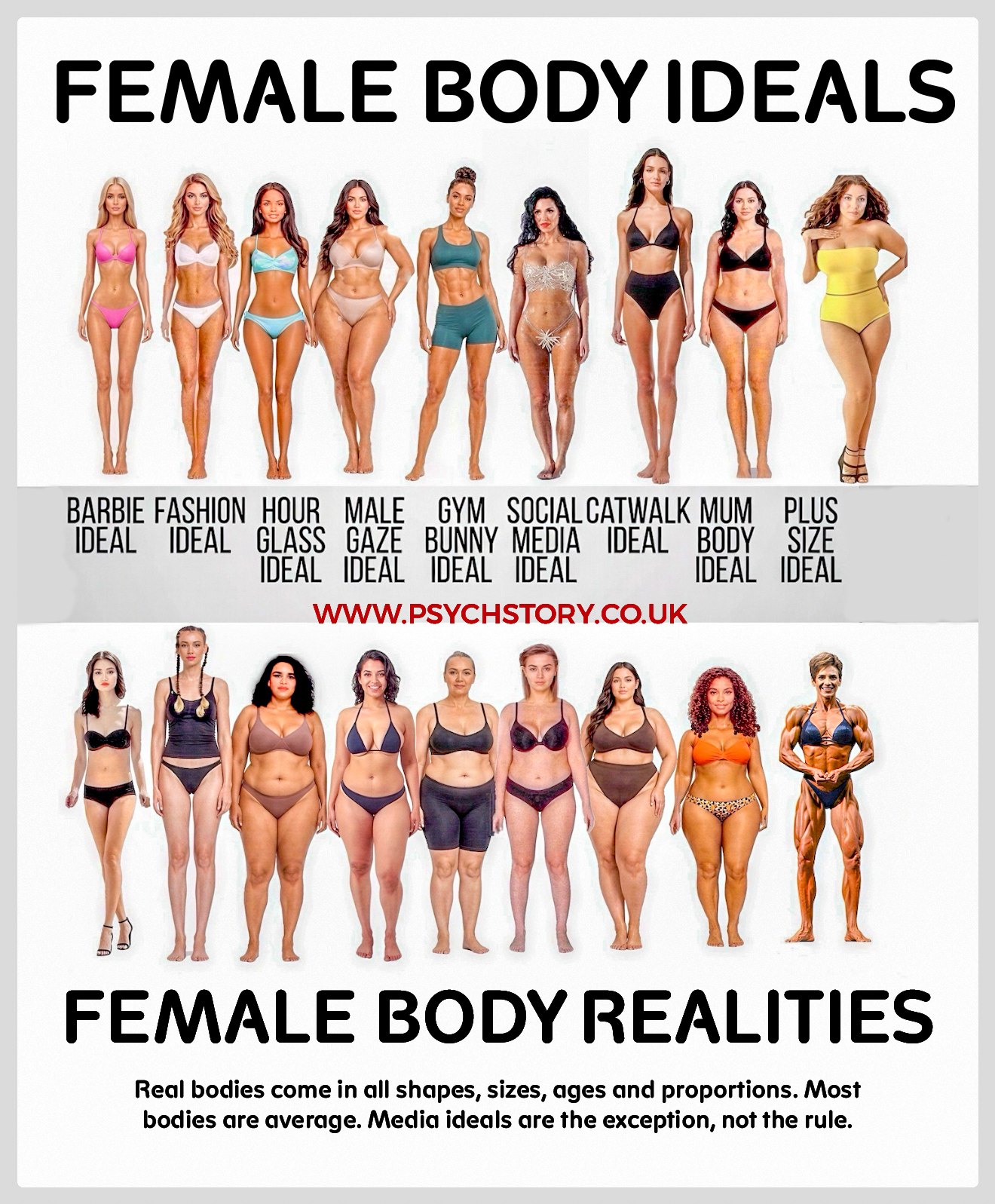
Today the body is constantly represented through highly selective images. These images become salient reference points and gradually form part of people’s body schemas.

Once this schema forms, people begin comparing their real body to the internalised template.

And the realities rarely match.

Rebecca Sylvia

I am a Londoner with over 30 years of experience teaching psychology at A-Level, IB, and undergraduate levels. Throughout my career, I’ve taught in more than 40 establishments across the UK and internationally, including Spain, Lithuania, and Cyprus. My teaching has been consistently recognised for its high success rates, and I’ve also worked as a consultant in education, supporting institutions in delivering exceptional psychology programmes.

I’ve written various psychology materials and articles, focusing on making complex concepts accessible to students and educators. In addition to teaching, I’ve published peer-reviewed research in the field of eating disorders.

My career began after earning a degree in Psychology and a master’s in Cognitive Neuroscience. Over the years, I’ve combined my academic foundation with hands-on teaching and leadership roles, including serving as Head of Social Sciences.

Outside of my professional life, I have two children and enjoy a variety of interests, including skiing, hiking, playing backgammon, and podcasting. These pursuits keep me curious, active, and grounded—qualities I bring into my teaching and consultancy work. My personal and professional goals include inspiring curiosity about human behaviour, supporting educators, and helping students achieve their full potential.

https://psychstory.co.uk
Next
Next

THESE DRUGS WILL SAVE YOU