
SOCIALLY SENSITIVE RESEARCH AND ETHICS
SPECIFICATION: Ethical implications of research studies and theory, including reference to social sensitivity
ETHICS IN PSYCHOLOGY
In your first chapter on ethics in psychology, you learned about this.
Ethics are the moral codes laid down by professional bodies to ensure that their members or representatives adhere to certain standards of behaviour. All scientific bodies have such codes, but those in psychology are particularly important given the subject matter.
Psychology is unlike most other subject areas in that its subject matter is entirely human or animal. Because of this, practically all research involves living things that can cause physical or psychological harm.
Psychological research also needs to consider the wider community. Milgram’s research taught us something unpleasant about the human race in general. Some research, for example, studies on IQ, have been used to discriminate against different races or ethnic groups.
The knowledge gained from psychological research can be exploited by people or groups to gain an advantage over others. Skinner’s work on behaviour shaping could be abused in this way. I could be shaping you right now!
ETHICS IN AQA PSYCHOLOGY (CLARIFICATION)
There are two separate ethics sections in AQA Psychology, and they should not be confused.
In scientific processes, ethics refers to the conduct and design of research, including adherence to BPS guidelines and considerations such as consent, deception, and protection from harm.
In the debates section, ethics refers to the ethical implications of research and theory, meaning the consequences of psychological knowledge once it is applied or interpreted in society. This includes, but is not limited to, social sensitivity.
Questions in this section, therefore, centre on the wider impact, uses, and potential misuse of psychological explanations, rather than how ethically a study was carried out.
SOCIALLY SENSITIVE RESEARCH (SSR)
“As long as research ethics avoid the matter of whether certain questions ethically cannot be asked, psychology will conduct technically ethical research that violates a more general ethic of avoiding harm to vulnerable populations” Brown (1997)
THE STANDARD ETHICAL FRAMEWORK – WHAT YOU ALREADY KNOW
By now, you will already be familiar with established ethical frameworks that psychologists follow, such as those set out by the BPS, when working with human participants. This includes avoiding deception, humiliation, and physical or psychological harm, as well as ensuring informed consent, the right to withdraw, a full debrief, and confidentiality. Most students assume that if these procedures are followed and participants leave in broadly the same psychological state as they entered, the research is typically judged to be ethically sound. On this account, ethical responsibility is fully discharged at the level of the individual participant.
ETHICS IN PSYCHOLOGY – LOOKING BEYOND THE LAB
But ethical concerns go well beyond the laboratory or research study. This ethical framework is narrow. It evaluates harm within the confines of the laboratory or study context, while remaining largely silent on the wider social consequences of the research produced. As a result, a paradox emerges. Research may meet all formal ethical requirements in its treatment of individual participants, yet still contribute to the stigmatisation or marginalisation of entire cultural and ethnic groups once its findings are published and circulated.
THE ARRIVAL OF SOCIALLY SENSITIVE RESEARCH (SSR)
Much research raises issues of relevance to society as a whole. As a result, psychologists need to be concerned about broader ethical issues. This is true of nearly all psychological research, but is especially true of socially sensitive research. The concept of socially sensitive research (often abbreviated as SSR) in psychology was formally introduced and defined in 1988 by Joan E. Sieber and Barbara Stanley.
In their influential paper titled "Ethical and professional dimensions of socially sensitive research", published in the American Psychologist (Vol. 43, No. 1, pp. 49–55), they coined and popularised the term to describe studies that carry potential social consequences — either positive or negative — for the participants involved or for the broader group(s) those participants represent.
KEY POINTS FROM THEIR WORK
They highlighted that some research topics (e.g., race, gender, intelligence differences, sexual behaviour, mental health stigma, political attitudes, or experiences of violence) can have far-reaching implications beyond the immediate lab setting.
These implications might include reinforcing stereotypes, influencing public policy, shaping societal attitudes, or stigmatising or marginalising groups.
THE RESEARCH QUESTION: Ethical concerns can begin at the point a question is posed. The wording and underlying assumptions of a research question may already shape the study's direction and implications. For instance, asking whether there are racial differences in intelligence can imply that such differences are expected, even before any data are collected. Similarly, studies exploring the heritability of criminal behaviour often proceed from an assumption that genetics plays a role. The decision to investigate these topics can itself have consequences, as it may signal to the public and to affected groups that certain traits are inherent, potentially creating anxiety or reinforcing stigma.
THE INSTITUTIONAL CONTEXT: The environment in which research is conducted can influence both participant behaviour and the ethical implications of the work. Settings associated with authority or prestige may lead participants to feel less able to resist instructions, thereby altering their responses. This effect was demonstrated in obedience research, where compliance levels were higher in a university setting than in a less formal environment. Ethical issues also arise when research is conducted within organisations. Findings may be used in ways that serve institutional interests rather than participant welfare. For example, evidence suggesting only moderate stress levels among employees could be used to justify removing support services, despite individual needs.
INTERPRETATION AND APPLICATION OF FINDINGS: Researchers must consider how their findings are likely to be interpreted once released. Some uses are foreseeable. For example, research suggesting group differences may be taken up by ideological groups to support pre-existing views. Other uses are less predictable; findings generated in one context may later be applied in entirely different and potentially harmful ways. The ethical issue lies in recognising both the likely and the possible consequences of publication, and the extent to which these can reasonably be anticipated.)
DECEPTION: Not limited to participants. It includes misleading the wider public through oversimplified or inaccurate conclusions, for example, implying causal claims that are not supported by the data.
INFORMED CONSENT: Participants must be made aware not only of the procedure but also of any potential risks arising from participation, including how the findings may be used or interpreted.
JUSTICE AND EQUITABLE TREATMENT: Research must not create or reinforce prejudice against particular groups. Nor should individuals be denied beneficial treatment for the sake of control conditions. A clear example is the Tuskegee study, where treatment for syphilis was withheld from Black men in order to observe the progression of the disease.
SCIENTIFIC FREEDOM: Scientific inquiry should not be censored, but socially sensitive research requires careful monitoring. Researchers must balance their right to investigate with their responsibility to anticipate harm.
OWNERSHIP OF DATA: When findings have implications for public policy or social outcomes, questions arise over who controls access to the data. Research funded by governments, corporations, or political groups may be used selectively. Some argue that data should be openly available for scrutiny and reanalysis. George Miller argued that psychology should be made accessible rather than restricted to elites.
VALUES OF THE RESEARCHER: Researchers bring their own theoretical and ethical positions. A humanistic approach prioritises individual experience and quality of life, whereas a scientific approach prioritises objectivity and methodological rigour. These perspectives may conflict with each other, or with the values of participants and institutions, influencing how research is designed, interpreted, and applied
COST–BENEFIT ANALYSIS: If the costs outweigh the potential or actual benefits, the research is unethical. However, assessing costs and benefits accurately is difficult, particularly in socially sensitive research where harm may be indirect, delayed, or experienced by groups beyond the participants. In addition, participants themselves rarely receive direct benefits from the research
INTERPRETATION AND APPLICATION OF FINDINGS: Researchers must consider how findings will be interpreted and applied beyond the study. Results may influence policy, shape public attitudes, or reinforce existing beliefs. Socially sensitive research carries ethical implications not only in its conduct, but in how its findings are communicated, understood, and used in the wider world
SOUND AND VALID METHODOLOGY: Methodological rigour is critical. While academics may identify flaws, the public and media often accept findings at face value. Weak or misleading research can therefore have a disproportionate impact when publicised, influencing opinion and policy. Historical examples include intelligence testing and Bowlby’s maternal deprivation research, where conclusions were widely applied beyond the original data.
SOCIAL AND CULTURAL DIVERSITY AND SSR
Psychological research must consider ethical issues linked to social and cultural diversity, particularly when studying ethnic groups. Ethnic groups are cultural groups living within a larger society and may be defined by shared ancestry, religion, language, or customs. These groups often occupy a minority position, making them more vulnerable to misrepresentation and negative interpretations in research.
ACCULTURATION STRATEGIES
Members of ethnic groups must decide how to relate to the dominant culture. This involves two separate questions:
Do they want to maintain their original cultural identity and customs?
Do they want to engage with and have contact with other groups in society?
Because these are independent choices, four distinct strategies are possible (Berry, 1997):
Integration involves maintaining one’s original culture while also engaging with the wider society.
Separation involves maintaining one’s culture and avoiding contact with other groups.
Assimilation involves abandoning one’s original culture and adopting the dominant one.
Marginalisation involves a weak connection to both the original culture and the wider society.
ACCULTURATIVE STRESS
Research shows that individuals often experience stress when navigating these choices. This is known as acculturative stress.
The lowest levels of stress are typically found among individuals who adopt an integrative approach, as they maintain cultural identity while functioning in the wider society.
The highest levels of stress are found in marginalisation, where individuals feel disconnected from both their original culture and the dominant culture.
Stress is also influenced by the wider society. Where there is tolerance and acceptance of diversity, acculturative stress is lower. Where there is prejudice or exclusion, stress increases.
ETHICAL IMPLICATIONS
There are three main ethical concerns arising from this research.
First, members of ethnic groups are often already under psychological pressure due to acculturative stress. This makes them more vulnerable participants, increasing the risk of harm.
Second, research findings that portray ethnic groups as inferior can affect how others treat them. For example, if a study suggests lower academic ability in a particular ethnic group, this may reduce willingness from the dominant group to engage with them, limiting opportunities for integration.
Third, negative findings can affect how individuals see themselves. Members of an ethnic group may begin to question their own cultural values. In extreme cases, this can contribute to marginalisation, where individuals feel disconnected from both their own culture and the wider society.
SUMMARY
Research on ethnic groups does not occur in a neutral context. The findings can influence social attitudes, individual identity, and levels of stress. Researchers must therefore consider not only methodological quality, but also the wider social impact of their work.
THE CURRENT BPS GUIDELINES AND SOCIALLY SENSITIVE RESEARCH
In 2004, the BPS Code of Ethics and Conduct (revised) included social sensitivity in research for the first time.
The current British Psychological Society (BPS) guidelines do include considerations for socially sensitive research, though the emphasis is integrated into broader principles rather than as a standalone category. The most recent version of the BPS Code of Human Research Ethics (published in April 2021) addresses this under key principles like social responsibility, maximising benefit and minimising harm, and respect for the autonomy, privacy, and dignity of individuals, groups, and communities. Here's a breakdown based on the official document:
KEY PRINCIPLES COVERING SOCIALLY SENSITIVE RESEARCH
SOCIAL RESPONSIBILITY: This principle requires psychologists to ensure their research contributes to the "common good" and to be aware of the "possible consequences of unexpected as well as predicted outcomes." It explicitly calls for self-reflection on how findings might be interpreted or misused, and for working in partnership with stakeholders (including communities) to avoid negative societal impacts. For example: "Psychology researchers need to be aware of their personal and professional responsibilities, to be alert to the possible consequences of unexpected as well as predicted outcomes of their work, and to acknowledge the often problematic nature of the interpretation of research findings."
MINIMISING HARM (INCLUDING BROADER SOCIAL HARM): The code goes beyond immediate participant welfare to include risks to "whole communities/categories of people." It defines socially sensitive topics as those involving "participants’ sexual behaviour; their legal or political behaviour; their experience of violence; their gender or ethnic status." Researchers must conduct risk assessments that consider "disruptive and damaging" effects on groups, such as stigmatisation, and mitigate impacts on vulnerable populations (e.g., children, those lacking capacity, or people in dependent relationships). It states: "Research that carries no physical risk can nevertheless be disruptive and damaging to research participants (both as individuals or whole communities/categories of people)."
RESPECT FOR GROUPS AND COMMUNITIES: The guidelines extend ethical protections to "any other persons, groups or communities who may be potentially affected by the research." This includes safeguarding against harm to wider stakeholders, such as families, colleagues, and societal groups, and avoiding stigmatisation. For instance: "Researchers should be aware of the risk of stigmatisation and ensure that this Code’s Principle of Respect for the Autonomy and Dignity of Persons is fully upheld."
HOW THIS FITS INTO ETHICS REVIEW
Ethics committees (RECs) are required to evaluate these aspects during review, including balancing individual participant costs against potential societal benefits. The code notes that researchers should consult widely (e.g., with colleagues or user groups) when broader harms are foreseeable, and it applies to all research contexts, including student projects.

On one side is an obligation to research participants who may not wish to see derogatory information … published about their valued groups. On the other side is an obligation to publish findings on beliefs relevant to scientific progress, an objective that in the investigator’s views will contribute to the eventual understanding and amelioration of social and personal problems
ARGUMENTS IN FAVOUR OF PUBLISHING SOCIALLY SENSITIVE RESEARCH
The case for publication rests on the structure of science itself. Knowledge only becomes scientific when it is open to challenge. Without publication, there is no scrutiny, no replication, and no correction. Weak claims do not disappear when withheld; they persist untested. Publication exposes them to criticism.
There is also a practical consequence. If findings are not published, they are not neutralised. They are simply displaced into less regulated spaces, where they circulate without methodological context or critique. Open publication allows other researchers to identify errors, limit overgeneralisation, and prevent flawed conclusions from becoming established.
At the same time, some lines of research that have carried social risk have also dismantled harmful assumptions. The shift away from theories such as the schizophrenogenic mother did not occur by avoiding sensitive topics, but by replacing them with alternative explanations grounded in biological evidence. In this sense, publication can function as a corrective, not just a risk.
There are also direct benefits to individuals when findings are applied appropriately. Genetic research, for example, can identify predispositions such as the so-called thrifty genotype, allowing individuals to understand why they may be more vulnerable to weight gain or metabolic conditions in modern environments. This can inform diet, lifestyle, and preventative health strategies. Similarly, research into mental illness has contributed to earlier diagnosis, more effective pharmacological treatments, and targeted interventions. In these cases, publication allows knowledge to be translated into practical outcomes that improve individual well-being and medical care.
EYEWITNESS TESTIMONY
It is possible to conclude that socially sensitive research should be avoided, but this position is too broad. Some areas of sensitive research have produced clear benefits. Research into eyewitness testimony provides a strong example. Studies have consistently demonstrated that memory for events is not a reliable recording but is vulnerable to distortion, suggestion, and reconstruction. One direct implication is that eyewitness identification alone is not a sufficient basis for conviction. Despite this, in the United States in 1973, there were nearly 350 cases in which eyewitness testimony was the sole evidence, and approximately 74 per cent resulted in a conviction.
Over time, psychological evidence has altered how such testimony is treated. Courts and juries are now more cautious, recognising their limitations. However, this shift was not immediate. The Devlin Report on identification evidence in the United Kingdom, published in 1976, concluded that psychological findings had not yet been sufficiently integrated into legal practice to justify procedural change. This illustrates that even when research is robust, its application can lag behind.
EVALUATION
Evidence suggests that socially sensitive research is more likely to face rejection by ethics committees than non-sensitive work. Ceci et al. (1985) reported that rejection rates were roughly double. This reflects a concern that studying certain topics may legitimise them. When psychologists investigate issues such as group differences in intelligence, this can imply that such differences exist as meaningful categories and can be objectively measured. The act of research, therefore, does not simply generate knowledge; it can also shape what society takes to be valid or important
ARGUMENTS AGAINST PUBLISHING SOCIALLY SENSITIVE RESEARCH
Socially sensitive research can cause harm to participants, reinforce stereotypes, and enable discrimination or social control. It can create stigma for marginalised groups, be misused by policymakers, and, in some cases, rely on flawed or ethically questionable methods. Research may also cause psychological distress to individuals and their families, particularly where sensitive data is involved and not handled with sufficient care.
1. PROBLEMS ARE BUILT INTO THE RESEARCH DESIGN AND CATEGORIES
There are several arguments against conducting and publishing socially sensitive research. The argument is not simply that findings are later misused. In many cases, the research itself, its categories, and the way questions are framed make harmful outcomes predictable. For example, when researchers compare broad, socially loaded categories such as “Black” and “White,” or “European” and “African,” they are already working with labels that do not map cleanly onto biology. These categories are visible and socially meaningful, but scientifically imprecise. “Black” does not refer to a single genetic group, and populations within Sub-Saharan Africa show greater genetic diversity than populations outside it. Despite this, research often treats these categories as if they represent coherent biological groups. Once this assumption is built into the design, any findings are immediately interpretable in social terms, regardless of the stated limitations. When findings are published, they are then reduced and simplified. This is not an occasional distortion but a consistent pattern. A study comparing two specific, non-equivalent populations under particular conditions becomes a claim about entire groups.
For example, research comparing IQ scores between specific Sub-Saharan African samples and European samples does not remain a narrow, context-bound finding. It is taken as evidence about all Black people and all White people. The distinction between “this group under these conditions” and “these people in general” disappears almost immediately outside the original paper. This shift does not require bad faith. It follows directly from the categories used, and because the groups are visible, the findings attach to real individuals in everyday contexts.
2. RESEARCH HAS BEEN USED TO JUSTIFY LEGAL RESTRICTIONS ON REAL PEOPLE
In the United States, from the early twentieth century onwards, intelligence testing was used alongside broader eugenic ideas to justify compulsory sterilisation laws. Indiana passed the first such law in 1907, followed by California and more than thirty other states. These laws targeted individuals labelled as “feeble-minded,” “unfit,” or “mentally defective,” classifications often informed by early intelligence testing and psychological assessments. Between 1907 and the 1970s, over 60,000 people were forcibly sterilised in the United States. In California alone, more than 20,000 sterilisation procedures were carried out. Psychologists were directly involved in this process. Figures such as Lewis Terman argued that intelligence testing could identify those who should be prevented from reproducing. In 1927, the US Supreme Court case Buck v. Bell upheld the legality of compulsory sterilisation, legitimising the use of psychological classification in restricting reproductive rights.
Another example is early research into XYY syndrome in the 1960s. This suggested that men with an extra Y chromosome were more likely to be aggressive or criminal. These conclusions were based on small, biased samples drawn from institutionalised populations such as prisons and secure hospitals, and screening programmes were conducted on newborn boys in places such as Boston. Despite weak methodology, the category “XYY male” became associated with violence. Once a biological label is linked to behaviour, it is interpreted in social terms regardless of the limitations of the data. This is not a case of research being misunderstood at the margins. The research fed directly into policy and practice. It was used to define who counted as “fit” or “unfit,” and to justify permanent and irreversible interventions in people’s lives. No psychologists nowadays would agree with the introduction of such harsh measures. However, some psychologists in the second half of the twentieth century argued that psychological principles should be used for purposes of social control. For example, B.F. Skinner claimed that we can determine and control people’s behaviour by providing the appropriate rewards at the appropriate times: “Operant conditioning shapes behaviour as a sculptor shapes a lump of clay.” Skinner (1948) described the use of operant conditioning to create an ideal society in his novel Walden Two. He envisaged a high degree of external control in this society, with children being raised
3. FINDINGS HAVE BEEN USED TO STRUCTURE EDUCATION AND LIMIT LIFE CHANCES
Intelligence testing has also been used to sort individuals within education systems. In the United States and parts of Europe, children were streamed into different educational tracks based on test performance. Those placed in lower streams were often directed away from academic routes and into manual or vocational pathways.
In the UK, the tripartite system introduced after the 1944 Education Act used the eleven-plus examination to allocate children to grammar schools, secondary modern schools, or technical schools. This system was influenced by the assumption that intelligence was stable and measurable at a young age. Children who failed the exam were often denied access to academic routes, limiting later opportunities. Cyril Burt’s research on intelligence and heritability supported these assumptions, despite later controversy over the validity of his data.
These decisions were not neutral. They shaped access to qualifications, employment, and social mobility. The assumption that intelligence was fixed meant that test scores were treated as reflecting inherent ability rather than differences in schooling, language, or environment. The research did not remain descriptive. It became a mechanism for allocating opportunity.
4. VISIBLE CATEGORIES CREATE IMMEDIATE SOCIAL CONSEQUENCES
There is a clear difference between research on visible and non-visible characteristics. Genetic variants such as MAOA L or DRD2 are not physically identifiable, and most individuals are unaware of their status. Findings about these variables do not automatically attach to people in everyday life. By contrast, categories such as sex, ethnicity, or visible mental illness are immediately recognisable. A claim about “women,” “Black people,” or “schizophrenic patients” does not remain abstract. It affects how individuals are judged, treated, and categorised by others. This makes research involving visible groups far more likely to produce direct and immediate social consequences.
5. RESEARCH HAS HISTORICALLY PRODUCED STIGMA THAT OUTLASTS THE EVIDENCE
Research has, at times, produced stigma that persists long after the original claims have been challenged. For example, the association between schizophrenia and dangerousness has influenced public perception, despite evidence that most individuals with schizophrenia are not violent. The label itself can lead to fear, social exclusion, and discrimination in housing or employment. Because these categories are recognisable, the findings attach directly to individuals in everyday life. Even when later evidence corrects earlier claims, the stigma does not disappear. A similar pattern occurred with the “refrigerator mother” hypothesis in autism, where mothers were blamed for their children’s condition. In both cases, the research extended harm beyond participants to identifiable groups.
6. CORRECTIONS DO NOT REACH THE SAME AUDIENCE AS INITIAL CLAIMS
Initial findings spread quickly because they are simple and often align with existing beliefs. Corrections are slower, more complex, and less visible.For example, early research linking vaccines to autism, particularly the 1998 Wakefield study, received widespread media attention despite being based on a small and flawed sample. Even after the study was retracted and discredited, public concern persisted, and vaccination rates were affected. Once a claim becomes established, later corrections do not fully reverse its impact.
7. WEAK OR PARTIAL FINDINGS CAN STILL HAVE LARGE SOCIAL EFFECTS
Some socially sensitive research is methodologically limited but still highly influential. Studies using culturally specific IQ tests or broad racial categories may not justify strong conclusions. However, once published, these findings are often taken at face value. This means that research with limited scientific clarity can still shape public belief, policy, and behaviour. In such cases, the cost-benefit balance becomes relevant. The potential harm to identifiable groups is immediate and concrete, while the scientific gain may be limited or uncertain.
8. RESEARCH CAN REDUCE PERSONAL RESPONSIBILITY OR BE USED STRATEGICALLY
Biological explanations of behaviour can be used to reduce perceived responsibility. For example, the MAOA gene has been used in criminal defence cases to argue diminished responsibility on the basis of a genetic predisposition to aggression. While this may be valid in some contexts, it also raises concerns about how such findings are applied. The same research can be used inconsistently, either to excuse behaviour or to justify increased monitoring or control of certain individuals.
9. SOME RESEARCH IS DRIVEN BY IDEOLOGICAL OR POLITICAL AGENDAS
Not all research is neutral in its application. Some studies are conducted or promoted in ways that align with political or ideological positions. For example, research into differences in intelligence between groups has often been used within wider debates about immigration, education, and social policy. Even when the data are limited or contested, findings can be selectively used to support pre-existing views. This creates a situation in which research is not only interpreted but also actively used to advance particular agendas.
10. RESEARCH CAN FUNCTION AS A “GET OUT OF CLAUSE” FOR RESPONSIBILITY
Some research suggests that behaviour is largely determined by genetic or environmental factors. This can be used to argue that individuals are not responsible for their actions. While this may reflect genuine influences on behaviour, it can also be used to avoid accountability. The same findings can be interpreted differently depending on context, leading to inconsistent responsibility assignments.
11. THE PURPOSE OF THE RESEARCH MUST BE QUESTIONED
A final issue concerns the purpose of conducting the research. If the likely outcomes are predictable, and the potential for harm is high, the value of the research must be justified. In cases where the scientific gain is limited, but the social consequences are significant and foreseeable, the argument against conducting or publishing such research becomes stronger. The issue is not opposition to knowledge itself, but recognition that certain research designs, categories, and contexts make harmful outcomes likely rather than accidental
CONCLUSION:
The problem is not whether research is conducted ethically at the point of data collection, but whether the foreseeable uses of that research produce harm beyond the study itself. Socially sensitive research forces a shift in focus from procedure to consequence. The question is no longer whether participants were protected, but whether publication contributes to how real groups are classified, judged, and treated
ARGUMENTS FOR PUBLISHING SOCIALLY SENSITIVE RESEARCH
The case for conducting and publishing socially sensitive research rests on the principle that avoiding difficult or controversial topics does not remove the problems themselves. It simply prevents them from being examined. Scarr (1988) argued that research into variables such as race and gender is necessary if societies are to understand inequality and address it effectively. Ignoring these issues does not protect vulnerable groups; it leaves existing disparities unchallenged and unexplained.
From this perspective, socially sensitive research is not inherently harmful. It becomes harmful only when it is poorly designed, misinterpreted, or used irresponsibly. When conducted rigorously, it can identify structural disadvantages, inform policy, and challenge assumptions. For example, research on educational attainment across different social groups has been central to recognising inequalities in schooling, access to resources, and long-term outcomes. Without such research, these patterns would remain anecdotal rather than evidence-based.
A further defence concerns predictability. Ethical guidelines tend to focus more on protecting individual participants than on protecting broader social groups. This reflects a practical limitation. Researchers can anticipate and manage the direct effects of a study on participants, such as stress, deception, or confidentiality. However, the wider social impact of findings is far more difficult to foresee. The consequences depend on how results are interpreted, communicated, and used by others, which extends beyond the researcher’s control. Holding research responsible for all possible downstream uses would make many enquiries unworkable.
There is also a strong argument that suppressing socially sensitive research introduces its own risks. If certain topics are avoided because they are uncomfortable, this creates knowledge gaps that may be filled by speculation, ideology, or misinformation. In this sense, restricting research does not eliminate harm but shifts it into less-regulated, less-evidence-based domains. Open scientific investigation, by contrast, allows claims to be tested, criticised, and refined.
The issue, therefore, is not whether socially sensitive research should exist, but how it should be conducted and communicated. The American Psychological Association (1982) framed this as a balance between two obligations. On one side is the duty to avoid harm, including the potential distress caused by publishing findings about valued social groups. On the other side is the obligation to advance knowledge and contribute to the understanding and resolution of social problems. Scientific progress depends on the ability to investigate real-world issues, even when the findings are uncomfortable.
In this context, socially sensitive research is justified when it meets high methodological and ethical standards, and when its potential benefits in understanding and addressing social issues outweigh the risks. The alternative, avoiding such research altogether, risks preserving ignorance rather than preventing harm
SOCIALLY SENSITIVE RESEARCH EXAMPLES
Socially sensitive research does not carry equal risk across all variables. The critical distinction is whether the characteristic is visibly identifiable or biologically latent. Where traits are visible, such as race, sex, age, or diagnosed mental illness, findings can be applied immediately and indiscriminately to individuals in everyday life. People cannot conceal or opt out of these categories, and others can assign them without consent. This creates direct, continuous exposure to stereotyping, discrimination, and altered expectations. In contrast, genetic variables such as MAOA, DRD2, or XYY are not visible and typically unknown to both the individual and others unless formally tested. This means the risk is mediated rather than immediate, emerging only through systems such as medical screening, insurance, or legal classification. The route, speed, and scale of harm are therefore fundamentally different: visible traits allow instant social application, whereas invisible traits require institutional identification before consequences arise.
EXAMPLE TWO: SCHIZOPHRENOGENIC MOTHER
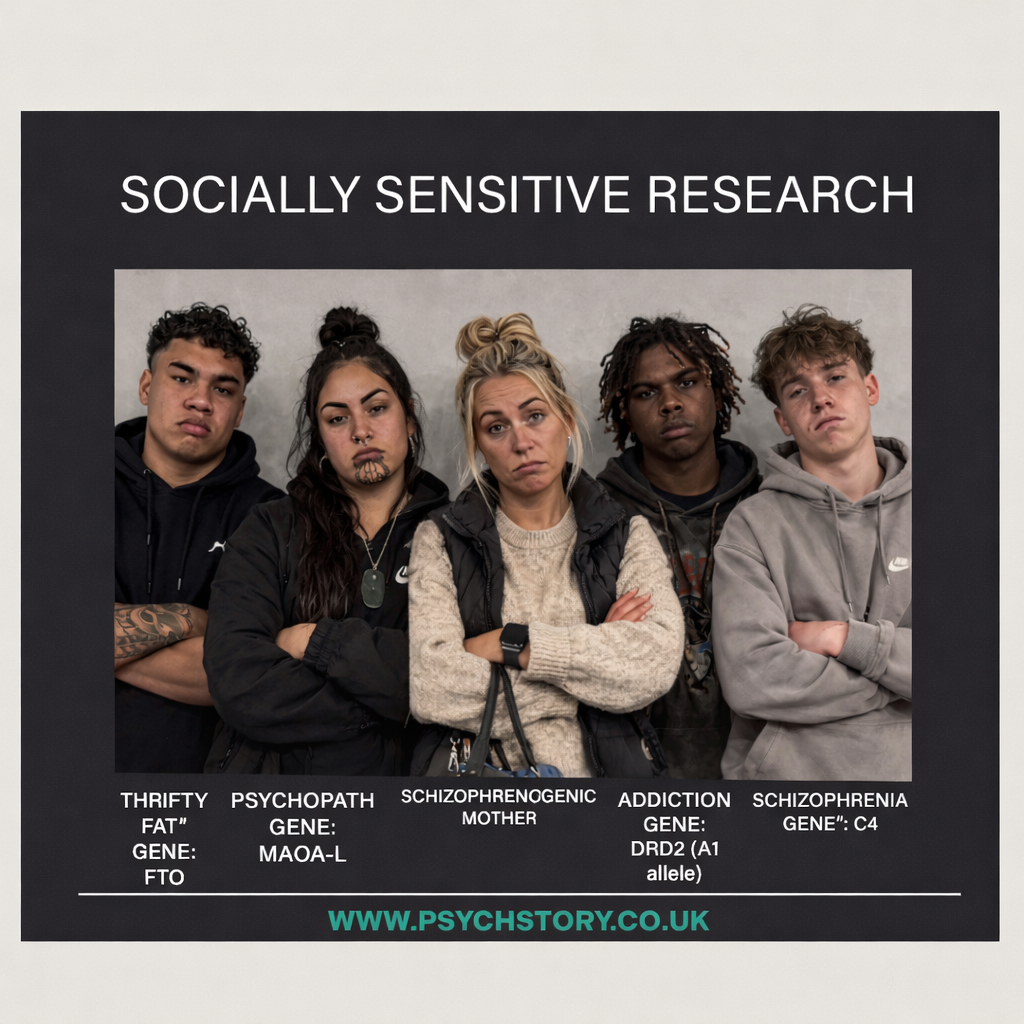
The “schizophrenogenic mother” theory attributed schizophrenia to cold or inconsistent maternal behaviour. The target group is socially identifiable by role rather than biology: mothers of individuals with schizophrenia. The repercussion was direct blame. Women were positioned as causal agents of severe mental illness, leading to guilt, stigma, and strained family relationships. Clinically, this diverted attention from biological and neurological explanations, delaying effective treatment. Socially, it altered how these mothers were perceived by professionals and others, often as harmful rather than in need of support. The research extended harm beyond participants to a wider, identifiable group defined by a relationship.
EXAMPLE THREE: DRD2 “ADDICTION GENE”
Research linking DRD2 variants to addiction illustrates a non-visible risk. The gene cannot be identified by sight, and most individuals are unaware of their status. As a result, the harm is not immediate or socially imposed in everyday interaction. Instead, the risk emerges if genetic information is disclosed or used institutionally. Individuals labelled as carrying a risk variant may face discrimination in insurance, employment, or legal contexts, being treated as predisposed to addiction regardless of behaviour. The repercussion is therefore conditional and mediated, but once activated, it can affect life chances through formal systems rather than informal social judgment.
EXAMPLE FOUR: DAYCARE AND COGNITIVE DEVELOPMENT
Findings suggesting lower cognitive scores in children attending early daycare become socially sensitive because they align with a visible, socially recognisable group: working parents, particularly mothers. The repercussion is reputational and normative. Parents may be judged as making harmful choices, and mothers in particular may face increased scrutiny or guilt. The media reduction of such findings to simple claims such as “daycare harms development” amplifies pressure and can influence policy or workplace expectations. The underlying data are complex and context-dependent, but the group's visible nature enables rapid social judgment and generalisation.
EXAMPLE FIVE: XYY CHROMOSOME
Research suggesting that males with an extra Y chromosome are more aggressive demonstrates a mixed case. The condition itself is not visible, but once identified, the label becomes socially powerful. Individuals diagnosed with XYY were associated with criminality and low intelligence, affecting how they were treated in education and within the justice system. Terms such as “supermale” reduced probabilistic findings to deterministic identity labels. Although the trait is latent, once disclosed, it functions similarly to a visible category, shaping expectations and treatment. The repercussion lies in the transition from hidden biological variation to a socially recognised label
EXAMPLE SEVEN: HUMPHREYS “TEA ROOM TRADE”
Humphreys’ research was socially sensitive because it was taken to represent gay men as a group, not just the specific individuals observed. The behaviour recorded in public toilets was interpreted and reported in a way that suggested homosexual men were living double lives, presenting outwardly as conventional while engaging in secret sexual activity. The repercussion was not a neutral description but a characterisation: gay men were framed as deceptive, sexually deviant, and morally suspect.
This extended far beyond the participants. The findings reinforced existing stereotypes that homosexual men were dishonest and predatory, which in turn justified social exclusion, discrimination, and in some cases legal scrutiny. In a context where homosexuality was already stigmatised and criminalised in many settings, this kind of research did not simply describe behaviour; it amplified a negative group narrative that could be applied to any visibly or openly gay man, regardless of whether the behaviour was representative.
EXAMPLE EIGHT: STRANGE SITUATION AND MATERNAL BLAME
Ainsworth’s Strange Situation classified infants into attachment types based on their responses to separation and reunion. Although designed as an observational assessment, the findings were interpreted beyond the laboratory as reflecting the quality of maternal care. In practice, insecure attachment classifications were often taken as evidence of maternal inadequacy, particularly coldness, inconsistency, or insensitivity.
The repercussion was the transfer of responsibility for child outcomes onto mothers. Women were judged against an implicit standard of “optimal” caregiving, with deviations framed as risk factors for later emotional or social problems. This extended into social policy, clinical judgement, and everyday discourse, where mothers of insecurely attached children could be blamed for developmental difficulties. The research, therefore, became socially sensitive not because of harm to participants, but because it contributed to a wider culture of maternal surveillance and blame
EXAMPLE NINE: RESEARCHER AS TARGET – GENDER DEBATES AND PROFESSIONAL CONSEQUENCES
Research and public statements on sex differences, gender identity, or the claim that gender is socially constructed have become socially sensitive not only for participants but also for those producing or discussing the work. In this area, the researcher, clinician, or academic may face reputational, institutional, and professional consequences.
The repercussion is direct. Individuals have faced disciplinary action, loss of positions, removal from platforms, or restrictions on practice for expressing or researching contested views. This has occurred across professions, including academics, clinicians, and medical practitioners. Cases such as Bret Weinstein and Jordan Peterson illustrate how engagement in socially sensitive topics can lead to public backlash, institutional pressure, and attempts to limit professional activity.
This form of socially sensitive research differs from participant-focused harm. The risk is not only that findings affect identifiable groups, but also that the act of producing or communicating research itself becomes a source of sanction. The consequence is a constraint on inquiry, where certain questions carry professional risk regardless of methodological rigour.
EXAMPLE TEN EYE WITNESS TESTIMONY
Eyewitness testimony is socially sensitive because the findings have direct consequences for identifiable individuals and real-world institutions, particularly within the legal system.
First, the research challenges a long-held assumption that confident witnesses are reliable. This has immediate implications for past and present convictions. If memory is shown to be fallible, then some individuals may have been wrongly imprisoned based on testimony that was accepted as accurate at the time.
Second, the consequences are not abstract. Defendants, victims, and witnesses are all affected. A victim’s identification may be questioned, which can be perceived as undermining their credibility. At the same time, a defendant may have been convicted or acquitted based on unreliable evidence. The stakes are therefore legal, moral, and personal.
Third, the research affects public trust in the justice system. If juries, police procedures, and court decisions are shown to rely on flawed evidence, confidence in legal processes can be weakened.
Finally, there are implications for how professionals operate. Police interview techniques, line-up procedures, and courtroom practices must change in response to the evidence. This can create institutional resistance, as it challenges established methods and authority. The sensitivity lies in the fact that the research does not remain theoretical. It directly alters how guilt is determined, how individuals are judged, and how justice is administered
APPLIED EXAMPLE OF SSR: MAOA L ( THE WARRIOR GENE AND/OR PSYCHPATH GENE)
The story of the so-called “warrior gene” dates back to the early 1990s, when several groups reported a link between violent aggression and a gene on the X chromosome encoding monoamine oxidase A. This enzyme regulates neurotransmitters such as dopamine and serotonin. The correlation first emerged from studies of a large Dutch family whose male members were mildly intellectually impaired and extremely violent. Two were arsonists, one attempted to run over an employer with a car, and another raped his sister and attempted to stab a hospital warden. The men all lacked monoamine oxidase A, suggesting a defective MAOA gene.
Later research identified a low-activity variant, MAOA-L, associated with reduced enzyme activity. This variant was linked to higher rates of aggression, particularly where individuals had experienced childhood trauma. The MAOA allele is not unique to humans; it is found in apes and Old World monkeys, suggesting it emerged around 25 million years ago in a common ancestor and may have been preserved through natural selection. In a 2004 review, Science referred to this variant as the “warrior gene.”
Race then entered the discussion. In 2007, Rod Lea and Geoffrey Chambers of Victoria University of Wellington reported that MAOA-L occurred in 56 per cent of Māori men. They commented that “it is well recognised that historically Māori were fearless warriors.” This conclusion was based on a sample of just 46 men, classified as Māori if they had one Māori parent. In 2009, criminologist Kevin Beaver reported that males with MAOA-L were more likely to report gang membership. However, most carriers were not gang members, and approximately 40 per cent of gang members did not carry the variant.
The individual studies may satisfy standard ethical requirements. Participants can be protected, consent obtained, and no direct harm inflicted during the research process. However, once findings are aggregated, simplified, and linked to named populations, the implications shift. Correlations become narratives, probabilities become traits, and small, context-dependent effects are interpreted as characteristics of entire groups.
The ethical issue, therefore, is not confined to how research is conducted, but extends to how it is framed, communicated, and applied beyond the study itself. Research into the MAOA gene has been used to argue that a low activity variant is linked to higher levels of aggressive behaviour. This claim is conditional from the outset. The effect only appears under particular environmental conditions, most notably severe childhood maltreatment. It is not a direct cause of aggression and does not operate in isolation. What is identified is a vulnerability, not a fixed behavioural outcome.
When population comparisons were introduced, the research became socially sensitive. A limited, context-bound finding is attached to a visible group, allowing generalisations to individuals who were never part of the study. The movement from a small sample to an entire population is built into how the finding is framed.
Comparative data complicate this interpretation. Similar or higher frequencies of the MAOA L variant have been reported in other populations, including some African and Asian samples, whereas lower frequencies have been observed elsewhere. However, these categories are themselves imprecise. Labels such as “African” or “Asian” group together highly diverse populations and conceal substantial variation within them. In many cases, variation within these categories exceeds variation between them. More precise markers, such as haplogroups, provide a clearer indication of genetic lineage than broad social labels. The reliance on visible categories creates an illusion of uniformity and makes overgeneralisation easier.
The causal interpretation is also frequently overstated. The MAOA variant does not produce aggression on its own. It increases susceptibility under certain environmental conditions. This interaction is often lost when findings are reduced to a single label, but the underlying evidence does not support a deterministic account.
An alternative explanation focuses on selection pressures rather than inherent traits. In environments characterised by conflict, instability, or weak regulation, individuals displaying higher levels of aggression may gain short-term advantages. These can include increased access to resources, higher status within dominance hierarchies, or greater reproductive success. Over time, this can increase the frequency of associated alleles through a bottleneck effect, where a smaller subset of individuals disproportionately contributes to the next generation.
Under this account, the frequency of the MAOA L variant reflects historical environmental conditions rather than a fixed characteristic of a population. The same mechanism could operate in any group exposed to similar pressures. The explanation shifts from identity to context, and from determinism to interaction.
The justification for conducting and publishing socially sensitive research does not rest on the assumption that weak or misleading claims will later be corrected. It rests on the requirement that findings are presented with precision from the outset, including clear limits on what can and cannot be inferred. Where research identifies conditional relationships, these must not be framed as universal traits. Where samples are small or unrepresentative, conclusions must not be extended beyond them. The responsibility lies in methodological rigour, accurate interpretation, and disciplined communication, not in the expectation that later critique will repair flawed claims
APPLIED EXAMPLE OF SSR: RACE AND IQ
RESEARCH: ETHICAL ISSUES AND EVALUATION
Race-related research in psychology has most often focused on differences in intelligence, particularly between Black and White populations in the United States. The issue is not simply empirical but ethical. The central question is whether such research should be conducted and published at all. There are arguments in favour of this work, grounded in scientific freedom and the potential value of knowledge, and strong arguments against it, grounded in problems of validity, interpretation, and social consequences.
One argument in favour of race-related research is that scientific enquiry should not be restricted on the basis of political sensitivity. If governments or institutions begin to prohibit certain lines of research, there is a risk that decisions will be driven by ideology rather than evidence. From this perspective, researchers should be free to investigate any question they consider important, provided standard ethical safeguards are in place. Limiting research in advance assumes that some questions are too dangerous to ask, which undermines the principle of open scientific enquiry.
This position was advanced by H. J. Eysenck, who argued that researchers who publish controversial findings are not necessarily acting unethically. He suggested that making empirical results available is a duty to society, and that problems such as group differences in ability can only be understood or addressed through further research. Under this view, avoiding the topic does not solve it. It simply prevents scrutiny and leaves assumptions untested.
However, the arguments against race-related research into intelligence are substantial and operate at several levels. A first concern is that much of this research has historically been based on weak or flawed methodology. A well-known example is Goddard’s 1913 study, in which intelligence tests were administered to immigrants arriving in New York. He concluded that large proportions of these groups were “feeble-minded,” including 87 per cent of Russians and 83 per cent of Jews. These conclusions were reached without accounting for the fact that many participants had limited English proficiency and were unfamiliar with the testing format. The tests were therefore not measuring intelligence in any meaningful sense but rather language ability and cultural familiarity.
Despite these clear methodological problems, the findings were treated as valid and were later supported by studies of immigrant soldiers. These results were then used in policy, contributing to the introduction of national origin quotas in the United States in 1924, which restricted immigration from southern and eastern Europe. This illustrates a central concern: flawed research can still have significant real-world consequences.
A second argument is that the categories used in race-related research are scientifically problematic. Terms such as “Black” and “White” are socially meaningful but do not correspond to clear biological groupings. Populations within Sub-Saharan Africa, for example, show greater genetic diversity than populations outside it. This means that the categories being compared are not equivalent or coherent in biological terms. If the grouping itself is imprecise, any comparison built on it is also questionable.
This problem does not remain at the level of theory. It shapes how findings are understood once they leave the study. A comparison between two specific samples is quickly taken as a claim about entire populations. The research does not stay as “this group under these conditions.” It becomes “these people in general.” Because the categories are visible and already used in everyday life, the findings attach immediately to real individuals. This is not simply a media distortion. It follows directly from the design of the research.
A third argument is that such research offers limited scientific value in explaining intelligence. Even if consistent differences were found, it would remain extremely difficult to determine their cause. Intelligence is influenced by a wide range of factors, including education, nutrition, health, and social environment. Demonstrating a difference between groups does not explain the mechanisms behind it. As a result, this type of research does little to advance understanding of how intelligence develops or how it can be improved.
This links directly to the issue of the application. Research of this kind does not provide clear guidance for policy or practice. It does not tell educators how to improve teaching or governments how to reduce inequality. The practical goal remains the same regardless of findings: to provide equal opportunities and support for all individuals. In this sense, the research's potential benefit is limited, while its potential for misuse is significant.
These concerns become clearer when applied to specific examples of race and IQ research. Studies comparing IQ scores between Sub-Saharan African populations and European populations are often presented as evidence of group differences in intelligence. However, these findings do not remain confined to the original samples. They are quickly generalised to broad categories such as “Black” and “White,” which are treated as if they represent stable biological groups.
Once this shift occurs, the consequences appear in everyday contexts. In education, Black students may be judged through the lens of assumed group differences before their individual abilities are assessed. Teachers may lower expectations, often without being aware of it. In employment, performance may be interpreted in ways that reflect these assumptions. In public debate, differences in outcomes are reframed as differences in intelligence rather than differences in opportunity or environment. A context-bound comparison becomes a general claim, and once that claim is established, it is difficult to reverse.
There is also a clear cost-benefit issue. If the research begins with the assumption that racial categories are biologically meaningful and that IQ reflects innate ability, then the conclusions it can produce are already constrained. Under those assumptions, the research offers little in terms of intervention or improvement. It does not suggest how outcomes can be changed. Instead, it risks reinforcing the idea that differences are fixed. The practical gain is therefore limited, while the potential for harm is high.
In addition, there are serious concerns about validity. Standardised IQ tests are developed within Western, educated contexts and rely on familiarity with formal schooling and specific forms of reasoning. When populations with different educational backgrounds are compared, the test is not measuring a neutral construct of intelligence. It is measuring performance within a particular cultural framework.
This becomes clearer when considering the conditions under which the groups are compared. Some of the lower-scoring samples come from environments with interrupted schooling, poorer nutrition, higher disease burden, and less stable infrastructure. These factors directly affect cognitive development, attention, and performance. By contrast, comparison groups are typically drawn from populations with consistent schooling and prolonged exposure to abstract, test-based reasoning. The result is that differences in scores reflect differences in experience as much as any underlying ability. Without isolating these factors, it is not possible to interpret the findings as evidence of innate differences.
Finally, the assumption that racial categories correspond to biological groups further undermines the research's validity. Labels such as “Black,” “African,” “White,” and “European” are broad social constructs that include highly diverse populations. Modern population genetics uses more precise classifications, such as haplogroups, to describe human variation, yet these are rarely used in this literature. Instead, socially constructed categories are treated as if they have biological meaning, allowing findings from limited samples to be extended far beyond what the data can support.
In conclusion, while there are arguments in favour of race-related research on scientific grounds and the potential value of the knowledge it yields, the arguments against it are substantial. These include methodological weaknesses, problems with the validity of categories, limited explanatory value, lack of practical benefit, and predictable issues in interpretation and application. Taken together, these factors suggest that the risks associated with conducting and publishing this type of research, particularly in its current form, are significant
APPLIED EXAMPLE: HOMOSEXUALITY
Kitzinger and Coyle (1995) identify three phases in psychological research on gay and lesbian relationships:
Heterosexual bias
Research assumes heterosexuality is the norm and evaluates homosexuality against it, often treating difference as a deficit.Liberal humanism
Research rejects inferiority claims and emphasises similarity between homosexual and heterosexual relationships.Liberal humanism plus
Research retains equality but also recognises meaningful differences shaped by social context and stigma.
LIBERAL HUMANISM
The liberal humanist phase rejects the idea that homosexuality is inferior and treats individuals as individuals rather than as representatives of a category. It assumes that homosexual and heterosexual relationships are fundamentally similar in structure and quality. A typical example is Kurdek and Schmitt (1986), who compared gay, lesbian, married heterosexual, and cohabiting heterosexual couples. Relationship quality was assessed using measures such as love, liking, and satisfaction. The findings showed that gay, lesbian, and married heterosexual couples reported very similar levels of relationship quality, while cohabiting heterosexual couples scored lower. This supports the claim of underlying similarity.
EVIDENCE OF HETEROSEXUAL BIAS
Morin (1977) reviewed studies published between 1967 and 1974 and found clear evidence of bias. Around 70 per cent of studies focused on whether homosexual individuals were different from heterosexuals and what might “cause” homosexuality. This framing treats homosexuality as a problem to be explained or corrected. This approach raises ethical concerns. It positions one group as the standard and the other as a deviation. In response, the American Psychological Association (1975) formally stated that homosexuality does not imply impairment in judgment, stability, or functioning, and called for the removal of stigma associated with it. Morin also found that 82 per cent of studies compared homosexual participants directly with heterosexual groups. This encourages the assumption that all members of a sexual orientation group share defining traits, which is inaccurate. Sexual orientation does not predict personality, attitudes, or behaviour in any comprehensive way.
LIMITATIONS OF LIBERAL HUMANISM
The liberal humanist approach avoids overt bias but introduces more subtle problems.
First, it assumes that similarity to heterosexual norms is the relevant standard. As a result, aspects of gay and lesbian relationships that do not fit heterosexual models are often ignored, distorted, or treated as problematic. The difference is implicitly framed as a deviation.
Second, it tends to overlook the social context in which these relationships exist. Gay and lesbian couples operate within environments that may involve stigma, legal inequality, or social hostility. Ignoring these conditions produces an incomplete account of relationship functioning.
The third phase retains the principle of equality but does not assume sameness. It recognises that differences may exist and that these differences are often shaped by external conditions such as discrimination, social norms, and institutional constraints.
This approach avoids the main ethical problems of earlier phases. It does not treat homosexuality as inferior, does not force it into heterosexual frameworks, and does not ignore the social pressures that influence relationship dynamics. It allows both similarity and difference to be examined without distortion.
SSR IN SUMMARY
Research whose implications extend beyond the participants and beyond the study itself
LEVELS OF IMPACT
For the participants
For the wider group, they are taken to represent
WHO MAY BE AFFECTED
The participants themselves, beyond the study
People close to them, including family, friends, and colleagues
The wider social group from which they are drawn, such as ethnic or cultural groups
The researchers and their institution
In each case, the ethical framework focuses on how participants are treated during the study. It does not adequately account for what happens afterwards. Findings are generalised, simplified, and circulated, often shaping how entire groups are perceived and treated. The harm, therefore, is not contained within the research process but emerges in its social impact
Researchers need to be cautious because:
SSR has the potential to affect the lives of many people
By its nature, it attracts the attention of psychologists, media & the public – so often high-profile
RESPONSIBILITIES IN SOCIALLY SENSITIVE RESEARCH (SIEBER AND STANLEY)
Researchers should not avoid socially sensitive research. There is a responsibility to society to produce useful knowledge. However, this requires heightened care:
Greater care must be taken over consent, debriefing, and protection when the topic is sensitive.
Researchers must consider how others may interpret and use their findings.
Assumptions underlying the research should be made explicit so they can be critically evaluated.
Limitations must be clearly stated, for example, restricted samples or reliance on self-report data.
Communication with the media and policymakers must be handled carefully to avoid distortion.
Researchers must balance obligations to participants with wider social responsibilities, for example, when disclosures may require reporting.
Researchers must be aware of their own values and biases, as well as those of participants.
ARGUMENTS FOR SOCIALLY SENSITIVE RESEARCH (AO3)
Psychologists have developed methods to address ethical concerns, including stricter review procedures.
Socially sensitive research is subject to greater scrutiny than most other forms of research, with higher rejection rates by ethics committees.
Research into issues such as gender, race, and sexuality can increase understanding and reduce prejudice.
Socially sensitive research has produced clear societal benefits. For example, research into eyewitness testimony has shown its limitations and reduced reliance on it in legal contexts, while also demonstrating that children’s testimony can be as reliable as that of adults.
Much psychological research has historically focused on white, middle-class American samples. Socially sensitive research helps to broaden representation and increase awareness of cultural variation.
ARGUMENTS AGAINST SOCIALLY SENSITIVE RESEARCH (AO3)
Flawed or oversimplified findings have been used to inform social policy, sometimes disadvantaging particular groups.
Research has historically been used to justify discrimination, for example, eugenic policies and forced sterilisation in the United States during the early twentieth century.
Ethical guidelines may lack sufficient power to prevent misuse or poorly designed, socially sensitive research from being conducted
QUESTIONS ON SOCIALLY SENSITIVE RESEARCH
1. Discuss socially sensitive research about a social explanation of criminal behaviour.
2. Socially sensitive research causes psychological harm.
3. Some socially sensitive research should never be published. Give examples.
4. What about the MAOA L gene? Explain.
5. Give examples of how socially sensitive research is...
Controversial
Risking stereotyping and prejudice
Subject to social values
Able to shape the law
Misrepresented in the media
6. The idea of “forbidden research” challenges us to question long-standing laws and rules about what knowledge we can seek, and whether that knowledge improves or impedes the health and sustainability of society. Deeply held moral beliefs have led to laws that restrict research on organismal engineering. Artificial intelligence and machine rights raise uncomfortable social, cultural, and legal questions. Misconceptions about Islam and women’s rights are amplified around the world, especially now in a time of politically charged racism in America. Climate and environmental engineering offer massive potential and massive risk. Can we afford to take those risks? Can we afford not to?