
SPECIFICATION: The role of the mirror neuron system in social cognition.
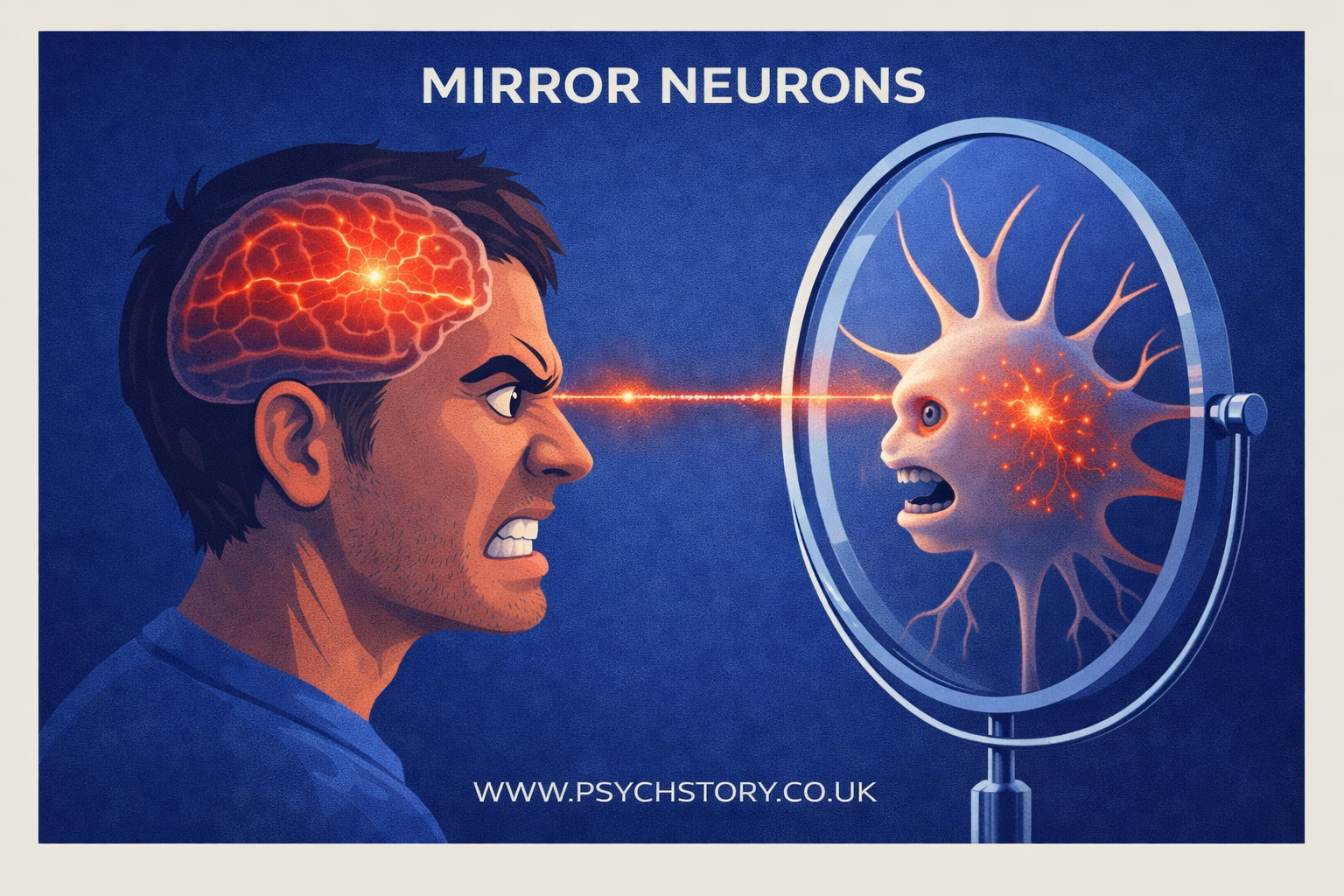
KEYWORDS FOR SOCIAL COGNITION AND MIRROR NEURONS
PERSPECTIVE TAKING: The cognitive ability to understand a situation from another person’s point of view. It involves recognising that other people may perceive, interpret, and experience events differently from oneself. Perspective-taking is an important component of social cognition because it allows individuals to interpret intentions, predict behaviour, and respond appropriately in social interactions. It is closely linked to empathy and theory of mind and is believed to involve brain systems associated with the mirror neuron network and frontal regions involved in social reasoning.
SOCIAL COGNITION: The mental processes involved in perceiving, interpreting, and responding to the behaviour, emotions, and intentions of other people. Social cognition includes abilities such as recognising emotional expressions, understanding social cues, interpreting intentions, perspective taking, empathy, and theory of mind. These processes allow humans to navigate complex social environments and maintain cooperative relationships. Research suggests that specific neural systems, including the mirror neuron system and prefrontal cortical regions, play a key role in enabling these social cognitive functions.
THEORY OF MIND: The ability to attribute mental states such as beliefs, intentions, desires, emotions, and knowledge to oneself and to other people. Theory of mind also involves understanding that other individuals possess beliefs and perspectives that may differ from one’s own. This capacity allows people to predict and explain behaviour in social situations. Theory of mind typically develops in early childhood and is often assessed using false belief tasks such as the Sally Anne task. Difficulties with theory of mind are commonly associated with autism spectrum conditions.
META COGNITION: The ability to think about and reflect on one’s own thinking processes. Metacognition involves the awareness and regulation of cognitive activities such as memory, comprehension, problem-solving, and decision-making. It includes monitoring one’s understanding, recognising errors in reasoning, and selecting strategies to improve learning or performance. Metacognition plays an important role in self-regulation and learning, allowing individuals to evaluate their knowledge and adjust their cognitive strategies accordingly.
MIRROR NEURON SYSTEM: A network of specialised neurons located primarily in the premotor cortex and inferior parietal lobule that respond both when an individual performs an action and when they observe another person performing the same action. These neurons were first discovered by Giacomo Rizzolatti and colleagues in the 1990s while studying motor activity in monkeys. The mirror neuron system is thought to contribute to social cognition by enabling individuals to internally simulate others' actions, intentions, and emotions. This mechanism has been proposed to support processes such as imitation, empathy, perspective taking, and understanding intention
THE DISCOVERY OF MIRROR NEURONS
MIRROR NEURON SYSTEM
Mirror neurons are a specialised class of brain cells that activate both when an individual performs a specific action and when they observe another individual performing that same action. First discovered in macaque monkeys, these neurons also exist in the human premotor and parietal cortices. They play an important role in understanding actions, imitation, empathy, and social learning.
KEY ASPECTS OF MIRROR NEURONS
FUNCTION
Mirror neurons help the brain simulate observed actions internally, allowing individuals to understand the intentions, emotions, and behaviour of others.
DISCOVERY
Mirror neurons were originally identified in the 1990s by Italian researchers studying the premotor cortex of macaque monkeys.
LOCATION IN HUMANS
In humans, mirror neurons are primarily located in the premotor cortex, inferior parietal cortex, and the supplementary motor area.
SOCIAL AND EMOTIONAL ROLE
Mirror neurons are strongly associated with empathy because they enable individuals to internally mirror the actions and emotional expressions of others.
LEARNING AND IMITATION
They are essential for observational learning and help explain why humans are able to learn new skills by watching others perform actions.
CLINICAL RELEVANCE
Dysfunction in the mirror neuron system has been proposed as a possible factor in autism spectrum conditions and reduced empathy in antisocial personality disorder.
FUNCTION IN ACTION RECOGNITION
When a person watches someone pick up an object such as a water bottle, mirror neurons activate in the observer’s brain as if they were performing the action themselves. This neural mirroring allows the brain to rapidly infer the intention behind the action and is believed to contribute to language acquisition and social interaction.
SELF, THEORY OF MIND, AND MIRROR NEURONS
A sense of self requires the distinction between our self and other selves and, arguably, some understanding of other selves. We saw in the discussion of autism that an ability to attribute mental states to others is called theory of mind and that researchers who study mirror neurons believe they are critical to our development of that comprehension. They give mirror neurons considerable credit for social understanding (Gallese & Goldman, 1998), empathy (Gazzola et al., 2006), and the ability to understand the intentions of others (Iacoboni et al., 2005). When volunteers watched a video clip, their mirror neurons responded more as a model reached for a full cup beside a plate of snacks (implying the intent to eat) than when the model reached for an empty cup beside an empty plate (implying the intent to clean up). The two scenes without the model produced no differences (Figure 15.23; Iacoboni et al., 2005).
Malfunction in the mirror neuron system is one reason suggested for the autistic individual’s failure to develop a distinction between self and others, along with empathy and theory of mind (Cascio, Foss-Feig, Burnette, Heacock, & Cosby, 2012; Williams, 2008). Children with autism spectrum disorder took twice as long as control subjects to develop the rubber hand illusion, and the delay was correlated negatively with an empathy measure (Cascio et al.). Justin Williams and his associates suggest that the problem is not in the mirror neurons themselves, but in the regulation of their function by the anterior cingulate cortex (J. H. Williams, Whiten, Suddendorf, & Perrett, 2001).
Like many great scientific discoveries, mirror neurons were discovered by accident. Giacomo Rizzolatti et al. (2002) were studying electrical activity in a monkey’s motor cortex (the area of the brain controlling movement) when one of the researchers ate his lunch in view of the monkey. The monkey’s motor cortex became activated in exactly the same way as it did when the animal itself reached for food. Further investigation revealed that it was, in fact, the same brain cells that fired when the monkey reached and when someone else reached. The researchers called these cells mirror neurons because they mirror motor activity in another individual.
MIRROR NEURONS AND INTENTION
Identifying mirror neurons has given us a whole new way of thinking about how we understand each other’s intentions – this is central to social cognition. Goldman (1998) suggested that mirror neurons respond not just to observed actions but to the intentions behind behaviour. Rather than the common-sense view that we interpret people’s actions in light of our memory, Gallese and Goldman suggested that we simulate actions in our motor system and experience others' intentions through our mirror neurons.
MIRROR NEURONS AND PERSPECTIVE TAKING
It has also been suggested that mirror neurons are important in other social cognitive functions, for example, theory of mind and the ability to take others’ perspectives. If mirror neurons fire in response to others’ actions and intentions, this may give us a mechanism for experiencing, and hence understanding, other people’s perspectives and emotional states. Just as we can simulate intention by making judgments based on our own motor responses, this same information may allow us to interpret what others are thinking and feeling.
MIRROR NEURONS AND HUMAN EVOLUTION
V. S. Ramachandran (2011) has suggested that mirror neurons are so important that they have effectively shaped human evolution. The uniquely complex social interactions we see in humans require a brain system that facilitates an understanding of intention, emotion and perspective. Without these cognitive abilities, we could not live in large groups or develop the complex social roles and rules that characterise human culture. Ramachandran argues that mirror neurons are absolutely key to understanding the way humans have developed as a social species.
MIRROR NEURONS AND AUTISM SPECTRUM DISORDER (ASD)
A major source of evidence concerning mirror neurons and perspective taking comes from the study of mirror neurons in children with ASD (autism spectrum disorders). These disorders are associated with impairments in all social cognitive abilities linked to mirror neurons.
If children on the autism spectrum can be shown to have a poor mirror neuron system, this may go a long way to explaining ASD.
Ramachandran, along with Lindsay Oberman (2006), proposed the broken mirror theory of ASD. This idea is that neurological deficits include dysfunction of the mirror neuron system, preventing children from imitating and understanding others' social behaviour. This manifests itself in infancy when children diagnosed with ASD mimic adult behaviour less than others. Later, problems arise in social communication as children fail to develop the usual ability to interpret intention and emotion in others
BIOLOGICAL EXPLANATIONS OF SOCIAL COGNITION
An important question is whether we are biologically designed to be social beings who live cooperatively. To understand each other, we need to be able to recognise both our own emotional states and those of others (including empathy), consider different perspectives and have a ToM. These skills help us to ‘mind-read’ others and develop a sense of morality. Is there an underlying biological mechanism that ensures we develop the skills we need in order to be social animals? Have our brains evolved in such a way to enhance our sociability?
Important information about the workings of the human brain has been obtained from patients with acquired damage to specific brain regions. For example, Adolphs et al. (1995) studied a 30-year-old patient, known as S.M., whose amygdala was destroyed by a metabolic disorder. The amygdala plays an important role in the perception and experience of negative emotions such as fear and anger. S.M. could not recognise fear shown in photos of faces that portrayed a range of emotional expressions and nor did S.M. experience fear. Another patient, known as N.M., also had damage to the amygdala. N.M. also found it difficult to recognise fear in facial expressions and could not identify bodily postures that expressed fear. These findings suggest a link between perception and behaviour. By studying brain deficits, it is possible to establish the importance of recognising other people’s emotional states. For both S.M. and N.M., understanding others and inferring their emotional state and intentions from their behaviour would have been very difficult. Although some facets of their ToM would have been intact, the overall quality and depth of their understanding of others would have been compromised.
MEASURING NEURAL ACTIVITY
A rapidly developing area of research employs modern neuroimaging (such as positron emission tomography and functional magnetic resonance imaging (fMRI)) to measure brain activity. This can provide valuable information about brain activity during the execution of qualitatively different tasks and about the effects of cognitive development on the brain. More recently, this technology has been used to ascertain which part of the brain becomes most active when individuals are asked to simulate carrying out a task in the first or third person. Even though we can do this without much thought on a daily basis, it involves considerable coordination of various social cognitive skills. This type of simulation, which Decety and Ingvar (1990) described as ‘conscious reactivation of previously executed actions’ stored in memory, requires less effortful processing when carried out in the first person but is more difficult when undertaken from a third-person perspective. Hesslow (2002) claims that when actions are simulated, we activate the motor areas of the brain in a manner that resembles the neural activation involved in performing the actual action. Furthermore, the same phenomenon occurs when imagining something – the same area of the brain is activated as when something is actually being perceived in real time. In addition, Hesslow investigated the anticipation of something which also results in perceptual activity, which would have occurred if the action had been actually carried out in real time. This has also been demonstrated by Meister et al. (2004) in a study using fMRI scanning, where participants played the same piece of music on the piano under two conditions:
On a silent keyboard, and
Imagining that they were playing the same piece.
They found that similar fronto-parietal neurons were activated regardless of whether the piano was played silently or imagined.
Simulation studies in which brain activity is measured using fMRI have enabled neuro-cognitive researchers to understand our capacity to interpret others' mental states, such as intentions, feelings, and beliefs. These studies typically involve a person mimicking the mental activity of someone else to understand that person’s behaviour while observing them, and often involve imagining ourselves carrying out the same behaviour. To do this, we have to ignore our current mental state and focus on the target. Electrophysiological studies have shown that when macaque monkeys observe actions carried out by other macaque monkeys, two areas of the brain are activated – the premotor cortex and the superior temporal sulcus. Some of the cells in the F5 area of the premotor cortex are sensorimotor neurons which become activated, regardless of whether the monkey is performing the action or perceiving the action being carried out by another monkey (Rizzolatti et al., 1996). These sensorimotor neurons are also known as mirror neurons – so-called because they fire when the animal acts and when it observes the same action performed by another animal of the same species. The discovery of mirror neurons has been of major importance in neuroscience. These neurons are also found in humans across several brain regions, including the parietal cortex, for object-related actions. A study by Calvo-Merino et al. (2005) used fMRI scans to examine brain activity in three groups of participants: experts in classical ballet, experts in capoeira (a Brazilian martial art), and control participants. The next activity will help you learn more about this fascinating study.
ACTIVITY – INVESTIGATING THE ROLE OF MIRROR NEURONS
Visit the NOVA Science NOW website:
http://www.pbs.org/wgbh/nova/sciencenow/3204/01.html
(a) Watch the short video (approximately 14 minutes), which introduces the concept of mirror neurons and explains their importance for understanding social interaction.
(b) Read the Research Update and then listen to the short interview (approximately nine minutes) with Daniel Glaser from University College London titled Monkey Do, Monkey See. In this interview, Glaser discusses research conducted with an international group of researchers from the UK (University College London and the University of Oxford) and collaborators in Paris (France) and Madrid (Spain). If preferred, the interview transcript can be read instead.
(c) Make notes on the following:
• the research study involving ballet dancers carried out by Glaser and his colleagues
• the main findings of the study
• the possible practical implications of these findings
(d) STRETCH AND CHALLENGE
After completing the task, discuss your notes with other students and work together to produce a Key Research Feature similar to those used throughout the textbook. This summary can then be used as a revision resource
WHAT ABOUT SOCIAL COGNITION?
What happens when we imagine the emotions or the pain experienced by someone else? Are similar mirror neurons activated when imagining the emotion or pain experienced by someone else as when a similar emotion or pain is experienced by oneself? This important question is central to the notion of ToM. Levenson and Ruef (1992) found that when two people experience the same emotion, they are more accurate at determining each other’s intentions, and this finding has been supported by fMRI scans. For instance, when participants were asked to imitate or observe emotional expressions on faces, increased neural activity occurred in brain regions related to understanding facial expressions of emotion, as well as in the premotor cortex, which is normally active during the physical portrayal of emotional expression.
Recognition of others' pain is important for empathy. Do we have mirror neurons that enable us to imagine and experience someone else's pain? Morrison et al. (2004) compared neural activation patterns during the actual experience of pain and during the observation of pain in another person. Participants were given fMRI scans while experiencing a sharp probe, not unlike a needle, to the hand. In a second condition, participants were shown a video of someone’s hand being pricked by a needle. The fMRI scans showed similar patterns of neural activity in both conditions: the anterior cingulate cortex (ACC) and anterior insula became activated. These findings have been replicated in numerous fMRI studies (e.g. Jackson et al., 2005; Botvinick et al., 2005). There are, however, qualitative differences in the areas of the ACC activated when experiencing pain in the first person (i.e. oneself) or the third person (in another person). This then might be the mechanism that allows us to differentiate between empathic responses to others’ pain and our own distress. Furthermore, this may prevent us from actually experiencing emotional distress or from having an overly empathic response. When we empathise with others, it is important to distinguish our own feelings from those of the other person (Decety and Jackson 2004). This may explain why the pattern of neural overlap is not quite the same in relation to the perception of pain. Another way the system ensures we know our own experiences from someone else’s is through the role of the right inferior parietal cortex. This part of the brain enables us to distinguish self-produced actions from actions performed by others (Blakemore and Frith 2003). Saxe and Wexler (2005) have taken this one step further by claiming that this region of the brain is specially involved in ToM. The right inferior parietal cortex only becomes activated during simulated actions from someone else’s perspective and not one’s own. Furthermore, it is activated when we imagine how another person would feel in an unpleasant situation but not when we imagine it for ourselves (Jackson et al. 2005).
WHAT PERSPECTIVE SHOULD A TEACHER TAKE WHEN MODELLING AN ACTION?
KEY RESEARCH: JACKSON ET AL. (2005)
Participants were shown and asked to imitate a series of simple hand and foot movements from two different visual perspectives: (i) the first-person perspective reflecting their own view and (ii) the mirror view (i.e. the third-person perspective).
Jackson and colleagues hypothesised that when the perspective matched their own, the time taken to imitate the movements would be shorter than when the mirror perspective was used. This is because observing and imitating movements elicits stronger premotor cortex activity in the first-person than in the third-person perspective. Sixteen individuals (eight males and eight females), aged between 29 and 65, participated in the study. They were shown five video clips of different hand and foot movements: 50 per cent in the first person and 50 per cent in the third person. They watched video clips while in the fMRI scanner and were either instructed to observe the simple movements (observation condition) or to imitate them (imitation condition). From the first-person perspective, the participants were either watching or performing the movements. However, the third-person perspective was like imitating an action while watching another person who is facing you do it. A baseline level of brain activity was observed when participants viewed a static cross. The results showed that participants were faster at imitating a model seen from a first-person than a third-person perspective (see Figure 8.13).
The findings confirmed their hypothesis that the more similar the model's perspective is to the person’s own, the easier it is to imitate an action. The fMRI data also support the view that partly distinct neural mechanisms are used when different visual perspectives are taken (i.e. first-person versus third-person).
This suggests that the perspective a teacher should take when demonstrating an action should be determined by what the students already know. If a teacher wants to challenge students’ ability to learn, demonstrating something using the third-person perspective might stimulate more effortful processing, resulting in transferable skills.
Figure 8.13 Bar chart showing the mean latency when imitating actions as a function of perspective i.e. (first vs mirror view (third person) and the limb used).
ACTIVITY — CHANGING THE PERSPECTIVE
Make a video recording of someone carrying out four of the children’s movie ‘on a block cube’. First, the action should be shown from the first person (own view) and then from the third person (mirror view). Then try to imitate the movements from both conditions and use a stopwatch to record how long it takes to successfully imitate each move. Which perspective did you find easier? Which perspective took longer to imitate?
EVALUATION OF MIRROR NEURON EXPLANATIONS OF SOCIAL COGNITION
Use of mirror neurons – Mirror neurons are needed to imitate behaviour. These become active in brain regions responsible for translating observations (perception) into actions (behaviour). Numerous fMRI studies have shown this to be true, so the claim is based on replicated empirical evidence.
Understanding social cognition – To understand others' intentions requires not only understanding our own emotions but also understanding theirs. fMRI scanning has enabled us to investigate how we do this. Mirror neurons in the premotor, parietal, and anterior cingulate cortices become differentially activated depending on whether we are experiencing pain or emotion in the first- or third-person. The pattern of mirror neuron activity differs when an emotion or pain is personally experienced compared with when it occurs in the third person.
Differential mirror neuronal activity – Differential mirror neuronal activity associated with personal experiences and the experience of others makes sense; although we may try to empathise with someone else’s pain, we do not actually experience it in the same way.
Use of fMRI scanning – fMRI has demonstrated the importance of the right inferior parietal cortex in distinguishing our own actions from others' actions. The right inferior parietal cortex is also involved in ToM. It is only activated during simulated actions from someone else’s perspective and not one’s own. This may be a means of protecting us from experiencing someone else’s adversity.
Further research is needed – This is a new and exciting field, with rapid advances in technology enabling more accurate detection of neural activity across different brain regions.
NEUROIMAGING AND SIMULATION
Further support for biological explanations comes from advances in cognitive neuroscience, particularly from neuroimaging techniques such as positron emission tomography and functional magnetic resonance imaging (fMRI). These technologies allow researchers to measure patterns of brain activity while individuals perform different cognitive tasks.
Studies using these methods show that simulating actions or imagining events activate many of the same brain areas involved in actually performing those actions. Decety and Ingvar (1990) described this process as a conscious reactivation of previously executed actions stored in memory. Hesslow (2002) similarly argued that when actions are mentally simulated, the brain activates the motor areas involved in performing the action itself.
Research by Meister et al. (2004) supports this claim. Using fMRI, participants played the same piece of music on a silent piano under two conditions: with the keyboard silent and while imagining they were playing it. Similar fronto-parietal neural activity was observed in both conditions, indicating that imagining an action can activate the same neural systems as physically performing it.
MIRROR NEURONS
Additional evidence for the biological basis of social cognition comes from research on mirror neurons. Electrophysiological studies in macaque monkeys have shown that when monkeys observe actions performed by other monkeys, two brain regions become active: the premotor cortex and the superior temporal sulcus. Some neurons within the premotor cortex fire both when the monkey performs an action and when it observes another monkey performing the same action (Rizzolatti et al. 1996).
These cells are known as mirror neurons because they mirror the actions of another individual or respond as if the observer were carrying out the action themselves. The discovery of mirror neurons has been regarded as an important finding in neuroscience because it suggests a biological mechanism through which individuals may understand the behaviour and intentions of others.
Mirror neurons have also been identified in other brain regions, including the parietal cortex, particularly in relation to actions performed with objects. Evidence for this system has also been found in humans. For example, Calvo Merino et al. (2005) used fMRI scanning to examine brain activity in three groups of participants: experts in classical ballet, experts in capoeira, and control participants. Studies of this kind provide further support for the idea that specialised neural systems in the brain contribute to our ability to interpret the actions and intentions of other people.
RESEARCH SUPPORT
One strength of mirror neurons is the existence of supporting evidence. There is evidence from noninvasive scanning to support a role for mirror neurons in human activity, from contagious yawning to watching pornography. For example, Haker et al. (2013) scanned the brains of people as they watched a film of people yawning. Levels of activity in Brodmann’s Area 9 are believed to be high when a mirror neuron response occurs. Participants yawned in response. Contagious yawning is widely believed to result from empathy, so this study links empathy to activity in another study. Haker et al. (2008) observed that activity in the pars opercularis, another brain region believed to be part of the mirror neuron system, increased just before participants experienced erections while watching heterosexual pornography. Presumably, the mirror neurons were activated, allowing the viewer to experience what they were watching (a form of perspective-taking).
This means that mirror neurons may play a role in important aspects of social cognition, including empathy and perspective taking.
HARD TO RESEARCH
One limitation of mirror neuron research is the difficulty of measuring neuron activity. Most studies of mirror neurons involve implanting electrodes into the brain to record electrical activity in individual neurons. However, it is unethical to use this kind of procedure in humans, and such animal studies tell us little about human activity. An alternative is to use scanning techniques, like the approach used by Haker et al. cited above. However, scanning shows only the mean activity in brain areas, not individual cells. This means there is no gold standard for measuring mirror neuron activity in humans, and as Hickok et al. (2019) note, no direct evidence for mirror neuron activity in humans.
EXPLAINING AUTISM SPECTRUM DISORDER
One strength of mirror neuron research is its support for explaining ASD. There is some evidence to support a link between ASD and abnormality in the mirror neuron system (Hadjikhani 2007). For example, brain scans have shown reduced activity in mirror neuron areas of people with ASD compared to neurotypical people. This is an area thought to be involved in perspective-taking. Oberman et al. (2005) also found reduced mu-wave suppression (a marker of mirror neuron activity) in children with ASD when observing actions.
However, some research has suggested that ASD may be related to the mirror neuron system.
COUNTER ARGUMENT:
Although some research has supported a link between ASD and abnormal structure or function in the mirror neuron system, a systematic review of 25 studies by Antonia Hamilton (2013) concluded that the results were highly inconsistent and hard to interpret. This means there may not be a link between ASD and mirror neuron activity after all.
MIRROR NEURONS AND PERSPECTIVE TAKING
The link between mirror neurons and perspective-taking is supported by a 2017 study by Monica Maranesi et al., which found that specific mirror neurons respond differently to the position and angle from which actions are observed. This suggests that the observer's physical perspective is encoded by the mirror neuron system. However, a recent review by Soukayna Bekkali et al. (2019) concluded that the evidence linking mirror neurons to social cognition in humans remains limited.CONCLUSION: Is evidence for physical perspective-taking enough to support wider claims for the importance of mirror neurons in human social cognition?
MIRROR NEURONS AND INTENTION UNDERSTANDING
There is evidence that mirror neurons play an important role in understanding the intentions behind others' actions. Goldman and Gallese (1998) argued that when we observe another person performing an action, our own motor system partially reenacts the observed behaviour. This internal simulation allows the observer to infer the goal or intention behind the action. Because understanding another person’s intentions is a key component of perspective taking, mirror neuron activity has been proposed as a possible neural mechanism underlying this process.
EVOLUTIONARY ROLE OF MIRROR NEURONS
Ramachandran (2011) emphasised the potential evolutionary importance of mirror neurons in the development of human social behaviour. He proposed that mirror neurons may have provided an evolutionary advantage by enabling individuals to learn complex skills through observation. For example, early humans could acquire practical skills such as tool use, hunting strategies, and food preparation by observing others rather than relying solely on trial and error. Ramachandran also suggested that mirror neuron systems may have contributed to the evolution of language by supporting imitation and shared understanding during communication.
BROKEN MIRROR NEURON HYPOTHESIS AND AUTISM
Oberman and Ramachandran (2006) proposed that dysfunction within the mirror neuron system may help explain some features of autism spectrum conditions. This idea is often referred to as the broken mirror neuron hypothesis. According to this explanation, reduced or atypical mirror neuron functioning may impair an individual’s ability to understand the intentions, emotions and perspectives of others. As a result, individuals may experience difficulties in social communication and interpreting nonverbal cues such as facial expressions and body language.
LIMITATION: INDIRECT EVIDENCE FOR MIRROR NEURONS
One limitation of research into mirror neurons is that most evidence is correlational. In many studies, researchers infer mirror neuron activity from increased activation in specific brain regions during action-observation tasks. However, this does not directly prove that mirror neurons are responsible for the observed effects. Hickok (2009) argued that the existence and role of mirror neurons in social cognition may have been overstated. Even if mirror neurons do exist, understanding another person’s intentions may involve more complex cognitive processes than simply simulating their observed motor actions.
LIMITATION: MIRROR NEURON DEFICITS MAY NOT EXPLAIN AUTISM
The broken mirror neuron hypothesis has also been criticised as an incomplete explanation for autism. Hadjikhani (2007) found that autistic participants showed reduced cortical thickness in the pars opercularis, a region believed to contain mirror neurons according to Mouras et al. (2008). However, not all individuals with autism show atypical mirror neuron activity, and similar neural patterns have been observed in other neurological conditions. This suggests that mirror neuron dysfunction may not uniquely explain autism and that the relationship between mirror neurons and social cognition is more complex than originally proposed.
SUPPORTING EVIDENCE FOR MIRROR NEURON INVOLVEMENT
Some research supports the role of mirror neurons in perspective-taking and social cognition. Mouras et al. (2008) used fMRI scans to examine brain activity while participants viewed heterosexual pornography. The study found increased activation in the pars opercularis during sexual arousal. This region is believed to contain mirror neurons, and the researchers suggested that the increased activity may reflect participants' internal simulation of the actors' experiences. This supports the idea that mirror neurons may contribute to understanding and experiencing the intentions and emotions of others
CHECK YOUR UNDERSTANDING
In what ways do psychologists test for self-awareness in very young infants?
What do we mean by ToM? What skills do we need to have in order to ‘mind-read’ another person successfully?
When do children acquire ToM? What emotions do children need to develop to assist the acquisition of ToM?
How does Harris’ (1989) research reflect ToM?
Describe a typical false-belief task. What do false belief tasks actually test?
What is meant by the term ‘perspective-taking’? What skills do children need in order to be successful?
How has perspective-taking been applied in therapy? What does it aim to achieve?
What are mirror neurons, and what do they enable us to do?
Explain what is meant by a standard deviation. (2 marks)
Explain what a standard deviation of 30 means in this study. (2 marks)
If the median result was 58% and the mode was 61%, would the frequency distribution of the results be positively or negatively skewed? Explain your answer. (2 marks)
Explain what is meant by the phrase “this difference was significant at the level of p < 0.001”. (2 marks)
Outline what mirror neurons are.
Explain the role of mirror neurons in social cognition.
Evaluate research into mirror neurons.
Outline and evaluate the role of mirror neurons in social cognition.
How has fMRI scanning helped us to understand the role of mirror neurons and their involvement in both perception and social cognition?
What differences do fMRI scans show for mirror neural activity under conditions of imagining the self and others in adversity?
Outline the role of mirror neurons in social cognition (6–8 marks)
Focuses on description (AO1) of what mirror neurons are and their functions, such as imitation and empathy.Discuss the role of the mirror neuron system in social cognition (16 marks)
Requires approximately 6 marks AO1 and 10 marks AO3.Outline and evaluate the “broken mirror” theory of autism (16 marks)
Discuss the role of mirror neurons in the development of human social cognition (16 marks)
Describe and evaluate research into the biological basis of social cognition (16 marks)
Discuss the role of the mirror neuron system in social cognition. (Total 16 marks)
APPLY IT – CONCEPTS
CONTAGIOUS YAWNING
Clem and Cammi are bored. Cammi yawns, and a few seconds later, Clem also yawns. They laugh at this and wonder why it is that when one person yawns so do others around them. Their friend Clint has studied psychology about this. “That’ll be your mirror neurons,” he says.
Explain what Clint means by this. How could contagious yawning be explained by mirror neurons?
APPLY IT – METHODS
CONTAGIOUS YAWNING AND STATS
Haker et al. found that the mean proportion of viewed yawns that elicited a yawn in response was 55%. There was a range from 33% to 100%, with a standard deviation of 30.
There was a difference in the activation of Brodmann’s Area 9 in the brain between participants who saw a yawning film and those who saw a neutral film. This difference was significant at the p < 0.001 level.
ESSAY GUIDES
AO1 DESCRIPTION
Definition: Mirror neurons are neurons that fire both when an individual performs an action and when they observe another individual performing the same action.
Discovery: Discovered by Rizzolatti et al. (1996) in the premotor cortex of macaque monkeys.
Function: They are proposed to enable understanding of others’ actions, intentions, and emotions.
Locations in humans: Thought to exist in areas such as the inferior frontal gyrus and pars opercularis (part of Broca’s area).
EXAMPLES
Contagious yawning and empathy: Mirror neurons may explain why people yawn when they see others yawn or feel sadness when seeing someone cry.
Understanding intention: Observing someone reaching for a cup may activate mirror neurons that help us understand the intention behind the action, not just the movement.
AO3 EVALUATION
Evidence for autism (broken mirror theory): Dapretto et al. (2006) found lower activity in the inferior frontal gyrus in autistic children when observing emotional facial expressions.
Evidence for empathy: Gazzola et al. (2006) found that mirror system activity correlated with empathy levels.
Limitations of human evidence
Direct recording of individual neurons cannot usually be performed in humans. fMRI scans only show general brain regions, not specific mirror neurons.Inconsistent evidence for the explanations of autism: Hamilton (2013) found inconsistent results linking autism with mirror neuron dysfunction.
Alternative explanations: Heyes (2009) argued that mirror neurons may result from associative learning rather than being an innate evolutionary adaptation.
Evolutionary role: Ramachandran proposed that mirror neurons may explain the rapid development of complex human social behaviour and culture.
EXAMPLE 3 MARK OUTLINE OF MIRROR NEURONS
Mirror neurons are specialised cells located in the premotor cortex that fire when an individual performs an action and when they observe another person performing the same action. They are believed to help individuals understand intentions, emotions, and actions, which is important for social interaction and empathy. For example, Haker et al. (2012) found that Brodmann’s area 9, which contains many mirror neurons, is involved in contagious yawning, supporting a role in empathy. The broken mirror theory of autism suggests that dysfunction in the mirror neuron system may prevent individuals with autism from effectively imitating or understanding others’ behaviour, which may explain social communication difficulties.
EXAMPLE DISCUSSION
Introduction: Define the mirror neuron system and describe its discovery by Rizzolatti and colleagues in macaque monkeys.
Paragraph 1 (AO1): Explain the role of mirror neurons in understanding intentions, actions, and empathy, referencing research such as Gallese et al.
Paragraph 2 (AO3 support): Discuss supporting evidence, such as that of Mukamel et al. (2010), who recorded mirror neuron activity in patients with epilepsy.
Paragraph 3 (AO3 application): Explain the broken mirror theory of autism, supported by research such as Dapretto (2006) and Hadjikhani.
Paragraph 4 (AO3 criticism): Discuss limitations of brain imaging methods, the associative learning explanation proposed by Heyes (2009), and inconsistent autism evidence, such as Hamilton (2013).
Conclusion: evaluate the usefulness of mirror neuron explanations for social cognition while acknowledging methodological limitations and alternative explanations